
- Quick Takeaways
- Part 1. Understanding garden tractor batteries
- Part 2. How to choose the right garden tractor battery?
- Part 3. Is a garden tractor battery 12V or 24V?
- Part 4. How long will your battery last?
- Part 5. Installing and replacing your battery
- Part 6. Maintaining your battery for longevity
- Part 7. Common problems and how to Fix them
- Part 8. Key takeaways
- Part 9. FAQs
You know how frustrating it can be when your garden tractor struggles to start right when you need it most. A reliable battery isn’t just a convenience — it’s the heart of your tractor’s performance. Choosing the right battery can save you from unexpected downtime, costly replacements, and even safety issues. Let’s break it down so you can make a confident decision.
Quick Takeaways
- Most garden tractors use 12V batteries, but some larger models require 24V systems.
- Lead-acid batteries are budget-friendly but need maintenance. AGM batteries are tough and spill-proof. Lithium-ion (LiFePO4) batteries deliver the longest lifespan and fastest charging.
- A high-quality battery can last anywhere from 2–10 years, depending on type, usage, and care.
- Always check the battery size, terminal type, and voltage before buying.
Part 1. Understanding garden tractor batteries
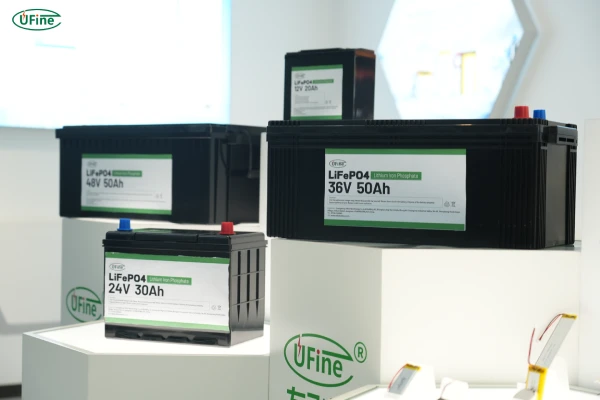
You might wonder: “Can I just grab any 12V battery?” Not quite. Garden tractors are unique because they rely on batteries that can handle frequent start-stop cycles, power attachments, and outdoor conditions.
Here’s a quick overview:
| Battery Type | Best For | Pros | Cons |
|---|---|---|---|
| Flooded Lead-Acid | Budget-minded users | Low upfront cost | Requires maintenance, heavier |
| AGM (Absorbent Glass Mat) | Most residential tractors | Leak-proof, vibration-resistant | Mid-range price |
| LiFePO4 (Lithium Iron Phosphate) | Long-term performance | Lightweight, long lifespan, fast charging | Higher upfront cost |
Flooded lead-acid batteries are the classic choice, but they need regular checks for water levels. AGM batteries are easier to maintain and handle vibrations better. If you want long-term reliability with minimal maintenance, LiFePO4 is the way to go.
Part 2. How to choose the right garden tractor battery?
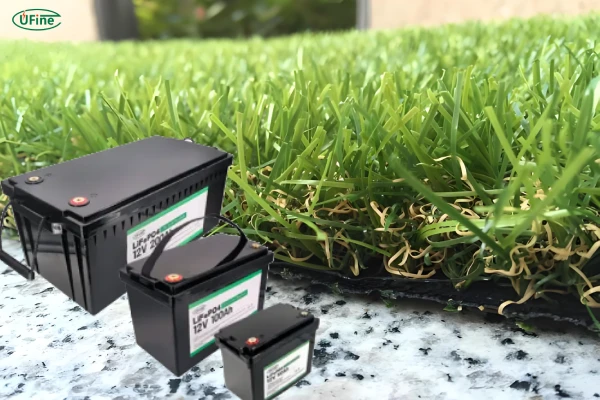
Picking the best garden tractor battery involves considering several factors:
1 Battery Type
✔ Lead-acid: Budget-friendly but requires maintenance.
✔ AGM: Spill-proof, longer lifespan.
✔ Lithium-Ion: Best performance, longest life.
If you’re considering a LiFePO4 battery, you might wonder how it performs in freezing temperatures. You can read more about whether lithium batteries freeze and how to protect them.
2 Cold Cranking Amps (CCA)
✔ CCA measures the battery’s ability to start in cold temperatures.
✔ If you live in a cold climate, choose a higher CCA battery for reliable performance.
Cold Cranking Amps (CCA) determine how well your battery starts in cold weather. To understand CCA in depth and how it affects your tractor, see this complete guide.
3 Battery Size & Compatibility
✔ Ensure the battery fits within the tray and matches the terminal configuration.
✔ Always check your tractor’s battery specifications before buying.
4 Lifespan & Warranty
✔ Standard lead-acid batteries last 2-4 years, while LiFePO4 batteries last 8-10 years.
✔ Opt for brands with reliable warranties for added security.
5 Physical Dimensions and Terminal Placement
✔ Ensure the battery fits securely in the designated compartment and that the terminals align with the tractor’s wiring. Incorrect sizing or terminal placement can lead to installation issues and poor performance.
For high-performance and long-lasting lithium batteries, Ufine Battery provides customized solutions for garden tractors. Contact us for premium battery options!
Part 3. Is a garden tractor battery 12V or 24V?
Most garden tractors use a 12V battery, but some heavy-duty models require 24V systems.
✔ 12V Batteries: Suitable for small to medium-sized garden tractors.
✔ 24V Batteries: Used in large, commercial tractors for higher power output.
Importance of Correct Voltage Selection
Using the wrong voltage can lead to severe consequences. A 12V battery in a 24V system will underperform, while a 24V battery in a 12V system can cause overheating, damage to the electrical system, and even safety hazards. Always refer to the manufacturer’s specifications to ensure compatibility.
To determine the right voltage for your tractor, check:
✔ Your owner’s manual.
✔ The existing battery label.
✔ The tractor’s electrical system requirements.
Part 4. How long will your battery last?
Battery lifespan varies significantly depending on chemistry, usage patterns, and maintenance.
Standard lead-acid batteries generally last between two and four years, while AGM batteries can stretch to five years with proper care. Lithium-ion options, particularly LiFePO4, may offer eight to ten years of reliable service. Environmental conditions play a major role as well; extreme cold, overcharging, or deep discharges can shorten battery life considerably.
By contrast, attentive storage, periodic charging, and regular inspections can extend performance far beyond average expectations.
Battery lifespan depends on type, usage, and maintenance:
| Battery Type | Typical Lifespan |
|---|---|
| Lead-Acid | 2–4 years |
| AGM | 3–5 years |
| LiFePO4 | 8–10 years |
Part 5. Installing and replacing your battery
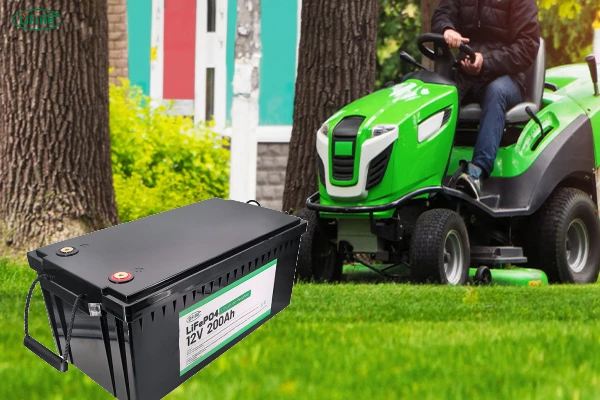
Replacing a battery is straightforward, but following proper steps ensures safety:
- Turn off your tractor and remove the key.
- Wear gloves and eye protection.
- Disconnect the negative (‑) cable first, then the positive (+).
- Remove the old battery and clean the tray.
- Install the new battery: positive first, then negative.
- Secure and test.
A well-placed battery improves balance and reduces strain during use.
Proper installation isn’t just about safety; it also affects comfort and performance. A well-placed battery helps maintain the tractor’s balance and prevents undue stress on the frame or attachments.
Part 6. Maintaining your battery for longevity
For LiFePO4 batteries, thermal management is important. Ensure ventilation or cooling in the battery compartment if your tractor is exposed to heat.
Maintenance is the difference between a battery that lasts two years and one that serves for a decade. Keeping terminals clean prevents corrosion and ensures consistent power delivery.
Smart chargers are a great investment, automatically adjusting voltage to prevent overcharging and undercharging, which prolongs battery health.
During winter or extended off-season storage, removing the battery and keeping it in a cool, dry place with a maintenance charger helps prevent self-discharge. For lithium batteries, adequate thermal management is crucial, especially if the tractor is exposed to direct sunlight or high ambient temperatures.
Proper care keeps your battery running longer:
- Clean terminals regularly to avoid corrosion.
- Use a smart charger to prevent overcharging.
- Store properly during the off-season in a cool, dry place.
- Check connections and inspect for swelling or damage.
Part 7. Common problems and how to Fix them
- Battery won’t hold a charge: Could be old or sulfated — try a slow charge or replace it.
- Corroded terminals: Clean with baking soda and water.
- Weak starts in cold weather: Store in a warmer area or use higher CCA batteries.
Part 8. Key takeaways
- Choose a battery type that matches usage, climate, and weight preferences.
- Check size, terminal orientation, and voltage before buying.
- Lithium batteries offer longer life and lighter weight, but cost more upfront.
- Regular maintenance and proper storage prolong battery performance.
- Always follow safety guidelines, use certified cells, and inspect regularly.
With the right battery, your garden tractor will start reliably, perform efficiently, and last for years — letting you focus on your yard, not unexpected breakdowns.
Part 9. FAQs
Can I use a car battery in my tractor?
Car batteries aren’t designed for frequent cycling. Using one can shorten lifespan and reduce efficiency.
Can I upgrade to a lithium battery?
Yes, if voltage and terminals match. Lithium gives longer life, lighter weight, and faster charging.
How do I know my battery size?
Check your manual or the label on your existing battery. Both physical size and terminal orientation are crucial.
Should I leave a trickle charger connected all winter?
Only if it’s a smart charger with float mode, which prevents overcharging.
Related Tags:

More Articles
18650 Battery vs AA: Which Is Better for Your Device?
Compare 18650 vs AA batteries in capacity, voltage, rechargeability, and applications. Learn which battery type fits high-drain or everyday devices.
What is the Difference Between Battery Cell, Battery Control Module, and Battery Pack?
Compare battery cells, modules, and packs. Learn functions, design differences, control modules, and selection tips for EV, ESS, and industrial use.
How to Prevent LiPo Battery Explosion?
Can LiPo batteries explode or catch fire? Learn key causes of LiPo battery fires and proven charging, storage, and handling tips to reduce explosion risk.
Aluminium Ion Battery vs Lithium-Ion: A Detailed Comparison
Compare aluminium ion battery vs lithium-ion battery in energy density, charging speed, safety, cost, and uses. A practical guide for engineers and buyers.
C vs D vs AA Battery: Size, Voltage, Capacity & Key Differences Explained
Compare AA, C, and D batteries by size, voltage, capacity, and lifespan. Learn the real difference between C and D batteries and which one you should use.


