- How We Tested and Selected the Best Camera Battery Brands
- What to Consider Before Buying a Camera Battery
- Quick Comparison: Best Camera Battery Brands
- 1. Panasonic Camera Battery
- 2. Sony Camera Battery
- 3. Ufine Battery
- 4. Canon Camera Battery
- 5. Nikon Camera Battery
- 6. Energizer Camera Battery
- 7. Telesin Camera Battery
- FAQs
How We Tested and Selected the Best Camera Battery Brands
To create this comparison, we evaluated camera battery brands using the same criteria rather than simply ranking them by popularity.
Our evaluation focused on five main areas:
Battery Performance
We reviewed:
- Battery chemistry (mainly lithium-ion)
- Available capacity options
- Expected shooting endurance
- Charge cycle performance
- Stability during continuous use
Compatibility and Ease of Use
We considered:
- Compatibility with popular camera models
- Communication between battery and camera body
- Charger compatibility
- Availability of replacement options
Safety and Reliability
We evaluated:
- Battery protection features
- Quality control practices
- Certifications and testing standards
- Brand reputation
Pricing and Value
We compared:
- Average price range
- Performance compared with cost
- Whether the battery offers good value for different users
Best Use Cases
Each brand was assessed based on where it performs best:
- Professional photography
- Consumer cameras
- Action cameras
- Custom camera projects
- Budget-conscious users
Our goal was not to identify a single “perfect” battery brand, but to show which brands are best suited for different photography needs.
What to Consider Before Buying a Camera Battery
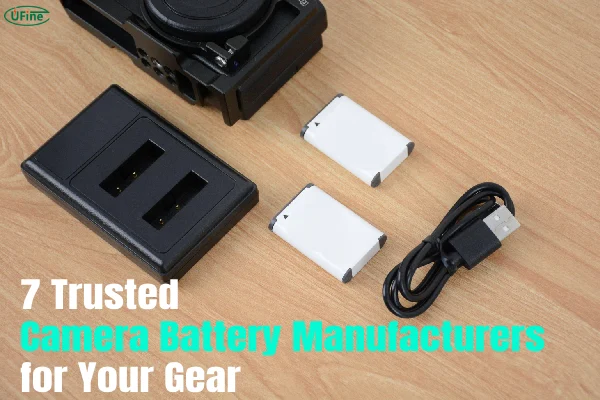
Before choosing a camera battery, you should consider more than just capacity numbers. A battery with a higher mAh rating does not always guarantee longer shooting time if it has poor efficiency or weak power management.
Battery Type and Chemistry
Most modern digital cameras use lithium-ion batteries because they provide:
- High energy density
- Lightweight construction
- Low self-discharge
- No significant memory effect
Lithium-ion technology has become the standard choice for DSLR cameras, mirrorless cameras, action cameras, and professional video equipment.
Battery Capacity
Battery capacity is usually measured in milliamp hours (mAh).
A higher capacity battery generally provides longer operation time, but real performance depends on:
- Camera sensor size
- Screen usage
- Video recording settings
- Autofocus frequency
- Shooting environment
For example, a photographer recording 4K video will consume battery power much faster than someone taking occasional still photos.
Original vs Third-Party Camera Batteries
When choosing between OEM and third-party batteries, consider your priorities.
| Battery Type | Advantages | Limitations |
|---|---|---|
| OEM Batteries | Maximum compatibility, reliable communication, strong quality control | Usually higher price |
| Third-Party Batteries | Lower cost, more capacity choices, wider availability | Quality varies between brands |
| Custom Batteries | Designed for special applications and unique devices | Usually requires manufacturer support |
For professional photographers working on important projects, OEM batteries are often preferred. For hobbyists, creators, and companies developing camera-related products, high-quality third-party batteries can provide better value.
Quick Comparison: Best Camera Battery Brands
| Product / Brand | Best For | Key Features | Price Range | Pros | Cons |
|---|---|---|---|---|---|
| Panasonic | Professional photographers using Panasonic cameras | Reliable lithium-ion batteries, OEM compatibility | $$$ | Excellent reliability, stable performance | Limited to Panasonic systems |
| Sony | Sony Alpha and professional video users | High-capacity NP series batteries, smart communication | $$$ | Strong performance, fast charging support | Higher cost |
| Ufine Battery | Custom camera batteries and specialized applications | Custom sizes, capacities, protection solutions | $$–$$$ | Flexible customization, manufacturing support | Not a direct consumer retail brand |
| Canon | Canon DSLR and mirrorless users | LP-E and NB battery series, camera communication | $$$ | Excellent compatibility, dependable quality | Expensive compared with alternatives |
| Nikon | Nikon camera users | EN-EL series lithium-ion batteries | $$$ | Reliable OEM performance | Limited compatibility outside Nikon |
| Energizer | General battery users and budget applications | Rechargeable battery solutions, broad availability | $–$$ | Affordable and widely available | Not focused only on camera batteries |
| Telesin | Action cameras and budget users | Affordable batteries and accessories | $ | Good value, wide availability |
Performance varies by model
|
What to Consider Before Buying a Camera Battery
Before choosing one of the best camera batteries, it is important to understand what actually affects battery performance.
Battery Type
Most modern cameras use lithium-ion batteries because they provide:
- High energy density
- Lightweight construction
- Low self-discharge
- No memory effect
Lithium polymer (LiPo) batteries are also becoming increasingly popular in customized camera devices because they can be produced in thinner and more flexible designs.
Older cameras may still use nickel-metal hydride (NiMH) batteries, but lithium-based batteries dominate the current digital camera battery market.
Battery Capacity
Battery capacity is measured in milliampere-hours (mAh). Generally, a higher mAh rating means the battery can store more energy and potentially provide longer shooting time.
However, capacity alone does not determine real-world performance. Other factors include:
- Camera power consumption
- Shooting mode
- Temperature
- Battery age
- Image stabilization usage
- Video recording requirements
For example, a high-capacity battery may provide longer runtime for photography but may not perform significantly better during high-power 4K video recording.
Compatibility
Always check whether the battery is designed for your exact camera model.
Important compatibility factors include:
- Physical battery size
- Voltage requirements
- Communication chips
- Charger compatibility
- Firmware support
Using an incompatible battery can cause inaccurate battery readings or charging problems.
OEM vs Third-Party Camera Batteries
When searching for the best third party camera battery brands, many users compare aftermarket options with original batteries.
OEM batteries offer:
- Guaranteed compatibility
- Better camera communication
- Manufacturer support
- Consistent quality
However, third-party batteries often provide:
- Lower prices
- Higher capacity options
- More flexible designs
- Alternative solutions for older cameras
The best choice depends on your priorities. Professional photographers who rely on their equipment every day may prefer OEM batteries, while hobbyists and businesses may benefit from high-quality third-party alternatives.
Are Third-Party Camera Batteries Safe?
A common concern is whether third-party camera batteries are safe.
The answer depends on the manufacturer. High-quality third-party batteries from reputable companies can provide reliable performance when they include:
- Proper battery protection circuits
- Quality lithium cells
- Safety certifications
- Professional manufacturing processes
However, extremely cheap batteries from unknown sellers may use lower-quality cells and lack proper protection features.
When comparing third-party camera battery brands, focus on manufacturing quality rather than only the lowest price.
1. Panasonic Camera Battery

Best For:
Photographers who use Panasonic Lumix cameras and want reliable OEM-level performance.
Price:
Mid-range to premium pricing depending on the battery model.
Key Features:
- High-quality lithium-ion battery technology
- Optimized compatibility with Panasonic Lumix cameras
- Stable power output for photography and video recording
- Lightweight design with good energy density
- Reliable temperature and safety management
What We Like:
Excellent compatibility with Panasonic cameras
Panasonic batteries are specifically designed for Lumix camera systems, ensuring reliable communication between the battery and camera body. Features such as accurate remaining battery display and optimized charging performance work consistently.
Strong reliability and quality control
Panasonic has decades of experience in lithium battery technology and electronics manufacturing. Its camera batteries benefit from strict quality standards and stable production processes.
Good balance between capacity and size
Models such as the DMW-BLF19, DMW-BLC12, and DMW-BLG10 provide a practical balance between battery life and portability, making them suitable for travel photography and professional shooting.
Suitable for demanding shooting environments
Panasonic OEM batteries generally perform consistently during long photo sessions, outdoor shooting, and video recording.
What Could Be Better:
Higher cost compared with third-party alternatives
Original Panasonic batteries are usually more expensive than compatible third-party options.
Limited compatibility
Panasonic batteries are mainly designed for Panasonic cameras and are not suitable for users of other camera systems.
Summary:
Panasonic remains one of the best camera battery brands for Lumix users who prioritize reliability and compatibility. While the price is higher than many aftermarket options, its consistent performance and OEM integration make it a safe choice for professional and enthusiast photographers.
2. Sony Camera Battery

Best For:
Professional photographers and videographers using Sony Alpha mirrorless cameras or Sony professional video equipment.
Price:
Mid-range to high-end pricing.
Key Features:
- High-capacity lithium-ion battery technology
- Intelligent communication with Sony cameras
- Fast charging support
- Long cycle life
- High-performance battery management system
What We Like:
Industry-leading compatibility with Sony cameras
Sony’s original batteries, including popular models such as NP-FZ100, NP-FW50, NP-BX1, and NP-F970, are designed to work seamlessly with Sony camera systems.
Excellent performance for video creators
Sony batteries are widely used among professional photographers, filmmakers, and content creators because of their stable output during high-power operations such as 4K video recording.
Accurate battery monitoring
Sony’s intelligent battery communication system allows cameras to display more accurate remaining battery information compared with many third-party alternatives.
Strong manufacturing expertise
Sony has extensive experience in imaging technology, semiconductor manufacturing, and battery development, which supports consistent product quality.
What Could Be Better:
Higher price compared with third-party camera batteries
Sony OEM batteries are among the more expensive options in the camera battery market.
Limited advantage for casual users
Hobby photographers who shoot occasionally may not fully benefit from the premium features.
Summary:
Sony produces some of the best camera batteries for professionals using Sony Alpha and video cameras. The combination of high capacity, reliable communication, and strong performance makes Sony batteries a preferred choice, although budget-conscious users may find third-party options more attractive.
3. Ufine Battery

Best For:
Camera manufacturers, professional equipment developers, and businesses looking for customized lithium battery solutions.
Price:
Custom pricing based on battery specifications, order volume, and customization requirements.
Key Features:
- Custom lithium-ion and lithium polymer battery solutions
- Flexible battery sizes, shapes, and capacities
- Low MOQ options for customized projects
- Multiple international certifications
- Factory-direct manufacturing support
- Battery protection solutions
What We Like:
Strong customization capability
Unlike traditional camera battery brands that mainly sell standard models, Ufine focuses on customized lithium battery development. This makes it suitable for companies creating specialized cameras, imaging devices, and portable electronic products.
Flexible battery design options
Ufine can customize battery specifications including:
Capacity
Voltage
Dimensions
Connector types
Battery shape
Protection circuit design
This flexibility is valuable for products where standard camera batteries cannot meet size or performance requirements.
Factory-direct manufacturing advantage
Ufine provides direct battery manufacturing services instead of only selling finished retail batteries. This allows companies to work directly with engineers during battery design and production.
Multiple safety certifications
The company provides batteries that can meet certifications and testing requirements such as UN38.3, CE, UL, KC, PSE, and IEC standards depending on project requirements.
Suitable for emerging camera-related devices
As cameras become smaller and more specialized, customized lithium batteries are increasingly important for products such as:
Compact cameras
Action cameras
Smart imaging devices
Portable monitoring equipment
Professional camera accessories
What Could Be Better:
Not designed primarily for individual photographers buying one replacement battery
Ufine is more suitable for businesses, manufacturers, and engineering teams rather than consumers looking for a single OEM replacement battery.
Custom projects require development time
Customized batteries usually involve communication, testing, and production steps before mass manufacturing.
Summary:
Ufine Battery is a strong choice among third-party camera battery brands for companies that need customized lithium battery solutions rather than standard retail replacements. Its advantage comes from manufacturing flexibility, engineering support, and the ability to develop batteries for specific product requirements.
4. Canon Camera Battery

Best For:
Canon DSLR and mirrorless camera users who want maximum compatibility and reliability.
Price:
Mid-range to premium pricing.
Key Features:
- Original Canon lithium-ion battery technology
- Optimized for EOS DSLR and mirrorless cameras
- Accurate battery status communication
- Stable performance during professional shooting
- Long-term reliability
What We Like:
Perfect integration with Canon cameras
Canon’s original batteries, including LP-E6, LP-E6NH, LP-E17, and NB series models, are specifically developed for Canon camera systems.
Reliable performance for professional photography
Canon batteries are widely used by photographers who require dependable performance during weddings, commercial shoots, travel photography, and video production.
Accurate battery information display
OEM Canon batteries communicate effectively with cameras, providing accurate information about remaining capacity and battery health.
Strong product ecosystem
Canon offers compatible chargers, battery grips, and accessories, making it easier for professional users to build a complete power solution.
What Could Be Better:
Higher purchase cost
Canon OEM batteries are usually more expensive than compatible third-party batteries.
Less flexible than customized battery solutions
Users who need unusual battery sizes or specifications will need to look beyond Canon’s standard product range.
Summary:
Canon produces some of the best camera batteries for EOS users. For photographers who depend on their camera every day, the reliability and compatibility of Canon OEM batteries often justify the
5. Nikon Camera Battery

Best For:
Nikon DSLR and mirrorless camera users who need reliable power for professional photography and long shooting sessions.
Price:
Mid-range to premium pricing.
Key Features:
- Original Nikon lithium-ion battery technology
- Optimized compatibility with Nikon camera systems
- Stable performance for professional shooting
- Support for battery grips and extended shooting
- Reliable safety and quality control
What We Like:
Excellent compatibility with Nikon cameras
Nikon develops its batteries specifically for its own camera ecosystem. Popular models such as EN-EL15c, EN-EL14a, EN-EL25, and EN-EL20a are designed to work smoothly with Nikon DSLR and mirrorless cameras.
Reliable performance for professional photographers
Nikon batteries are commonly used in demanding photography environments, including weddings, wildlife photography, studio work, and outdoor shooting.
Strong battery ecosystem
Nikon provides compatible chargers, battery grips, and accessories that allow professional users to extend shooting time and improve workflow efficiency.
Consistent quality standards
Nikon’s experience in imaging technology helps ensure its batteries meet the reliability expectations of professional photographers.
What Could Be Better:
Higher cost compared with many third-party options
Nikon OEM batteries generally cost more than aftermarket alternatives with similar capacity ratings.
Limited use outside Nikon cameras
These batteries are designed specifically for Nikon products and offer little value for users of other camera brands.
Summary:
Nikon remains one of the best camera battery brands for photographers using Nikon equipment. Its biggest advantages are compatibility, reliability, and professional-level performance, although users looking for lower-cost alternatives may consider reputable third-party batteries.
6. Energizer Camera Battery

Best For:
Casual photographers, digital camera users, and buyers looking for affordable battery options.
Price:
Low to mid-range pricing.
Key Features:
- Long-established battery manufacturing experience
- Rechargeable battery options
- Affordable pricing
- Wide availability
- Multiple battery chemistry options
What We Like:
Strong reputation in the battery industry
Energizer has been producing batteries for more than a century and is recognized worldwide for consumer battery products.
Affordable option for everyday use
Compared with many OEM camera batteries, Energizer products are often more accessible for casual users who do not require professional-level performance.
Wide availability
Energizer batteries are easy to find through online retailers and electronics stores, making replacements convenient.
Suitable for general digital devices
For users with compact digital cameras, accessories, or devices requiring standard rechargeable batteries, Energizer can provide a practical solution.
What Could Be Better:
Not focused specifically on modern professional camera batteries
Unlike Canon, Sony, and Nikon, Energizer does not primarily develop dedicated OEM batteries for advanced mirrorless camera systems.
Performance varies depending on battery type
Different Energizer battery series target different applications, so users need to carefully check specifications before purchasing.
Summary:
Energizer is a reliable battery brand with strong consumer recognition, but it is not the first choice for professional photographers seeking dedicated camera batteries. It is better suited for general users who prioritize affordability and availability.
7. Telesin Camera Battery
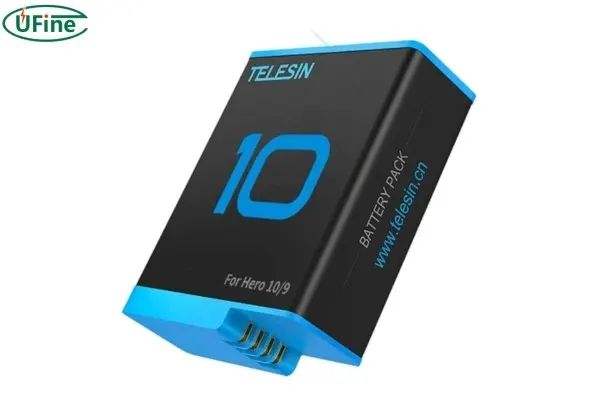
Best For:
Action camera users, especially those looking for affordable GoPro-compatible batteries and accessories.
Price:
Budget-friendly pricing.
Key Features:
- Affordable third-party camera batteries
- Compatibility with action cameras
- Multi-battery charging kits
- Lithium-ion battery technology
- Additional camera accessories available
What We Like:
Good value for action camera users
Telesin has become popular among GoPro users because it provides affordable battery bundles and accessories compared with official manufacturer options.
Convenient battery kits
Many Telesin products include multiple batteries and charging solutions, which is useful for travel, outdoor activities, and content creation.
Broad accessory ecosystem
Besides batteries, Telesin produces camera accessories such as mounts, cases, chargers, and protective equipment.
Accessible pricing
For users who frequently record outdoor videos, having several affordable spare batteries can be more practical than purchasing only OEM batteries.
What Could Be Better:
Performance consistency may vary by model
Third-party batteries can differ in long-term performance compared with OEM products.
Not ideal for professional mission-critical shooting
Photographers and filmmakers who cannot risk unexpected battery issues may still prefer original manufacturer batteries.
Summary:
Telesin is one of the better-known third-party camera battery brands for action cameras. It provides good value for casual creators and outdoor users, although professional users should carefully evaluate reliability requirements before choosing aftermarket batteries.
FAQs
1. How many camera batteries do I need for a day of shooting?
It depends on your camera usage. Casual photographers may need one spare battery, while professionals shooting weddings, travel, or video content often carry 2–4 extra batteries.
2. Does a higher mAh battery always mean longer shooting time?
Not always. A higher mAh rating means more stored energy, but actual battery life also depends on camera power consumption, battery quality, and shooting conditions.
3. What certifications should a good camera battery have?
Reliable lithium camera batteries often include certifications such as: UN38.3, CE,UL,RoHS.
4. Why does my camera battery drain faster in cold weather?
Cold temperatures reduce lithium-ion battery efficiency, which can temporarily lower capacity and shorten shooting time.
Related Tags:

More Articles

Check If Your Charger Works: Simple Test Guide
Think your battery charger's broken? Quick tests can show you for sure. See if it’s the charger or the battery that's causing issues. Read more.
What You Need to Know About Portable Fan Batteries
Discover the best portable electric fan battery, its types, lifespan, and maintenance tips. Learn how to choose the right one and keep it running longer.
13 E-Bike Battery Options Compared: Voltage, Fit, Chemistry & Use Case
Compare 13 e-bike battery options by voltage, capacity, chemistry, mounting style and compatibility to find the right battery for your electric bike.
How to Replace Your Ring Battery?
Need to replace your Ring doorbell battery? This guide covers everything from battery types to replacement tips, ensuring a smooth and efficient process.
Group 65 Battery Explained: Size, Specs & Lithium Benefits
Discover what a Group 65 battery is, its size, types, AGM vs lithium comparison, cost, and how to choose the best option for your vehicle or RV.