- Part 1. What Are Lithium Batteries Made Of?
- Part 2. Lithium Battery Manufacturing Process Overview
- Part 3. How to make Lithium cells?
- Part 4. How to assemble lithium battery packs?
- Part 5. Safety and Quality Control in Lithium Battery Manufacturing
- Part 6. Types of Lithium Batteries and Manufacturing Differences
- Part 7. Environmental Considerations in Battery Manufacturing
- Part 8. Lithium Battery Manufacturing Challenges
- Part 9. FAQs
Key Takeaways
- Lithium batteries are made from several key materials, including cathode materials, graphite anodes, electrolytes, separators, and metal current collectors.
- The lithium battery manufacturing process involves electrode production, cell assembly, electrolyte filling, formation, testing, and packaging.
- Modern lithium-ion batteries are produced in highly controlled environments to ensure safety, consistency, and performance.
- Different battery chemistries, such as LiFePO4 (LFP), NMC, and NCA, use different cathode materials and manufacturing approaches.
- Formation and quality testing are critical steps that determine battery reliability and lifespan.
Lithium batteries are powering every device in today’s world, but have you ever tried to know how lithium batteries are made? Knowing the raw material used and the process of making lithium batteries can help you better understand the lithium battery working mechanism. This article will explore how lithium batteries are made, from raw materials to manufacturing and assembling processes.
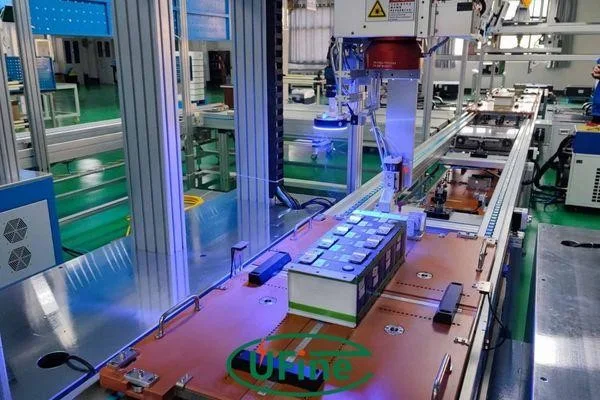
For a closer look at industrial manufacturing techniques, explore Ufine Battery detailed battery production process guide.
Part 1. What Are Lithium Batteries Made Of?
Before examining the manufacturing process, it’s important to understand the main components that make up a lithium-ion battery.
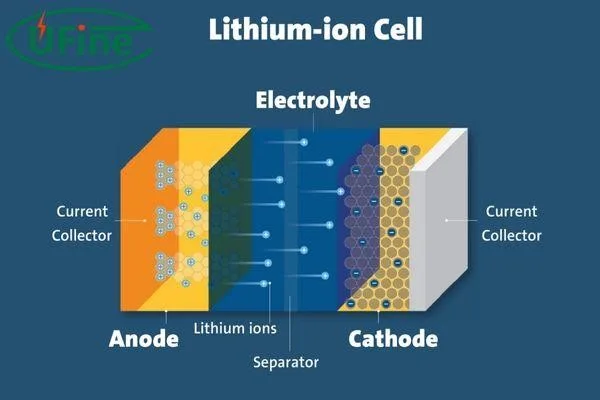
Cathode
The cathode is the positive electrode and one of the most important battery components. Common cathode materials include:
- Lithium Iron Phosphate (LiFePO4 or LFP)
- Lithium Nickel Manganese Cobalt Oxide (NMC)
- Lithium Nickel Cobalt Aluminum Oxide (NCA)
- Lithium Cobalt Oxide (LCO)
The cathode largely determines the battery’s energy density, safety, lifespan, and cost.
Anode
The anode is the negative electrode and is typically made from graphite. During charging and discharging, lithium ions move between the cathode and anode through the electrolyte.
Some advanced battery technologies also use silicon-enhanced anodes to increase energy density.
To better understand how energy is stored and transferred, learn more about the cathode and anode inside a battery.
Electrolyte
The electrolyte is a conductive liquid that allows lithium ions to travel between the electrodes. It usually consists of lithium salts dissolved in organic solvents.
Separator
The separator is a thin porous membrane placed between the cathode and anode. It prevents direct contact between the electrodes while allowing lithium ions to pass through.
Current Collectors
Battery manufacturers use:
- Aluminum foil for the cathode
- Copper foil for the anode
These metal foils collect and transfer electrical current during operation.
Battery Housing
The outer casing protects internal components and may be designed as:
- Cylindrical cells
- Prismatic cells
- Pouch cells
One common misconception is that lithium-ion batteries are made from pure metallic lithium. In reality, most rechargeable lithium-ion batteries contain lithium compounds rather than metallic lithium.
Part 2. Lithium Battery Manufacturing Process Overview
Watch the video below to see how lithium batteries are manufactured in a real production environment.
The lithium battery manufacturing process typically follows six major stages:
- Raw material preparation
- Electrode manufacturing
- Cell assembly
- Electrolyte filling
- Formation and aging
- Testing and packaging
Each stage requires specialized equipment and strict process controls to ensure battery performance and safety.
1 Step 1 – Electrode Production
Electrode manufacturing is one of the most critical stages in lithium-ion battery production.
Slurry Mixing
Manufacturers first combine active materials, conductive additives, and binders to create a uniform slurry.
For example:
Cathode slurry may contain:
- LFP, NMC, or NCA powder
- Conductive carbon
- Binder materials
Anode slurry typically contains:
- Graphite
- Conductive additives
- Binders
Achieving the correct mixture is essential for consistent battery performance.
Coating
The slurry is coated onto metal foils:
- Cathode slurry onto aluminum foil
- Anode slurry onto copper foil
High-precision coating machines ensure uniform thickness across the electrode surface.
Drying
After coating, the electrodes pass through industrial drying ovens to remove solvents and moisture.
Calendering
The dried electrodes are compressed using rollers. This process improves:
- Electrode density
- Energy density
- Electrical conductivity
Slitting
Finally, the electrodes are cut into precise widths suitable for cell assembly.
2 Step 2 – Cell Assembly
Once the electrodes are prepared, manufacturers assemble them into battery cells.
Stacking or Winding
Depending on the cell design, electrodes are either:
Wound into a jelly-roll structure- Common for cylindrical cells
- Common for pouch and prismatic cells
Separator Insertion
A separator is placed between the cathode and anode layers to prevent short circuits.
Cell Housing Installation
The assembled electrodes are inserted into their final housing:
- Cylindrical cans
- Prismatic cases
- Flexible pouches
Because moisture can damage battery materials, assembly often takes place in ultra-dry rooms with tightly controlled humidity levels.
3 Step 3 – Electrolyte Filling and Sealing
After assembly, electrolyte is injected into the battery cell.
The electrolyte saturates the separator and electrodes, creating a pathway for lithium-ion movement.
Manufacturers then seal the cell to prevent:
- Moisture contamination
- Electrolyte leakage
- Performance degradation
Vacuum filling systems are often used to ensure complete electrolyte penetration throughout the cell.
4 Step 4 – Formation and Testing
Formation is one of the most important and time-consuming stages of lithium battery manufacturing.
Initial Charging
Each battery undergoes a carefully controlled first charging cycle.
This process creates a protective layer known as the Solid Electrolyte Interphase (SEI) on the anode surface.
The SEI layer helps:
- Improve battery stability
- Reduce side reactions
- Extend battery life
Aging Process
Following formation, batteries may be stored for several days or weeks to stabilize their electrochemical characteristics.
Capacity Grading
Manufacturers test each cell for:
- Capacity
- Voltage consistency
- Internal resistance
- Self-discharge rate
Cells with similar performance characteristics are grouped together for battery pack assembly.
Part 3. How to make Lithium cells?
Making lithium cells also follows the same method we discussed above. How are lithium batteries made? The only difference is the size and shape of the both.
However, here is the lithium cell manufacturing process.
- Mix electrode materials with conductive binders to create a uniform slurry.
- Coat the slurry on the current collector using tools like a slot die, doctor blade, or anilox roller.
- The large ovens dry the coated foil to evaporate solvents.
- Cut the electrode sheets according to the precise shape and size.
- Each battery component is stacked in the battery casing.
- Place a separator between positive and negative electrodes.
- Machines inject the electrolytes inside the battery for easy lithium ion movement.
- Seal the battery using heat sealers or laser welding machines.
- Final testing of the battery to verify different metrics.
Part 4. How to assemble lithium battery packs?
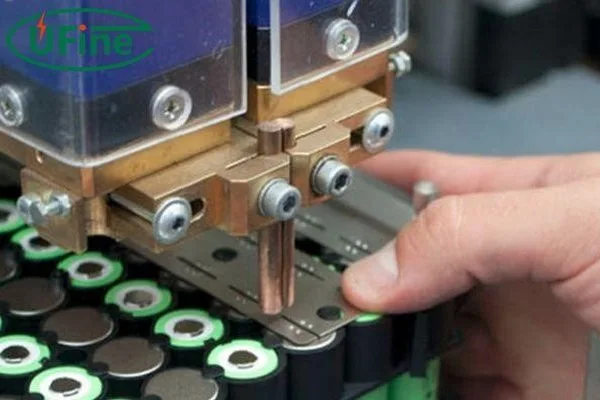
Now, it’s time to assemble lithium battery packs after manufacturing small lithium cells. The small cells in the series form to increase total battery voltage and capacity. It is a useful method to make bigger lithium batteries with higher capacities. Let’s check out each step of how lithium batteries are made.
Cell Selection
Cell selection is very important for lithium battery pack cell selection. Each lithium cell should have the same capacity, chemistry, and voltage as there can be Lithium-ion (Li-ion), Lithium polymer (LiPo), Lithium iron phosphate (LiFePO4), and Nickel-metal hydride (NiMH) cells. Therefore, it is important to use a multimeter for each cell and read its brand name and description. Moreover, it is necessary to calculate the total voltage and capacity of the battery when selecting lithium cells.
Configuration
There are two ways to connect the cells. Either in series ( each cell positive to the other’s negative) or parallel ( each cell positive with positive and negative with negative). Connecting in series will increase overall battery voltage as well as capacity. On the other hand, parallel will only increase battery capacity.
Welding Lithium Cells
Now, we can join all the cells through spot welding. However, soldering is an alternative way if spot-wielding is not available. However, it generates heat and requires necessary precautions while soldering the cells.
Insulation and BMS Installation
The last step is insulating the battery in a strong battery case and a battery management system (BMS) that performs several important functions. It protects the battery from deep discharge and overcharge and balances the lithium cells.
Part 5. Safety and Quality Control in Lithium Battery Manufacturing
Modern lithium battery production requires strict quality control standards.
Humidity Control
Even small amounts of moisture can react with battery materials and affect performance.
Many production facilities maintain extremely low humidity levels, especially during cell assembly.
Clean Room Operations
Dust particles and contaminants can cause internal defects and reduce battery reliability.
For this reason, many battery manufacturing processes occur in clean-room environments.
Automated Inspection
Manufacturers use advanced inspection systems to identify defects such as:
- Coating inconsistencies
- Misalignment
- Foreign particles
- Welding issues
Safety Testing
Finished batteries often undergo:
- Short-circuit testing
- Overcharge testing
- Vibration testing
- Thermal testing
These procedures help ensure safe operation under real-world conditions.
Part 6. Types of Lithium Batteries and Manufacturing Differences
Although the basic manufacturing process is similar, different lithium battery chemistries require different materials and production parameters.
1 LiFePO4 (LFP)
Advantages:
- Excellent safety
- Long cycle life
- Lower cost
- Thermal stability
LFP batteries are widely used in energy storage systems, electric vehicles, and industrial applications.
For a deeper understanding of LFP battery voltage characteristics, see our LiFePO4 Voltage Guide.
2 NMC Batteries
Advantages:
- High energy density
- Good balance of performance and lifespan
NMC batteries are commonly used in electric vehicles and portable electronics.
3 NCA Batteries
Advantages:
- Very high energy density
- Lightweight design
NCA batteries are often used in premium EV applications.
4 LCO Batteries
Advantages:
- High energy density for compact devices
These batteries are frequently found in smartphones, tablets, and laptops.
Part 7. Environmental Considerations in Battery Manufacturing
As battery demand grows worldwide, sustainability has become increasingly important.
Manufacturers are investing in:
- Recycling technologies
- Cleaner production methods
- Reduced material waste
- Lower carbon emissions
Many companies are also working to recover valuable materials such as lithium, nickel, cobalt, and copper from used batteries to reduce reliance on newly mined resources.
Part 8. Lithium Battery Manufacturing Challenges
Producing lithium-ion batteries at scale presents several challenges.
Material Supply
Global demand for lithium, nickel, and other battery materials continues to increase.
Quality Consistency
Even small variations in manufacturing can affect battery performance and lifespan.
Safety Requirements
Manufacturers must balance energy density with safety and reliability.
Cost Reduction
Improving production efficiency remains a major goal as battery adoption expands worldwide.
Part 9. FAQs
-
Can lithium-ion batteries explode?
A lithium battery can rarely explode. It can overheat and explode if damaged, improperly used, or made with low-quality materials. The safety measures taken during assembly (like spot welding and incorporating a Battery Management System) are crucial to prevent battery explosion or failure. -
How long do lithium-ion batteries last?
The lifespan of a lithium battery can depend on several factors, such as battery type and quality, habit, temperature, and maintenance. However, a LiFePO4 battery has around 2,000 cycles of life. -
How are lithium batteries made?
Making lithium batteries involves several stages. It requires experts and machines to handle different tasks. It includes electrode creation, coating, dying process, and sliting, sealing, forming, and testing stages. -
How can I achieve different voltages and capacities with lithium-ion batteries?
An individual lithium cell typically has 3.7 volts. If you connect these cells in series, it will multiply the volts and capacity. However, suppose you connect the 3.7-volt cell in parallel. In that case, it will only increase the total battery capacity while the voltage will remain at 3.7. -
What is the main mineral in lithium batteries?
A lithium battery uses graphite as an anode of the battery. Cathode can use any of the four minerals, lithium, manganese, cobalt, and nickel. All of these are expensive minerals that make lithium batteries expensive.
Related Tags:

More Articles
Aluminum Air Battery Design: Materials, Assembly & Efficiency Tips
Learn how an aluminum air battery works, its materials, assembly process, efficiency factors, advantages, limitations, and key applications.
AGM vs Flooded Battery: A Detailed Comparison
Compare AGM vs flooded battery performance, cost, lifespan, charging speed, and maintenance. Find the best battery for your application.
Lithium-ion Battery Structure: Components, Functionality, and Innovations
Learn the lithium-ion battery structure, key components, internal design, and how it works. Explore cell types, safety features, and battery innovations.
12V 100Ah Lithium Battery: Weight, Watt Hours, Lifespan and Uses
Find out how long a 12V 100Ah lithium battery lasts, what it can power, how much it weighs, and whether it's worth the upgrade.
Learn what deep discharge is, battery discharge meaning, depth of discharge (DoD), deep-cycle batteries, and how to prevent battery damage.