
- Key Takeaways
- Part 1. What is a 6v battery?
- Part 2. Can you charge a 6v battery with a 12v charger?
- Part 3. What happens when a 12v charger is connected to a 6v battery?
- Part 4. 6v battery charging requirements by chemistry
- Part 5. How to charge a 6v battery safely
- Part 6. Can you charge a 12v battery with a 6v charger?
- Part 7. Can a 12v charger charge two 6v batteries in series?
- Part 8. Can you use a resistor to charge a 6v battery from 12v?
- Part 9. What should you do after using a 12v charger by mistake?
- Part 10. How to choose the right 6 volt battery charger
- Part 11. How long does it take to charge a 6v battery?
- Part 12. Tips to extend 6v battery life
- Part 13. FAQs about charging a 6v battery
Can you charge a 6V battery with a 12V charger? No. A 12V charger delivers excessive voltage for a single 6V battery and can cause overheating, swelling, or permanent damage. Charging must match the battery’s chemistry and specifications, not just its nominal voltage. This guide explains the risks, how to choose the right 6 volt battery charger, and whether a 6V charger can charge a 12V battery.
Key Takeaways
- Do not connect a standard 12V charger to a single 6V battery.
- A 12V lead-acid charger often outputs about 14.4–14.7V. A 6V lead-acid battery usually needs about 7.2–7.5V for charging.
- The charger must match battery voltage, chemistry, capacity, and charge profile.
- A multi-voltage charger is safe only when it is set to the correct 6V mode.
- A 6V charger cannot charge a 12V battery because the voltage is too low.
- Two matched 6V batteries in series can be charged as a 12V pack, but only under proper control.
- Never try to charge a non-rechargeable 6V alkaline or zinc-carbon battery.
Part 1. What is a 6v battery?
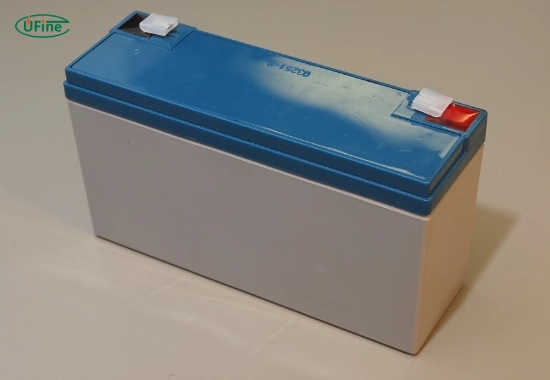
A 6V battery stores energy and has a nominal voltage of about 6 volts. “Nominal” means the normal working level, not the exact charging voltage.
A fully charged 6V lead-acid battery can read above 6V when idle. But it still needs a higher charging voltage to accept current. This does not mean a 12V charger is suitable.
Common 6V battery types include:
- Flooded lead-acid batteries: Used in old vehicles, industrial tools, deep-cycle systems, and some golf carts.
- AGM batteries: Sealed lead-acid types used in alarms, emergency lights, toys, and backup systems.
- Gel batteries: Low-maintenance sealed batteries with good leak resistance.
- NiMH or NiCd packs: Usually made from five 1.2V cells in series.
- LiFePO4 packs: Two lithium cells in series, with about 6.4V nominal voltage.
- Non-rechargeable lantern batteries: Some 6V alkaline or zinc-carbon types. These must never be charged.
For more details, see our guide on 6V battery types and uses.
Part 2. Can you charge a 6v battery with a 12v charger?
No. You should not use a 12V charger on a single 6V battery.
A 12V lead-acid charger often rises to about 14.4–14.7V during charging. A 6V lead-acid battery usually needs only about 7.2–7.5V. This means the voltage is almost double.
Too much voltage can push too much current into the battery. This creates heat and unwanted chemical reactions. It does not mean faster or better charging.
What if the charger has 6V and 12V modes?
A smart charger can be used only if it has a real 6V mode. Before use, check:
- The charger is set to 6V.
- The battery chemistry matches (lead-acid, AGM, gel, LiFePO4, or NiMH).
- The charging current is within the battery limit.
- The charger does not switch back to 12V mode automatically.
When set correctly, it works as a proper 6 volt battery charger, not a 12V system.
Part 3. What happens when a 12v charger is connected to a 6v battery?
Results depend on battery type, charger design, and time of exposure. Common problems include heat, gas, pressure, and damage inside the battery.
| Battery type | What may happen | Main risk |
|---|---|---|
| Flooded lead-acid | Strong gassing, water loss, plate damage, heat | Hydrogen gas, acid leakage, case damage |
| AGM or gel | Pressure build-up, venting, swelling, dry-out | Permanent capacity loss or rupture |
| LiFePO4 or lithium pack | BMS shutdown or cell overvoltage | Fire, venting, or thermal runaway |
| NiMH or NiCd | Fast heating and pressure increase | Leakage or cell rupture |
| Non-rechargeable 6V battery | Uncontrolled internal reaction | Leakage, rupture, or fire |
Overheating
Too much voltage increases current. The battery turns extra energy into heat. High heat can damage internal parts and make the battery unstable.
Gas and pressure
Lead-acid batteries can release hydrogen and oxygen when overcharged. Sealed batteries may vent gas. Once vented, they often lose capacity permanently.
Swelling or leakage
Heat and pressure can deform the case. A swollen battery is a clear sign of internal damage. Cracks or leaks may follow.
Permanent capacity loss
Even if the battery still works, damage may reduce its capacity. It may charge fast but discharge quickly.
Fire risk in lithium batteries
Lithium batteries are very sensitive to overvoltage. A BMS may stop charging, but it is not a full safety guarantee.
If protection fails, the battery may overheat or enter thermal runaway. UL recommends using only a charger designed for the battery or device.
Part 4. 6v battery charging requirements by chemistry
Not all 6V batteries charge the same way. Always check the chemistry first.
| Battery type | Charging needs | Recommended charger |
|---|---|---|
| 6V flooded lead-acid | Controlled voltage and current | 6V lead-acid charger |
| 6V AGM | About 7.2–7.5V charging range | AGM-compatible smart charger |
| 6V gel | Lower and tighter voltage control | Gel-compatible charger |
| 6.4V LiFePO4 pack | CC/CV charging, about 7.2–7.3V max | 2S LiFePO4 charger |
| 5-cell NiMH pack | Current control with smart cut-off | NiMH smart charger |
| 6V alkaline battery | Not rechargeable | Do not charge |
Always follow the datasheet. For example, sealed lead-acid batteries often use about 2.3–2.45V per cell depending on use mode.
Lithium batteries need tighter control. See our guide on lithium battery CC/CV charging for more details.
Part 5. How to charge a 6v battery safely
Safe charging starts with correct identification. Do not guess based on voltage only.
1. Check if the battery is rechargeable
Look for “rechargeable,” “lead-acid,” “AGM,” “NiMH,” or “LiFePO4.”
If it says “do not recharge,” do not charge it.
2. Confirm battery chemistry
Different chemistries need different chargers. A lead-acid charger is not safe for lithium or NiMH batteries.
3. Check charging voltage
Use the datasheet values such as cycle voltage or max charge voltage. Do not estimate.
4. Set correct charging current
Charging current must stay within limits. A simple rule is:
C-rate = current ÷ capacity
Example: 0.5A ÷ 4.5Ah = 0.11C
5. Inspect the battery
Do not charge if you see swelling, leaks, corrosion, or damage.
6. Connect polarity correctly
Wrong polarity can damage both battery and charger. Turn off power before connecting if possible.
7. Charge in a safe place
Use a dry and ventilated area. Keep away from heat and fire sources.
OSHA also provides safety rules for battery charging areas: OSHA battery charging safety rules.
8. Monitor during charging
Stop charging if the battery becomes hot, swollen, or smells strange.
For lithium systems, also check temperature limits. See our guide on lithium battery temperature range.
Part 6. Can you charge a 12v battery with a 6v charger?
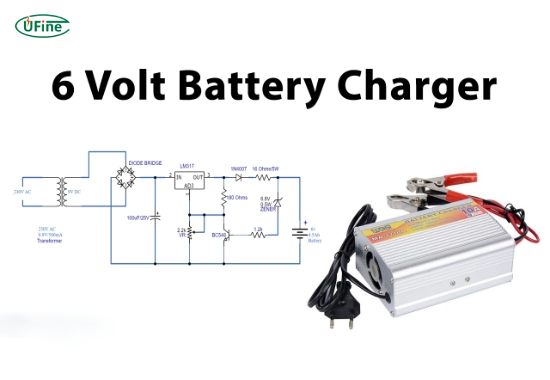
No. A 6V charger cannot reach the voltage needed for a 12V battery.
A 12V battery often needs about 14V or more to charge. A 6V charger is too weak.
Possible results include:
- No charging starts.
- Very slow or no current flow.
- Charger error or shutdown.
- Battery stays empty.
Use a proper 12V charger instead.
Part 7. Can a 12v charger charge two 6v batteries in series?
Yes, but only in a special case. Two 6V batteries in series form a 12V system.
Conditions must be met:
- Same battery type and chemistry.
- Same capacity and age.
- Balanced condition.
- Correct 12V charger support.
If one battery is weaker, it may overcharge or undercharge. This causes imbalance and damage.
Note: This does not mean a 12V charger is safe for a single 6V battery.
Part 8. Can you use a resistor to charge a 6v battery from 12v?
No. A resistor cannot control charging safely.
Battery current changes during charging. A fixed resistor cannot adjust to this change.
Problems include:
- No proper charge control
- No full charge detection
- Heat loss in resistor
- Wrong voltage at different stages
Do not use simple parts like resistors or lamps as a charger.
What about a DC-DC buck converter?
A buck converter can lower voltage, but it is not always a full charger.
A safe system still needs:
- Current control
- Correct charge stages
- Cut-off function
- Temperature protection
For lithium systems, use a proper design or certified charger. See our guide on how to choose a lithium battery charger.
Part 9. What should you do after using a 12v charger by mistake?
If this happens, act quickly and safely.
- Turn off the charger.
- Do not touch a hot or swollen battery.
- Ventilate the area.
- Do not reconnect the charger.
- Let the battery cool down.
- Test the battery if possible.
- Replace it if damaged.
UL safety guidance also warns to stop use if heat, smoke, or swelling appears: UL battery safety guide.
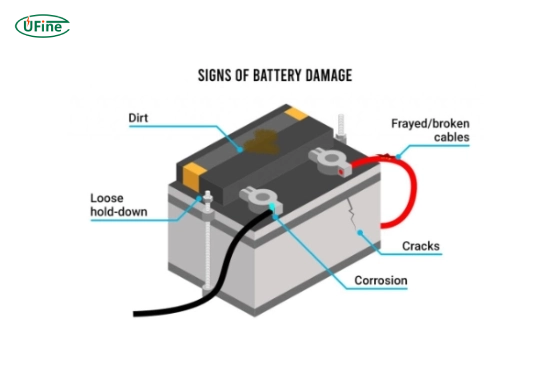
Signs of damage
- Swollen case
- Heat after charging stops
- Leakage or residue
- Strange smell
- Fast voltage drop
- Low capacity
- Charging errors
Part 10. How to choose the right 6 volt battery charger
Do not choose a charger only by “6V” label. Check full specs.
| Item | What to check | Why it matters |
|---|---|---|
| Chemistry | Lead-acid, AGM, gel, lithium, NiMH | Each needs a different charge method |
| Voltage | 6V or 6.4V system | Wrong voltage causes damage |
| Charge voltage | Match datasheet | Prevents overcharge |
| Current | Match battery capacity | Controls heat and stress |
| Cut-off method | Auto stop or CC/CV | Prevents overcharging |
| Temperature control | Sensor or compensation | Improves safety |
| Connector | Correct polarity and plug | Avoids wiring damage |
| Safety approval | Certified charger | Reduces fire risk |
Part 11. How long does it take to charge a 6v battery?
Charging time depends on battery size, charger current, and battery condition.
Simple formula:
Time = capacity ÷ current × factor
Example:
4.5Ah ÷ 0.75A × 1.2 ≈ 7.2 hours
Real time may be longer or shorter depending on temperature and battery health.
Part 12. Tips to extend 6v battery life
- Use the correct charger: Match voltage and chemistry.
- Avoid deep discharge: Recharge early when possible.
- Control temperature: Do not charge in extreme heat or cold.
- Keep terminals clean: Reduce resistance and heat.
- Store properly: Follow chemistry storage rules.
- Check cables: Replace damaged wires or connectors.
- Balance series batteries: Replace weak units early.
- Do not overcharge: Use smart chargers when possible.
Part 13. FAQs about charging a 6v battery
Can you safely charge a 6V battery with a 12V charger?
No. A 12V charger will overcharge a 6V battery and may cause overheating, swelling, leakage, or permanent damage.
Can I use a 12V charger if it also has a 6V setting?
Yes, if switched to a true 6V mode that matches the battery chemistry and correct charging settings.
Can a 12V charger charge two 6V batteries in series?
Yes, if two identical 6V batteries are connected in series to form a 12V pack and charged as a system.
Can you charge a 12V battery with a 6V charger?
No. A 6V charger cannot reach the voltage required to charge a 12V battery.
How long does it take to charge a 6V battery?
Charging time = battery capacity ÷ charger current, plus 20–40% for losses. Example: 4.5Ah at 0.75A ≈ 7 hours.
Related Tags:

More Articles

JST vs Molex: The Right Battery Connector Choice
JST or Molex for your battery? Learn how connector selection affects current, voltage drop, reliability, and device performance.
Custom Battery Pricing: Costs Manufacturers Don’t Mention
A low battery quote may not be the final cost. Discover common hidden expenses that affect custom lithium battery projects.
Battery Wire Length: Hidden Cause of Power Loss
A longer battery wire can cause voltage drop, power loss, and unstable operation. Learn how wire length affects battery performance.
How Device Sleep Modes Affect Battery Life
Think sleep mode extends battery life? Learn why devices still drain power and how firmware, hardware, and batteries affect runtime.
LiPo Battery and PCB Design: Clearance, Insulation, and Placement
Learn how to optimize LiPo battery PCB clearance, insulation, placement, wiring, and thermal design—and avoid common integration mistakes.


