- Key Takeaways
- Part 2. Types of chainsaw batteries
- Part 3. Key specifications
- Part 4. Matching the right battery to your chainsaw
- Part 5. Chainsaw battery prices and cost factors
- Part 6. Top recommended chainsaw batteries
- Part 7. When should you replace a chainsaw battery?
- Part 8. Maximizing battery performance and lifespan
- Part 9. Safety and environmental considerations
- Part 10. FAQs
Chainsaw performance is determined not only by motor power but also by battery choice. The right battery affects power output, runtime, weight, and safety. For professional forestry or gardening, batteries with high capacity and fast charging are essential, while DIY users often prioritize lightweight and portable solutions.
Key Takeaways
- Lithium-ion is the best choice for most chainsaw batteries because it is lighter, more powerful, and lasts longer.
- Voltage affects power, capacity (Ah) affects runtime. Choose the right balance for your chainsaw.
- Smaller batteries are lighter but run for a shorter time, while larger batteries provide longer cutting time.
- Always check compatibility before buying a replacement battery (voltage, connector, and size).
- Chainsaw battery prices usually range from $40 to $200, depending on voltage and capacity.
- Replace the battery when runtime drops significantly, the battery overheats, or it no longer charges properly.
- Proper charging and storage can extend battery life and keep your chainsaw running efficiently.
Part 2. Types of chainsaw batteries
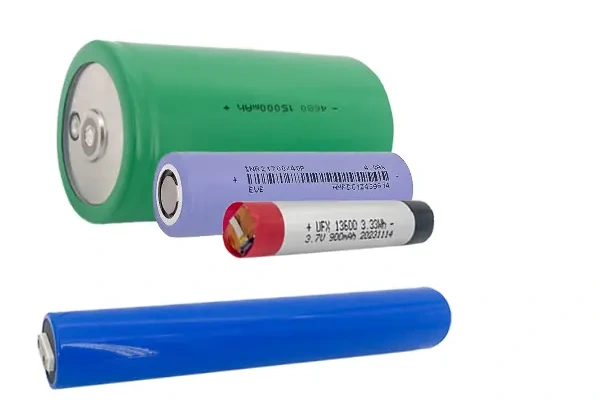
1 Lithium-ion (Li-ion)
- Pros: High energy density, long cycle life, lightweight, low self-discharge, fast charging.
- Cons: Sensitive to extreme temperatures, higher cost.
- Best For: Mini chainsaws, portable electric chainsaws.
- Technical Insight: Li-ion batteries have a low internal resistance, allowing stable peak current for heavy-duty cutting.
2 Nickel-Metal Hydride (NiMH)
- Pros: Medium energy density, less toxic than NiCd, environmentally safer.
- Cons: High self-discharge rate, larger volume for same energy.
- Best For: Occasional light-duty electric chainsaws.
3 Lead-Acid / SLA (Sealed Lead-Acid)
- Pros: Cost-effective for high-capacity storage.
- Cons: Heavy, low cycle life, slow charge.
- Best For: Large industrial chainsaws or stationary setups.
The internal resistance and voltage sag of different chemistries directly influence chain speed and cutting efficiency under load. Li-ion batteries maintain a more stable voltage curve compared to NiMH or SLA.
Part 3. Key specifications
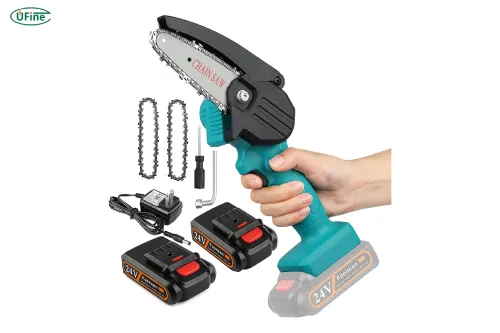
- Voltage (V) – Determines output power: Power(W)=Voltage(V)×Current(A). Common systems: 18V, 36V, 40V. Higher voltage enables faster cutting but can increase cost and weight.
- Capacity (Ah) & Energy (Wh) – Ah alone is insufficient to estimate runtime; consider both voltage and load.
- Discharge Rate (C-Rating) – Indicates maximum current the battery can safely deliver. High C-ratings are essential for heavy cutting.
- Weight & Size – Critical for mini chainsaws and portable use. Lightweight vs. Runtime Trade-off: Smaller batteries are easier to handle but have shorter runtime. Users must decide if portability or longer cutting time is the priority
- Battery Management System (BMS) – Prevents overcharge, over-discharge, and thermal runaway. A robust BMS increases lifespan and safety.
High-power chainsaws generate heat during heavy cutting. Batteries with effective thermal management maintain consistent voltage, prevent capacity loss, and reduce risk of overheating.
Part 4. Matching the right battery to your chainsaw
Mini chainsaw batteries prioritize weight and portability, while full-size chainsaws prioritize runtime and peak power. Smallest battery chainsaw options must balance voltage, capacity, and runtime.Example:
- For 14–16 inch chainsaws:
- 18V 2.0Ah ≈ 15–20 min heavy cutting
- 36V 4.0Ah ≈ 40–50 min heavy cutting
Compatibility
- OEM batteries: Guaranteed fit, longer warranty.
- Third-party replacements: Can save cost but must match voltage, capacity, and connector type.
- How to Identify Third-Party Interfaces: Check physical connector shape, voltage markings, and pin arrangement.
- Safety Consideration: Using a battery outside manufacturer specifications may cause overheating, reduced lifespan, or damage to the chainsaw.
Economic Considerations
- Price/performance ratio is key: sometimes replacing an old battery with a new high-capacity one is cheaper than buying a new chainsaw.
- Compare:
- OEM 5Ah 18V Li-ion battery: ~$120
- New entry-level electric chainsaw: $200–250
- Decision: If the chainsaw is otherwise functional, replacing the battery is often the most cost-effective option.
Recommended Voltage & Capacity by Chainsaw Size
| Chainsaw Size | Voltage | Capacity | Runtime (Heavy Duty) |
|---|---|---|---|
| 10–12 inch | 18V | 2.0–3.0Ah | 15–25 min |
| 14–16 inch | 18–36V | 2.0–4.0Ah | 15–50 min |
| 16–18 inch | 36–40V | 4.0–5.0Ah | 40–60 min |
Part 5. Chainsaw battery prices and cost factors
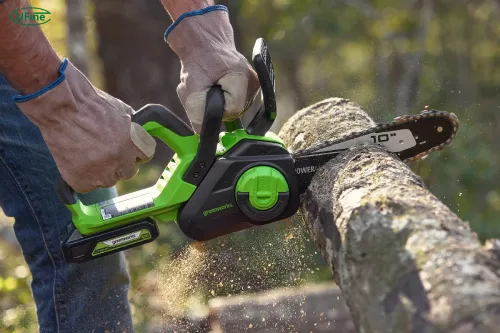
The price of a chainsaw battery depends mainly on battery chemistry, voltage, capacity, and brand. Lithium-ion batteries dominate the market due to their high energy density and long cycle life, but prices vary significantly between OEM and third-party replacements.
Typical Price Ranges
| Battery Type | Voltage | Capacity | Average Price (USD) |
|---|---|---|---|
| Mini chainsaw lithium battery | 12V–20V | 2.0Ah | $40 – $70 |
| Standard electric chainsaw battery | 18V | 4.0–5.0Ah | $90 – $130 |
| High-capacity professional battery | 36V–40V | 4.0–6.0Ah | $130 – $200 |
| Third-party replacement batteries | 18V–40V | 2.0–5.0Ah | $35 – $90 |
What Affects Battery Price
1. Battery Capacity
Higher Ah means longer runtime but also higher cost.
2. Battery Cell Quality
Premium cells (such as Samsung, LG, Ufine Battey, or Panasonic) cost more but offer better cycle life and stable performance.
3. Built-in Battery Management System (BMS)
Advanced BMS provides protection against overcharging, overheating, and short circuits.
4. Brand vs Third-Party Batteries
| Type | Advantages | Disadvantages |
|---|---|---|
| OEM batteries | Guaranteed compatibility, longer lifespan | Higher price |
| Third-party replacements | Lower cost, wide availability | Quality varies |
If your chainsaw is still functioning properly, replacing the battery is usually 60–70% cheaper than buying a new electric chainsaw.
Part 6. Top recommended chainsaw batteries
Full-Size Electric Chainsaw Batteries
| Battery Model | Voltage | Capacity | Weight | Price (USD) | Notes |
|---|---|---|---|---|---|
| Makita BL1850B | 18V | 5.0Ah | 0.6kg | $120 | Long runtime, OEM |
| DeWalt DCB184 | 18V | 5.0Ah | 0.55kg | $115 | Fast charge, stable voltage |
| Greenworks 40V | 40V | 4.0Ah | 0.7kg | $140 | Powerful for mid-size chainsaws |
Mini Chainsaw Lithium Batteries
| Battery Model | Voltage | Capacity | Weight | Price (USD) | Notes |
|---|---|---|---|---|---|
| Worx WA3552 | 20V | 2.0Ah | 0.4kg | $60 | Compact, ideal for small jobs |
| Einhell TE-CP | 12V | 2.0Ah | 0.35kg | $55 | Smallest battery chainsaw, light & portable |
Replacement Tips:
- OEM or high-quality third-party lithium batteries are recommended.
- Ensure voltage, connector, and physical size match.
- Avoid low-cost knock-offs; they degrade quickly and can be unsafe.
Part 7. When should you replace a chainsaw battery?
Even high-quality lithium chainsaw batteries gradually lose capacity after repeated charge cycles. Most lithium batteries used in electric chainsaws last 300–800 charge cycles, depending on usage and maintenance.
Common Signs Your Chainsaw Battery Needs Replacement
1. Significantly Shorter Runtime
If the chainsaw runs for only half the normal cutting time, the battery capacity has likely degraded.
2. Voltage Drop Under Load
When cutting thick wood, the chainsaw may suddenly lose power or stop due to voltage sag.
3. Battery Overheating During Use or Charging
Excess heat may indicate internal resistance increase or cell degradation.
4. Charging Problems
If the battery fails to reach full charge or the charger repeatedly stops early, the battery may be nearing end-of-life.
5. Physical Damage or Swelling
A swollen lithium battery should be replaced immediately for safety reasons.
Average Lifespan of Chainsaw Batteries
| Battery Type | Typical Lifespan |
|---|---|
| Lithium-ion chainsaw battery | 3–5 years |
| NiMH battery | 2–4 years |
| Lead-acid battery | 2–3 years |
Replacement Decision Guide
| Situation | Recommended Action |
|---|---|
| Chainsaw works normally but runtime decreased | Replace battery |
| Chainsaw motor damaged | Consider replacing chainsaw |
| Battery price < 50% of new chainsaw | Replace battery |
| Battery price > 70% of new chainsaw | Consider new chainsaw |
For users who rely on chainsaws frequently, owning two batteries and rotating them can extend overall battery lifespan and reduce downtime.
Part 8. Maximizing battery performance and lifespan
1.Charging Strategy- Avoid overcharging; remove battery when full.
- Charge within the recommended temperature range (10–40°C).
- Store batteries at 40–60% charge for long-term storage.
- Avoid damp, hot, or freezing environments.
- Before winter, charge batteries fully and store in a cool, dry place.
- Inspect battery terminals for corrosion and clean if needed.
- Li-ion capacity fades over cycles due to SEI film growth and electrode degradation.
- Proper charging, storage, and maintenance can extend lifespan by 20–30%.
Part 9. Safety and environmental considerations
- Avoid short-circuits, overcharging, or exposing batteries to fire.
- Recycle old batteries; Li-ion should never go into general waste.
- Compare chemistries:
- Li-ion: Efficient but sensitive
- NiMH: Safer but lower energy density
- SLA: Heavy, environmentally challenging
Part 10. FAQs
1. Are higher voltage batteries always better for cutting?
Not necessarily. Higher voltage increases peak power but also weight. Match voltage to chainsaw motor specifications.
2. How do I know when a battery is nearing end-of-life?
Look for decreased runtime, voltage sag under load, or swelling. Consistently short runtimes indicate replacement is needed.
3. Do mini chainsaw batteries support heavy wood cutting?
They can handle light-duty cutting, but heavy hardwood may require larger capacity or higher voltage batteries to avoid voltage sag.
4. How long does a chainsaw battery last per charge?
Depends on voltage, capacity, chainsaw size, and cutting load. Refer to Table 1 for estimates.
5. Why does my battery die quickly?
Could be high load, low temperature, battery aging, or BMS limiting output.
6. Should I replace my battery or buy a new chainsaw?
If the chainsaw is otherwise in good condition, replacing the battery is generally more cost-effective.
Related Tags:

More Articles

The Ultimate Guide to Small Size Battery
Learn small battery types, sizes, and applications. Compare lithium, alkaline, and coin cells. Find the best small size battery for your device or project.
Lithium Battery Comparison: Soft Pack Vs. Hard Pack
Compare soft pack vs hard pack lithium battery. Understand structure, safety, energy density, and applications to choose the right battery.
What Size are 18650 Batteries?
Learn exact 18650 battery dimensions (18mm × 65mm), tolerances, and pack configurations. Compare 18650 size with 21700 and others for better battery selection.
The Ultimate Guide to Battery Terminal Clamps
Learn battery terminal clamps, including types, materials, installation, and how to choose the right battery clamp for car and industrial use.
What Is a Lithium-Ion Battery Pack?
Learn what a lithium ion battery pack is, how it works, key components, configurations, and real-world applications for industrial and commercial use.