
- Key Takeaways
- Part 1. What is a 18650 battery?
- Part 2. 18650 battery capacity by different materials
- Part 3. Lithium-ion materials: why they dominate 18650 capacity
- Part 4. LiFePO₄ materials: why capacity is lower but stability is higher
- Part 5. Why the maximum 18650 capacity is limited by materials
- Part 6. What is the maximum capacity of an 18650 battery?
- Part 7. Why your 3000mAh 18650 doesn’t feel like 3000mAh
- Part 8. How to verify an 18650 battery’s capacity
- Part 9. Choosing the right 18650 material based on capacity needs
- Part 10. FAQs
When people talk about 18650 battery capacity, most focus on one number: mAh.
But what many don’t realize is that capacity is largely determined by the materials inside the cell, not just the battery size.
If you’ve ever wondered why two 18650 batteries with the same dimensions perform very differently, this guide is for you. We’ll look at how different materials affect capacity, what the real maximum looks like today, and how you should choose based on how you plan to use the battery.
Key Takeaways
- The material system inside an 18650 cell directly limits its capacity ceiling.
- High-capacity materials often trade off discharge performance and longevity.
- Lithium-ion chemistries dominate because they offer the best energy density per volume.
- There is no universally “best” material — only the best match for your application.
Part 1. What is a 18650 battery?
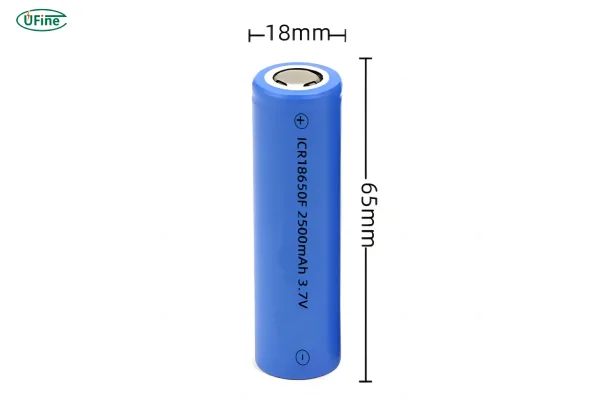
An 18650 battery is a cylindrical rechargeable cell measuring 18mm × 65mm. The name only defines its size — not its chemistry, safety level, or capacity.
In the early days, 18650 cells existed in multiple chemistries. Today, however, lithium-based materials dominate because they store far more energy in the same physical space. That’s why modern discussions about 18650 capacity are really discussions about electrode materials and internal chemistry.
Part 2. 18650 battery capacity by different materials
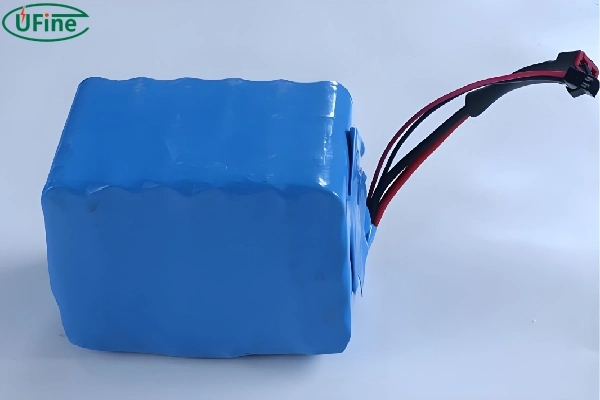
Capacity doesn’t come from the metal can — it comes from what’s packed inside.
At a material level, capacity is influenced by:
- How much lithium the cathode material can reversibly store
- The structure and thickness of the electrodes
- The balance between energy density, internal resistance, and safety
This is why two cells with identical size and voltage ratings can have very different real-world performance.
Let’s look at the most common material systems used in 18650 batteries and how they influence capacity.
| Material / Chemistry | Nominal Voltage | Typical Capacity Range | Capacity Characteristics |
|---|---|---|---|
| Lithium-ion (NMC / NCA) | 3.6–3.7V | 1800–3500mAh | Highest energy density, capacity-focused |
| Lithium Iron Phosphate (LiFePO₄) | 3.2V | 1000–2000mAh | Lower capacity, very stable |
| Nickel-Metal Hydride (NiMH) | 1.2V | ~2500–2700mAh | Lower energy density, obsolete |
From a pure capacity-per-volume perspective, lithium-ion materials clearly lead — which explains their dominance in consumer and industrial applications.
Part 3. Lithium-ion materials: why they dominate 18650 capacity
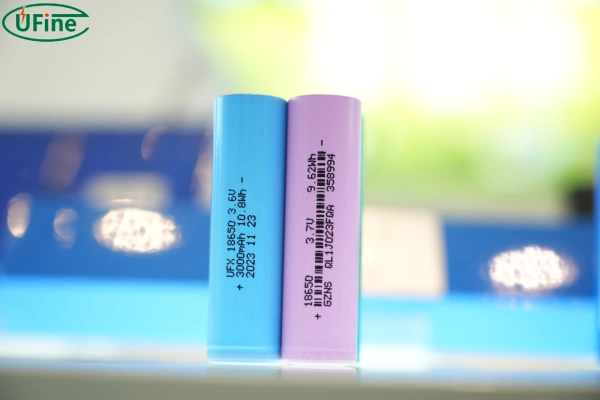
Most high-capacity 18650 batteries use NMC or NCA cathode materials. These materials can store more lithium ions per unit volume, which directly translates to higher mAh ratings.
With optimized electrode design, these cells can realistically reach 3000–3500mAh. That’s why manufacturers pushing for maximum capacity almost always choose lithium-ion over safer but lower-density materials.
Leading producers such as Panasonic, LG, and Samsung all rely on advanced lithium-ion material systems — and still stop at similar capacity limits.
That limit isn’t marketing; it’s material physics.
For a deeper dive into capacity limits beyond materials alone, you can also check this guide on the 18650 maximum capacity.
Part 4. LiFePO₄ materials: why capacity is lower but stability is higher
Lithium iron phosphate (LiFePO₄) uses a fundamentally different crystal structure. While it can’t store as much lithium per unit volume, it offers:
- Strong thermal stability
- Long cycle life
- Excellent resistance to overcharging
The trade-off is clear: lower capacity. In an 18650 format, LiFePO₄ cells typically stay well below lithium-ion capacity levels. They’re chosen when safety and longevity matter more than runtime.
Part 5. Why the maximum 18650 capacity is limited by materials
A common question is: why can’t manufacturers just keep increasing capacity?
The answer lies in material constraints. Increasing capacity usually means:
- Thicker electrodes
- Higher internal resistance
- More heat during charge and discharge
Beyond a certain point, these factors increase safety risk and shorten battery life. That’s why the maximum realistic 18650 battery capacity remains around 3500mAh, despite years of development.
Part 6. What is the maximum capacity of an 18650 battery?
With current commercial technology, the highest reliable 18650 battery capacity is about 3500mAh. This limit is driven by physics: electrode thickness, internal resistance, heat dissipation, and safety margins.
Industry leaders like Panasonic, LG, and Samsung all operate within this range for mass-produced cells. Claims of 4000mAh or higher usually don’t survive independent testing.
If a number looks too good to be true, it usually is.
Part 7. Why your 3000mAh 18650 doesn’t feel like 3000mAh
This is where many users get frustrated.
Capacity ratings are measured at low discharge currents, often around 0.2C, under ideal temperatures. Your device, however, may pull several amps continuously.
As current increases:
- Voltage drops faster
- Cutoff voltage is reached sooner
- The device shuts down earlier
The result? You lose usable runtime long before the theoretical capacity is fully delivered. That’s why “real-world capacity” often feels lower than the label suggests.
Part 8. How to verify an 18650 battery’s capacity
Beware of inflated capacity claims from shady sellers! To ensure you’re getting what you pay for:
- Look for Trusted Brands: Stick to reputable manufacturers like Panasonic, LG, or Samsung.
- Request Test Reports: Reliable suppliers often provide capacity test results.
- Conduct Your Own Tests: Use professional equipment to perform charge/discharge tests.
Part 9. Choosing the right 18650 material based on capacity needs
Instead of chasing the highest number, it’s smarter to match material to use case.
| Application | Material Preference | Capacity Priority |
|---|---|---|
| Flashlights | Lithium-ion (NMC/NCA) | High |
| Power tools | Lithium-ion (lower capacity, high drain) | Medium |
| Solar / backup | LiFePO₄ | Low |
| Battery packs | Lithium-ion (balanced) | Medium–High |
Material choice determines not only capacity, but how usable that capacity really is.
Part 10. FAQs
-
How is 18650 battery capacity measured?
The capacity of 18650 batteries is measured in milliampere-hours (mAh), which indicates the amount of charge the battery can hold and discharge over time. -
What factors affect the capacity of an 18650 battery?
The capacity of an 18650 battery is influenced by factors such as the electrode materials used, the cell’s internal chemistry, and the manufacturing process. -
Can the capacity of an 18650 battery degrade over time?
Yes, the capacity of an 18650 battery can degrade over time and with repeated charge/discharge cycles, leading to a reduced runtime and shorter battery life. -
How does temperature affect the capacity of an 18650 battery?
Extreme temperatures, both hot and cold, can negatively impact the capacity and performance of an 18650 battery, potentially reducing its overall capacity. -
Are all 18650 batteries of the same capacity?
No, 18650 batteries can have varying capacities depending on the manufacturer, cell chemistry, and intended application, ranging from low-capacity cells to high-capacity cells for demanding applications. -
How can I maximize the capacity of my 18650 battery?
To maximize the capacity of your 18650 battery, follow proper charging and discharging practices, avoid extreme temperatures, and replace the battery when it reaches the end of its useful life.
Related Tags:

More Articles
6 Volt Tractor Battery vs 12 Volt: Which One Fits Your Farm Equipment Best?
Compare 6V and 12V tractor batteries. Learn which voltage fits vintage or modern tractors, which specifications matter, and how to convert safely.
The Ultimate Guide to a Molten Salt Battery
Learn how a molten salt battery works, its main types, advantages, disadvantages, operating temperature, safety, and grid energy storage uses.
2000mAh Battery Runtime: How Long Will It Last in Real Devices?
Learn how to calculate 2000mAh battery runtime and backup time. See real device examples, power-loss factors, and battery replacement checks.
White Stuff on Battery Terminals: A Step-by-Step Cleaning and Maintenance Guide
White stuff on a battery may be corrosion or leaked electrolyte. Learn what causes white powder, whether it is dangerous, and how to clean it safely.
Do Lithium Batteries Need to Be Fully Charged Before First Use?
Should you fully charge a lithium battery the first time? Learn what happens if you don't, how long to charge, and the best charging practices.


