
- Part 1. What is lithium battery self-discharge?
- Part 2. Why lithium batteries lose charge when not in use
- Part 3. Normal lithium battery self-discharge rate
- Part 4. Lithium-ion vs LiFePO4 vs LiPo self-discharge
- Part 5. How temperature affects battery self-discharge
- Part 6. Signs of abnormal self-discharge
- Part 7. How to reduce lithium battery self-discharge
- Part 8. FAQs
You charge a lithium battery, leave it unused for a few weeks, and suddenly the battery percentage is lower than expected. Naturally, many people assume something is wrong.
In reality, even the best lithium batteries slowly lose energy over time. This process is called self-discharge, and it affects everything from smartphones and 18650 batteries to EVs, solar storage systems, drones, and backup power equipment.
Still, not all self-discharge is equal.
A healthy lithium-ion battery may lose only a tiny amount of charge each month, while a damaged or aging battery can drain surprisingly fast even when sitting idle. Temperature, battery chemistry, storage habits, and manufacturing quality all play important roles.
That’s why understanding lithium battery self-discharge matters more than many users realize. It helps you recognize whether your battery behavior is normal, extend storage life, avoid hidden battery damage, and even improve long-term device reliability.
Key Takeaways
- Most lithium-ion batteries lose only 1–3% charge per month under normal storage conditions.
- Heat is one of the biggest reasons lithium batteries self-discharge faster.
- LiFePO4 batteries usually offer more stable long-term storage performance than many standard Li-ion batteries.
- Rapid voltage loss, swelling, or overheating during storage may indicate internal battery damage.
- Storing lithium batteries around 40–60% charge can help reduce aging and energy loss.
Part 1. What is lithium battery self-discharge?
Self-discharge refers to the gradual loss of stored energy even when a battery is completely disconnected from a device.
In other words, your battery is technically “doing nothing,” yet small internal chemical reactions are still happening inside the cell. Those reactions slowly consume energy over time.
This is normal behavior for all rechargeable batteries. However, lithium batteries are considered low self-discharge batteries because they hold their charge far better than older battery chemistries like NiMH or lead-acid.
For example, you may store a lithium-ion battery for several months and still find most of the charge remaining. Try the same thing with some nickel-based batteries, and the difference becomes obvious very quickly.
What makes self-discharge confusing is that it doesn’t always happen at the same speed. Two batteries stored in different environments can behave very differently. A battery left inside a hot car during summer may lose charge dramatically faster than one stored indoors at room temperature.
That’s why self-discharge is not just about chemistry — it’s also about storage conditions, battery quality, and time.
Part 2. Why lithium batteries lose charge when not in use
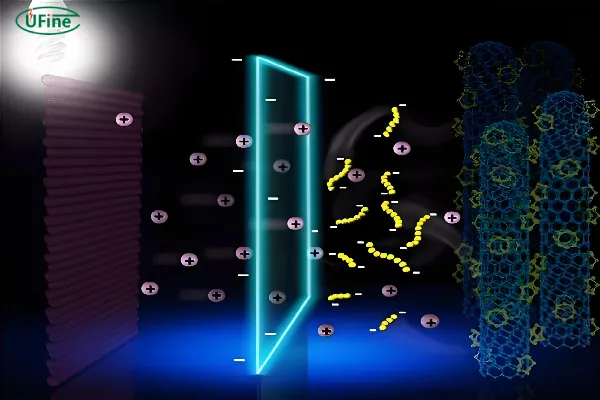
Many users expect a disconnected battery to remain perfectly stable. Unfortunately, battery chemistry doesn’t work that way.
Inside every lithium battery, microscopic reactions continue between:
- the cathode
- the anode
- the electrolyte
- the separator materials
These reactions never fully stop. They only slow down.
One major factor is the gradual breakdown of the electrolyte. Over time, tiny leakage currents form inside the battery, allowing energy to escape little by little. In addition, lithium-ion batteries develop something called an SEI layer (Solid Electrolyte Interphase). This protective layer is essential for battery stability, but small side reactions still occur there during storage.
Then there’s heat.
Temperature has a massive impact on lithium battery self-discharge. High temperatures accelerate internal chemical activity, which means energy disappears faster. That’s why batteries stored in hot environments often feel “empty” much sooner than expected.
Aging also matters. As lithium batteries get older, internal resistance increases and material degradation becomes more severe. Eventually, older batteries begin losing charge faster even if they are rarely used.
In cheaper cells, poor manufacturing quality can make the situation worse. Tiny impurities, separator defects, or contamination inside the battery may create abnormal leakage currents. This is one reason low-cost counterfeit 18650 batteries often self-discharge far faster than premium branded cells.
Part 3. Normal lithium battery self-discharge rate
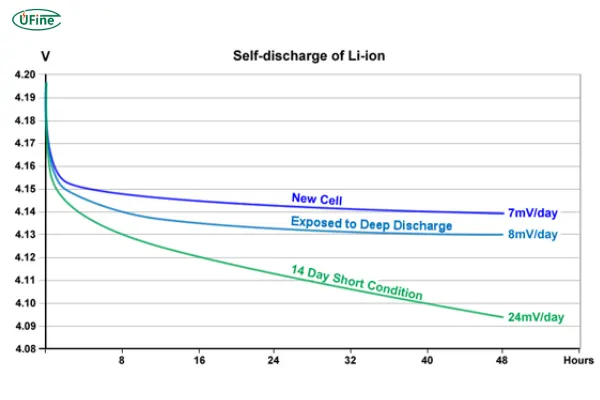
Under normal room-temperature conditions, most lithium-ion batteries lose charge relatively slowly.
However, the exact self-discharge rate depends heavily on:
- battery chemistry
- storage temperature
- battery age
- state of charge
- manufacturing quality
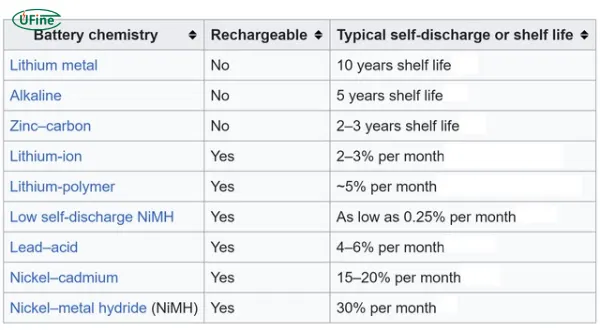
Here’s a general comparison of common rechargeable battery types.
| Battery type | Typical self-discharge rate |
|---|---|
| Lithium-ion battery | 1–3% per month |
| LiFePO4 battery | 2–3% per month |
| LiPo battery | 3–5% per month |
| 18650 lithium battery | 1–3% per month |
| Lead-acid battery | 3–5% per month |
| NiMH battery | 20–30% per month |
This low self-discharge behavior is one reason lithium batteries dominate industries like:
- consumer electronics
- electric vehicles
- solar energy storage
- medical equipment
- portable industrial systems
Even so, there’s an important detail many people overlook: self-discharge is rarely perfectly linear.
A new premium battery may lose almost no noticeable charge during the first few weeks, then slowly stabilize into a predictable monthly loss pattern. Meanwhile, a damaged battery might appear normal initially before suddenly experiencing rapid voltage decline later.
That unpredictability is why manufacturers closely monitor self-discharge during battery quality testing.
If you want to compare storage performance across different battery types, check out our guide on AGM vs lithium vs lead-acid batteries.
Part 4. Lithium-ion vs LiFePO4 vs LiPo self-discharge
Not all lithium batteries behave the same way during storage.
Traditional lithium-ion batteries generally provide the lowest overall self-discharge while maintaining high energy density. That balance makes them ideal for laptops, smartphones, and compact electronics.
LiFePO4 batteries, meanwhile, are known for stability. Although their self-discharge rate may look similar on paper, their chemistry is extremely durable during long-term storage. That’s one reason LiFePO4 batteries are widely used in RV systems, marine batteries, and solar energy storage where reliability matters more than compact size.
LiPo batteries are slightly different. Their flexible pouch structure allows lightweight designs and high discharge rates, but they are often more sensitive to:
- heat
- swelling
- physical stress
- overcharging
As a result, LiPo battery self-discharge rates can sometimes appear higher, especially after heavy usage cycles.
The same applies to 18650 batteries. A high-quality 18650 cell from a trusted manufacturer may hold charge exceptionally well. However, counterfeit or low-grade cells often develop abnormal self-discharge surprisingly early in their lifespan.
This is especially common in batteries exposed to:
- over-discharge
- repeated overheating
- poor charging practices
- long-term high-voltage storage
Swelling can sometimes increase abnormal energy loss in LiPo cells, especially under heat or overcharging conditions. Learn more about LiPo battery swelling.
Part 5. How temperature affects battery self-discharge
If there’s one factor that consistently destroys lithium battery storage performance, it’s heat.
Temperature directly accelerates internal chemical reactions. As the battery gets hotter, self-discharge increases faster and battery aging speeds up at the same time.
That combination is particularly damaging because some of the lost capacity becomes permanent.
Here’s a simplified comparison of how storage temperature can affect self-discharge behavior.
| Storage temperature | Self-discharge impact |
|---|---|
| Around 0°C | Very low |
| Around 25°C | Normal |
| Around 45°C | High |
| Above 60°C | Severe battery degradation |
This explains why a lithium battery left inside a parked car during summer may feel heavily drained after only a short period.
Interestingly, extremely cold temperatures create a different issue. While cold environments reduce self-discharge temporarily, they can also reduce battery performance and increase internal resistance. Fortunately, those effects are often reversible once the battery returns to normal temperatures.
For long-term storage, most manufacturers recommend keeping lithium batteries around:
- 15°C to 25°C
- low humidity
- away from direct sunlight
Part 6. Signs of abnormal self-discharge
Some self-discharge is completely normal. However, certain warning signs suggest the battery may be damaged internally.
For example, if you fully charge a lithium battery, leave it unused for only a few days, and then discover a dramatic voltage drop, that behavior is not typical.
The same is true if the battery:
- becomes warm during storage
- swells noticeably
- shows unstable voltage readings
- drains rapidly after charging
In many cases, abnormal self-discharge is linked to:
- internal micro short circuits
- electrolyte breakdown
- separator damage
- lithium plating
- contamination inside the cell
This is especially important for large battery packs used in EVs or energy storage systems. A single weak cell with excessive self-discharge can gradually create imbalance across the entire battery pack.
That imbalance often becomes worse over time.
One subtle problem is that abnormal self-discharge may appear long before obvious failure symptoms. A battery might still power a device normally while quietly losing more energy during standby periods each month.
Because of that, self-discharge testing is commonly used by battery manufacturers as an early quality-control indicator.
Part 7. How to reduce lithium battery self-discharge
You can’t completely stop self-discharge, but you can slow it down significantly with proper storage habits.
The most effective approach is surprisingly simple: avoid stress.
Lithium batteries prefer stable environments. Moderate temperature, partial charge levels, and periodic maintenance checks usually produce the best long-term results.
Many experts recommend storing lithium batteries around 40–60% state of charge instead of fully charged. Fully charged lithium cells remain under higher chemical stress during storage, which can accelerate degradation over time.
You should also avoid leaving batteries completely empty for long periods. Deep discharge can damage internal structures permanently and sometimes make the battery unsafe to recharge later.
If you plan to store batteries for months, checking voltage occasionally is a smart habit. This is especially true for:
- RV batteries
- solar storage batteries
- backup power systems
- drones
- seasonal equipment
Most importantly, avoid prolonged heat exposure whenever possible. In real-world conditions, heat is often the biggest hidden cause behind both high self-discharge and premature battery aging.
Part 8. FAQs
Can a lithium battery self-discharge to zero?
Yes, but it usually takes a long time under normal conditions. However, if the battery has internal damage or is stored improperly, self-discharge can accelerate and eventually over-discharge the cell.
Why do new lithium batteries sometimes lose charge in storage?
Even brand-new lithium batteries experience natural chemical reactions during storage. Small charge loss is normal before first use.
Why does one cell in a battery pack drain faster than others?
Cell imbalance can happen because of manufacturing differences, aging, temperature variation, or internal resistance changes. Weak cells often show higher self-discharge first.
Do smart BMS systems reduce self-discharge?
A Battery Management System helps protect the battery, but the BMS itself also consumes a tiny amount of standby power. Advanced systems usually minimize this drain effectively.
Related Tags:

More Articles

Comparative Analysis: 14500 Battery Vs. 18650 Battery
Compare 14500 vs 18650 batteries by size, voltage, capacity, runtime, discharge current, charging, safety, and applications to choose the right cell.
12V Lithium-Ion What Voltage at Fully Charged and Why Your Battery Might Not Reach It
Check the 12V lithium battery voltage chart for 3S Li-ion and 4S LiFePO4. Learn full charge, resting voltage, charger limits, and fault checks.
LiFePO4 Voltage Chart Guide: Everything You Need to Know
Check the LiFePO4 voltage chart for 3.2V, 12V, 24V and 51.2V batteries. Compare SOC, charging voltage, cutoff limits and internal resistance.
Lithium Ion Cell Sizes: A Comprehensive Guide
Compare lithium ion cell sizes with a chart of dimensions, capacity ranges, cell types, applications, and key factors for selecting the right battery.
6 Volt Tractor Battery vs 12 Volt: Which One Fits Your Farm Equipment Best?
Compare 6V and 12V tractor batteries. Learn which voltage fits vintage or modern tractors, which specifications matter, and how to convert safely.


