
- Key Takeaways
- Part 1. What is a battery booster (booster battery)?
- Part 2. How does a battery booster work?
- Part 3. Core components of a booster battery
- Part 4. Types of battery boosters
- Part 5. Applications of booster batteries
- Part 6. How to choose the right battery booster?
- Part 7. Maintenance and safety best practices
- Battery Booster FAQs: Usage, Safety, and Selection
Battery boosters (also called jump starters or jump packs) provide high current to start vehicles when the battery is weak. This guide covers how boosters work, the main types, and tips for choosing the right battery for your application and needs.
Key Takeaways
- Battery boosters are designed to deliver high peak current for short durations, not long-term charging.
- Lithium-ion booster batteries offer higher power density, lower weight, and faster recharge than lead-acid units.
- Correct selection depends on engine size, required cranking amps, battery chemistry, and usage frequency.
- Modern booster batteries integrate reverse polarity, short-circuit, and thermal protection to protect vehicle electronics.
- For professional or industrial use, continuous-duty rating and safety compliance matter more than compact size.
Part 1. What is a battery booster (booster battery)?
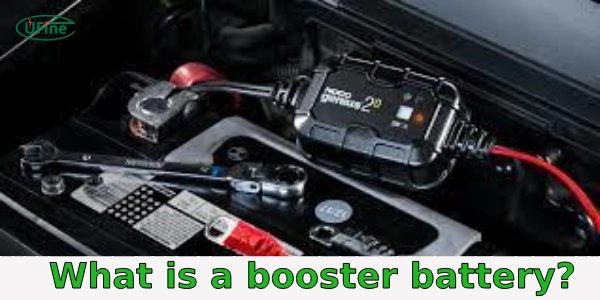
A battery booster is a portable power device designed to temporarily supply high current to a depleted battery, enabling an engine or system to start when the primary battery cannot deliver sufficient power.
In most applications, a booster battery:
- Bypasses the weak battery’s current limitation
- Supplies instant cranking current to the starter motor
- Disconnects once the engine or system is running
Battery boosters are widely used in:
- Passenger vehicles and commercial fleets
- Construction and industrial equipment
- Marine and RV systems
- Emergency preparedness and roadside assistance
Part 2. How does a battery booster work?
A battery booster works by releasing stored electrical energy at a very high discharge rate. Unlike chargers, which slowly replenish capacity, boosters prioritize instantaneous current delivery.
Basic operating principle
- Connection: Clamps attach to the battery terminals (positive to positive, negative to negative or chassis ground).
- Activation: Internal circuitry allows high-current discharge.
- Cranking: The starter motor receives enough current to turn the engine.
- Disconnection: Once running, the alternator takes over.
Key technical characteristics
- Peak Current Output: Often hundreds to thousands of amps for a few seconds.
- Voltage Regulation: Prevents overvoltage damage to ECUs and onboard electronics.
- Short-Duration Design: Not intended to recharge deeply discharged batteries.
Part 3. Core components of a booster battery
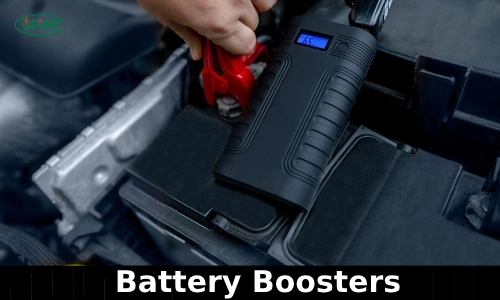
- Rechargeable Battery Pack: Lithium-ion or lead-acid cells designed for high-rate discharge.
- Heavy-Duty Clamps & Cables: Low-resistance conductors for high current flow.
- Battery Management System (BMS): Protects against reverse polarity, overcurrent, and overheating.
- Protective Housing: Shock-resistant enclosure for field use.
- Status Indicators: LED or digital displays for charge and fault status.
- Auxiliary Outputs: USB ports or 12V outputs for electronics.
Part 4. Types of battery boosters
Portable jump starters
Compact units intended for personal vehicles and emergency use. Easy to store and quick to deploy.
Lithium-ion booster batteries
Offer high power density, reduced weight, and faster charging compared to lead-acid boosters. Preferred for modern vehicles with sensitive electronics.
Multi-function power packs
Combine jump-starting with USB charging, LED lighting, air compressors, or inverters.
Heavy-duty / wheeled boosters
Designed for trucks, buses, and industrial equipment. Typically used in workshops and fleet maintenance.
Solar-assisted boosters
Supplement internal charging using solar panels. Useful for remote or off-grid environments.
Part 5. Applications of booster batteries
- Automotive Emergency Starting – Cars, motorcycles, trucks
- Fleet & Commercial Maintenance – Service vehicles and logistics fleets
- Construction & Industrial Sites – Backup starting power for machinery
- Marine & RV Use – Engines and onboard electronics
- Emergency Preparedness – Power outages and disaster kits
Part 6. How to choose the right battery booster?
- Required Cranking Amps: Match booster output to engine displacement and fuel type.
- Battery Chemistry Compatibility: Lead-acid, AGM, or lithium vehicle batteries.
- Usage Frequency: Occasional emergency vs. daily professional use.
- Safety Certifications: Look for compliance with automotive and electrical standards.
- Portability vs. Power: Compact size may limit peak output.
For related battery selection guidance, see: Lithium-Ion Battery Basics and Battery Pack Design Considerations.
Part 7. Maintenance and safety best practices
- Recharge the booster every 2–3 months if unused
- Store between 10°C and 30°C in a dry environment
- Inspect cables and clamps before each use
- Never exceed rated engine size or voltage
- Follow manufacturer instructions strictly
Battery Booster FAQs: Usage, Safety, and Selection
Can a battery booster start a completely dead battery?
Yes. A booster can start a dead battery if the starter and electrical system are functional, supplying high peak current to the starter directly.
What is the difference between a battery booster and a battery charger?
A booster delivers a short burst of high current to start engines, while a charger slowly replenishes battery capacity over time. Boosters aren’t for long-term charging.
How many amps does a battery booster need to start a car or truck?
Small gasoline engines need 400–600A, larger gasoline or diesel engines 1,000A+. Choose a booster rated above your engine’s cranking requirement.
Are lithium battery boosters safe for modern vehicles?
Yes. Quality lithium boosters include voltage regulation, reverse polarity, and short-circuit protection, making them safe for vehicles with sensitive electronics.
How long does a battery booster hold its charge when not in use?
Most lithium boosters retain charge for 6–12 months, but recharging every 2–3 months ensures reliable performance in emergencies.
Ufine Battery provides custom battery booster solutions for OEM and industrial applications, tailored to specific voltage, current, and safety requirements.
Find A Solution NowAuthoritative References:
Related Tags:

More Articles
XT60 vs. XT90 Battery Connector Comparison
Compare XT60 vs XT90 connectors for drones, EVs, and robotics. Learn current rating, size differences, anti-spark options, and selection guide.
What Is the Voltage of an AC Battery? Understanding the Basics
Learn what an AC battery is, whether battery voltage is AC or DC, typical AC voltage ranges, and how AC battery systems work in solar, UPS, and backup systems.
What Is the Weigh of an AA Battery?
Learn the average AA battery weight in grams, differences between alkaline, lithium, and NiMH batteries, and how battery weight affects device compatibility.
AGM vs Lithium Battery: Which One is Better?
AGM vs lithium battery comparison: learn differences in lifespan, weight, charging speed, cost, and applications to choose the right battery for your system.
Are Ultra Thin Lithium Batteries Worth the Hype?
Discover how ultra thin LiPo & lithium batteries deliver high performance in wearables, foldables, and IoT devices. Find the perfect fit today!


