
- Part 1. What is an airsoft battery?
- Part 2. How does a NiMH battery work?
- Part 3. What is a LiPo battery?
- Part 4. How does a Li-Ion battery differ?
- Part 5. Which battery gives the best performance?
- Part 6. What voltage should I choose?
- Part 7. What is battery "C rating," and why does it matter?
- Part 8. How to charge airsoft batteries safely?
- Part 9. How do you store airsoft batteries?
- Part 10. Which airsoft battery is best for you?
- Part 11. FAQs about airsoft battery
Choosing the correct airsoft battery is key to getting the best performance out of your AEG (Automatic Electric Gun). Whether you’re a beginner or a seasoned player, the type of battery you use affects everything — from the rate of fire to trigger response and the longevity of your gear. This guide will break down the three major airsoft battery types: NiMH, LiPo, and Li-Ion.
We’ll explore each type, how they perform, and which is best for your playstyle. By the end of this article, you’ll know exactly what battery to pick for your next airsoft game.
Part 1. What is an airsoft battery?
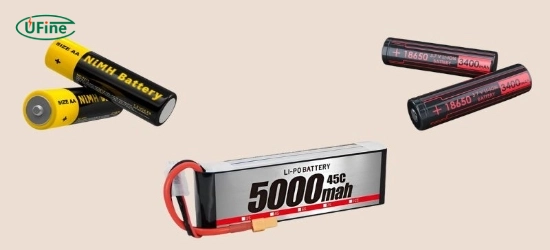
An airsoft battery powers your electric airsoft gun, specifically AEGs. It stores energy and sends power to the motor, which drives your internal gears to fire BBs. Without a battery, your AEG won’t work.
There are three main types of batteries used in airsoft:
- NiMH (Nickel-Metal Hydride)
- LiPo (Lithium Polymer)
- Li-Ion (Lithium-Ion)
Each battery type has pros and cons, and choosing the right one can significantly impact the field.
Part 2. How does a NiMH battery work?
NiMH batteries are the most beginner-friendly airsoft batteries on the market. They’re simple, safe, and affordable.
These rechargeable batteries use a hydrogen-absorbing alloy for the negative electrode and nickel oxide hydroxide for the positive electrode. Their voltages typically range from 8.4V to 9.6V in airsoft applications.
Pros of NiMH batteries:
- Safe and stable – won’t explode or catch fire under everyday use
- Affordable – usually cheaper than LiPo and Li-Ion
- No special charger is needed
Cons of NiMH batteries:
- Heavier and bulkier
- Slower discharge rate – affects the rate of fire and trigger response
- He needs to be fully discharged before recharging for the best life
Ideal for:
- Beginners
- Players on a budget
- Low to mid-performance AEGs
Part 3. What is a LiPo battery?
LiPo batteries, short for Lithium Polymer, are known for their high performance and lightweight design. They are made with a polymer electrolyte instead of a liquid, which allows for flexible shapes and sizes.
LiPo airsoft batteries commonly come in 7.4V and 11.1V versions. The 11.1V version delivers a higher rate of fire and snappier trigger response but needs a gun with upgraded internals.
Pros of LiPo batteries:
- High power output
- Compact and lightweight
- Fast discharge rate
Cons of LiPo batteries:
- Needs a LiPo-specific charger
- It can be dangerous if overcharged or punctured
- Shorter lifespan if not maintained properly
Ideal for:
- Intermediate to advanced players
- High-performance or upgraded AEGs
- Players who want a faster response and a higher rate of fire
Part 4. How does a Li-Ion battery differ?
Li-Ion (Lithium-Ion) batteries are similar to LiPo but use a liquid electrolyte. These are the same types of batteries used in phones and laptops. In airsoft, they’re gaining popularity for being stable, long-lasting, and easy to maintain.
They usually come in 7.4V or 11.1V configurations, just like LiPo.
Pros of Li-Ion batteries:
- Longer lifespan than LiPo
- Lighter than NiMH
- No memory effect – can be charged anytime
- More stable than LiPo
Cons of Li-Ion batteries:
- Slightly bulkier than LiPo
- Lower discharge rate than LiPo
- It still needs careful charging
Ideal for:
- Players who want performance reliability
- Those who wish to avoid LiPo risks
- Long-term users
Part 5. Which battery gives the best performance?
LiPo batteries are the top choice if you’re looking for raw performance. They offer faster cycle rates, better trigger response, and lighter weight.
But there’s a trade-off — they require more careful handling and proper charging. If your AEG isn’t upgraded to handle high voltage, a powerful LiPo like 11.1V can damage your gun.
Performance ranking (general):
- LiPo (11.1V) – Best performance, high risk
- LiPo (7.4V) – Good balance
- Li-Ion – Stable and long-lasting
- NiMH – Safe but lower performance
Part 6. What voltage should I choose?
The voltage of your battery affects how fast your AEG cycles. Higher voltage = faster rate of fire.
- 7.4V – Safe for almost all stock guns
- 9.6V (NiMH) – Good for mid-level gearboxes
- 11.1V – Use with upgraded internals only
Tip: Never use an 11.1V LiPo in a stock AEG unless you’re sure the internals can handle it.
Part 7. What is battery “C rating,” and why does it matter?
The C rating shows how fast a battery can discharge its energy. A higher C rating means more power delivery, improving trigger response and fire rate.
For airsoft:
- 15C to 25C is standard for most players
- 25C+ is for high-performance builds
Example: A 7.4V 1500mAh 20C LiPo can deliver 30A of continuous current. That’s usually enough for most AEGs.
Part 8. How to charge airsoft batteries safely?
Charging depends on the battery type:
- NiMH: Use a smart charger that detects full charge
- LiPo: You must use a LiPo balance charger to prevent overcharging
- Li-Ion: Also needs a specific charger with a balancing function
Always charge batteries:
- On a non-flammable surface
- Away from flammable items
- In a LiPo safety bag (for LiPo/Li-Ion)
- Never leave a charging battery unattended.
Part 9. How do you store airsoft batteries?
To extend battery life, proper storage is essential:
- Store in a cool, dry place
- Avoid full charge or full discharge during storage
- For LiPo/Li-Ion, store at about 50% charge
- Keep away from metal objects to prevent short circuits
Pro tip: Use a battery storage case or LiPo-safe bag.
Part 10. Which airsoft battery is best for you?
Here’s a quick comparison to help you decide:
| Battery Type | Best For | Pros | Cons |
|---|---|---|---|
| NiMH | Beginners, budget builds | Safe, cheap, no special care | Heavier, lower performance |
| LiPo | Advanced players, upgraded guns | High power, lightweight | Needs care, can be dangerous |
| Li-Ion | Performance + safety | Long life, stable | Slightly bulky, needs special charger |
Part 11. FAQs about airsoft battery
Can I use a LiPo battery in a stock AEG?
Yes, but only a 7.4V LiPo. An 11.1V LiPo in a stock AEG can cause premature wear or damage unless the gun is upgraded.
What’s better for cold weather, NiMH or LiPo?
NiMH batteries perform better in cold weather. LiPo batteries tend to lose efficiency when temperatures drop.
How long does an airsoft battery last?
A typical airsoft battery lasts between 500 and 1000 charge cycles, depending on the type and how well it’s maintained. Li-Ion batteries usually last the longest.
Can I overcharge my airsoft battery?
Yes, and it’s dangerous. Always use a smart charger that matches your battery type to avoid overcharging, which can lead to fire or battery damage.
What’s the most potent airsoft battery?
The most potent option is an 11.1V LiPo with a high C rating. It gives a fast trigger response and a high rate of fire, but it should only be used in AEGs with reinforced gearboxes.
Related Tags:

More Articles
The Ultimate Guide to Small Size Battery
Learn small battery types, sizes, and applications. Compare lithium, alkaline, and coin cells. Find the best small size battery for your device or project.
Lithium Battery Comparison: Soft Pack Vs. Hard Pack
Compare soft pack vs hard pack lithium battery. Understand structure, safety, energy density, and applications to choose the right battery.
What Size are 18650 Batteries?
Learn exact 18650 battery dimensions (18mm × 65mm), tolerances, and pack configurations. Compare 18650 size with 21700 and others for better battery selection.
The Ultimate Guide to Battery Terminal Clamps
Learn battery terminal clamps, including types, materials, installation, and how to choose the right battery clamp for car and industrial use.
What Is a Lithium-Ion Battery Pack?
Learn what a lithium ion battery pack is, how it works, key components, configurations, and real-world applications for industrial and commercial use.


