- Key Takeaways
- Part 1. What is a lithium metal battery?
- Part 2. How do lithium metal batteries work?
- Part 3. Why are lithium metal batteries so energy dense?
- Part 4. Lithium metal vs lithium-ion batteries
- Part 5. Advantages of lithium metal batteries
- Part 6. Challenges and limitations of lithium metal batteries
- Part 7. Common applications of lithium metal batteries
- Part 8. Lithium metal batteries and solid-state battery technology
- Part 9. Safety considerations for lithium metal batteries
- Part 10. How to recycle lithium metal batteries
- Part 11. How to choose the right lithium metal battery
- Part 12. FAQs about lithium metal batteries
Lithium metal batteries are one of the most energy-dense battery technologies available today. They are widely used in aerospace, medical devices, military electronics, sensors, and backup systems where long runtime and lightweight design matter most.
Many people ask: Is lithium a metal? What does lithium do in a battery? What is a lithium metal battery? The answer is simple. Lithium is a highly reactive alkali metal that stores and releases energy very efficiently. In lithium metal batteries, pure lithium metal is used as the anode, allowing much higher energy density than standard lithium-ion batteries.
As demand grows for smaller, lighter, and more powerful energy storage, lithium metal batteries are becoming increasingly important in advanced electronics and next-generation battery research.
Key Takeaways
- Lithium metal batteries use pure lithium metal as the anode.
- Most lithium metal batteries are primary (non-rechargeable) batteries.
- They offer much higher energy density than traditional lithium-ion batteries.
- Lithium metal vs lithium-ion is mainly about anode material and rechargeability.
- These batteries are widely used in aerospace, military, medical, and industrial devices.
- Key challenges include dendrite growth, thermal runaway, and transportation safety.
- Solid-state battery development is accelerating lithium metal battery adoption.
Part 1. What is a lithium metal battery?
A lithium metal battery is a battery that uses metallic lithium as the negative electrode (anode). Unlike lithium-ion batteries, which store lithium ions inside graphite or silicon materials, lithium metal batteries use pure lithium metal directly.
Because lithium metal has an extremely high theoretical capacity, these batteries can store much more energy in a smaller size.
Is Lithium a Metal?
Yes. Lithium is a soft, silver-white alkali metal and the lightest metal on Earth. It is highly reactive and has excellent electrochemical properties, which is why it is widely used in modern batteries.
What Does Lithium Do in a Battery?
Lithium acts as the energy carrier inside the battery. During discharge, lithium atoms release electrons that power connected devices. Lithium ions move through the electrolyte between the anode and cathode to complete the electrochemical reaction.
Main Components of Lithium Metal Batteries
| Component | Function |
|---|---|
| Anode | Pure lithium metal stores and releases energy |
| Cathode | Usually manganese dioxide, sulfur, or fluorinated compounds |
| Electrolyte | Transfers lithium ions between electrodes |
| Separator | Prevents short circuits while allowing ion flow |
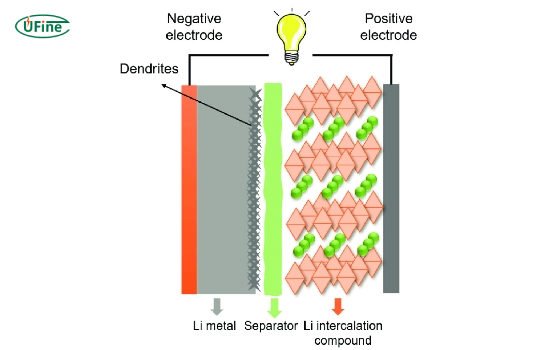
Part 2. How do lithium metal batteries work?
Lithium metal batteries generate electricity through electrochemical reactions.
During discharge:
- Lithium metal at the anode releases electrons.
- Lithium ions move through the electrolyte.
- Electrons travel through the external circuit and power the device.
- The cathode receives lithium ions and electrons.
In most commercial lithium metal batteries, this reaction is not reversible. That is why many lithium metal batteries are single-use batteries.
Part 3. Why are lithium metal batteries so energy dense?
Lithium metal has:
- Very high specific capacity
- Very low atomic weight
- Strong electrochemical potential
This combination allows lithium metal batteries to achieve much higher energy density than many other chemistries.
Part 4. Lithium metal vs lithium-ion batteries
Many users confuse lithium metal batteries with lithium-ion batteries. Although both use lithium chemistry, they are very different technologies.
Lithium Metal vs Lithium-Ion: Key Differences
| Feature | Lithium Metal Battery | Lithium-Ion Battery |
|---|---|---|
| Anode Material | Pure lithium metal | Graphite or silicon composite |
| Rechargeable | Mostly non-rechargeable | Rechargeable |
| Energy Density | Very high | High |
| Cycle Life | Limited | Longer |
| Safety | Higher risk | More mature and stable |
| Applications | Medical, military, aerospace | EVs, laptops, ESS, consumer electronics |
Which Battery Is Better?
It depends on the application.
- Lithium metal batteries are better for ultra-high energy density and long shelf life.
- Lithium-ion batteries are better for rechargeable consumer and industrial systems.
For customized rechargeable lithium battery packs, see Ufine Battery’s guide to lithium-ion battery technology.
Part 5. Advantages of lithium metal batteries
Lithium metal batteries provide several major advantages.
- 1. Extremely High Energy Density
- Lithium metal batteries can achieve significantly higher energy density than conventional lithium-ion batteries. This allows smaller and lighter battery designs.
- 2. Lightweight Design
- Lithium is the lightest metal element. This makes lithium metal batteries ideal for aerospace and portable electronics.
- 3. Long Shelf Life
- Many primary lithium metal batteries can remain operational for 10 years or longer with very low self-discharge rates.
- 4. Wide Operating Temperature Range
- Lithium metal batteries can work reliably in harsh environments, including very cold temperatures.
- 5. High Reliability
- These batteries are often chosen for mission-critical applications where long-term reliability is essential.
Part 6. Challenges and limitations of lithium metal batteries
Despite their advantages, lithium metal batteries still face important technical challenges.
- Dendrite Formation
- Lithium dendrites are needle-like structures that can grow during charging or discharging. These dendrites may pierce the separator and cause internal short circuits.
- Safety Risks
- Lithium metal is highly reactive. Improper handling, overheating, or damage can increase fire risk.
- Limited Rechargeability
- Most lithium metal batteries are primary cells. Rechargeable lithium metal technology is still under development.
- Higher Manufacturing Cost
- Advanced materials and stricter safety controls increase production costs.
- Transportation Restrictions
- Lithium metal batteries are regulated during air transportation because of fire safety concerns.
For shipping regulations, refer to the IATA lithium battery guidance.
Part 7. Common applications of lithium metal batteries
Lithium metal batteries are widely used in industries that require compact size, low weight, and long operating life.
Consumer Electronics
Applications include:
- Cameras
- Smart sensors
- Drones
- Memory backup systems
- Wearable devices
Medical Devices
Lithium metal batteries are commonly used in:
- Pacemakers
- Implantable medical devices
- Portable diagnostic systems
Aerospace and Defense
Their lightweight structure and high reliability make them suitable for:
- Satellites
- Aircraft systems
- Missile guidance systems
- Military communication equipment
Industrial IoT and Remote Sensors
Long shelf life makes lithium metal batteries ideal for:
- Smart meters
- Tracking systems
- Oil and gas monitoring
- Remote industrial sensors
Part 8. Lithium metal batteries and solid-state battery technology
Many next-generation solid-state batteries use lithium metal anodes.
Solid-state electrolytes can help reduce dendrite formation and improve safety. Because of this, many companies are investing heavily in rechargeable lithium metal battery research.
This technology may significantly improve:
- Electric vehicle range
- Battery safety
- Charging speed
- Energy density
According to the U.S. Department of Energy, advanced battery technologies are critical for future EV development and energy storage systems.
Part 9. Safety considerations for lithium metal batteries
Proper handling is essential.
Key Safety Risks
- Thermal runaway
- Internal short circuit
- Moisture exposure
- Physical damage
- Overheating
Safety Best Practices
- Store batteries in cool, dry areas
- Avoid puncturing or crushing cells
- Use approved chargers when applicable
- Follow UN38.3 transportation standards
- Never mix old and new batteries
For battery safety standards, see the UL safety standards database.
Part 10. How to recycle lithium metal batteries
Lithium metal battery recycling helps recover valuable materials and reduce environmental impact.
Recycling Process
- Collection and transportation
- Battery sorting by chemistry
- Mechanical dismantling
- Material extraction and purification
- Reuse in new battery production
Never throw lithium batteries into regular household trash.
Users should recycle batteries through certified recycling programs or local hazardous waste centers.
You can also learn more about lithium battery recycling methods and sustainability practices.
Part 11. How to choose the right lithium metal battery
When selecting a lithium metal battery, consider the following factors:
| Selection Factor | Why It Matters |
|---|---|
| Energy Density | Determines runtime and compactness |
| Operating Temperature | Important for outdoor or industrial use |
| Shelf Life | Critical for backup devices |
| Safety Requirements | Essential for medical and aerospace systems |
| Size and Weight | Important for portable equipment |
| Regulatory Compliance | Needed for transportation and export |
For OEM and custom battery solutions, many industrial buyers choose tailored voltage, size, and protection configurations based on their device requirements.
Part 12. FAQs about lithium metal batteries
What is a lithium metal battery?
A lithium metal battery uses pure lithium metal as the anode. Most are non-rechargeable batteries with very high energy density.
Is lithium a metal?
Yes. Lithium is an alkali metal and the lightest metal element in the periodic table.
What is the difference between lithium metal and lithium-ion batteries?
Lithium metal batteries use metallic lithium anodes, while lithium-ion batteries typically use graphite anodes and are rechargeable.
Are lithium metal batteries rechargeable?
Most commercial lithium metal batteries are primary batteries and are not rechargeable. However, rechargeable lithium metal and solid-state battery technologies are under active development.
What are lithium metal batteries used for?
They are commonly used in aerospace, medical devices, military systems, industrial sensors, and high-performance electronics.
Related Tags:

More Articles

Best 5 Riding Lawn Mower Battery Manufacturers
Looking for the best riding mower battery? Compare top battery brands by lifespan, maintenance, price, and performance.
All You Need to Know About CB Certification for Lithium Batteries
Learn what CB certification and the IECEE CB Scheme mean for lithium batteries. Explore requirements, testing, benefits, and global market access.
How to Choose the Right 3S LiPo Battery 5000mAh for Your RC Hobby Projects?
Learn how to choose the best 3S LiPo battery 5000mAh for RC cars, drones, boats, and planes. Compare C ratings, runtime, connectors, charging, and safety tips.
Comparing Semi Truck Batteries vs. Truck Batteries
Compare semi truck batteries and truck batteries by size, CCA, lifespan, and battery type. Learn how to choose the right truck battery for your vehicle.
Top 10 Flat Lithium Ion Battery Options for Compact Devices
Explore top flat lithium ion battery options, key specifications, and selection factors for compact electronics, medical devices, and energy storage systems.