
- Part 1. Are lithium batteries recyclable?
- Part 2. How recyclable are lithium-ion batteries?
- Part 3. How are lithium batteries recycled?
- Part 4. Lithium battery recycling industry chain
- Part 5. Lithium battery recycling technology
- Part 6. Can EV batteries be reused before recycling?
- Part 7. Is lithium battery recycling better than mining?
- Part 8. FAQs
Key takeaways
- Lithium batteries can be recycled, but recycling rates are still relatively low worldwide.
- Valuable materials such as lithium, nickel, cobalt, copper, and aluminum can be recovered and reused.
- The lithium-ion battery recycling process usually includes discharge, shredding, material separation, and chemical recovery.
- Different battery chemistries have very different recycling economics.
- LFP batteries are generally harder to recycle profitably because they contain fewer high-value metals.
- Hydrometallurgical recycling is becoming increasingly popular due to higher recovery efficiency.
- Many EV batteries are reused in second-life energy storage systems before recycling.
- Battery recycling is expected to become a major part of the future battery supply chain.
Part 1. Are lithium batteries recyclable?
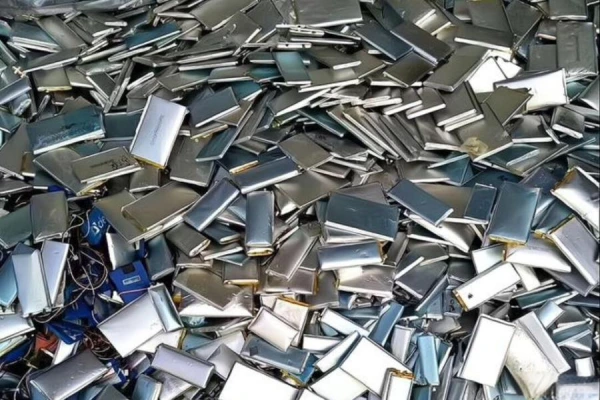
Yes, lithium batteries are recyclable. In fact, many of the materials inside them are too valuable to simply throw away.
A typical lithium-ion battery contains metals and industrial materials that can be recovered and reused in new products. Depending on the battery type, recyclers may recover:
- Lithium
- Nickel
- Cobalt
- Copper
- Aluminum
- Graphite
However, “recyclable” does not necessarily mean “easy to recycle.”
That distinction matters.
A lot of people imagine battery recycling as something similar to recycling plastic bottles or aluminum cans. In reality, lithium battery recycling is a highly technical industrial process involving fire prevention systems, chemical separation technologies, and specialized transportation rules.
For example, a damaged EV battery pack can still hold dangerous residual energy even after the vehicle stops operating. If handled incorrectly, the battery may enter thermal runaway and ignite during shipping or dismantling.
That is one reason why many used batteries still end up stored in warehouses or processing backlogs instead of being immediately recycled.
Part 2. How recyclable are lithium-ion batteries?
Not all lithium-ion batteries are equally recyclable.
Some battery chemistries contain large amounts of high-value metals, making recovery economically attractive. Others contain fewer valuable materials, which can make recycling more difficult from a business perspective.
Here is a simplified comparison:
| Battery chemistry | Recyclability | Valuable materials | Recycling difficulty |
|---|---|---|---|
| NMC | High | Nickel, cobalt, lithium | Moderate |
| NCA | High | Nickel, cobalt | Moderate |
| LCO | High | Cobalt | Lower |
| LFP | Moderate | Lithium, iron phosphate | Higher |
| LTO | Specialized | Titanium-based materials | Complex |
This is one reason the industry talks so much about LFP battery recycling lately.
LFP batteries are becoming extremely common in EVs and energy storage systems because they are safer and often cheaper. However, they contain little or no cobalt and nickel, which historically helped offset recycling costs.
As a result, recycling companies have had to rethink how to make LFP battery recycling economically sustainable at scale.
NMC vs. LFP vs. LTO Batteries: A Complete Comparison Guide
Part 3. How are lithium batteries recycled?
The lithium-ion battery recycling process is far more industrial than most people expect. It is not simply a matter of crushing old batteries and melting them down.
Instead, modern facilities use multiple stages to safely recover usable materials while minimizing fire risks and contamination.
1 Collection and transportation
Everything starts with collection.
Used batteries are gathered from EV manufacturers, electronics recyclers, repair centers, and waste collection systems. Transportation alone is heavily regulated because damaged lithium batteries can become unstable during shipping.
That is why many batteries are stored in fire-resistant containers or partially discharged before transport.
2 Battery discharge and dismantling
Before recycling begins, batteries are usually discharged to reduce safety risks.
Large EV battery packs may then be manually or robotically dismantled into smaller modules. This stage is labor-intensive because battery designs vary widely between manufacturers.
In some cases, recyclers can reuse functioning battery modules for second-life applications instead of immediately processing them for raw materials.
3 Shredding and crushing
After dismantling, batteries are shredded into smaller pieces inside controlled environments.
This process creates a mixture of metals, plastics, electrolytes, and fine powder known as “black mass.” Black mass contains many of the battery’s most valuable materials, including lithium, nickel, and cobalt compounds.
At this point, magnets, air separation systems, and screening technologies help isolate different materials.
4 Material recovery
Once the materials are separated, recyclers use chemical or thermal processes to recover usable metals.
Today, most large-scale facilities rely on one of two major approaches.
| Recycling method | How it works | Advantages | Limitations |
|---|---|---|---|
| Pyrometallurgy | High-temperature smelting | Simpler processing | Higher energy use, lower lithium recovery |
| Hydrometallurgy | Chemical leaching and separation | Higher recovery efficiency | More complex chemical handling |
Hydrometallurgical recycling has become increasingly important because it can recover more lithium and produce higher-purity materials for new battery production.
Some companies are also developing “direct recycling” technologies that preserve the cathode structure itself instead of breaking everything down into raw elements. Many experts believe this could become a major future trend in lithium battery recycling.
Part 4. Lithium battery recycling industry chain
1 Lithium battery recycling upstream industry
There are two main parts in the upstream raw materials of the lithium battery recycling industry chain. One is the unqualified cells, pole pieces, cores, etc. produced during the production process of lithium batteries. The second is the waste lithium batteries formed after use in new energy vehicles, energy storage and 3C consumer fields. These raw materials will be crushed in the recycling process to form black powder (electrode powder, battery powder). Or decommissioned batteries that can continue to be used are selected in the echelon utilization stage.
2 Lithium battery recycling midstream industry
Midstream processing is divided into two routes: recycling and echelon utilization.
Recycling crushes upstream waste lithium battery materials into black powder. Metal salts such as cobalt sulfate, nickel sulfate, manganese sulfate, and lithium carbonate are formed through various smelting technologies. And further processed into battery cell materials to be supplied to downstream battery cell manufacturers.
Ladder utilization uses various technical means to sort, disassemble, PACK and reassemble batteries of different capacities before supplying them to downstream manufacturers.
3 Lithium battery recycling downstream industries
The downstream of lithium battery recycling is the lithium battery consumer end. New batteries formed by recycling and old batteries reused after cascade utilization are once again used in the fields of power and energy storage.
Part 5. Lithium battery recycling technology
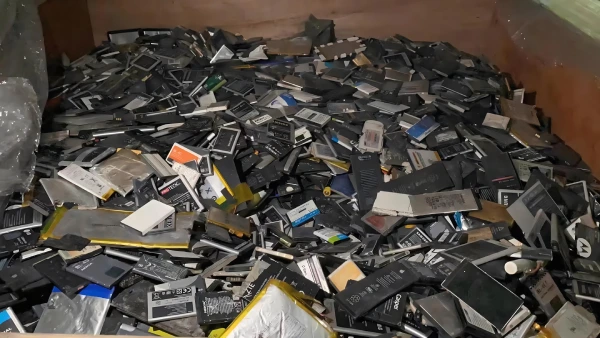
1 Ladder utilization technology
Ladder utilization refers to a recycling treatment method that achieves reuse by dismantling, testing, screening and recomposing healthy battery packs for used lithium battery packs.
Electric vehicle batteries reach the designed retirement period when the battery capacity drops below 80%. If the battery is eliminated directly at this time, 70-80% of the battery’s capacity will be unused, resulting in a huge waste. Therefore, in order to improve the utilization efficiency of lithium batteries, secondary utilization manufacturers will recycle retired lithium batteries and “downgrade” them for use in other scenarios until the performance no longer meets the requirements.
The market has clearly divided the applicable application of batteries with different capacities. However, it is difficult to evaluate the aging state of the battery and the battery specifications are not uniform. Currently, the proportion of lithium batteries that are recycled through echelon utilization technology is still small.
Despite this, the echelon utilization technology still has huge development potential because of its advantages such as improving the utilization value of batteries, reducing battery costs in industries such as energy storage and low-speed electric vehicles, and maximizing the value of the industrial chain.
2 Recycling technology
According to the principle of maximizing battery utilization efficiency, batteries should be reused after they have been used step by step until they are no longer usable, and valuable metal elements should be recovered. However, because the ladder utilization technology still has the problems mentioned above, most retired batteries are currently recycled using recycling technology.
Recycling refers to a processing method that disassembles the entire lithium battery, extracts nickel, cobalt, lithium and other metal elements with recycling value through physical, chemical and other methods and recovers them. At present, the most common recycling methods are fire recycling, wet recycling and physical repair.
3 Fire recycling technology
Peel off the outer casing of the lithium battery, mix the inner core of the battery with coke and limestone, and undergo reduction and roasting to obtain metal lithium, cobalt, nickel, aluminum, etc. combined into a carbon alloy. Fluorine, phosphorus, etc. in the electrolyte are solidified in the slag and can be used as additives for building materials or concrete. Then deep processing is carried out, and the whole process is completed at high temperature.
4 Wet recycling technology
Used lithium batteries are disassembled and pre-treated and then dissolved in acid and alkali solutions to extract some valuable metal elements. Then through ion exchange and electrodeposition, the remaining valuable metals are extracted. The core process of the wet method is to add chemical reagents to the black powder for leaching and extraction.
5 Physical repair technology
Finely separate the positive and negative electrode materials, separators, electrolytes, hardware and other component structures of used batteries. Then through the material repair process, the disassembled positive and negative electrode materials are adjusted in composition and repaired in high-temperature solid phase, and finally the repaired positive and negative electrode material powders are generated. The core technology of physical repair is to repair lithium battery materials, which is a relatively pure physical process.
Part 6. Can EV batteries be reused before recycling?
Many EV batteries are not recycled immediately after leaving a vehicle.
Even when an EV battery no longer delivers ideal driving range, it may still retain enough capacity for lower-demand applications.
This creates what the industry calls “second-life batteries.”
For example, retired EV battery packs may later be used for:
- Solar energy storage
- Backup power systems
- Grid stabilization
- Industrial energy buffering
Only after this secondary use phase do many batteries eventually enter the recycling stream.
This approach helps maximize the total value extracted from each battery before raw material recovery begins.
Part 7. Is lithium battery recycling better than mining?
Recycling is not a perfect solution, but it can significantly reduce the environmental pressure associated with mining new materials.
Compared with traditional mining, recycling often requires less land disruption and can reduce long-term resource dependence.
Here is a simplified comparison:
| Aspect | Recycling | Mining |
|---|---|---|
| Land impact | Lower | Higher |
| Raw material extraction | Reduced | Required |
| Waste generation | Lower | Higher |
| Supply chain dependence | Reduced | Higher |
| Long-term sustainability | Stronger potential | Resource limited |
That said, mining will still remain necessary for years because global battery demand is growing so quickly.
Battery recycling is more likely to complement mining rather than completely replace it.
Part 8. FAQs
What is black mass in battery recycling?
Black mass is the powder created after batteries are shredded. It contains valuable materials such as lithium, nickel, cobalt, and graphite.
Can swollen lithium batteries be recycled?
Yes, but swollen lithium batteries are considered hazardous and should be handled carefully. Many recycling centers require special packaging because damaged cells can ignite during transport or processing.
Do recycled lithium batteries perform worse than new ones?
Not necessarily. Recovered materials such as nickel, cobalt, and lithium can often be refined to battery-grade quality and reused in new batteries with comparable performance.
Why do some lithium batteries end up in landfills?
Many batteries are improperly disposed of because collection systems are still limited in some regions. Small consumer batteries are especially difficult to track and recover.
Is lithium battery recycling expensive?
It can be. Costs often include transportation, safety handling, labor, chemical processing, and fire prevention systems. Profitability depends heavily on battery chemistry and metal prices.
Can lithium batteries be recycled more than once?
In many cases, yes. Materials such as lithium, nickel, and cobalt can potentially move through multiple recycling cycles if recovery quality remains high.
Related Tags:

More Articles
What Is a Rectangle Battery? Types, Uses, and Selection Guide
Learn about rectangle batteries, including types, uses, advantages, and selection tips for electronics, EVs, medical devices, and industrial equipment.
Find the Best 48V Golf Cart Battery: A Buyer’s Guide
Discover the best 48V golf cart batteries, real pricing, specs, and expert tips to maximize range and battery life.
How Long Does a Camera Battery Last?
Learn how long camera batteries last, what affects wireless security camera battery life, and tips to extend runtime and battery lifespan.
Types of Flat Batteries: Choosing the Perfect Option for You
Learn common flat battery types, including lithium-ion, alkaline, NiMH, and small flat batteries. Compare uses, sizes, lifespan, and selection tips.
Rechargeable D Batteries with Charger: Types, Charging and Selection
Compare rechargeable D batteries, charger types, charging methods, lifespan, safety, and compatibility for flashlights, radios, toys, and industrial devices.


