- Key Takeaways (Quick Decision Guide)
- Part 1. What is an AA size lithium battery?
- Part 2. AA battery size, shape, and compatibility
- Part 3. Voltage and capacity: why AA lithium batteries are different
- Part 4. AA lithium battery chemistry types
- Part 5. AA size lithium cells vs custom battery packs
- Part 6. Rechargeable vs non-rechargeable AA lithium batteries
- Part 7. AA size lithium battery vs 14500 battery
- Part 8. Why double A lithium batteries are ideal for camera gear
- Part 9. Lithium vs alkaline AA batteries (engineering comparison)
- Part 10. How to choose the right AA lithium battery
- Part 11. Conclusion: is an AA size lithium battery worth it?
AA size lithium batteries provide a powerful alternative to traditional alkaline cells, offering superior performance in high-drain devices, extreme temperatures, and mission-critical applications. Understanding the differences between lithium AA battery types is essential for selecting the right power source for cameras, medical devices, industrial equipment, and consumer electronics.
Key Takeaways (Quick Decision Guide)
- AA size lithium batteries share the same physical size as standard AA cells but differ significantly in voltage, chemistry, and safety behavior.
- Non-rechargeable AA lithium (Li-FeS₂) cells are ideal for cameras, outdoor devices, and cold environments due to stable 1.5V output and long shelf life.
- Rechargeable lithium-ion AA-sized cells (including 14500) output 3.6–3.7V and must only be used in devices designed for higher voltage.
- Double A lithium batteries outperform alkaline AA batteries in high-drain and temperature-sensitive applications.
- For industrial, IoT, or OEM projects, custom AA-size lithium battery packs provide better voltage matching, safety control, and lifecycle reliability.
Part 1. What is an AA size lithium battery?
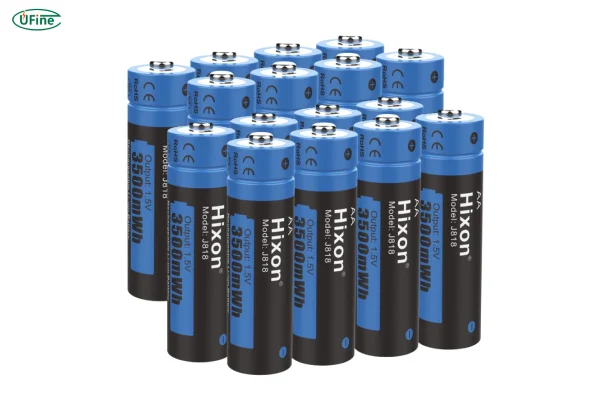
An AA size lithium battery (also called a double A lithium battery) is a lithium-based battery built in the standard AA form factor (14.5 mm × 50.5 mm). Compared with alkaline AA batteries, lithium AA cells deliver higher energy density, longer runtime, and superior performance in extreme temperatures.
These batteries are widely used in high-drain and mission-critical devices such as digital cameras, flash units, GPS devices, medical instruments, industrial sensors, and emergency equipment.
Part 2. AA battery size, shape, and compatibility
All AA size batteries—alkaline, NiMH, or lithium—share the same cylindrical dimensions:
- Diameter: 14.5 mm
- Length: 50.5 mm
This ensures mechanical compatibility with AA battery holders. However, electrical compatibility depends on voltage and chemistry, not size alone. Lithium AA batteries are often lighter than alkaline cells, which is a key advantage for portable and handheld equipment.
Part 3. Voltage and capacity: why AA lithium batteries are different
Voltage is the most critical factor when selecting an AA size lithium battery.
- Non-rechargeable lithium AA (Li-FeS₂): 1.5V nominal output
- Rechargeable lithium-ion AA / 14500: 3.6V–3.7V nominal output
- Regulated lithium-ion AA: Internally regulated to stable 1.5V output
Typical capacity ranges:
- Non-rechargeable AA lithium: 2,700–3,000 mAh
- Rechargeable lithium-ion AA: 600–1,200 mAh (space consumed by protection circuits)
Higher voltage does not automatically mean better compatibility. Always match the battery voltage to the device design limits.
Part 4. AA lithium battery chemistry types
Different lithium chemistries determine safety, shelf life, discharge behavior, and use case.
- Li-FeS₂ (Lithium Iron Disulfide): Primary (non-rechargeable), 1.5V, excellent cold performance, long shelf life.
- Li-ion (Lithium-ion): Rechargeable, 3.6–3.7V, high energy density, requires protection circuits.
- Li-SOCl₂ (Lithium Thionyl Chloride): Industrial-grade, ultra-long shelf life, used in IoT and metering.
- Li-MnO₂ (Lithium Manganese Dioxide): Stable chemistry for specialized electronics.
Part 5. AA size lithium cells vs custom battery packs
Most consumer devices use single AA lithium cells. In contrast, industrial and OEM applications often require custom AA-size lithium battery packs.
Battery packs can be configured in:
- Series: Increase voltage (e.g., 4 × 1.5V = 6V)
- Parallel: Increase capacity and runtime
Ufine Battery specializes in custom AA-size lithium battery packs with tailored voltage, connectors, protection circuits, and industrial-grade reliability.
Part 6. Rechargeable vs non-rechargeable AA lithium batteries
1 Non-rechargeable (primary)
- Voltage: 1.5V
- Capacity: 2,700–3,000 mAh
- Shelf life: Up to 10 years
- Applications: Cameras, flashlights, outdoor and emergency devices
2 Rechargeable (secondary)
- Voltage: 3.6–3.7V (or regulated 1.5V)
- Capacity: 600–1,200 mAh
- Cycle life: 500–1,000 cycles
- Applications: High-drain electronics, medical tools, industrial devices
The Difference Between Primary and Secondary Battery
Part 7. AA size lithium battery vs 14500 battery
Although AA lithium batteries and 14500 lithium-ion batteries share the same physical size, they are not interchangeable.
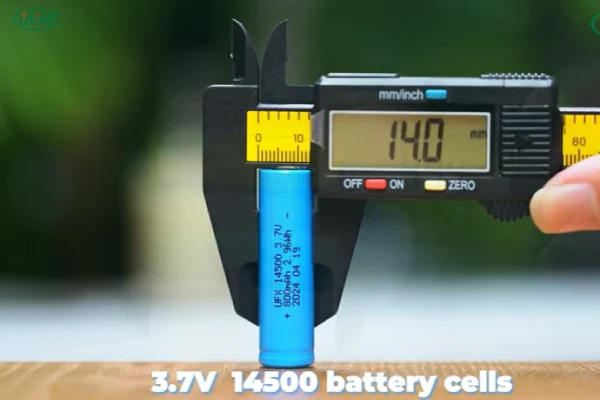
- AA lithium (Li-FeS₂): 1.5V, non-rechargeable
- 14500 lithium-ion: 3.6–3.7V, rechargeable
Using a 14500 battery in a device designed for 1.5V AA cells can cause overheating or permanent damage.
All About 14500 Lithium Rechargeable Battery
Part 8. Why double A lithium batteries are ideal for camera gear
Photography equipment demands stable voltage and high discharge capability. Double A lithium batteries outperform alkaline cells in cameras, flashes, and wireless triggers.
- Consistent voltage for faster flash recycle times
- Lightweight for travel and outdoor shoots
- Reliable operation in cold and hot environments
- Long shelf life for backup power
Part 9. Lithium vs alkaline AA batteries (engineering comparison)
| Feature | Lithium AA | Alkaline AA |
|---|---|---|
| Energy density | High | Moderate |
| Weight | Lighter | Heavier |
| Shelf life | Up to 10 years | 5–7 years |
| Cold performance | Excellent | Poor |
| High-drain use | Stable | Voltage drop |
Part 10. How to choose the right AA lithium battery
- Confirm voltage requirements in the device manual
- Match battery chemistry to application environment
- Use reputable brands or certified suppliers
- For OEM projects, consult a custom battery manufacturer
Part 11. Conclusion: is an AA size lithium battery worth it?
For high-drain, cold-weather, or professional applications, AA size lithium batteries are a clear upgrade over alkaline AA cells. When correctly matched by voltage and chemistry, they deliver longer runtime, better reliability, and lower total cost of ownership.
For specialized voltage, capacity, or industrial use cases, custom AA-size lithium battery solutions provide the safest and most efficient path forward.
Related Tags:

More Articles
Dead Battery or Device Failure? How to Find the Cause
Think your device is broken? Learn how to tell if the problem comes from battery aging or hardware failure before replacing your electronics.
Why iPhone Duo Uses Two Batteries: The Engineering Behind Foldable Phone Power
Why do foldable phones need two batteries? Explore the engineering challenges behind iPhone Duo’s dual-battery architecture and future battery trends.
Solid-State Batteries: 3 Myths You Need to Know
Solid-state batteries promise safer EVs and longer range, but the reality is more complex. Discover the challenges behind this next-gen technology.
Battery Capacity vs Discharge Rate: The Choice Engineers Face
Higher capacity or higher discharge rate? Learn how to choose the right LiPo battery for longer runtime, stable power output, and better device performance.
Battery Cable Size Guide: Choose the Right Wire Fast
Not sure what battery cable size you need? Learn how to select the right wire gauge, terminal size, and cable for safer, more efficient battery systems.