- Key takeaways
- Part 1. What is a 3.2V AA battery?
- Part 2. 3.2V LiFePO4 battery vs 3.2V AA battery
- Part 3. 3.2V AA battery vs 14500 battery
- Part 4. Can you replace regular AA batteries with 3.2V AA batteries?
- Part 5. Safety advantages of LFP AA batteries
- Part 6. How to choose a 3.2V AA battery manufacturer?
- Part 7. FAQs
The global demand for rechargeable batteries continues to grow rapidly as more electronic devices require reliable, compact, and long-lasting power solutions. According to the International Energy Agency (IEA), global battery demand reached more than 750 GWh in 2023, driven mainly by electric vehicles, energy storage, and portable electronics. This growth is also accelerating innovation in smaller rechargeable battery formats, including 3.2V AA batteries for specialized applications.
Unlike traditional 1.5V alkaline AA batteries, a 3.2V AA rechargeable battery typically uses lithium iron phosphate (LiFePO4 or LFP) chemistry. These batteries provide stable voltage output, excellent cycle life, and enhanced safety, making them suitable for IoT devices, sensors, smart equipment, and custom electronics.
This guide explains what a 3.2V AA battery is, how LiFePO4 technology works, how it compares with other battery types, and how to choose the right battery solution for your application.
Key takeaways
- A 3.2V AA battery is usually a rechargeable LiFePO4 battery with a nominal voltage of 3.2V.
- LiFePO4 AA batteries offer longer cycle life, better thermal stability, and improved safety compared with conventional lithium-ion batteries.
- A 3.2V AA battery is not always a direct replacement for a standard 1.5V AA battery because device voltage requirements must be considered.
- Compared with 14500 batteries, LiFePO4 AA batteries provide lower voltage but better safety and longer lifespan.
- Custom battery manufacturers can optimize capacity, size, protection circuits, and connectors for specific applications.
Part 1. What is a 3.2V AA battery?
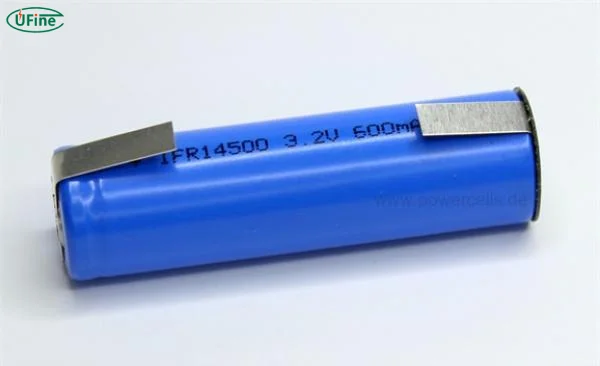
A 3.2V AA battery is a rechargeable battery that follows the common AA cylindrical size format but uses lithium iron phosphate chemistry instead of alkaline or nickel-metal hydride technology.
The “AA” designation describes the physical size, while “3.2V” represents the battery’s nominal voltage.
Different AA battery chemistries have different voltage characteristics:
| Battery type | Nominal voltage | Rechargeable |
|---|---|---|
| Alkaline AA battery | 1.5V | No |
| NiMH AA battery | 1.2V | Yes |
| Li-ion 14500 battery | 3.7V | Yes |
| LiFePO4 AA battery | 3.2V | Yes |
A 3.2 volt rechargeable battery provides a higher operating voltage than traditional AA batteries, which makes it suitable for applications designed around lithium-based power systems.
But, unlike standard alkaline AA batteries, the 3.2V AA battery is designed for long-term use. It can provide consistent power, even under heavy loads, making it ideal for applications that require more than just a quick burst of energy.
All About AA Rechargeable Batteries
A typical 3.2V AA rechargeable battery may have specifications like:
| Parameter | Typical value |
|---|---|
| Chemistry | LiFePO4 |
| Nominal voltage | 3.2V |
| Full charge voltage | 3.65V |
| Capacity range | 600–1500mAh |
| Cycle life | 2000+ cycles |
| Size | AA format (14 × 50mm) |
Actual performance depends on battery design, electrode materials, manufacturing process, and application requirements.
For example:
- Lower capacity batteries may prioritize compact size and fast charging.
- Higher capacity batteries provide longer operating time for low-power devices.
1 Size and weight
When it comes to size, the 3.2V AA battery follows the standard AA dimensions. It’s about 50.5 mm in length and 14.5 mm in diameter, just like any other AA battery. So, physically, it can fit into most devices that require AA batteries, which makes it super convenient.
However, it’s important to note that the weight of the 3.2V AA battery may vary depending on its chemical composition. Generally, lithium-based batteries tend to be lighter than their alkaline counterparts, so a 3.2V AA battery might feel a little lighter while still delivering more power. This lighter weight doesn’t compromise its capacity—rather, it makes it more portable and convenient for various uses.
2 Chemistry
The chemistry of a 3.2V AA battery is one of the things that sets it apart. Unlike the standard AA batteries that use alkaline chemistry, 3.2V AA batteries often utilize Lithium Iron Phosphate (LiFePO4) chemistry. This is where the magic happens.
LiFePO4 batteries have a higher charge capacity and longer lifespan than their alkaline counterparts. They are also known for being incredibly stable, which means they are less prone to overheating or leakage. This chemistry allows for a higher voltage (3.2V) and provides a much longer cycle life—up to 2,000 charge/discharge cycles in some cases. That means fewer replacements and more reliable performance over time.
Additionally, LiFePO4 batteries are considered environmentally friendly, as they are free of toxic heavy metals like cobalt, which is often found in other lithium-based batteries.
3 Capacity
When we talk about battery capacity, we’re referring to how much energy the battery can store and how long it can power a device before needing a recharge. The capacity of a 3.2V AA battery usually ranges from 600mAh to 1,000mAh, depending on the manufacturer and the specific battery model.
For reference, this is much higher than the capacity of standard alkaline AA batteries, which typically have a capacity of around 2,500mAh but at a much lower voltage (1.5V). The higher voltage of the 3.2V AA battery allows it to deliver more consistent power throughout its discharge cycle, even as it starts to run low.
4 Applications
So, what can you actually use a 3.2V AA battery for? Because of its higher voltage, this battery is well-suited for devices that require sustained power over a longer period. Common applications include:
- Remote control devices: Many modern remote controls, especially those with advanced features, require more power.
- Toys and gadgets: Certain electronic toys or gadgets that demand a steady current can benefit from the power of a 3.2V AA battery.
- Solar-powered devices: Some 3.2V AA batteries are used in solar-powered systems, especially for low-power applications like garden lights or outdoor sensors.
Part 2. 3.2V LiFePO4 battery vs 3.2V AA battery
It’s important to clarify that 3.2V AA battery and 3.2V LiFePO4 battery are terms that are sometimes used interchangeably, but they can refer to different things. In most cases, when people refer to a 3.2V AA battery, they are talking about a LiFePO4 battery designed to fit into the same size form factor as an AA battery.
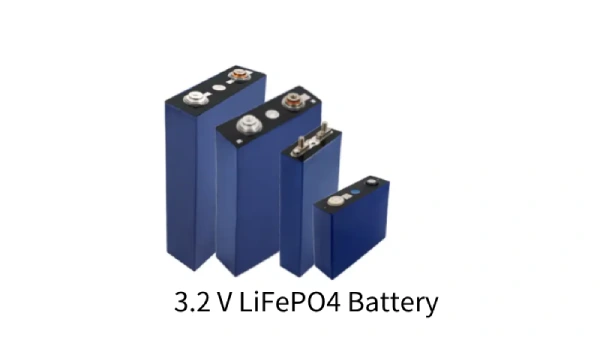
The difference lies in the chemistry and design. A 3.2V LiFePO4 battery will typically last longer, have a higher cycle life, and be more stable in varying temperatures compared to other types of lithium-based AA batteries, like lithium-ion or standard alkaline.
Part 3. 3.2V AA battery vs 14500 battery
Many engineers compare 3.2V AA batteries with 14500 lithium batteries because they have similar physical dimensions.
However, they are different battery types.
| Feature | 3.2V AA LiFePO4 battery | 14500 Li-ion battery |
|---|---|---|
| Chemistry | LiFePO4 | Lithium-ion |
| Voltage | 3.2V | 3.7V |
| Safety | Higher | Lower |
| Cycle life | Longer | Moderate |
| Thermal stability | Excellent | Good |
The main difference between 14500 vs AA battery is not only size but also chemistry and electrical performance.
A 14500 battery may provide higher voltage and energy density, while LiFePO4 AA batteries are preferred when safety, durability, and long service life are priorities.
While both 3.2V AA and 14500 AA batteries offer higher performance than traditional alkaline AA batteries, they have distinct characteristics that make them suitable for different applications. Here’s a detailed comparison of the two:
1. Voltage
- 3.2V AA: Offers a consistent 3.2 volts throughout its discharge cycle.
- 14500 AA: Provides a higher nominal voltage of 3.6-3.7 volts.
2. Chemistry
- 3.2V AA: Uses Lithium Iron Phosphate (LFP) chemistry, known for its safety and stability.
- 14500 AA: Employs Lithium-ion chemistry, which offers high energy density but can be less stable under certain conditions.
3. Energy Density
- 3.2V AA: Offers higher energy density than alkaline batteries but lower than 14500 AA batteries.
- 14500 AA: Provides the highest energy density among the two, making it ideal for devices requiring longer runtime.
4. Cycle Life
- 3.2V AA: Generally has a longer cycle life, meaning it can withstand more charge-discharge cycles before significant capacity loss.
- 14500 AA: Offers a good cycle life, but it may degrade faster than LFP batteries, especially if subjected to high temperatures or rapid charging.
5. Safety
- 3.2V AA: Considered safer due to its stable LFP chemistry, which is less prone to thermal runaway.
- 14500 AA: Can be less stable, especially if mishandled or subjected to extreme conditions. Proper charging and storage are crucial.
6. Charging
- Both: Require specific chargers designed for their respective chemistries.
- 3.2V AA: May have slower charging times compared to 14500 AA.
- 14500 AA: Can be charged relatively quickly, especially with advanced chargers.
7. Cost
- 3.2V AA: Typically more expensive than traditional alkaline batteries but can be more cost-effective in the long run due to their longer lifespan.
- 14500 AA: Generally more affordable than 3.2V AA batteries but may require replacement more frequently.
Part 4. Can you replace regular AA batteries with 3.2V AA batteries?
Not always.
Although they share the same AA physical size, a 3.2V AA lithium battery is electrically different from a traditional 1.5V AA battery.
Before replacing batteries, check:
- Device voltage range
- Battery management requirements
- Charging system compatibility
Suitable applications include:
- Devices designed for LiFePO4 batteries
- Solar-powered equipment
- Custom electronic products
- Low-power industrial devices
Using a 3.2V battery in a device designed only for 1.5V batteries may damage the electronics.
Part 5. Safety advantages of LFP AA batteries
Compared with traditional lithium-ion batteries, LiFePO4 batteries offer improved safety characteristics.
Key advantages include:
- Better thermal stability
- Lower risk of thermal runaway
- Longer service life
- Reliable performance under repeated cycling
However, professional battery designs still require:
- Overcharge protection
- Over-discharge protection
- Short-circuit protection
- Temperature monitoring
A complete battery solution depends on both cell chemistry and battery management design.
Part 6. How to choose a 3.2V AA battery manufacturer?
When selecting a 3.2V AA battery manufacturer, consider more than just battery price.
Important factors include:
Battery customization capability
A reliable supplier should support:
- Custom capacity
- Customized protection circuits
- Connector design
- Battery pack integration
Manufacturing experience
Battery production requires expertise in:
- Cell design
- Safety testing
- Quality control
- Mass production management
Certifications and testing
Professional suppliers should provide relevant certifications such as:
- UN38.3
- IEC 62133
- RoHS
Working with an experienced manufacturer helps ensure stable performance and long-term reliability.
Ufine Battery provides customized LiFePO4 AA battery solutions with flexible capacity, voltage, dimensions, and protection designs — from prototype samples to mass production.
Get Your Custom Battery SolutionPart 7. FAQs
1. How many hours can a 3.2V AA battery run a device?
The runtime of a 3.2V AA battery depends on the battery capacity and the device’s power consumption. For example, a 1000mAh battery can theoretically provide 1 hour at a continuous 1000mA load or 10 hours at a 100mA load. Real-world performance also depends on temperature, discharge rate, and battery efficiency.
2. What affects the lifespan of a 3.2V AA rechargeable battery?
Several factors influence battery lifespan, including charging voltage, discharge depth, operating temperature, charging frequency, and storage conditions. Using the correct LiFePO4 charging method and avoiding extreme operating conditions can significantly extend battery cycle life.
3. Are 3.2V AA batteries environmentally friendly?
LiFePO4 batteries are considered a more environmentally friendly lithium battery option because they do not use cobalt and typically offer longer service life. Their extended cycle life reduces the frequency of battery replacement and helps reduce waste over the product lifecycle.
4. What certifications should a 3.2V AA battery manufacturer provide?
A reliable 3.2V AA battery manufacturer should provide certifications and test reports related to safety, transportation, and quality control, such as UN38.3 for lithium battery transportation, IEC 62133 for battery safety, and RoHS compliance for material restrictions.
Related Tags:

More Articles
Comprehensive Guide to Choosing the Right Cart Battery
Learn how to choose the right cart battery for a vape cartridge or electric cart. Compare types, voltage, capacity, compatibility, safety, and care.
The Complete Guide to Doorbell Batteries
Learn which doorbell battery you need, common sizes and voltages, battery life, charging tips, and how to choose batteries for wired or smart doorbells.
What Is an SLI Battery? Key Facts You Need to Know
Confused about SLI car batteries? This guide explains SLI battery meaning, performance, lifespan, maintenance, and how to choose the right option.
USB LiPo charger: A complete guide to charging LiPo batteries via USB
Learn how USB LiPo chargers work, compare USB-C and traditional options, and discover how to choose the right charger for safe and efficient LiPo charging.
3.7V Battery Comparison: 3.7V Li-ion, 3.7V LiPo, 3.7V 18650, 3.2V LiFePO4 Batterry
What is the difference between 3.7V Li-ion, LiPo and 18650 batteries? Compare voltage, performance, safety and applications in this complete guide.