

- Part 1. Industry Challenges in Car Toys Battery Applications
- Part 2. Overview of Ufine’s Car Toys Battery Solutions
- Part 3. How Our Technology Solves Toy Car Battery Challenges
- Part 4. Recommended Battery Solutions by Toy Type
- Part 5. Why Custom Batteries Matter for Car Toys
- Part 6. Partner with a Reliable Toy Battery Manufacturer
Car toys place unique and demanding requirements on power sources. From high-speed RC cars to ride-on electric vehicles for kids, batteries must deliver high discharge performance, consistent safety, and long service life—all within limited space and strict cost constraints.
At Ufine Battery, we provide custom lithium battery solutions designed specifically for toy applications, helping brands improve performance, safety, and product reliability across global markets.
Part 1. Industry Challenges in Car Toys Battery Applications
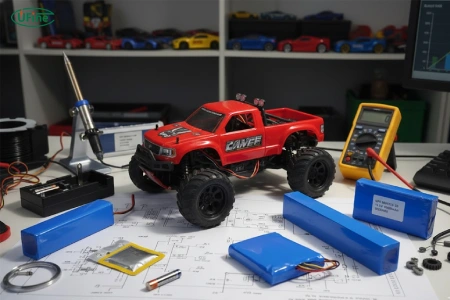
Car toys may look simple, but their power demands are not. Common challenges faced by toy manufacturers include:
1 High Peak Discharge Requirements
Toy cars require rapid acceleration and instant torque. A standard toy battery often fails to support these high current bursts, leading to weak performance or voltage drops. This is especially critical for RC vehicles and electric ride-on toys.
2 Safety for Children’s Products
A lithium battery for toys must meet higher safety expectations than general consumer electronics. Overheating, swelling, or short circuits can create serious risks in children’s products, particularly for lithium battery kids car applications.
Learn more about safe usage and prevention tips in our Guide to Understanding Lithium Battery Overheating for toy applications.
3 Frequent Charging and Misuse
Toy batteries are often charged frequently and sometimes incorrectly. Poor-quality batteries may degrade quickly under overcharge, deep discharge, or repeated cycling.
4 Limited Installation Space
Toy designs usually leave fixed or irregular battery compartments, making standard batteries unsuitable. A properly designed toy car lithium battery often needs custom size, shape, and wiring.
5 Cost Sensitivity
Toy products are highly cost-competitive. Manufacturers need a balance between performance, safety, and cost control, especially for mass-market models.
Part 2. Overview of Ufine’s Car Toys Battery Solutions
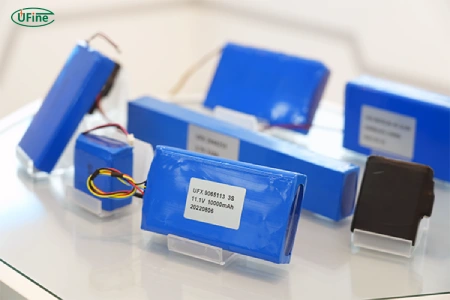
We offer a complete portfolio of toy battery solutions tailored to different toy car categories:
1 Battery Chemistry Options
- Lithium Polymer (LiPo) batteries for lightweight and high discharge
- Cylindrical lithium-ion batteries (18650 / 21700) for durability and capacity
2 Voltage & Capacity Range
- Voltage: 3.7V / 7.4V / 11.1V / 12V / 24V
- Capacity: 500mAh to 20Ah
3 Discharge Performance
- Continuous discharge: 5C–20C
- Peak discharge: up to 30C
4 Customization Capabilities
- Custom size and shape to fit toy structures
- Connector and wire customization
- Integrated PCM/BMS protection
5 Compliance & Certification Support
- UN38.3, MSDS for transport
- IEC 62133 and other toy-related safety standards (market dependent)
Part 3. How Our Technology Solves Toy Car Battery Challenges
1 High Current Output for Strong Performance
Our lithium ion battery for toy car applications uses low internal resistance cells and optimized internal structures to ensure stable voltage under high load.
2 Enhanced Safety Design
Each toy car battery can be equipped with multi-layer protection, including overcharge, over-discharge, short-circuit, and temperature protection—essential for lithium battery toys used by children.
3 Long Cycle Life
Cells are selected and tested for high-rate cycling, reducing early capacity loss even with frequent use.
4 Stable & Child-Safe Chemistry
We prioritize stable lithium chemistries to minimize swelling and thermal risks, making our lithium battery for toys suitable for long-term consumer use.
See how our batteries are made with precision and quality in this Ufine Battery Production Video
Part 4. Recommended Battery Solutions by Toy Type
| Toy Application Type | Battery Type | Voltage | Capacity Range | Key Features |
|---|---|---|---|---|
| Small RC Cars | Lithium Polymer Battery | 7.4V | 1000–3000mAh | High C-rate output for fast acceleration and responsive control |
| Ride-On Electric Toy Cars (Kids Cars) | Lithium Battery Pack | 12V / 24V | Large capacity | Reinforced protection design, suitable for lithium battery kids car applications |
| Educational & DIY Toy Vehicles | Custom Lithium Polymer Battery | Customized | Customized | Custom-shaped design with flexible connectors and wiring options |
Part 5. Why Custom Batteries Matter for Car Toys
Choosing a custom toy car lithium battery is not just about fit—it directly impacts safety, performance, and product lifespan.
- Fixed toy structures limit the use of standard batteries
- Different toy models require different discharge profiles
- Safety regulations vary across markets (US, EU, Asia)
- Custom battery design helps reduce failure rates and after-sales issues
A well-matched lithium battery for toys ensures smoother operation, longer runtime, and better user experience.
Part 6. Partner with a Reliable Toy Battery Manufacturer
Ufine Battery supports toy brands from concept to mass production, offering custom lithium battery solutions that balance performance, safety, and cost.
If you are developing a new toy car or upgrading an existing model, our engineering team can help you design the right lithium battery for toys—optimized for real-world use.
High Energy Density
It stores large amounts of energy in a smaller and lighter package
Longer Cycle Life
Withstands extensive charge and discharge cycles
Low Self-Discharge
Maintains power longer when not in use
Safety
Minimizes the risk of accidents and ensures safe operation
More Information About Toy Car Lithium Batteries
it.
-
How long does a lithium battery for a toy car typically last?
-
Can I use a standard lithium battery in different toy car models?
-
What happens if a toy battery overheats during play?
-
Are there environmentally friendly disposal options for toy batteries?
-
Can lithium batteries be used in both indoor and outdoor toy cars?
-
How can I know if a lithium battery is safe for kids?
Latest Blogs
About Lithium Battery Industry News
Buck vs. Boost vs. Buck-Boost Converter: Which Is Best for Battery?
Not sure which converter your battery-powered device needs? Compare Buck, Boost, and Buck-Boost designs and discover what affects voltage stability and runtime.
2026/10/20 Ufine

How to Match 18650 Cells for a Reliable Battery Pack?
Building an 18650 battery pack? Learn how to compare cell capacity, voltage, and internal resistance to avoid mismatches and improve reliability.
2026/10/19 Ufine

Why Do 18650 Battery Packs Get Hot During Discharge?
Is your 18650 battery pack overheating under load? Learn what causes excess heat, how to spot dangerous symptoms, and what to do next.
2026/10/19 Ufine

18650 Battery BMS: How to Get the Specs Right
Learn how to choose a BMS for an 18650 battery pack. Compare voltage, current ratings, protection features, and balancing before you buy.
2026/10/19 Ufine
Why Does My Ring Camera Battery Drain So Fast or Stop Charging?
Is your Ring camera battery draining fast or not charging? Discover common causes, practical fixes, and when to replace the battery.
2026/10/19 Ufine

Battery Pack Overheating? Causes and Solutions
Is your battery pack getting too hot? Learn the common causes, identify potential risks, and discover practical ways to prevent overheating.
2026/10/16 Ufine

