2S battery
103450-2S 14.8Wh Compact 2S Battery Pack

- 16 Years Experience
- 200+ Certifications
- 1000+ Customers
- 7X24 Customer Support
-
Product Details
-
Specs
-
Content
-
FAQs

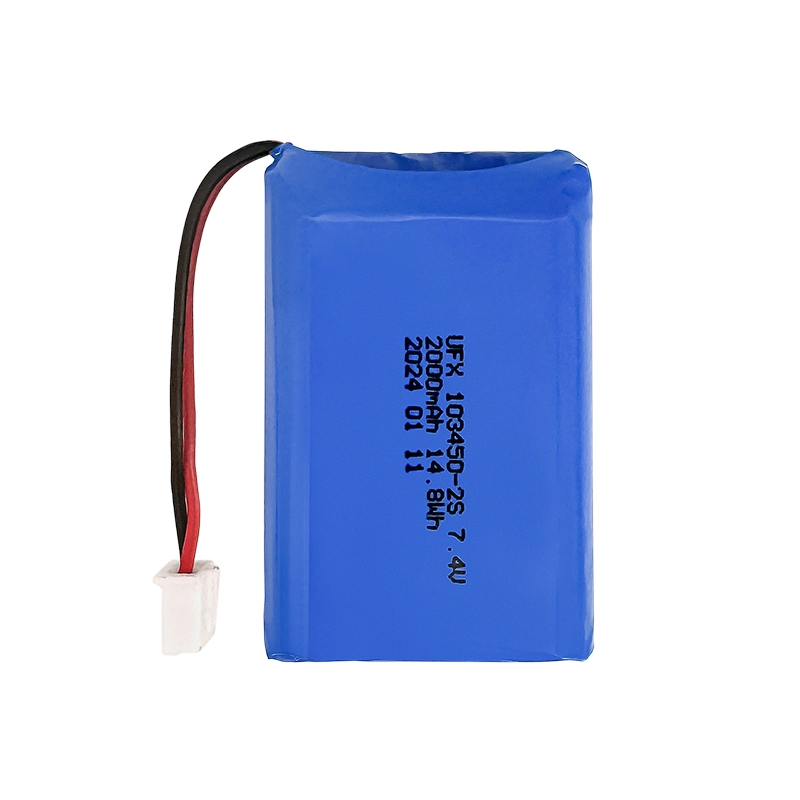
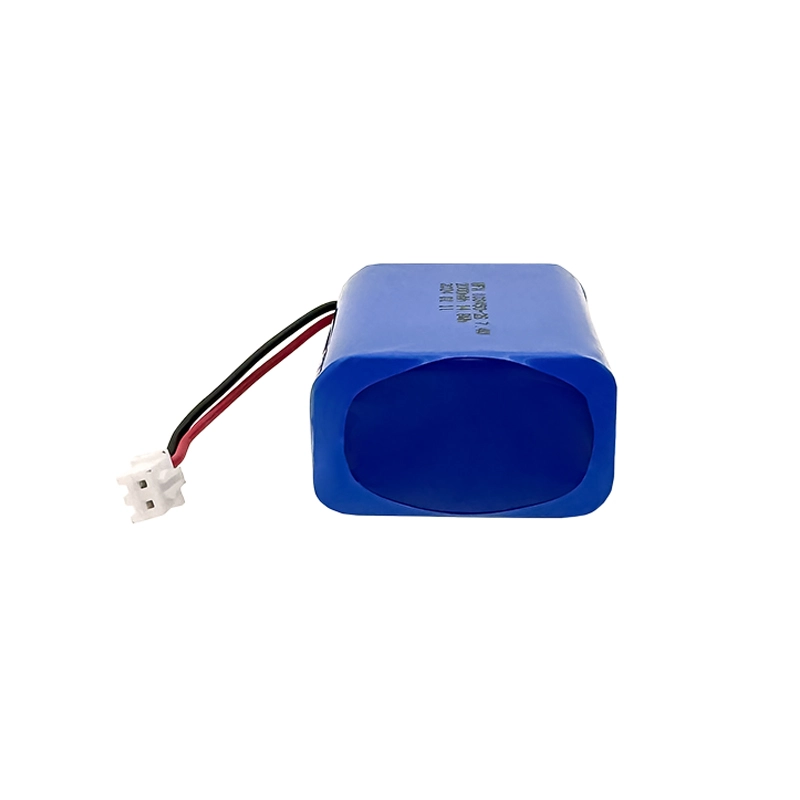
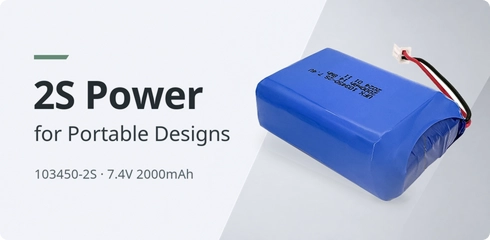
The Ufine 103450-2S is a 7.4V 2000mAh rechargeable lithium-ion pouch battery pack. Its 2S1P design provides 14.8Wh of nominal energy. The pack includes PCM protection and has a maximum body size of 21 × 34 × 52mm.
103450-2S Performance and Operating Limits
Use the pack ratings to check device load, charger settings, and operating conditions before testing a sample.
- Energy and Load
- Charging
- Cycle Life
- Temperature
Plan Runtime and Check Startup Current
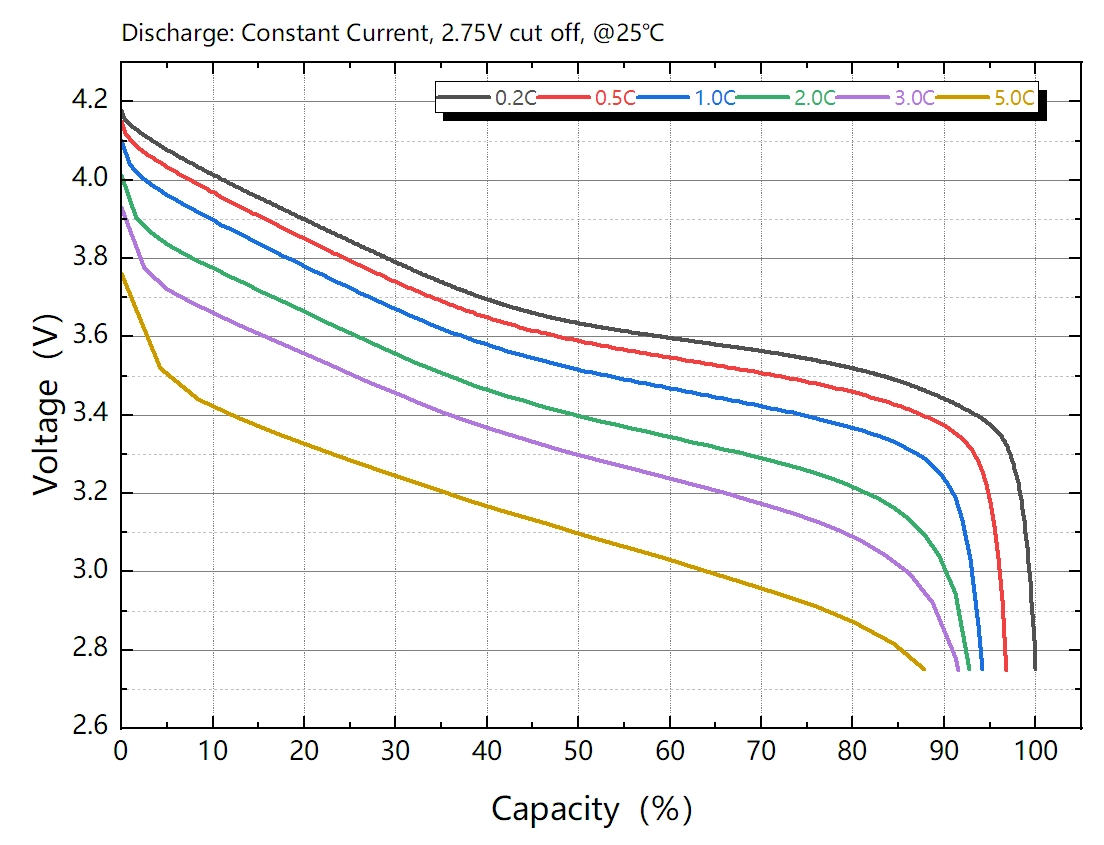
The 7.4V 2000mAh pack uses a 2S1P configuration and provides 14.8Wh of nominal energy. Use this figure for an initial runtime estimate, then check running current and startup peaks in your device.
- Standard discharge current: 400mA (0.2C)
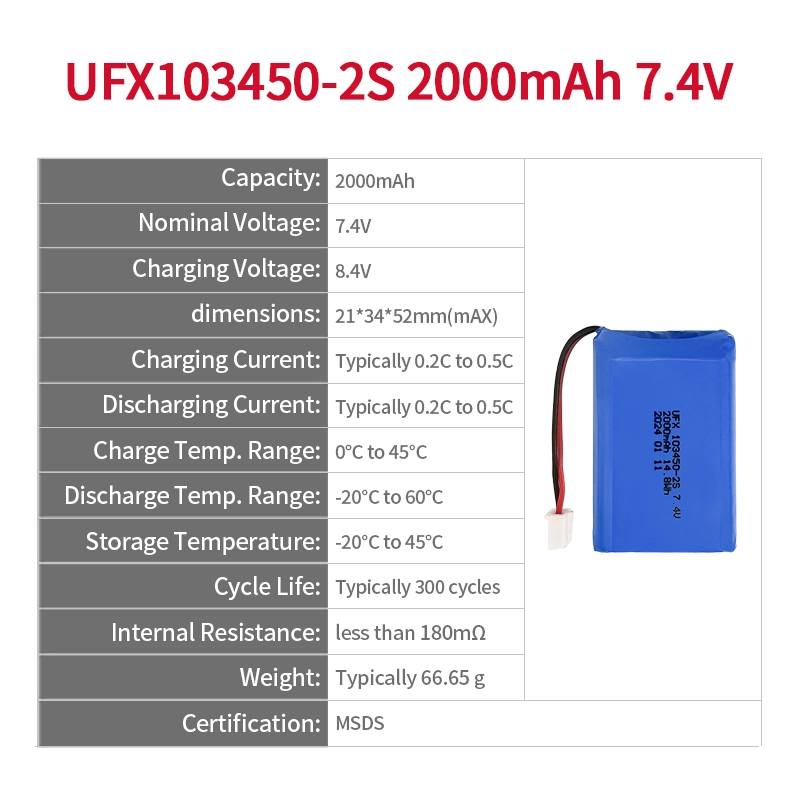
- Typical discharge current shown on the product image: 400–1000mA (0.2C–0.5C)
- Listed maximum discharge current: 2000mA (1C)
- Listed discharge cut-off: 5.5V
No separate pulse rating is listed. The PCM trip threshold does not extend the pack current rating.
Understand Discharge Rate and Current 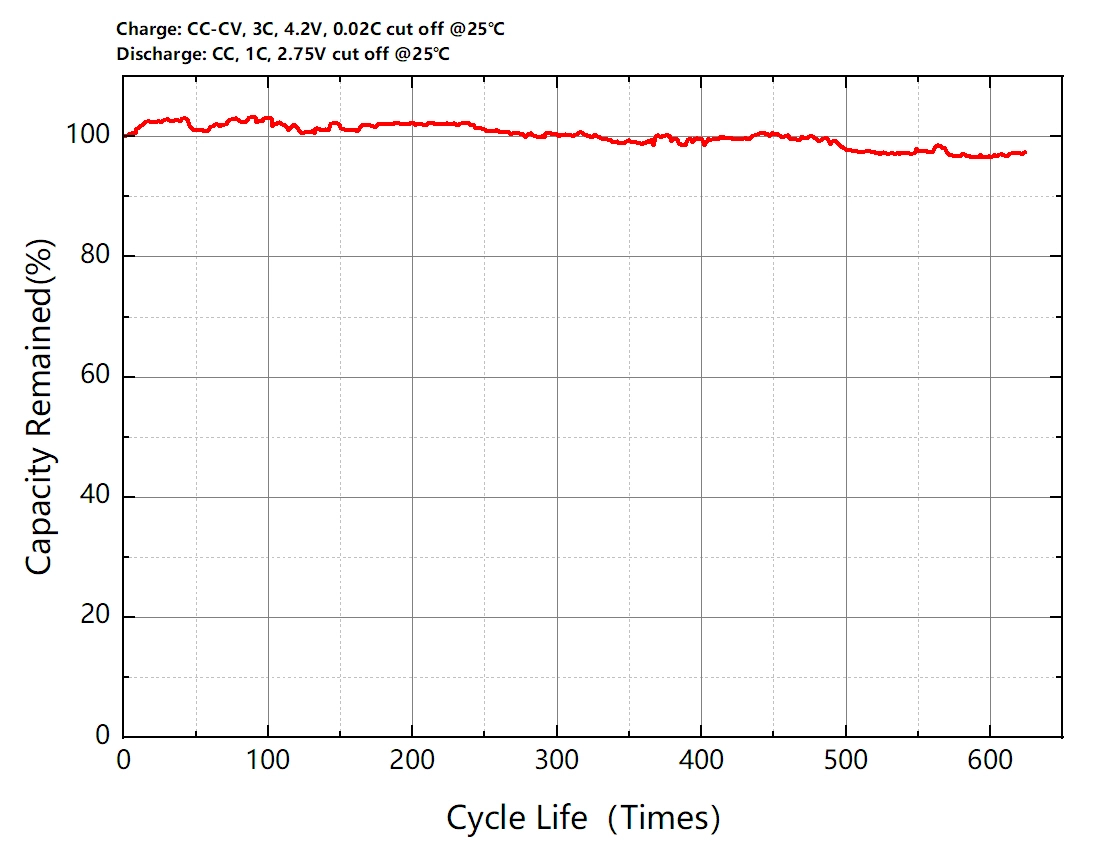
Match the Charger to the 2S Pack
The pack has a nominal voltage of 7.4V. The product image lists 8.4V as the charging voltage. Confirm the approved charge voltage and connector polarity before setting up a compatible 2S lithium-ion CC/CV charger.
- Standard charge current: 400mA (0.2C)
- Typical charge current shown on the product image: 400–1000mA (0.2C–0.5C)
- Listed maximum charge current: 2000mA (1C)
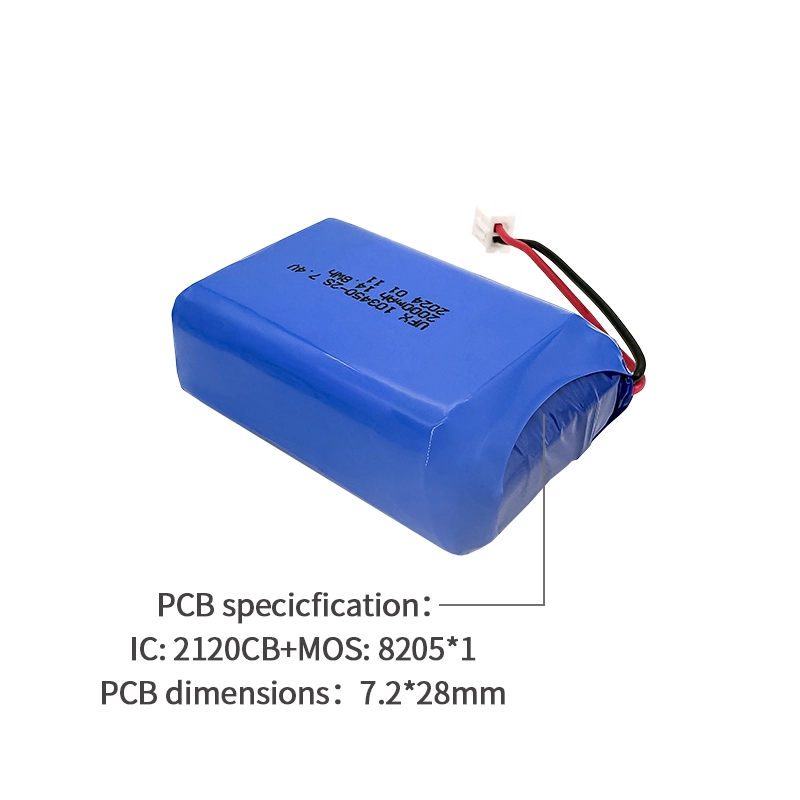
The pack includes PCM protection. The standard assembly has no NTC temperature sensor. Confirm any temperature sensing or balancing needs before approving the charging design.
How to Charge a 7.4V Battery 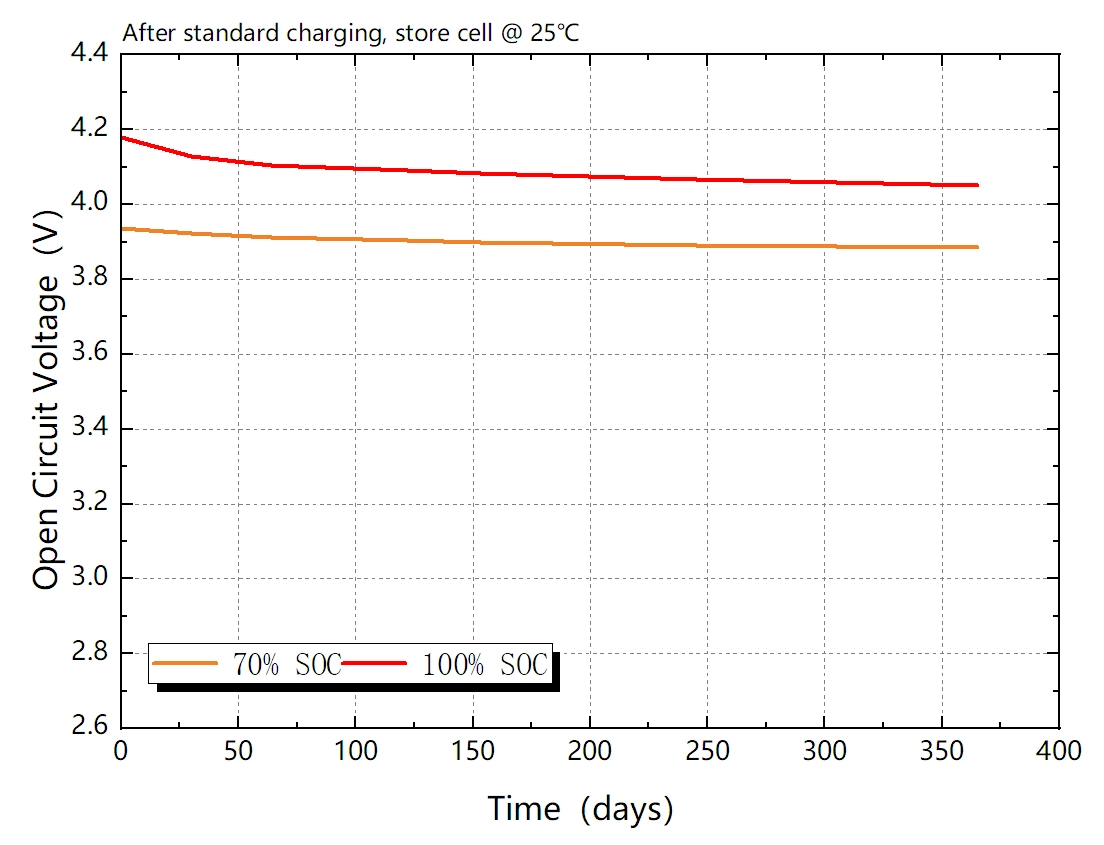
Use Capacity Retention to Compare Cycle Life
The product image lists 300 typical cycles. The detailed specification gives the remaining capacity at several points:
- After 100 cycles: ≥92% capacity
- After 300 cycles: ≥88% capacity
- After 500 cycles: ≥80% capacity
Ask for the test currents, temperature, and voltage limits before comparing these figures with another pack or setting a runtime target.
Learn About Battery Charge Cycles 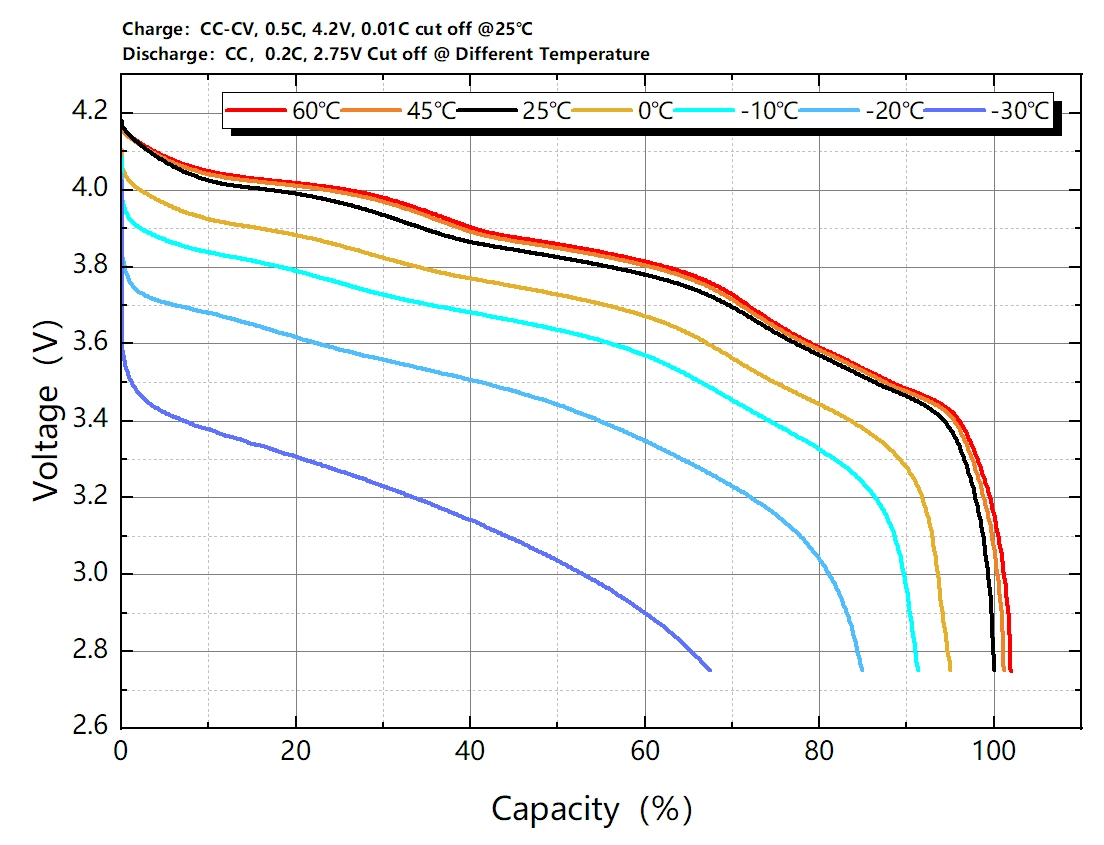
Check Temperature During Use and Storage
Measure pack temperature inside the device during charging and during the longest expected work session. Use the detailed specification to check storage limits for the planned period.
- Charging: 0°C to 45°C
- Discharging: −20°C to 60°C
- One-year storage: −20°C to 30°C
- Three-month storage: −20°C to 45°C
- One-month storage: −20°C to 60°C
Check the Housing Opening as Well as the Compartment
A pack can fit inside a housing and still be difficult to insert or connect. Review the assembly path before fixing the enclosure design.
Plan the Fit for a 21 × 34 × 52mm Pack Body
Use the maximum body dimensions as a starting point. Check the finished assembly drawing for the leads, connector, and space needed during installation.
- Insertion: Check that the pack passes through the housing opening.
- Cover clearance: Leave room for the lid to close without pressing on the pack.
- Wire route: Keep leads clear of screw posts and the cover seam.
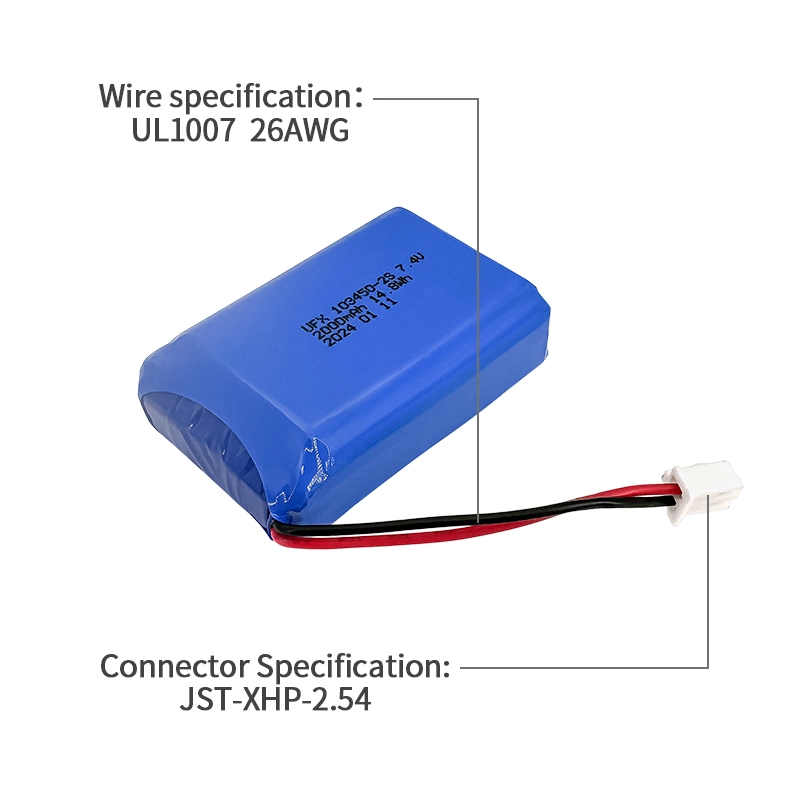
- Connector access: Leave room to connect and disconnect the pack without pulling the wires.
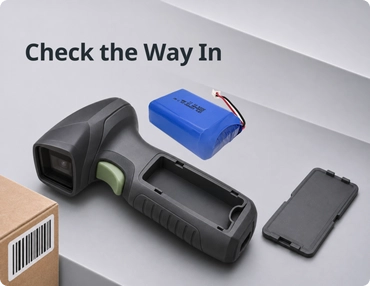
Evaluate the Pack Over a Full Work Session
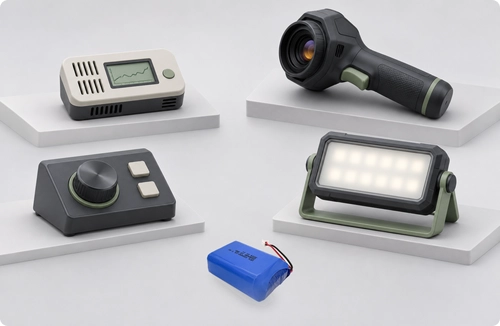
The 103450-2S is an option to evaluate for portable data loggers, handheld inspection tools, compact controllers, and rechargeable task lights designed for a 2S supply.
For a logger, include startup, recording, and data transfer in the test. For a task light, check current at full brightness and near low-battery shutdown. Confirm that the device stays within the approved voltage and current limits throughout the session.
Know Which 2S Pack You Are Approving
Give engineering and purchasing the same reference for the sample, drawing, and order.
Request a 103450-2S Specification Review 


Need a Narrower 7.4V Pack?
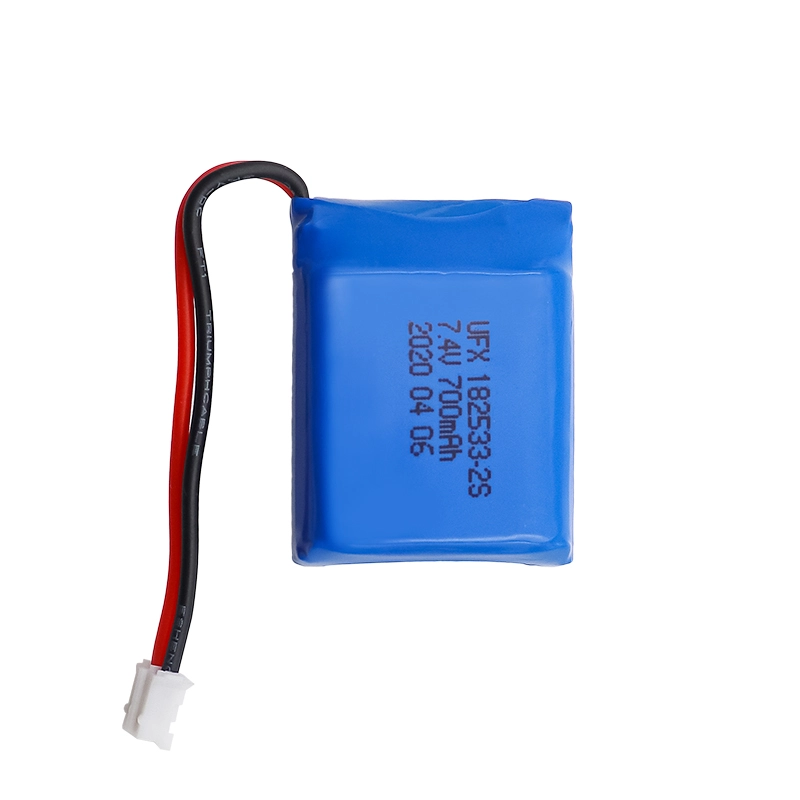
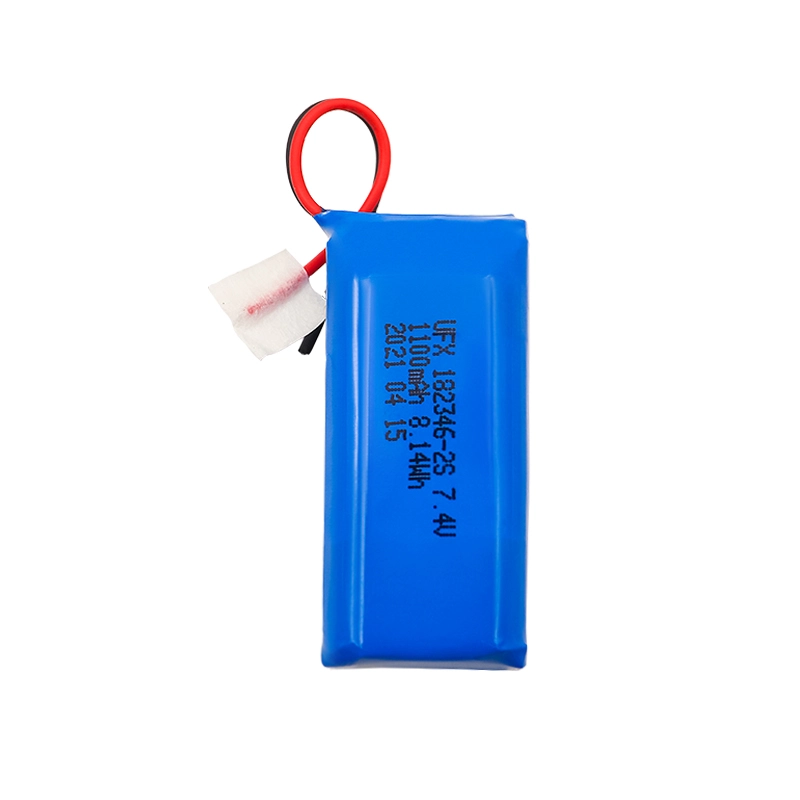
The 182346-2S 1100mAh pouch pack is 11mm narrower and 3mm thinner based on the listed maximum body sizes. Check whether 1100mAh meets your runtime target, then compare current limits and connector details.
Check the 103450-2S Before You Commit to the Housing
Send your compartment drawing and device load details. Ufine can review the pack fit and prepare a sample quote.
- Fit: compartment depth and opening size
- Load: running current, peak current, and peak duration
- Charging: charger settings and sensing needs
- Connection: socket drawing, pin order, and lead route
-
01Confirm which pack fits the housing and meets the runtime target.
-
02Verify startup, charging, and low-battery shutdown in the device.
-
03Approve the drawing, sample configuration, and required documents before ordering.
Battery Specification
-
1. Mechanical Characteristics
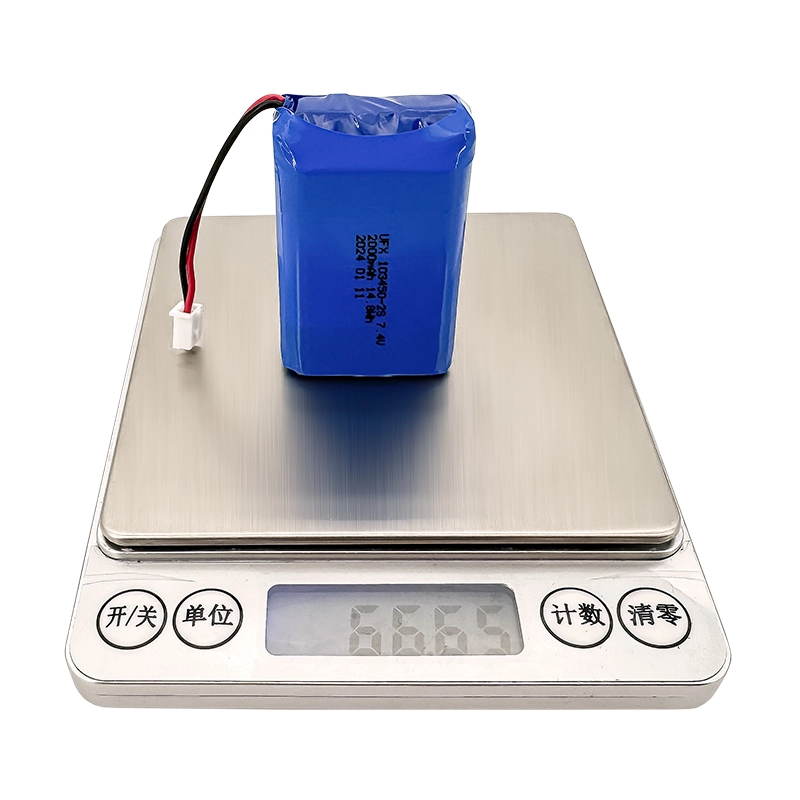
Cell 103450-2S PCM Yes NTC No Weight appr. 66.65g Configuration 2S1P -
2. Electrical Specification
Capacity 2000mAh Nominal Voltage 7.4V Energy 14.8Wh Internal Resistance less than 180mΩ Max. Charge Voltage 7.4V Discharge Cut Off 5.5V Max. Charge Current 2000mA Max. Discharge Current 2000mA Standard Charge Current 400mA Standard Discharge Current 400mA Charging Temperature 0℃ to 45℃ Discharging Temperature -20℃ to 60℃ Storage Temp.Range 1 year at -20℃ to +30℃ 3 mos. at -20℃ to +45℃ 1 mo. at -20℃ to +60℃ Cycle life 100 cycles ≥92% 300 cycles ≥88% 500 cycles ≥80% -
3. Cell protection
Overcharge Detection 4.28V ±50mV (80 to 200msec delay, release 4.08V ±50mV) Overdischarge Detection 2.4V ±100mV (40 to 120msec. delay, release 3.0V ±100mV) Overcurrent Detection 2.5A to 4.5A (5 to 10msec. delay) Short protection Yes
The Ufine 103450-2S is a 7.4V 2000mAh rechargeable lithium-ion pouch battery pack. It uses a 2S1P design and provides 14.8Wh of nominal energy.
If your housing is already set, start with two questions. Can the pack go in without pinching the wires? Can it finish the longest task your device needs to run?
Will the 103450-2S pass through the housing opening?
The maximum pack body size is 21 × 34 × 52mm. A compartment can be large enough while its opening is too small. Check the path the pack takes during assembly.
-
Check the opening with the circuit board and mounting parts in place.
-
Leave space to plug in the connector without pulling on the wires.
-
Close the cover with the sample in place. Check that it does not press on the pack or trap the leads.
Use the finished assembly drawing for the final fit check. The body dimensions do not show how much room you need to route the leads or mate the connector.
How much of a work session can 14.8Wh cover?
For a first estimate, measure average power at the battery connection. Then compare it with the pack's nominal energy.
Ideal runtime (hours) ≈ nominal battery energy (Wh) ÷ average battery-side power (W)
At an average battery-side load of 4W, 14.8Wh gives an ideal estimate of 3.7 hours. This assumes all nominal energy is usable. Confirm actual runtime in the finished device.
-
For a data logger, include setup, recording, and data transfer.
-
For an inspection tool, include screen use and time between readings.
-
For a task light, test at the brightness setting your users will need.
Average power helps estimate runtime. It can hide short current peaks. The detailed specification lists 400mA as the standard discharge current and 2000mA as the maximum. Check startup and mode changes separately. No separate pulse rating is listed.
Would the smaller 182346-2S fit the job?
If width is the issue, compare the 182346-2S 7.4V 1100mAh pouch pack. Its maximum body size is 18 × 23 × 49mm. It is 11mm narrower and 3mm thinner than the 103450-2S, based on the listed dimensions.
The smaller pack has 45% less rated capacity. If both packs meet your electrical needs, test the smaller one over a full work session before changing the housing or choosing the larger pack.
Both models are rated at 7.4V nominal. Check each pack's current limits, charger requirements, connector, and polarity before switching.
Review the 2S charger and device shutdown together
Confirm the approved charge voltage before connecting a sample. The 7.4V rating is the nominal pack voltage. Use a compatible 2S lithium-ion CC/CV charger and check its settings against the approved pack specification.
-
Charging: the detailed specification lists 400mA standard and 2000mA maximum. Confirm the setting for your assembly.
-
Temperature: the listed charge range is 0°C to 45°C. The standard pack has no NTC temperature sensor.
-
Protection: PCM is included. Confirm cell balancing separately if your design needs it.
-
Shutdown: the listed discharge cut-off is 5.5V. Your device may need to stop earlier to save data or avoid a restart.
Ask for the sample your team can approve
Send the housing opening and compartment dimensions, the measured startup and running currents, and the required runtime. Include the charger settings and a drawing or part number for the mating socket.
Use the same pack drawing and connector configuration for the sample test and the production quote. MSDS is listed for the 103450-2S. If your project needs other reports, ask which documents cover the exact assembly you plan to order.
FAQs
-
Will the 103450-2S fit through my housing opening?
The pack body measures up to 21 × 34 × 52mm. Check the opening and the space inside. Leave room for the wires and connector so the lid can close without pressing on the pack. -
Can the 103450-2S support a 1A running load?
The specification lists 400mA as the standard discharge current and 2A as the maximum. A 1A running load is below the listed maximum. Check startup and mode changes too, since no separate pulse rating is listed. -
What should I confirm before connecting a charger?
Use a compatible 2S lithium-ion CC/CV charger. Check the approved charge voltage, current, and connector polarity. The 7.4V rating is the nominal pack voltage. The standard pack has no NTC temperature sensor. -
Should my device wait until 5.5V to shut down?
The listed discharge cut-off is 5.5V. Your device may need to stop earlier to save data or avoid resets. Check how it behaves at low battery voltage under normal load. -
What does the 500-cycle figure mean for runtime?
The specification lists at least 80% capacity after 500 cycles. Ask for the test conditions before using this figure to plan service life. Check whether an aged pack can still finish a full work session in your device. -
Which documents should I ask for with a 103450-2S sample?
Ask for the pack specification and assembly drawing. Check that the model, wire length, connector, and pin order match your sample. MSDS is listed for this model. Ask which other reports cover the exact assembly you plan to order.
Ready to Power Your Project?
We’ll help you design the perfect power source — tailored to your voltage, capacity, size, C-rate, and performance needs.
Contact Us NowWhat Our Customers Are Saying
We love hearing from you! Your experiences help us improve and inspire others. Check out what our happy customers have to say about our lithium batteries—share your thoughts with us too!









Latest Articles
About Lithium Battery Industry News

Swollen Laptop Battery? Don't Ignore These Signs
Is your laptop case bulging? Find out why lithium batteries swell, what risks you should know, and how to handle a swollen battery safely.
2026-11-10 Ufine

200 Amp Lithium Battery: Better Than Lead-Acid?
Is a 200Ah lithium battery worth the extra cost? Compare runtime, lifespan, usable power, and long-term savings before you buy.
2026-11-10 Ufine

Where to Find Reliable LiPo Battery Suppliers for OEM Projects
Looking for LiPo battery suppliers? Discover where to find reliable manufacturers and how to avoid costly sourcing mistakes.
2026-11-10 Ufine