Popular Choice
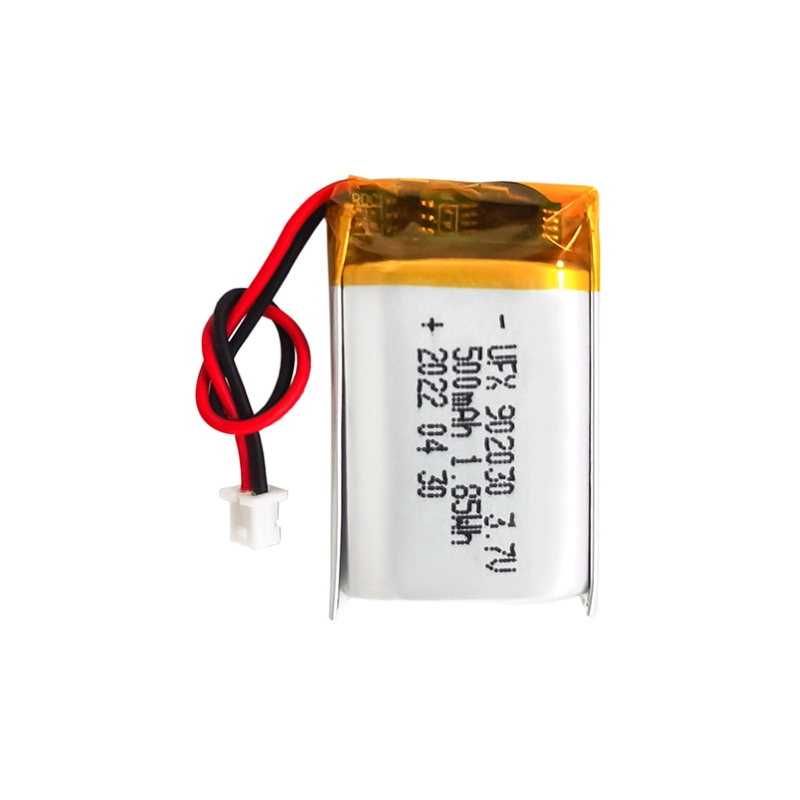
3.7 V 500mAh Lithium Ion Battery 902030




- 16 Years Experience
- 200+ Certifications
- 1000+ Customers
- 7X24 Customer Support
-
Product Details
-
Specs
-
Content
-
FAQs

Compact Dimensions for Space-Constrained Devices
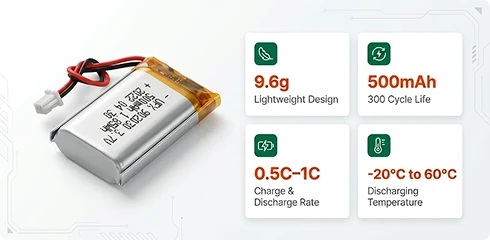
The UFX902030 combines 500mAh capacity, compact dimensions, and lightweight construction for portable electronic devices.
Test Curves of Ufine LiPo Battery
Take a closer look at the Lithium polymer battery test curves—see the stability and performance you can trust for all your power needs!
- Cycle Life
- Self-Discharge
- Discharge Rate
- Temp Performance
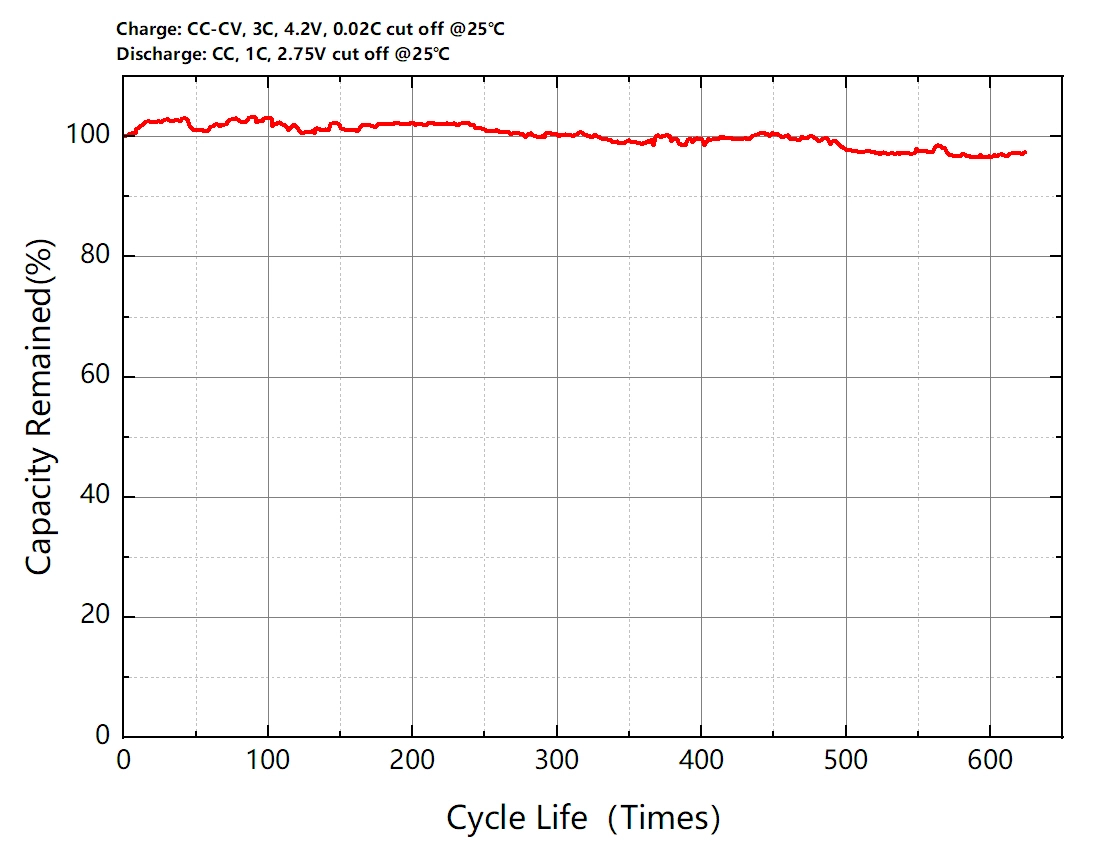
Cycle Life at 25°C
Even after 600 full charge and discharge cycles, this battery retains over 95% of its original capacity, ensuring a long and dependable service life.
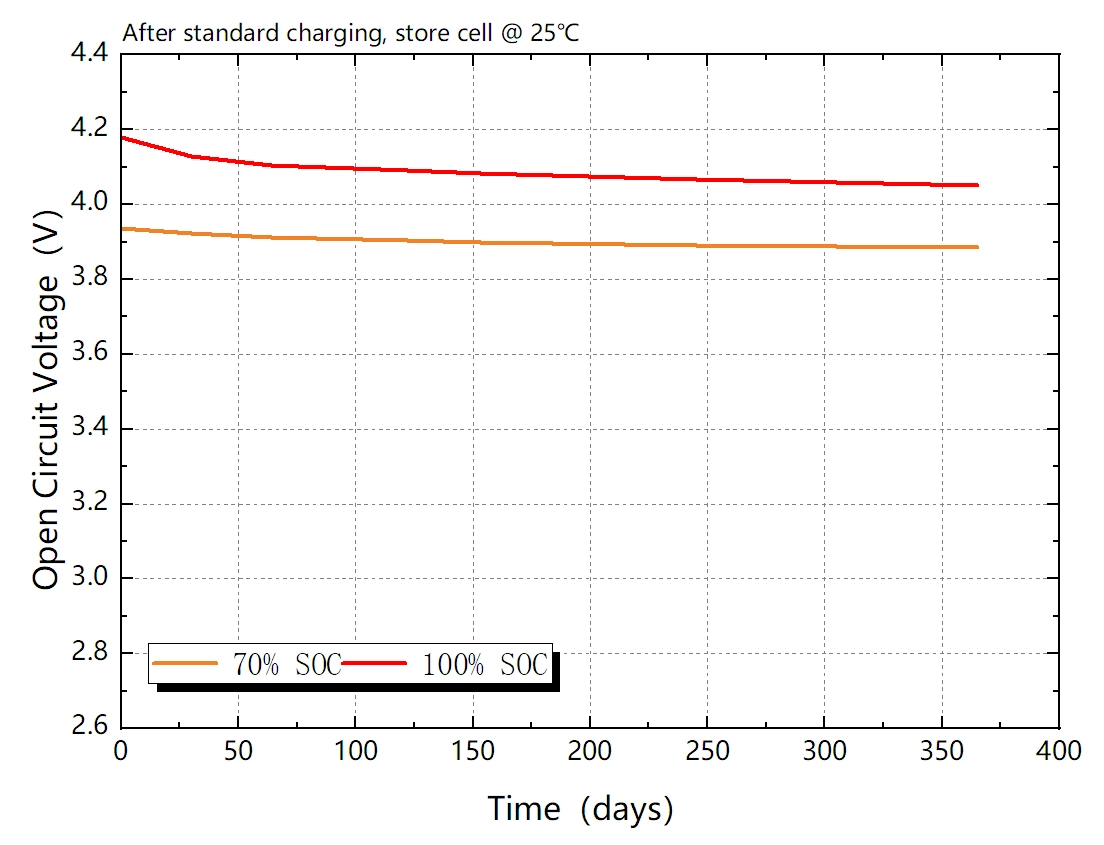
Self-discharge at 25°C
This battery has a very low self-discharge rate, holding its charge for up to a year when stored at room temperature. It's ready to go when you need it, even after long periods of inactivity.
Learn More About Self-Discharge Rate 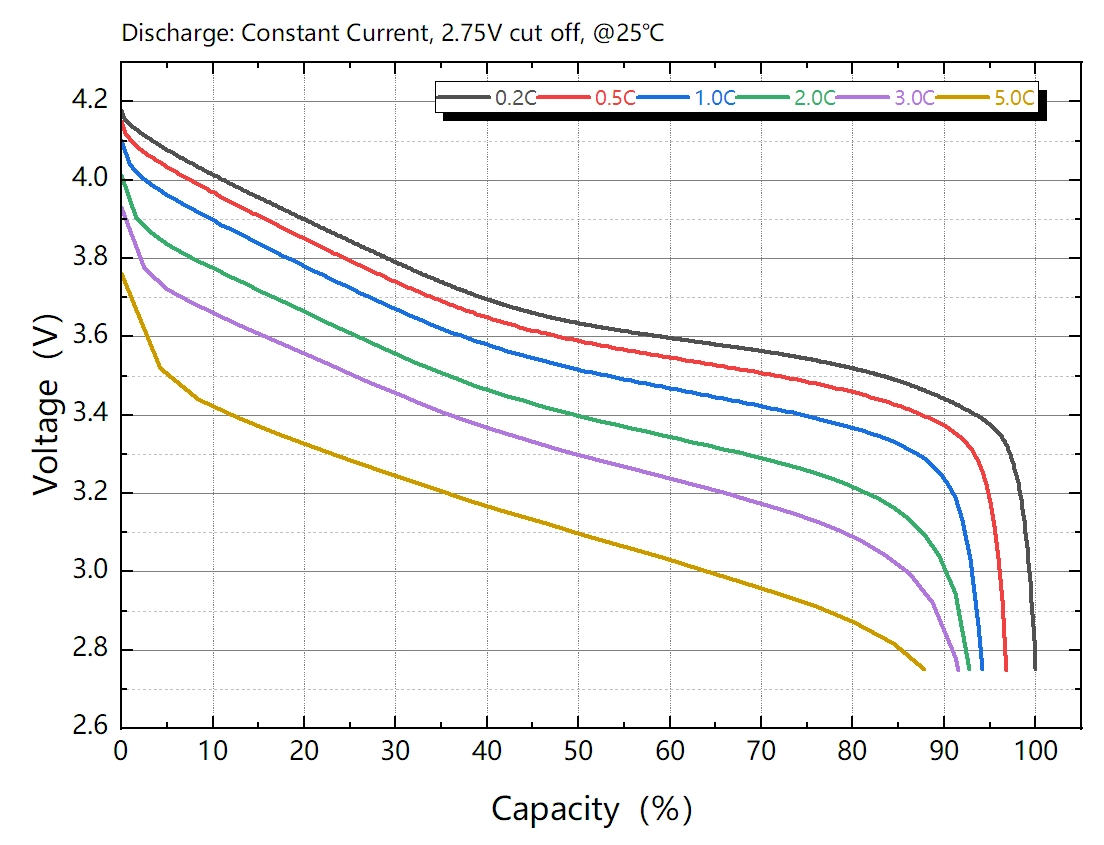
Discharge at Different C Rate
Whether you need a slow, steady power source or a quick burst of energy, this battery is designed to handle various discharge rates without significant loss in performance.
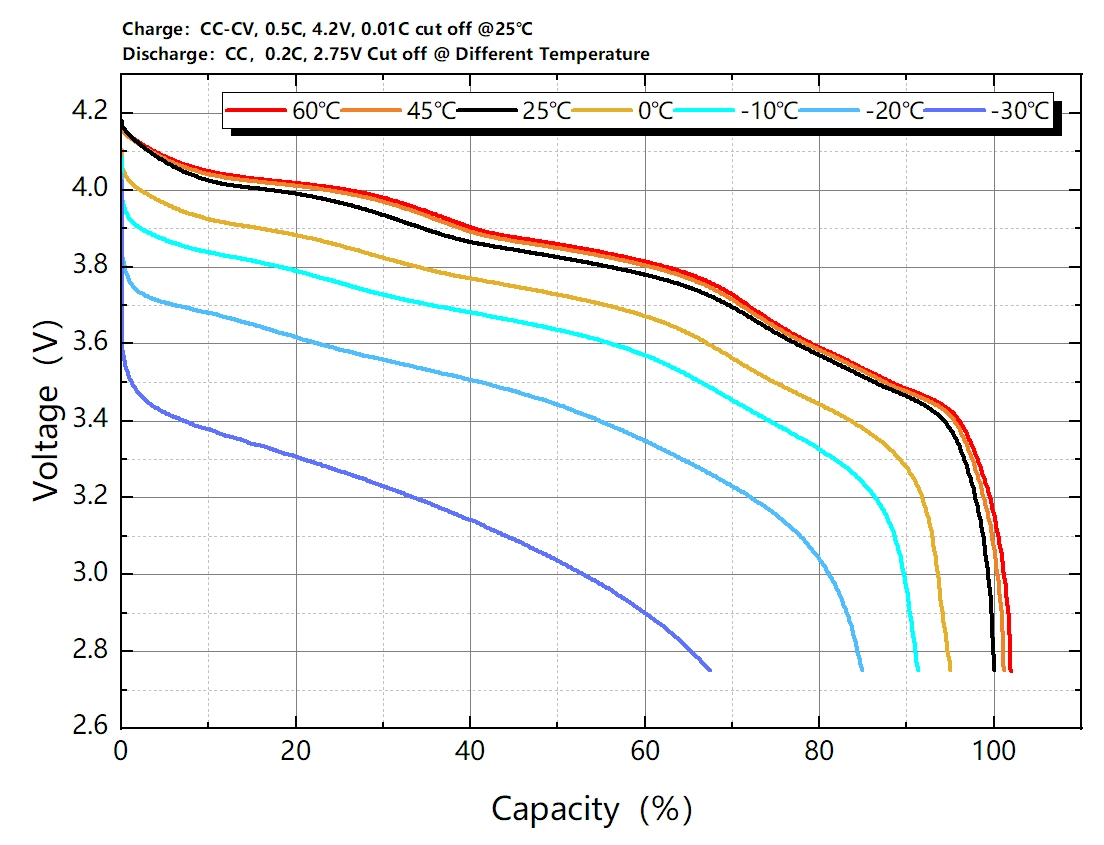
Discharge at Different Temperature
Engineered to perform in a wide range of conditions, this battery delivers consistent power from a scorching 60°C down to a frigid -20°C. Note that performance will be reduced in extreme cold.
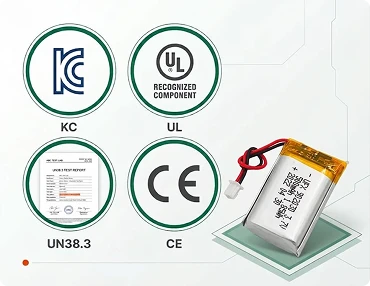
Global Certifications & Safety Compliance
The UFX902030 lithium polymer battery is supported by multiple safety and compliance credentials, helping manufacturers evaluate cell safety and transportation requirements for different markets.
- KC – Applicable Battery Compliance Requirements in South Korea
- UL1642 – Lithium Battery Cell Safety Requirements
- UN38.3 – Lithium Battery Transportation Safety
- CE – Applicable European Market Conformity Requirements
Applications
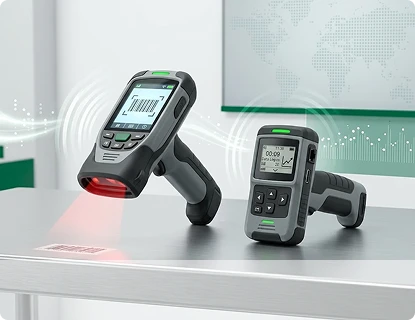
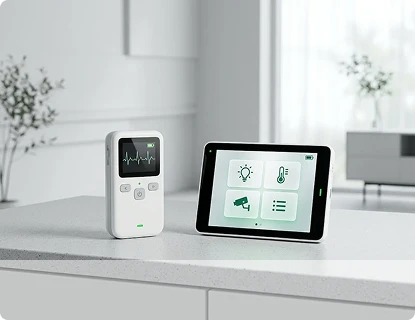
Designed for compact portable electronics, audio devices, wireless communication products, and smart equipment requiring lightweight rechargeable power.
View more production details 


What We Custom and How
At Ufine, we know that one size doesn't fit all, especially when it comes to battery needs. That's why we specialize in custom battery solutions.
- Battery Chemistries: We build with Lithium, Polymer, LiFePO4, and 18650 cells.
- Custom Specs: We customize size, voltage, capacity, and shape to fit your needs.
- Connectors: Get the perfect fit with JST, Molex, XT series, and more.
- Performance: Our batteries handle discharge rates from 0.2C to 25C.
- Temperature: They're designed to operate from -40°C to 80°C.
-
01Enquiry and Design: Contact us with requirements. The technical team creates tailored designs.
-
02Sampling and Sample Testing: Receive customized battery samples for evaluation within two days.
-
03Confirmation and Production: Finalize specifications, sign the production contract, and pay a deposit.
-
04Delivery and Shipping: Make final payment, and arrange safe and efficient delivery.
Recommended Products
Explore similar 3.7V lithium polymer batteries with different sizes and capacities to find a suitable battery solution for your portable electronic devices.
| Voltage | Model | Capacity | Size (mm) | Product Highlights |
|---|---|---|---|---|
| 3.7V | 702535 | 600mAh | 7 × 25 × 37 | Pouch Cell Design |
| 3.7V | 702525 | 350mAh | 7 × 25 × 27 | Compact Design, Pouch Cell |
| 3.7V | 552826 | 450mAh | 5.5 × 28 × 28 | Compact Design, Pouch Cell |
| 3.7V | 672330 | 450mAh | 6.7 × 23 × 32 | Compact Design, Pouch Cell |
| 3.7V | 702527 | 380mAh | 7 × 25 × 29 | Compact Design, Pouch Cell |
| 3.7V | 502049 | 500mAh | 5 × 20 × 51 | Slim Pouch Cell Design |
| 3.7V | 902128 | 500mAh | 9 × 21 × 30 | Compact Design, Pouch Cell |
Battery Specification
-
1. Mechanical Characteristics
Cell 902030 PCM Yes NTC No Weight appr. 9.6g Configuration 1S1P -
2. Electrical Specification
Capacity 500mAh Nominal Voltage 3.7V Energy 1.85Wh Internal Resistance less than 180mΩ Max. Charge Voltage 4.2V Discharge Cut Off 2.75V Max. Charge Current 500mA Max. Discharge Current 500mA Standard Charge Current 100mA Standard Discharge Current 100mA Charging Temperature 0℃ to 45℃ Discharging Temperature -20℃ to 60℃ Storage Temp.Range 1 year at -20℃ to +30℃ 3 mos. at -20℃ to +45℃ 1 mo. at -20℃ to +60℃ Cycle life 100 cycles ≥92% 300 cycles ≥88% 500 cycles ≥80% -
3. Cell protection
Overcharge Detection 4.28V ±50mV (80 to 200msec delay, release 4.08V ±50mV) Overdischarge Detection 2.4V ±100mV (40 to 120msec. delay, release 3.0V ±100mV) Overcurrent Detection 2.5A to 4.5A (5 to 10msec. delay) Short protection Yes
Part 1. What Does 902030 Battery Mean?
A 902030 battery is a lithium polymer battery model identified by its approximate physical dimensions:
-
9: Approximately 9mm thick
-
20: Approximately 20mm wide
-
30: Approximately 30mm long
The model number describes the battery's size, not its voltage or capacity. A 902030 battery can have different electrical specifications depending on the manufacturer and cell design.
For example, the UFX902030 from Ufine is designed with the following specifications:
| Parameter | Specification |
|---|---|
| Model | UFX902030 |
| Battery Type | Lithium Polymer (LiPo) |
| Nominal Voltage | 3.7V |
| Nominal Capacity | 500mAh |
| Charging Voltage | 4.2V |
| Energy | 1.85Wh |
| Dimensions | 9 × 20 × 32mm (Max)* |
| Weight | Approx. 9.6g |
*Dimensions should be confirmed against the final product drawing before mechanical integration.
Why Choose a 902030 LiPo Battery?
The main advantage of a small LiPo battery is its flexible pouch-cell design. Compared with conventional rigid cylindrical cells, pouch batteries offer more flexibility in dimensions and packaging.
A 902030 battery may be a suitable option when your device needs:
-
A compact battery that fits into a limited installation space.
-
Rechargeable power for portable electronics.
-
A lightweight energy source for handheld or wearable products.
-
A customized battery configuration with specific wire and connector requirements.
However, a compact battery is not automatically suitable for every small device. Capacity, discharge current, operating temperature, and installation conditions must also match the application.
Part 2. How Long Does a 902030 Battery Last?
Battery runtime is one of the most important considerations when choosing a 902030 battery. A 500mAh capacity does not represent a fixed operating time. Actual runtime depends on how much current or power your device consumes.
2.1 How to Calculate Battery Runtime
For a device operating at a compatible voltage, you can estimate runtime using this formula:
Runtime (hours) = Battery Capacity (mAh) ÷ Average Current Consumption (mA)
For a 500mAh battery, the theoretical runtime at different average current levels would be:
| Average Device Current | Theoretical Runtime |
|---|---|
| 25mA | 20 Hours |
| 50mA | 10 Hours |
| 100mA | 5 Hours |
| 250mA | 2 Hours |
| 500mA | 1 Hour |
These figures are simplified estimates, not guaranteed operating times. Actual runtime is usually shorter because of conversion losses, battery discharge characteristics, cutoff voltage, temperature, and variations in device power consumption.
For devices with changing power demands, calculate runtime using average current consumption rather than the maximum current alone.
2.2 What Affects the Actual Battery Life?
Several factors influence how long a 902030 battery can power your device.
-
Device Power Consumption: A GPS tracker that spends most of its time in standby may consume much less energy than a wireless device that continuously transmits data. Two products using the same 500mAh battery can therefore have very different runtimes.
-
Operating Conditions: Low or high operating temperatures can affect available battery capacity and performance. The UFX902030 has a typical charging temperature range of 0°C to 45°C and a discharging temperature range of -20°C to 60°C.
-
Power Management: Sleep modes, standby settings, display brightness, wireless transmission frequency, and voltage-conversion efficiency all influence energy consumption.
-
Battery Aging: Rechargeable batteries gradually lose capacity through repeated charge and discharge cycles. The UFX902030 has a typical cycle life of 300 cycles under its specified test conditions.
2.3 Battery Runtime vs. Cycle Life: What's the Difference?
These two terms are often confused:
-
Battery runtime: Refers to how long a fully charged battery can power a device before it needs recharging.
-
Cycle life: Refers to how many charge and discharge cycles a battery can complete before its capacity declines to a specified level.
For the UFX902030, approximately 300 cycles is a typical reference value. Actual cycle life depends on charging conditions, discharge depth, temperature, and usage patterns.
Part 3. Does a 902030 Battery Come with a Protection Board?
Yes. The Ufine UFX902030 3.7V 500mAh lithium polymer battery comes with a built-in protection board and connecting wires. This integrated design helps simplify battery installation and provides essential protection against common electrical faults.
The protection circuit uses an R5478N280 protection IC and an 8205 MOSFET. Its compact PCB measures 15 × 3.7mm, making it suitable for space-constrained electronic devices.
3.1 What Does a Battery Protection Board Do?
The protection board in the UFX902030 is designed to provide several essential safety functions:
-
Overcharge Protection: Helps prevent the cell voltage from exceeding the configured charging limit.
-
Over-discharge Protection: Helps prevent the battery voltage from dropping below the specified discharge limit.
-
Overcurrent Protection: Interrupts the circuit when the current exceeds the configured protection threshold.
-
Short-circuit Protection: Helps protect the battery and connected equipment if a short circuit occurs.
The protection board uses the following components:
| PCB Specification | Details |
|---|---|
| Protection IC | R5478N280 |
| MOSFET | 8205 |
| PCB Dimensions | 15 × 3.7mm |
The protection circuit helps improve battery safety during normal operation. Actual protection thresholds and operating limits depend on the circuit design.
3.2 What Should You Check When Using a 902030 Battery with a Protection Board?
Although the UFX902030 comes with a built-in protection board, you should still check the following before integrating it into your device:
-
Does the protection circuit support your device's continuous and peak current requirements?
-
Can the 15 × 3.7mm protection PCB fit within the available battery compartment?
-
Are the protection thresholds compatible with your device's operating conditions?
-
Is your charging circuit designed for a single-cell 3.7V LiPo battery?
Important: A protection board does not replace a proper lithium battery charging circuit. The UFX902030 requires a compatible single-cell charging system with a 4.2V charge-voltage limit.
Part 4. What Wires and Connectors Does a 902030 Battery Use?
The UFX902030 comes with pre-installed connecting wires and a Molex 5102 connector, providing a ready-to-connect configuration for compatible electronic devices.
Its standard wire and connector specifications are:
| Component | Specification |
|---|---|
| Wire Model | UL3302 |
| Wire Gauge | 32AWG |
| Connector | Molex 5102 |
| Wiring | 2-wire connection |
4.1 Wire Specifications
The UFX902030 uses UL3302 32AWG wires for its electrical connection. This compact wiring configuration is suitable for space-conscious battery installations when the actual current and operating conditions are within the wire's allowable limits.
When integrating the battery into your device, consider:
-
Wire Gauge: The 32AWG wire should be checked against the device's current requirements, voltage drop, and temperature rise.
-
Wire Length: Make sure the wires can reach the device's PCB without being stretched or excessively bent.
-
Wire Routing: Avoid pinching, sharp bends, or mechanical stress during installation.
-
Polarity: Verify the positive and negative connections against the battery drawing and device circuit diagram.
4.2 Connector Specifications
The UFX902030 is equipped with a Molex 5102 connector for connection to compatible electronic circuits.
Before connecting the battery, verify the following details:
-
Connector series and exact part number.
-
Connector pitch and pin count.
-
Positive and negative pin positions.
-
Compatibility with the mating connector on your device's PCB.
Connectors with similar appearances are not necessarily interchangeable. Always confirm the exact connector specifications and pin arrangement before installation.
4.3 What to Check Before Connecting the Battery
Before connecting the UFX902030 to your device, make sure the electrical and mechanical interfaces match your design.
-
Confirm that your device uses a compatible Molex 5102 mating connector.
-
Check the positive and negative pin assignments.
-
Ensure the 32AWG wires can reach the connection point without being stretched or compressed.
-
Verify that the wiring and protection circuit can support your device's operating current.
If you are replacing an existing battery, providing a clear connector photograph or technical drawing can help verify compatibility before ordering.
Part 5. How Much Does a 902030 Battery Cost?
There is no universal price for a 902030 battery. Even batteries with the same model number and nominal capacity can have different prices depending on their specifications and manufacturing configurations.
If you are comparing 902030 battery suppliers, consider these five factors.
5.1 Battery Capacity and Cell Performance
Capacity, internal resistance, discharge capability, and cycle-life requirements can affect the cell selection and manufacturing cost.
For example, a standard 500mAh battery and a customized version with stricter performance requirements may not have the same price.
5.2 Protection Board Configuration
Adding a protection circuit increases the number of components and assembly requirements. The price may vary according to the protection IC, MOSFET selection, and required protection functions.
5.3 Wires and Connectors
Connector type, wire length, wire gauge, and assembly complexity can all influence the final quotation.
A bare cell and a finished battery assembly with customized wiring should not be compared as identical products.
5.4 Order Quantity
Order quantity is another important pricing factor. Prototype samples, small-volume orders, and mass production may have different unit prices because of setup, material procurement, and production efficiency.
5.5 Certifications and Testing Requirements
Additional testing, documentation, and market-specific compliance requirements may affect project costs. Confirm which documents are required rather than assuming every 902030 battery has the same certifications.
How to Get an Accurate 902030 Battery Quote
To receive a more accurate quotation, provide your supplier with:
-
Required voltage and capacity.
-
Battery dimensions.
-
Expected order quantity.
-
Protection board requirements.
-
Connector type and wire specifications.
-
Target application and any required certifications.
At Ufine Battery, customers can discuss standard UFX902030 specifications or request customized configurations according to their device requirements.
Part 6. What Should You Check Before Choosing a 902030 Battery?
Before purchasing a 902030 battery, checking only the model number and capacity is not enough. The following points can help you avoid compatibility problems during product development and assembly.
6.1 Confirm the Actual Dimensions
Check the battery's maximum length, width, and thickness against the available battery compartment.
Remember to allow space for:
-
Battery manufacturing tolerances.
-
Protective packaging and insulation.
-
Wires and connectors.
-
The protection board, if included.
-
Possible pouch-cell thickness changes during use.
Do not design the battery compartment based only on the model number.
6.2 Match Capacity with Your Runtime Requirements
Estimate your device's average current consumption and calculate the capacity needed for the expected operating time.
For example, if your device consumes an average of 50mA and needs to operate for 8 hours, its theoretical capacity requirement is:
50mA × 8h = 400mAh
A 500mAh battery may be a starting point for evaluation, but you should also account for conversion losses, operating conditions, and an appropriate design margin.
6.3 Check Voltage and Charging Compatibility
The UFX902030 has a nominal voltage of 3.7V and a charging voltage of 4.2V.
Make sure your device's charging circuit is designed for a single-cell lithium polymer battery. Using an incompatible charging voltage or charging method can damage the battery and create safety risks.
6.4 Confirm the Required Discharge Current
The UFX902030 supports typical charging and discharging rates of 0.5C–1C.
For its 500mAh capacity, this corresponds to approximately 250–500mA.
If your device has high startup current, wireless transmission peaks, motors, or other demanding loads, check both continuous and peak current requirements before selecting the battery.
6.5 Verify the Protection Board and Connector
Confirm whether your application requires a protection board and whether its electrical limits match your device.
Also check the connector's exact part number, polarity, pin arrangement, and wire length. These details are particularly important when replacing an existing battery or integrating the battery into a custom PCB.
6.6 Consider Operating Temperature and Compliance
The UFX902030 has the following typical temperature ranges:
| Condition | Temperature Range |
|---|---|
| Charging | 0°C to 45°C |
| Discharging | -20°C to 60°C |
| Storage | -20°C to 45°C |
You should also verify the applicable safety and transportation documentation for your target market and product category. The UFX902030 specification lists KC, UL1642, UN38.3, and CE; confirm the exact certificate or test-document scope for your intended application.
Final Thoughts
A 902030 battery is more than a model number. Its actual suitability depends on capacity, voltage, dimensions, discharge requirements, protection circuitry, and connector configuration.
The UFX902030 3.7V 500mAh LiPo battery offers a compact form factor, 1.85Wh of nominal energy, and typical 0.5C–1C charge and discharge rates. It can be considered for compatible portable electronic devices where size and weight are important design factors.
If you need a 902030 battery with a specific connector, wire length, protection board, or other customized specifications, contact Ufine Battery to discuss your project requirements and request a quotation.
Looking for a 902030 battery for your device?
Ufine Battery provides custom lithium polymer battery solutions, including capacity, dimensions, wiring, and connector configurations.
FAQs
-
Can I Replace a 902030 Battery with a Different Model?
Possibly, but the replacement must meet your device's voltage, capacity, physical dimensions, discharge requirements, and connection specifications. A similar model number does not guarantee compatibility. -
Can I Connect Two 902030 Batteries in Parallel?
Yes. Single-cell LiPo batteries can be connected in parallel to increase total capacity, provided the cells are properly matched and the battery pack uses suitable protection and charging circuitry. Professional battery pack design is recommended. -
Can I Connect Two 902030 Batteries in Series?
Yes. A series configuration increases the total voltage. Two 3.7V cells connected in series form a 7.4V nominal battery pack and require a compatible two-cell charging and protection system. -
Does a 902030 Battery Lose Capacity When Not in Use?
Yes. Like other rechargeable lithium batteries, a LiPo battery gradually loses charge through self-discharge and connected-device standby consumption. Storage conditions and battery quality can influence the rate. -
What Is the Difference Between a 902030 LiPo Battery and a 902030 Li-ion Battery?
LiPo batteries commonly use pouch-cell construction, while conventional lithium-ion batteries are often associated with cylindrical or prismatic formats. However, lithium polymer is also a type of lithium-ion battery technology. Actual differences depend on cell construction, electrolyte system, packaging, and specifications rather than the model number alone. -
How Can I Tell If My 902030 Battery Needs Replacement?
Common warning signs include noticeably reduced runtime, unexpected device shutdowns, abnormal charging behavior, or physical swelling. Stop using a battery if it becomes swollen, damaged, or unusually hot, and arrange for replacement through an appropriate supplier.
Ready to Power Your Project?
We’ll help you design the perfect power source — tailored to your voltage, capacity, size, C-rate, and performance needs.
Contact Us NowWhat Our Customers Are Saying
We love hearing from you! Your experiences help us improve and inspire others. Check out what our happy customers have to say about our lithium batteries—share your thoughts with us too!









Latest Articles
About Lithium Battery Industry News

Swollen Laptop Battery? Don't Ignore These Signs
Is your laptop case bulging? Find out why lithium batteries swell, what risks you should know, and how to handle a swollen battery safely.
2026-11-10 Ufine

200 Amp Lithium Battery: Better Than Lead-Acid?
Is a 200Ah lithium battery worth the extra cost? Compare runtime, lifespan, usable power, and long-term savings before you buy.
2026-11-10 Ufine

Where to Find Reliable LiPo Battery Suppliers for OEM Projects
Looking for LiPo battery suppliers? Discover where to find reliable manufacturers and how to avoid costly sourcing mistakes.
2026-11-10 Ufine