
- Key takeaways
- Part 1. What is a quantum battery?
- Part 2. How do quantum batteries work?
- Part 3. Which quantum effects support charging?
- Part 4. Why can collective charging be faster?
- Part 5. Quantum battery vs. lithium-ion battery
- Part 6. Are quantum batteries real?
- Part 7. Potential benefits of quantum batteries
- Part 8. What are the main challenges?
- Part 9. Could quantum batteries replace lithium-ion batteries?
- Part 10. Potential applications of quantum batteries
- Part 11. Are quantum batteries the future of energy storage?
- Part 12. FAQs about quantum batteries
Quantum batteries are experimental systems that use quantum effects to store and release energy. They may support much faster collective charging, but current devices are still small lab prototypes.
Key takeaways
- Quantum batteries store energy in quantum states instead of standard electrochemical reactions.
- Their main potential benefit is higher charging power, not unlimited capacity.
- Several quantum cells may absorb energy together through collective charging.
- Fast charging does not always mean high energy density, long storage time, or high efficiency.
- Lab studies have shown superabsorption and light-to-electricity discharge.
- No commercial quantum battery can yet power phones, EVs, or grid storage.
Part 1. What is a quantum battery?
A quantum battery stores usable energy in controlled quantum states. Its storage cells may be atoms, molecules, photons, quantum dots, or superconducting qubits.
Each quantum cell can move between low- and high-energy states. Charging raises the cell to a higher state. Discharging returns it to a lower state and releases energy.
The term covers several designs. Some exist only as theoretical models. Others have been tested as small physical devices.
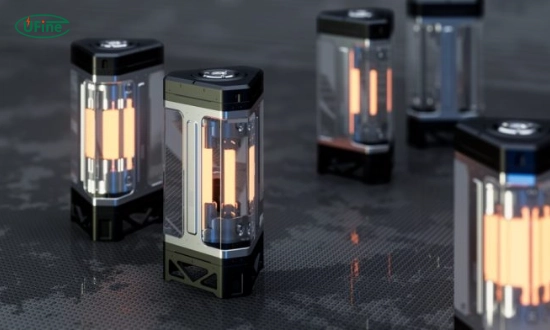
A quantum battery is not the same as a solid-state battery. A solid-state battery uses a solid electrolyte but still stores energy through electrochemical reactions. A quantum battery uses quantum behavior to change how energy is absorbed, stored, or released.
Part 2. How do quantum batteries work?
Most quantum battery designs include three parts:
- Charger: Supplies energy through light, microwaves, or an electric field.
- Quantum cells: Store energy in different quantum states.
- Extraction system: Converts stored energy into useful work or electrical current.
1. Energy enters the battery
The charger excites the quantum cells. Light may raise organic molecules to higher energy levels. Microwave signals may perform the same role in superconducting qubits.
2. The cells charge together
Quantum cells can share a common electromagnetic field or optical cavity. Under the right conditions, they act as one connected system rather than separate cells.
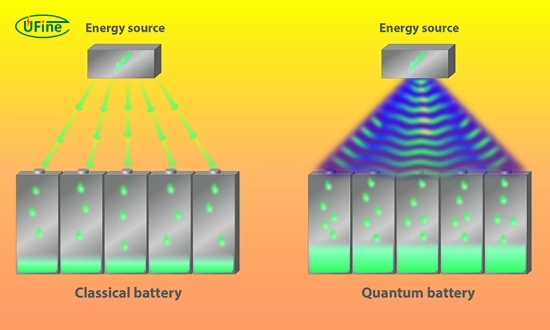
This behavior is called collective charging. It may increase total charging power as more cells are added.
3. The energy is stored
The cells remain in higher-energy states after charging. The system must keep these states stable until the energy is needed.
Heat, vibration, material defects, and electrical noise can disturb the system. This loss of controlled quantum behavior is called decoherence.
4. The energy is released
A useful battery must convert stored energy into a controlled output. Depending on the design, this output may be light, electrical current, or another form of work.
Quantum battery diagram: basic energy flow
- Energy input: Light, microwaves, or an electric field reaches the charger.
- Collective absorption: Connected quantum cells absorb energy together.
- Energy storage: The cells remain in higher-energy states.
- Discharge: The stored energy becomes light, current, or useful work.
Part 3. Which quantum effects support charging?
| Quantum Effect | Role in a Quantum Battery |
|---|---|
| Superposition | Allows a cell to exist in a mix of energy states during charging. |
| Coherence | Keeps the phase relationship between states stable enough for controlled energy transfer. |
| Entanglement | Creates strong links between cells and may support collective behavior in some designs. |
| Superabsorption | Allows a group of emitters to absorb light faster than the same number of isolated emitters. |
| Strong light–matter coupling | Creates shared states between photons and molecules inside an optical cavity. |
No single effect guarantees a faster battery. Performance also depends on the charger, cell structure, energy losses, and discharge method.
In 2022, researchers reported superabsorption in an organic microcavity. The results showed that larger molecular systems could absorb energy at a faster collective rate.
Part 4. Why can collective charging be faster?
Conventional cells are usually charged through separate electrical paths. Total charging power often rises in direct proportion to the number of cells.
A quantum battery may use one shared charging field. Its cells then absorb energy as a group. In some models, charging power rises faster than the number of cells.
This is called a quantum charging advantage. It does not create extra energy. The charger must still supply all stored energy.
The advantage only describes the rate of energy transfer under defined conditions. It depends on:
- The number of quantum cells
- The strength and range of cell interactions
- The charging method
- The available input power
- The coherence time
- Energy loss during storage and discharge
The Review of Modern Physics overview of quantum batteries explains that charging power, stored energy, stability, and usable output must be measured separately. A high charging rate alone does not make a practical battery.
Part 5. Quantum battery vs. lithium-ion battery
Lithium-ion batteries are mature commercial products. Quantum batteries are still research systems. This makes direct performance claims difficult.
| Feature | Lithium-Ion Battery | Quantum Battery |
|---|---|---|
| Storage method | Lithium ions move between two electrodes | Energy is held in quantum states or collective excitations |
| Development stage | Mass-produced | Lab research and small prototypes |
| Charging input | Electrical current | Light, microwaves, fields, or quantum coupling |
| Charging limit | Ion transport, heat, electrode design, and charger power | Coherence, coupling, input power, and energy extraction |
| Energy density | Measured in Wh/kg and Wh/L | No commercial Wh/kg or Wh/L value |
| Storage time | Can retain energy for long periods | Still short in current experiments |
| Cycle life | Measured through standard cycle tests | No useful commercial cycle-life data |
| Current use | Phones, EVs, wearables, tools, and energy storage | Quantum physics and energy research |
Commercial lithium-ion cells often reach about 150–250 Wh/kg, although the value depends on chemistry and cell design. Our guide to lithium-ion battery energy density explains how these figures affect battery size and runtime.
Quantum batteries have no comparable commercial energy-density range. Current devices are too small for a fair Wh/kg comparison.
Part 6. Are quantum batteries real?
Yes, but only as lab-scale systems. Researchers have demonstrated collective absorption, temporary energy storage, and electrical output.
2022: Superabsorption in an organic microcavity
A study in Science Advances placed organic dye molecules inside an optical cavity. The researchers observed charging rates that increased with system size.
This was important because the experiment used a physical organic material rather than only a theoretical model.
2026: Light-to-electricity discharge
A later study in Light: Science & Applications reported a microcavity system that captured light and produced electrical current.
The device showed a complete charge-discharge process under lab conditions. Its electrical output increased faster than the size of the active system in the tested low-light range.
The peer-reviewed study describes this result as superextensive electrical power from a quantum battery.
The result is a major research step. However, the device still has very low capacity, short storage time, and limited output. It is not a replacement for a commercial lithium battery.
Part 7. Potential benefits of quantum batteries
Higher charging power
Collective charging may help quantum cells absorb energy faster than separately charged cells. This is the main expected advantage.
Small-scale energy control
Quantum batteries may store or deliver energy inside very small systems. This could support quantum processors, sensors, or photonic chips.
Fast light absorption
Organic microcavity systems can use collective effects to capture light. This may support future low-light sensors or energy-harvesting devices.
Precise energy release
Some devices need short and controlled energy pulses rather than long discharge. Quantum systems may offer better control over when and where energy is released.
These are research benefits, not proven commercial specifications. Claims such as instant charging, zero heat, or unlimited cycle life are not supported by current devices.
Part 8. What are the main challenges?
Short coherence time
Quantum states are fragile. Heat, noise, vibration, and material defects can break the links needed for collective charging.
Limited storage time
A battery must hold energy until it is needed. Current quantum systems often store energy only long enough for lab measurements.
Very low capacity
Most experiments use small groups of particles or thin molecular layers. Their stored energy is far below even a small lithium-ion cell.
Difficult energy extraction
Electrodes and transport layers are needed to produce electrical current. These parts can add losses or disturb the quantum states.
Full-system efficiency
Fast quantum charging does not always mean high system efficiency. Engineers must include losses from the charger, light source, microwave controls, cooling system, and electrical output stage.
Heat and aging
Quantum batteries do not remove all heat or material damage. Real devices still contain conductors, interfaces, electrodes, and control parts that can heat up or degrade.
Manufacturing cost
Many designs need precise cavities, thin material layers, or superconducting circuits. There is no standard production process or supply chain for quantum batteries.
Part 9. Could quantum batteries replace lithium-ion batteries?
Quantum batteries are unlikely to replace lithium-ion batteries soon.
Lithium-ion cells already provide useful voltage, capacity, energy density, discharge current, cycle life, and storage time. They also have mature production and safety systems.
Before quantum batteries can compete, they must provide:
- Useful watt-hour capacity
- Long energy retention
- Repeatable charge-discharge cycles
- Stable voltage and current output
- Safe room-temperature operation
- Low total energy loss
- Scalable and affordable production
For products being designed today, engineers should compare proven lithium battery chemistries and their uses based on voltage, energy, power, temperature, size, and safety needs.
Other battery technologies are also closer to commercial use. Solid-state designs improve electrolyte safety, while graphene-enhanced lithium batteries aim to improve conductivity and charging performance within an electrochemical cell.
Part 10. Potential applications of quantum batteries
| Application | Potential Benefit | Current Status |
|---|---|---|
| Quantum computers | Local energy storage and precise power control | Possible research use |
| Nanoscale sensors | Small size and fast energy transfer | Long-term research area |
| Low-light energy harvesting | Collective light absorption | Demonstrated in lab microcavities |
| Photonic devices | Store and release energy inside optical systems | Possible specialized use |
| Wearable and medical devices | Small size and rapid charging | Not practical with current designs |
| Electric vehicles | Very high charging power | Far beyond current scale |
| Grid storage | Fast capture of renewable energy | No practical system demonstrated |
Part 11. Are quantum batteries the future of energy storage?
Quantum batteries may become one part of future energy storage. They are unlikely to replace every battery chemistry.
The first uses may appear in systems where quantum behavior already matters. These include quantum computers, nanoscale sensors, optical chips, and low-power energy-harvesting devices.
Phones, EVs, and grid storage need large capacity and long storage time. Lithium-ion, LiFePO4, sodium-ion, flow batteries, and solid-state batteries are better suited to these needs today.
Hybrid systems may be more realistic. A quantum component could capture energy quickly. An electrochemical battery could then store it for longer use.
When will quantum batteries be available?
There is no confirmed commercial release date. Forecasts that promise quantum battery phones or EVs within a few years remain speculative.
Specialized photonic or quantum devices may appear first. Consumer and industrial batteries will require major gains in capacity, retention time, cycling, output, safety, cost, and manufacturing scale.
Part 12. FAQs about quantum batteries
Do quantum batteries use lithium?
Not necessarily. Most designs use atoms, molecules, photons, quantum dots, or superconducting circuits rather than lithium-based electrodes.
Do quantum batteries need very low temperatures?
Some superconducting designs need extreme cooling. Organic microcavity systems can operate at room temperature.
Can a quantum battery charge instantly?
No practical quantum battery charges instantly. Charging time still depends on capacity, input power, energy loss, and system design.
Does faster charging mean higher energy density?
No. Charging power measures how fast energy enters the battery. Energy density measures how much energy the battery stores by mass or volume.
What will be the first use of quantum batteries?
Early uses may include quantum computers, nanoscale sensors, photonic devices, and low-power light-harvesting systems.
Related Tags:

More Articles

JST vs Molex: The Right Battery Connector Choice
JST or Molex for your battery? Learn how connector selection affects current, voltage drop, reliability, and device performance.
Custom Battery Pricing: Costs Manufacturers Don’t Mention
A low battery quote may not be the final cost. Discover common hidden expenses that affect custom lithium battery projects.
Battery Wire Length: Hidden Cause of Power Loss
A longer battery wire can cause voltage drop, power loss, and unstable operation. Learn how wire length affects battery performance.
How Device Sleep Modes Affect Battery Life
Think sleep mode extends battery life? Learn why devices still drain power and how firmware, hardware, and batteries affect runtime.
LiPo Battery and PCB Design: Clearance, Insulation, and Placement
Learn how to optimize LiPo battery PCB clearance, insulation, placement, wiring, and thermal design—and avoid common integration mistakes.


