
- Key Takeaways
- Part 1. What is a battery port?
- Part 2. Common battery port & battery charger connector types
- Part 3. Battery ports in electric vehicles (evs)
- Part 4. Battery ports in solar & energy storage systems
- Part 5. How to choose the right battery charging port
- Part 6. Common battery port problems (engineering perspective)
- Part 7. Battery port & battery charging cable connector maintenance best practices
- Part 8. Future trends in battery ports
- Part 9. Battery port & battery charger connector types FAQs
Selecting the correct battery port or battery charger connector type directly affects safety, efficiency, and long-term system reliability. Whether you are designing lithium battery packs, upgrading a battery charging cable connector, or choosing a battery charger plug type for industrial equipment, connector selection is not just a mechanical decision—it’s an electrical and thermal one.
This guide explains common battery ports, compares their electrical capabilities, and provides practical selection criteria for engineers and procurement teams.
Key Takeaways
- Battery port selection must match current rating, voltage, and duty cycle, not just physical fit.
- High-current systems (≥30A) require low-resistance connectors such as XT60 or Anderson Powerpole.
- Consumer and low-power electronics rely on DC barrel or USB battery charging ports for compact integration.
- Outdoor and energy systems demand waterproof and UV-resistant battery charging cable connectors like MC4.
- In EV and industrial systems, connector standards and compliance (UL, IEC) are as important as current capacity.
Part 1. What is a battery port?
A battery port (also called a battery charger port or battery connector interface) is the physical and electrical interface between a battery and a device or charger. It enables:
- Stable power delivery
- Controlled battery charging
- Safe disconnection and reconnection
- Protection against reverse polarity and short circuits
In lithium battery systems—especially custom packs like those used in industrial robotics or energy storage—connector design influences thermal performance and voltage drop.
Related reading: 10 Frequently Asked Questions About Battery Terminals
Part 2. Common battery port & battery charger connector types
Below are the most widely used battery charger connector types across industrial, automotive, and consumer sectors.
1 Anderson powerpole connectors
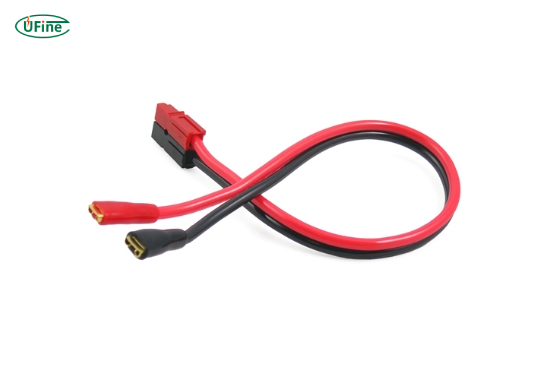
- Typical current range: 15A–180A
- Common applications: Solar storage, amateur radio, robotics, backup power systems
Why engineers choose it:
- Modular design
- Low contact resistance
- High current capability
- Field-serviceable
Limitations:
- Larger footprint
- Not sealed unless additional housing is used
Ideal for medium-to-high current battery ports where flexibility and reliability matter.
2 DC barrel connectors (cylindrical battery charger ports)
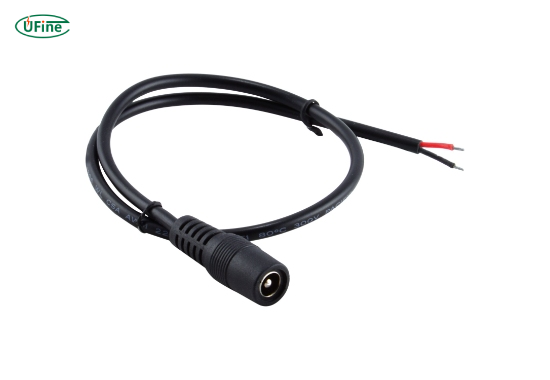
- Typical current range: 1A–5A
- Common applications: Routers, LED lighting, small electronics
Advantages:
- Compact
- Low cost
- Easy panel mounting
Disadvantages:
- Limited current capacity
- Weak retention under vibration
This is one of the most common battery charger plug types in low-power electronics.
3 XT60 connector
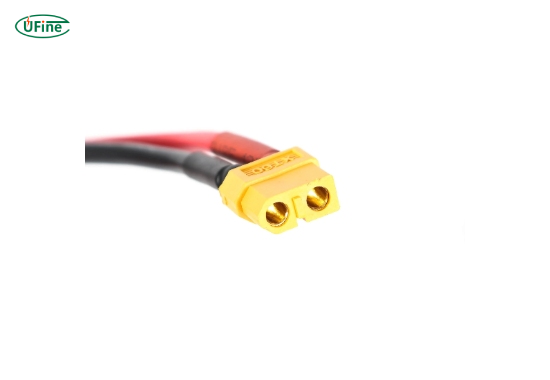
- Rated current: Up to 60A
- Common applications: Drones, RC vehicles, portable power tools
Advantages:
- Anti-spark design (in newer variants)
- Strong mechanical lock
- Reliable under vibration
Disadvantages:
- Larger than barrel connectors
- Not waterproof by default
Frequently used in lithium battery packs where moderate-to-high discharge rates are required.
4 USB battery charging ports
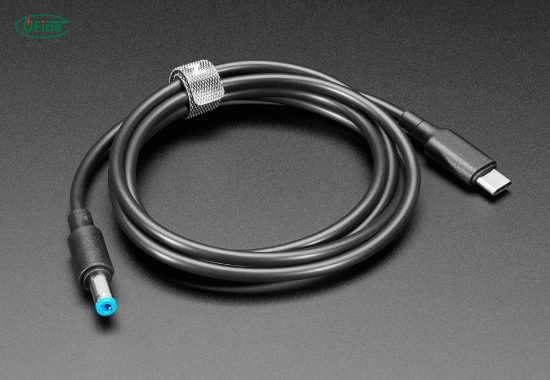
- Common standards: USB-A, Micro-USB, USB-C
- Power range: From 5W up to 240W (USB-C PD 3.1)
USB-C has become dominant due to:
- Reversible design
- Fast charging capability
- Wide ecosystem compatibility
However, USB ports are not suitable for high-discharge industrial battery packs.
For USB-C specifications, refer to the official USB Implementers Forum: https://www.usb.org/
5 SAE connector
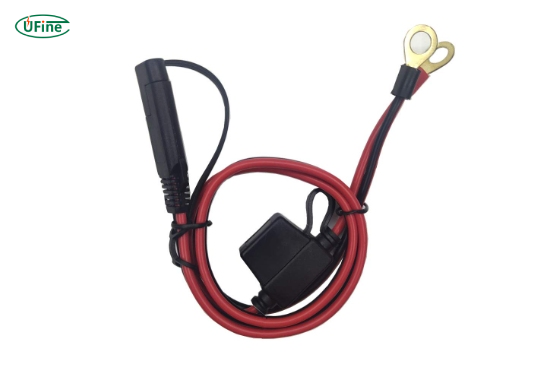
- Typical use: Automotive batteries, motorcycles, RVs
Advantages:
- Simple design
- Cost-effective
- Easy quick-disconnect
Limitations:
- Moderate current handling
- Limited sealing without covers
Common in trickle chargers and maintenance charging systems.
Part 3. Battery ports in electric vehicles (evs)
Electric vehicle battery charging ports follow standardized systems.
Major EV charging connector standards include:
- SAE J1772 (North America AC charging)
- CCS Combo (AC + DC fast charging)
- CHAdeMO (Japanese DC fast charging)
For compliance details, see SAE International: https://www.sae.org/
When selecting EV battery charger ports, consider:
- Charging level (Level 1, 2, DC fast)
- Communication protocol compatibility
- Thermal management under high current
Part 4. Battery ports in solar & energy storage systems
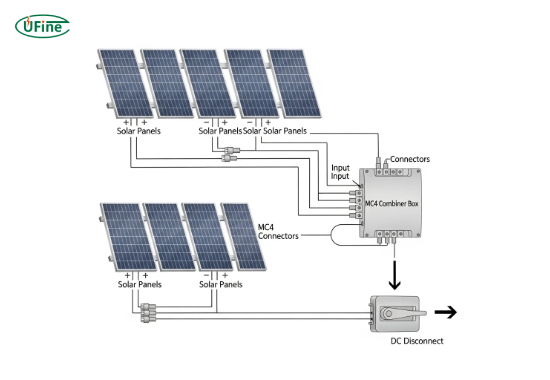
The most common solar battery charging cable connector is:
- MC4 connector
Why widely used:
- IP67 waterproof rating
- UV-resistant housing
- High-voltage tolerance
MC4 connectors are standardized under IEC 62852, ensuring compatibility across solar modules.
For larger off-grid systems, Anderson connectors may be used between battery banks and inverters.
Part 5. How to choose the right battery charging port
When selecting a battery port, evaluate the following:
-
Electrical Requirements
- Maximum continuous current
- Peak discharge current
- System voltage
- Contact resistance
Undersized battery ports cause overheating and voltage drop.
-
Mechanical Constraints
- Panel mounting vs cable connection
- Locking mechanism
- Mating cycle durability
-
Environmental Conditions
- IP rating requirements
- UV exposure
- Vibration resistance
-
Compliance & Safety
- UL certification
- IEC standards
- RoHS compliance
For custom lithium battery packs, port selection should be aligned with BMS design and charge profile. If you are developing custom battery systems, see: https://www.ufinebattery.com/
Part 6. Common battery port problems (engineering perspective)
| Problem | Root Cause | Engineering Solution |
|---|---|---|
| Loose connection | Insufficient retention force | Use locking connectors |
| Overheating | Underrated current capacity | Increase connector rating |
| Corrosion | Moisture exposure | Use sealed/IP-rated connectors |
| Voltage drop | High contact resistance | Select low-resistance terminals |
Part 7. Battery port & battery charging cable connector maintenance best practices
- Inspect for oxidation or discoloration
- Clean contacts using electrical contact cleaner
- Avoid mixing incompatible battery charger plug types
- Replace worn battery charging cable connectors immediately
In industrial lithium systems, periodic inspection should align with preventive maintenance cycles.
Part 8. Future trends in battery ports
- Higher power USB-C PD integration
- Anti-spark XT connectors
- Magnetic alignment connectors
- Increasing adoption of wireless charging for low-power systems
While wireless systems reduce mechanical wear, high-power industrial systems still rely on robust physical battery ports.
Part 9. Battery port & battery charger connector types FAQs
What is the most common battery port?
For consumer electronics, USB-C is currently the most common battery charging port. For industrial systems, XT60 and Anderson connectors dominate mid-to-high current applications.
How do I determine the correct battery charger connector type?
Match the connector to: Maximum current, Voltage level, Environmental exposure, Required safety certification. Avoid choosing connectors based solely on physical compatibility.
Can I overspec a battery port?
Yes. Using a higher current-rated battery port is electrically safe, but it may increase size and cost unnecessarily.
Are waterproof battery ports necessary for indoor systems?
Not typically. However, high-humidity or dusty industrial environments may still require sealed connectors.
What is the difference between a battery port and a battery charger port?
A battery port can refer to discharge or power output connection. A battery charger port specifically refers to the charging interface. In many systems, they are integrated but electrically separated through the BMS.
Related Tags:

More Articles

JST vs Molex: The Right Battery Connector Choice
JST or Molex for your battery? Learn how connector selection affects current, voltage drop, reliability, and device performance.
Custom Battery Pricing: Costs Manufacturers Don’t Mention
A low battery quote may not be the final cost. Discover common hidden expenses that affect custom lithium battery projects.
Battery Wire Length: Hidden Cause of Power Loss
A longer battery wire can cause voltage drop, power loss, and unstable operation. Learn how wire length affects battery performance.
How Device Sleep Modes Affect Battery Life
Think sleep mode extends battery life? Learn why devices still drain power and how firmware, hardware, and batteries affect runtime.
LiPo Battery and PCB Design: Clearance, Insulation, and Placement
Learn how to optimize LiPo battery PCB clearance, insulation, placement, wiring, and thermal design—and avoid common integration mistakes.


