
- Key takeaways
- Part 1. What is a lithium jet ski battery?
- Part 2. Lithium vs lead-acid jet ski batteries
- Part 3. What voltage is a jet ski battery?
- Part 4. How much do lithium jet ski batteries weigh?
- Part 5. How long does a jet ski battery last?
- Part 6. How to choose the best jet ski battery?
- Part 7. Can you replace a lead-acid jet ski battery with lithium?
- Part 8. Can you use a standard charger for a lithium jet ski battery?
- Part 9. How lithium batteries improve jet ski performance?
- Part 10. Are lithium jet ski batteries safe?
- Part 11. How to maintain a lithium jet ski battery?
- Part 12. Are lithium jet ski batteries eco-friendly?
- Part 13. Best lithium battery options for jet skis
- Part 14. FAQs about jet ski batteries
Need a lighter and longer-lasting jet ski battery? A lithium jet ski battery can improve starting power, reduce weight, and last longer than many lead-acid batteries.
This guide explains jet ski battery voltage, lifespan, safety, charging, and selection tips. It is built for PWC owners, rental fleets, and marine equipment buyers.
Key takeaways
- Most jet ski batteries use a 12V system. Always check the OEM battery spec before replacement.
- Lithium jet ski batteries are often 50–70% lighter than lead-acid batteries.
- A good LiFePO4 jet ski battery can last 5–10 years with proper use.
- The best jet ski battery must match voltage, size, terminal layout, and starting current.
- Choose a battery with a built-in BMS, sealed case, and strong vibration resistance.
Part 1. What is a lithium jet ski battery?
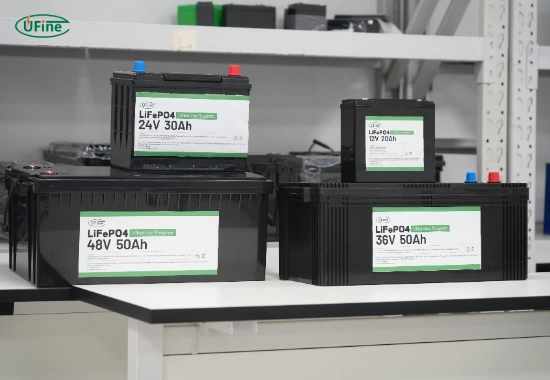
A lithium jet ski battery is a rechargeable battery for personal watercraft, also called PWC. It powers the starter motor, ignition system, ECU, display, sensors, and other electrical parts.
Most lithium jet ski batteries use LiFePO4 chemistry. LiFePO4 is also called lithium iron phosphate. It is widely used in marine and powersports batteries because it is stable, light, and long-lasting.
Unlike flooded lead-acid batteries, lithium batteries are sealed. They do not need water refilling. They also have lower self-discharge and more stable voltage output.
How it works
A lithium battery stores power by moving lithium ions between the positive and negative electrodes. During discharge, the battery sends power to the jet ski. During charging, the process is reversed.
This process is efficient. It helps the battery deliver strong current with less voltage drop. This is useful because jet skis need high current when starting the engine.
Why lithium fits jet ski use
Jet skis work in wet and rough environments. The battery must handle vibration, wave impact, moisture, and frequent starting.
A good lithium jet ski battery should include:
- High-discharge cells for engine starting
- A built-in Battery Management System, or BMS
- A sealed and strong outer case
- Stable terminals
- Good vibration resistance
Part 2. Lithium vs lead-acid jet ski batteries
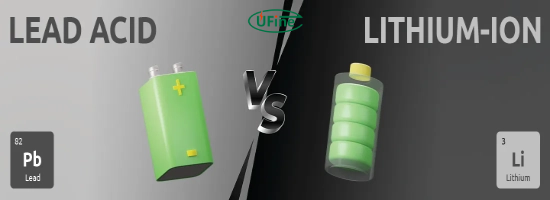
Lead-acid batteries are still common in many jet skis. They are easy to buy and cost less upfront. But lithium batteries offer better weight, longer life, and more stable power.
You can also read Ufine Battery’s full guide on lead-acid vs lithium-ion batteries for a deeper comparison.
| Factor | Lithium Jet Ski Battery | Lead-Acid Jet Ski Battery |
|---|---|---|
| Weight | Much lighter | Heavier |
| Starting Power | Strong output with less voltage sag | Good when new, weaker as it drains |
| Lifespan | Often 5–10 years | Often 2–3 years |
| Charging | Fast with the right charger | Slower |
| Maintenance | Low maintenance | May need more care |
| Storage | Low self-discharge | Higher self-discharge |
| Cost | Higher upfront cost | Lower upfront cost |
Lower weight
Weight affects how a jet ski feels on the water. A lighter battery can help improve handling and response. It also makes installation easier.
A lead-acid jet ski battery may weigh 12–20 lb. A lithium jet ski battery may weigh only 2–6 lb.
Better starting power
Jet skis need a strong burst of current to start the engine. Lithium batteries can deliver high current quickly. This helps reduce slow starts and voltage drop.
Longer service life
A lead-acid battery often lasts 2–3 years. A quality lithium jet ski battery can last 5–10 years when charged and stored correctly.
Faster charging
Lithium batteries can charge faster than lead-acid batteries. This is helpful for frequent riders, rental fleets, and racing users.
Stable voltage
Lithium batteries keep voltage more stable during discharge. This helps the starter, ECU, display, and sensors work more reliably.
Part 3. What voltage is a jet ski battery?
Most jet ski batteries are 12V batteries. But different battery types have different voltage ranges.
| Battery Type | Nominal Voltage | Fully Charged Voltage | Key Note |
|---|---|---|---|
| Lead-acid / AGM | 12V | About 12.6–12.8V | Voltage drops more as it discharges |
| LiFePO4 | 12.8V | About 14.4–14.6V | Voltage stays more stable |
Before choosing a battery, check the jet ski manual. Confirm the required voltage, battery size, terminal position, and starting current.
Do not choose a lithium battery only because it fits the battery tray. It must also match the electrical system.
Part 4. How much do lithium jet ski batteries weigh?
Weight is one of the biggest reasons to choose lithium. A lighter battery can improve handling, acceleration, and balance.
- Typical lead-acid jet ski battery: 12–20 lb, or about 5.5–9 kg
- Typical lithium jet ski battery: 2–6 lb, or about 0.9–2.7 kg
The exact weight depends on capacity, cell type, case design, and BMS structure.
For casual riders, the main benefit is easier handling and easier replacement. For racing riders, the lower weight may help the jet ski feel quicker and more responsive.
Part 5. How long does a jet ski battery last?
Jet ski battery life depends on battery type, riding habits, charger use, and storage. Lithium batteries usually last longer than lead-acid batteries.
| Battery Type | Typical Service Life | Main Risk |
|---|---|---|
| Flooded lead-acid | 1–3 years | Water loss, sulfation, vibration damage |
| AGM lead-acid | 2–4 years | Deep discharge, poor storage |
| LiFePO4 lithium | 5–10 years | Wrong charger, heat, poor BMS quality |
What affects battery lifespan?
- Charging: Use a charger made for lithium batteries.
- Storage: Store lithium batteries at about 50–70% charge.
- Temperature: Avoid high heat and freezing charge conditions.
- Deep discharge: Do not drain the battery too low.
- BMS quality: A good BMS protects the cells.
- Water exposure: Use a battery with a sealed case for marine use.
Part 6. How to choose the best jet ski battery?
The best jet ski battery is not always the largest battery. It is the battery that fits your jet ski and starts it safely.
Check these points before buying.
1. Match the voltage
Most jet skis use a 12V system. For lithium, this usually means a 12.8V LiFePO4 battery. Always check the OEM battery spec first.
2. Check starting current
The battery must provide enough starting current. Look for cold cranking amps, pulse cranking amps, or the battery maker’s starting rating.
If starting current is too low, the engine may crank slowly or fail to start.
3. Confirm size and terminal layout
The battery must fit tightly and safely. A loose battery can be damaged by vibration.
Check:
- Length, width, and height
- Terminal position
- Terminal type
- Cable reach
- Hold-down bracket fit
4. Choose a built-in BMS
A BMS is very important for lithium jet ski batteries. It helps protect the cells and the electrical system.
A good BMS should protect against:
- Overcharge
- Over-discharge
- Overcurrent
- Short circuit
- High temperature
- Cell imbalance
5. Choose a marine-ready case
Jet ski batteries face water, salt spray, shock, and vibration. Choose a battery with a sealed case and strong terminals.
6. Check lithium transport compliance
For commercial buyers, battery transport documents are important. Lithium batteries should meet UN 38.3 transport test requirements.
You can review the PHMSA lithium battery transport guidance for more information.
Part 7. Can you replace a lead-acid jet ski battery with lithium?
Yes, many jet skis can use a lithium battery instead of a lead-acid battery. But the lithium battery must be compatible.
Before replacement, check:
- Battery voltage
- Battery size
- Terminal layout
- Polarity
- Starting current
- Charger compatibility
- PWC warranty rules
A drop-in lithium battery may work for many owners. But OEM projects may need a custom pack.
Ufine Battery offers custom lithium battery solutions for applications that need a special size, BMS, connector, enclosure, or power design.
Part 8. Can you use a standard charger for a lithium jet ski battery?
Not always. Many lead-acid chargers are not designed for lithium batteries.
The wrong charger can:
- Undercharge the battery
- Overcharge the battery
- Damage the cells
- Trigger BMS protection
- Void the warranty
Use a charger made for LiFePO4 or lithium batteries. A good charger should support:
- CC/CV charging
- Correct lithium charging voltage
- Automatic shut-off
- No lead-acid repair or desulfation mode
- Temperature protection when needed
Avoid chargers with lead-acid repair mode unless the battery maker says they are safe.
Part 9. How lithium batteries improve jet ski performance?
A lithium jet ski battery can improve real riding performance in several ways.
Faster starts
Lithium batteries can deliver strong current quickly. This helps the starter motor crank faster.
Better handling
Lower weight can make the jet ski feel lighter and easier to control. This matters in sharp turns and quick moves.
Stable power for electronics
Modern jet skis use more electronics. Stable battery voltage helps the ECU, display, sensors, and accessories work well.
Less downtime
Lithium batteries charge faster and hold charge longer in storage. This helps riders spend less time maintaining the battery.
Part 10. Are lithium jet ski batteries safe?
Yes, lithium jet ski batteries are safe when they are well designed and used correctly. LiFePO4 is often the best lithium chemistry for PWC starting batteries.
Look for these safety features:
- Built-in BMS
- Short-circuit protection
- Overcurrent protection
- Overcharge protection
- Over-discharge protection
- Temperature protection
- Cell balancing
- Sealed and vibration-resistant case
Avoid cheap and unbranded lithium batteries. They may use weak cells, poor terminals, or low-quality BMS parts.
Part 11. How to maintain a lithium jet ski battery?
Lithium batteries need less care than lead-acid batteries. But simple habits can help them last longer.
Before riding
- Check the battery voltage.
- Make sure the terminals are tight.
- Check that the battery is fixed in place.
- Look for cracks, swelling, or water damage.
After riding
- Dry the battery area if water is present.
- Check cables after rough riding.
- Recharge the battery when needed.
Off-season storage
- Store the battery at about 50–70% charge.
- Disconnect it if the jet ski will not be used for weeks.
- Keep it in a cool and dry place.
- Avoid high heat and freezing storage areas.
- Check voltage every 2–3 months.
Part 12. Are lithium jet ski batteries eco-friendly?
Lithium batteries can reduce waste because they often last longer than lead-acid batteries. They also do not contain lead or sulfuric acid.
But they still need proper recycling. Do not throw used lithium batteries in household trash.
The U.S. EPA recommends taking used lithium-ion batteries to a battery recycling point or a household hazardous waste collection site. You can read the EPA guide on used lithium-ion battery recycling.
Part 13. Best lithium battery options for jet skis
The best battery depends on how the jet ski is used. A racing rider, rental fleet, and OEM buyer may need different battery features.
| Use Case | Main Need | Recommended Features |
|---|---|---|
| Recreational riding | Easy replacement | 12V LiFePO4, built-in BMS, correct size |
| Racing or freestyle | Low weight | Light case, high starting current, secure mounting |
| Rental fleet | Long life | Fast charging, durable case, strong BMS |
| OEM design | Custom fit | Custom size, connector, BMS, and enclosure |
| Saltwater use | Corrosion resistance | Sealed case and corrosion-resistant terminals |
Ufine Battery
Ufine Battery supports custom lithium battery solutions for marine, powersports, and industrial applications.
For jet ski and PWC projects, Ufine can customize battery size, voltage, capacity, BMS, connector, wire layout, and enclosure design.
This is useful when a standard jet ski battery cannot meet size, power, safety, or system needs.
Other powersports lithium battery brands
Jet ski owners may also compare brands such as Antigravity, Shorai, EarthX, Battery Tender, and NOCO.
When comparing brands, check starting current, size, BMS protection, water resistance, warranty, and model compatibility.
Part 14. FAQs about jet ski batteries
What is the best jet ski battery?
The best jet ski battery matches your PWC voltage, size, terminal layout, and starting current. For many users, a 12V LiFePO4 lithium jet ski battery is a strong choice.
How long does a jet ski battery last?
A lead-acid jet ski battery often lasts 2–3 years. A quality lithium jet ski battery can last 5–10 years with proper charging and storage.
What voltage is a jet ski battery?
Most jet ski batteries are 12V batteries. A LiFePO4 battery usually has a nominal voltage of 12.8V. Always check the owner’s manual before replacement.
Can I put a lithium battery in my jet ski?
Yes, in many cases. The lithium battery must match the OEM voltage, size, terminal layout, starting current, and charger requirements.
Do lithium jet ski batteries need a special charger?
Yes. Use a charger made for LiFePO4 or lithium batteries. Avoid lead-acid chargers with repair or desulfation mode unless the battery maker approves them.
Related Tags:

More Articles
What Is an LR14 Battery? Learn About This C-Size Cell
Learn what an LR14 battery is, its voltage, capacity, uses, equivalents, and the differences between LR14, R14, and HR14 C batteries.
9 Volt Battery Capacity Showdown: Lithium vs. Alkaline Batteries
Compare 9V lithium vs alkaline battery capacity, mAh ratings, runtime, cost, and performance. Find the best 9V battery for smoke alarms, microphones, and more.
Lipo Battery Storage Voltage Explained Simply
Lipo battery storage voltage is key for battery life. Storing at 3.7V–3.85V per cell keeps the ions in a good state, minimizing wear. Read now!
Do You Need to Buy a LiPo Battery Bag?
Do LiPo safety bags actually protect lithium batteries from fire? Learn the real risks, limitations, and whether you really need one.
Battery Packaging Types Explained: What You Should Know
Discover different battery packaging types, safety rules, and how proper packaging impacts performance. Learn about lithium, solar, car battery packaging!


