
- Part 1. Why does the voltage of lipo battery become low?
- Part 2. Lipo battery normal voltage
- Part 3. Signs of lipo battery low voltage
- Part 4. Understanding lipo battery low voltage cutoff (LVC)
- Part 5. How to fix and prevent low voltage issues
- Part 6. What are the hazards of lipo low voltage?
- Part 7. How to measure the voltage of lipo battery?
- Part 8. How to restore a low voltage lipo battery?
- Part 9. What should I do If lipo low voltage can’t be restored?
- Part 10. FAQs
If you’re using LiPo batteries for drones, RC vehicles, electric scooters, or any portable devices, chances are you’ve encountered low voltage issues. Maybe your device cut out mid-use, your battery looks puffed up, or it just doesn’t last as long as it used to. Don’t panic—understanding lipo low voltage and how to deal with it properly can save your battery, your device, and sometimes even your safety.
Key takeaways
- Low voltage in LiPo batteries can permanently reduce capacity or damage cells.
- Symptoms include device cutoff, voltage sag, and physical swelling.
- Understanding low voltage cutoff, proper charging, and safe storage is essential.
- Prevention is always better than attempting recovery—sometimes the battery is beyond saving.
Part 1. Why does the voltage of lipo battery become low?
There are several reasons why Lipo batteries experience low voltage.
- Over-Discharge: This is the number one reason for low voltage in Lipo batteries. When a battery is drained beyond its safe discharge voltage (typically 3.0V per cell), it can lead to irreversible damage. Over-discharging can happen if you’re using the battery too long or too hard without monitoring the voltage.
- High Current Draw: Lipo batteries can handle a lot of current, but if you’re using a battery that’s not rated for heavy loads (like on a high-powered drone or RC vehicle), the voltage can drop quickly.
- Aging Battery: As batteries age, their internal chemistry starts to degrade. This leads to a loss of capacity, and the battery may not hold a charge as well as it did when it was new. An aging battery is more likely to show signs of low voltage prematurely.
- Improper Storage: Storing your Lipo battery at too high or too low of a voltage can cause imbalances and deterioration. Ideally, you should store your Lipo batteries at around 3.8V per cell if they’re not in use for an extended period.
- Defective Battery: Sometimes, the issue could be with the battery itself. Manufacturing defects or damaged cells can result in low voltage problems even when the battery is new.
What happens inside a LiPo battery during low voltage
When a LiPo battery drops below its recommended voltage—usually around 3.0V per cell—chemical changes inside the cells start to occur. Lithium ions may plate unevenly on the anode, increasing internal resistance. This doesn’t just reduce performance; it can permanently degrade capacity. Even if the battery seems fine afterward, it may no longer hold a full charge.
Over-discharging can also cause electrolyte breakdown, damaging the separator and sometimes leading to short circuits. This is why low voltage isn’t just an inconvenience—it’s a real risk to battery health.
Understanding low voltage in theory is one thing, but seeing it in action helps you appreciate its importance:
- Drone flight cutoffs: A drone might drop mid-flight because one cell hit 2.9V, triggering the LVC. Repairing that cell is usually impossible—prevention is key.
- Electric scooter power loss: Riders often report sudden cutoff in winter. Cold temperatures increase internal resistance, accelerating voltage drop.
- RC car performance drop: During long runs, a partially discharged pack may cause slower acceleration or erratic performance, even if total voltage seems adequate.
These examples show that low voltage isn’t just theoretical—it impacts safety, performance, and longevity.
Part 2. Lipo battery normal voltage
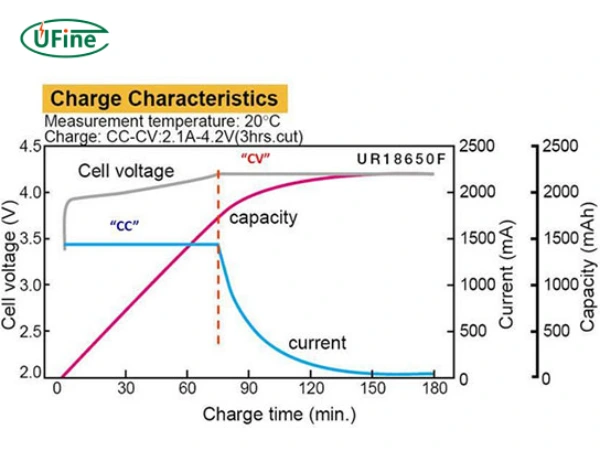
Before we dive into what happens with Lipo low voltage, let’s quickly review the normal voltage ranges for Lipo batteries. Understanding how your battery should behave in a healthy state will help you identify when something goes wrong.
Each Lipo cell has a nominal voltage of 3.7V. When fully charged, a single cell reaches about 4.2V, and when discharged, it should not go below 3.0V. However, keep in mind that continuous operation near the lower limit can shorten the battery’s lifespan.
For example:
- 1S Lipo: 3.7V nominal, 4.2V fully charged, 3.0V low voltage
- 2S Lipo: 7.4V nominal, 8.4V fully charged, 6.0V low voltage
- 3S Lipo: 11.1V nominal, 12.6V fully charged, 9.0V low voltage
- 4S Lipo: 14.8V nominal, 16.8V fully charged, 12.0V low voltage
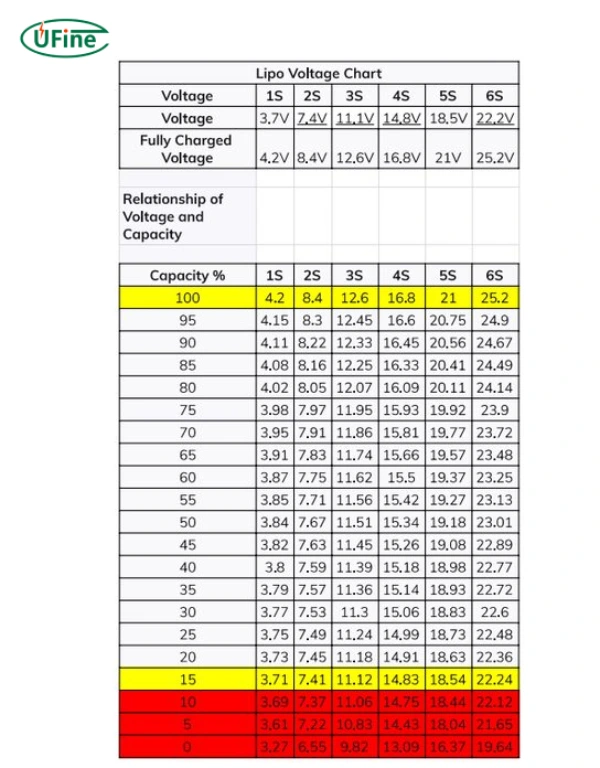
Understanding these figures is crucial because if the voltage drops below these safe levels, it can damage the battery permanently. But what exactly causes this drop? Let’s take a look at that next.
Useful Overview of Lipo Battery Voltage
Part 3. Signs of lipo battery low voltage
Recognizing Lipo low voltage early can save you a lot of headaches. So, how do you know if your Lipo battery is running low?
Here are some common signs to watch for:
- Reduced Performance: One of the first things you’ll notice is a drop in performance. Your drone may struggle to lift off, or your RC car may move sluggishly. This is often a result of insufficient power being supplied by the battery.
- Device Shutoff: Many devices, especially drones and RC cars, have built-in voltage cutoff systems that automatically power down the device when voltage gets too low. This is a safety feature, but it can leave you stuck in the middle of your fun.
- Flashing LED Indicators: Some devices include LED indicators that blink or flash when the battery voltage drops below a safe level. Pay attention to these signals, as they can prevent you from damaging the battery.
- Warning Alarms: Many newer devices have audible alarms or beep warnings when the voltage reaches a critically low point.
These signs can help you catch the issue before it causes permanent damage to your Lipo battery. If you notice any of these, it’s time to act quickly!
Part 4. Understanding lipo battery low voltage cutoff (LVC)
Most modern devices or BMS include a low voltage cutoff (LVC) feature. Think of it as a safety net: it sacrifices some runtime to protect the battery from permanent damage.
Why LVC matters:
- Prevents over-discharge: Drawing too much current from a depleted battery can ruin the cells.
- Maintains balance: In multi-cell packs, LVC ensures no single cell falls too low.
- Improves longevity: Avoiding deep discharge keeps your battery healthier over time.
Without LVC, you risk creating “zombie cells”—cells that look normal but can no longer safely hold a charge.
Part 5. How to fix and prevent low voltage issues
If your LiPo is already in a low voltage state, act carefully. Recovery is sometimes possible, but safety comes first.
- Slow, balance charging: Use a charger with a balance mode and low current setting. Avoid fast-charging a stressed battery.
- Check cell balance: Unequal voltages across cells indicate internal problems. Many chargers display individual cell readings.
- Storage voltage: Never store fully discharged LiPos. Keep them at 3.7–3.85V per cell.
- Temperature considerations: Charging in extreme temperatures stresses the battery and worsens low voltage damage.
| Tip | Why it works |
|---|---|
| Balance charge | Ensures all cells reach safe voltage evenly |
| Low-current recharge | Reduces stress on weakened cells |
| Storage at 3.7–3.85V | Prevents further low-voltage damage during downtime |
| Temperature-safe charging | Avoids internal stress and chemical degradation |
Sometimes, low voltage LiPos cannot be safely revived. In such cases, it’s better to dispose of the battery following safety guidelines rather than risk fire.
Part 6. What are the hazards of lipo low voltage?
Low voltage isn’t just a performance issue—it can actually be dangerous. Let’s look at the risks associated with Lipo low voltage:
- Permanent Damage to the Battery: If a Lipo battery is discharged below its safe voltage for too long, it can suffer permanent damage. This may render the battery useless or cause it to fail prematurely.
- Reduced Battery Life: Consistently allowing your Lipo battery to discharge too much can significantly shorten its lifespan. A well-maintained battery lasts much longer.
- Overheating: Low voltage batteries that are forced to operate can overheat, especially during charging. Overheating can lead to battery degradation or even fire risks if the battery is not properly handled.
- Safety Hazards: In extreme cases, if the battery is subjected to low voltage repeatedly, it could lead to thermal runaway, where the battery becomes unstable, potentially catching fire or exploding.
As you can see, dealing with Lipo low voltage quickly is crucial for both performance and safety.
Part 7. How to measure the voltage of lipo battery?
Measuring the voltage of your Lipo battery is simple but essential. Here’s how to do it:
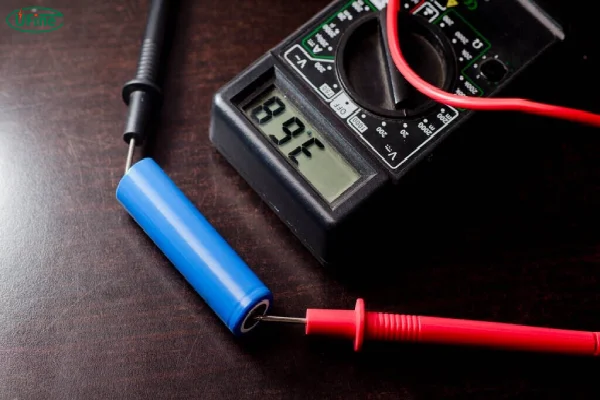
- Use a Voltmeter: A standard voltmeter or Lipo battery checker is the most accurate tool to measure voltage. Make sure the meter is set to DC voltage.
- Measure Each Cell: For multi-cell batteries (like 2S, 3S, or 4S), measure the voltage of each individual cell. For example, for a 3S battery, you’ll need to measure the voltage of each of the three cells.
- Measure the Total Voltage: To get the overall battery health, add up the voltages of all cells. For instance, a 3S battery should show 11.1V nominal and 12.6V fully charged.
By measuring the voltage regularly, you can catch issues before they get serious.
Part 8. How to restore a low voltage lipo battery?
If your Lipo battery is showing signs of low voltage, don’t panic. It might still be possible to restore it, depending on how low the voltage has dropped. Here’s how you can try to restore it:
- Slow Charging: Use a balanced charger and set it to a low charge rate (e.g., 0.5C). This will help bring the voltage back up gradually without overloading the battery.
- Balance Charging: If you have a multi-cell Lipo battery, it’s crucial to balance the cells during charging. Use a charger with a balance charging function to ensure all cells are charged evenly.
- Recondition the Battery: Some high-end chargers have a reconditioning mode, which discharges and recharges the battery in cycles to help restore its capacity.
However, if the voltage is too low (e.g., below 2.5V per cell), it may be impossible to restore the battery safely.
Fast Charging vs Slow Charging: Which is Better for your Lithium Battery?
Part 9. What should I do If lipo low voltage can’t be restored?
If your Lipo battery cannot be restored and the voltage is still low despite attempts, it may be time to replace the battery. Continuing to use a damaged or low voltage battery is risky and can lead to further damage or safety issues.
In this case, here’s what you should do:
- Dispose of the Battery Safely: Never throw a Lipo battery in the trash. Lipo batteries need to be disposed of at a certified recycling center that accepts Li-ion or LiPo batteries.
- Buy a Replacement: Replace your damaged Lipo battery with a new one, and make sure you follow all charging and storage recommendations to prevent similar issues.
Part 10. FAQs
What tools can help prevent low voltage in LiPo batteries?
Balance chargers, in-line voltage monitors, and battery management systems (BMS) are essential for tracking voltage and protecting cells.
Can low voltage cause permanent swelling of LiPo cells?
Yes. Swelling usually indicates internal chemical damage. Swollen cells are unsafe and should never be reused.
What’s the difference between low voltage and full discharge?
Low voltage occurs when cells drop below the safe operating threshold (usually ~3.0V per cell), while full discharge is complete depletion. LVC protects against low voltage before full discharge.
How can I safely recover a low voltage LiPo?
Use a low-current balance charge and monitor each cell’s voltage carefully. Avoid fast charging, and stop immediately if any cell shows swelling or abnormal readings.
Does LVC activation mean the battery is damaged?
Not necessarily. LVC protects the battery from damage, so activation can indicate proper functioning rather than harm—but repeated LVC events may degrade battery life.
Can using mismatched cells increase low voltage risk?
Yes. Mixing old and new cells or different brands causes uneven discharge, increasing the likelihood of some cells hitting low voltage before others.
Related Tags:

More Articles

Comparative Analysis: 14500 Battery Vs. 18650 Battery
Compare 14500 vs 18650 batteries by size, voltage, capacity, runtime, discharge current, charging, safety, and applications to choose the right cell.
12V Lithium-Ion What Voltage at Fully Charged and Why Your Battery Might Not Reach It
Check the 12V lithium battery voltage chart for 3S Li-ion and 4S LiFePO4. Learn full charge, resting voltage, charger limits, and fault checks.
LiFePO4 Voltage Chart Guide: Everything You Need to Know
Check the LiFePO4 voltage chart for 3.2V, 12V, 24V and 51.2V batteries. Compare SOC, charging voltage, cutoff limits and internal resistance.
Lithium Ion Cell Sizes: A Comprehensive Guide
Compare lithium ion cell sizes with a chart of dimensions, capacity ranges, cell types, applications, and key factors for selecting the right battery.
6 Volt Tractor Battery vs 12 Volt: Which One Fits Your Farm Equipment Best?
Compare 6V and 12V tractor batteries. Learn which voltage fits vintage or modern tractors, which specifications matter, and how to convert safely.


