- Key Takeaways
- Part 1. What is a lithium ion battery charge cycle?
- Part 2. Lithium battery cycle count: why it matters in real applications
- Part 3. Deep vs shallow charging: which is better?
- Part 4. How to run a battery cycle on lithium ion battery? (calibration purpose)
- Part 5. How do I prevent excessive battery cycles?
- Part 6. How to prolong lithium ion battery cycle life?
- Part 7. Can lithium batteries be recycled?
- Part 8. Application considerations: choosing the right cycle life
- Part 9. FAQs about lithium ion battery cycle life
Understanding lithium ion battery charge cycles is essential for engineers, procurement managers, and product designers who rely on long-lasting power systems. Whether you’re evaluating cycle life for industrial equipment, medical devices, or consumer electronics, knowing what is a charge cycle and how it impacts performance directly affects total cost of ownership.
Key Takeaways
- A lithium battery charge cycle equals 100% total discharge accumulation—not necessarily one full 0–100% use.
- Lithium ion battery cycle life is typically rated until capacity drops to 70–80% of original.
- Shallow charging (20–80%) significantly increases usable cycle life compared to deep cycling.
- Heat, high voltage (4.2V+), and deep discharge are the primary causes of accelerated degradation.
- Proper charging strategy can often double real-world cycle count compared to poor charging habits.
- Lithium batteries are recyclable, and recycling helps recover valuable metals like lithium, nickel, and cobalt.
Part 1. What is a lithium ion battery charge cycle?
1 What is a charge cycle?
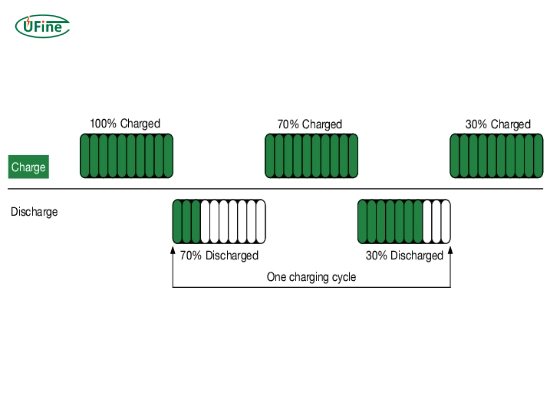
A charging cycle (also called a battery cycle or lithium battery cycle) refers to the cumulative use of 100% of a battery’s capacity.
Many people ask:
- What is a battery cycle?
- What is a charging cycle?
- What is lithium battery cycle count?
A full lithium battery charge cycle occurs when:
- You discharge 100% of the battery’s rated capacity (not necessarily in one go).
For example:
- Use 50% today
- Recharge
- Use another 50% tomorrow
That equals one full cycle, even though you never drained it to zero at once.
This is how lithium battery cycle count is calculated by battery management systems (BMS).
2 What is lithium ion battery cycle life?
Lithium ion battery cycle life refers to the total number of charge cycles a battery can complete before its capacity falls to a defined percentage—usually 70–80% of original capacity.
Typical Cycle Life Ranges
| Battery Type | Typical Cycle Life (to 80%) |
|---|---|
| Standard Li-ion (NCM/NCA) | 300–500 cycles |
| High-quality 18650 cells | 500–1000 cycles |
| LiFePO4 (LFP) | 2000–6000 cycles |
Cycle life depends on:
- Depth of discharge (DoD)
- Charge voltage
- Temperature
- Discharge rate (C-rate)
- Cell chemistry
- BMS design
For example, operating between 20% and 80% instead of 0% to 100% can increase cycle life by 30–50%.
If you’re selecting cells for long-life applications, reviewing the cycle life curve in the battery datasheet is critical.
You can also explore our guide on: 👉 18650 lithium battery specifications and applications
Part 2. Lithium battery cycle count: why it matters in real applications
Tracking lithium battery cycle count is important because:
- Every cycle slightly reduces maximum capacity.
- Internal resistance increases over time.
- Heat generation rises with aging.
In industrial equipment, high cycle count can lead to:
- Reduced runtime
- Voltage instability
- Increased downtime
- Higher replacement costs
For fleet or IoT deployments, understanding cycle accumulation helps predict maintenance intervals.
Part 3. Deep vs shallow charging: which is better?
1 Deep charging (0–100%)
Deep cycling means:
- Charging to 100%
- Discharging close to 0%
Effects:
- Higher electrode stress
- Increased lithium plating risk
- Faster capacity degradation
- Reduced total cycle life
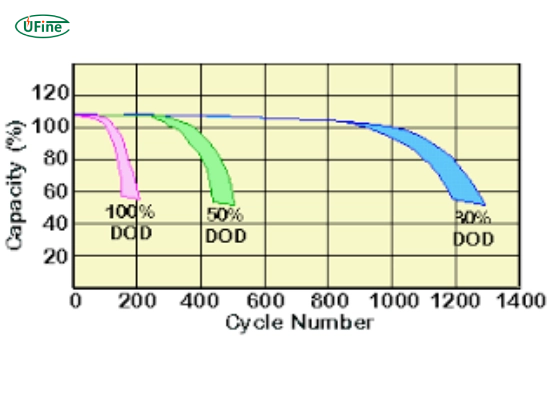
Frequent deep cycles significantly shorten lithium ion battery cycle life.
2 Shallow charging (20–80%)
Shallow cycling keeps the battery within moderate voltage range.
Benefits:
- Lower chemical stress
- Reduced heat
- Slower SEI layer growth
- Extended cycle life
This is why many EV and industrial battery systems limit usable capacity.
Part 4. How to run a battery cycle on lithium ion battery? (calibration purpose)
Some users ask: How to run a battery cycle on lithium ion battery?
Important distinction:
- Lithium-ion batteries do NOT require regular deep cycles
- But devices may need occasional calibration
For calibration (not health improvement):
- Use battery to ~10–15%
- Charge uninterrupted to 100%
- Resume partial charging habit
This resets battery percentage accuracy—not chemistry health.
Part 5. How do I prevent excessive battery cycles?
To reduce unnecessary cycle accumulation:
- Avoid fully draining the battery daily.
- Reduce high-drain usage when not required.
- Use energy-efficient system settings.
- Increase battery capacity to reduce depth of discharge.
- Optimize BMS cutoff voltages.
In industrial pack design, increasing nominal capacity by 20% can significantly reduce annual cycle count.
Part 6. How to prolong lithium ion battery cycle life?
1 Control depth of discharge (DoD)
Lower DoD = Longer life
- 100% DoD → ~500 cycles
- 50% DoD → ~1200 cycles
- 30% DoD → 2000+ cycles (chemistry dependent)
2 Limit maximum voltage
Charging to 4.1V instead of 4.2V per cell can:
- Reduce stress
- Increase cycle life by 20–40%
Many industrial systems use conservative voltage limits.
3 Avoid heat
Heat is the #1 lithium battery killer.
Best operating temperature: 15°C–30°C (59°F–86°F)
Avoid:
- Charging below 0°C
- Operating above 45°C
For high-temperature environments, consider: 👉 High-temperature lithium battery solutions
4 Minimize fast charging
Fast charging increases:
- Internal temperature
- Lithium plating risk
- Mechanical stress
Use standard charging rates when cycle life is more important than speed.
5 Proper storage
For long-term storage:
- Charge to 40–60%
- Store in cool, dry environment
- Avoid full charge storage for months
Part 7. Can lithium batteries be recycled?
Yes. Lithium batteries can be recycled, and recycling is increasingly important for sustainability and resource recovery.
According to the U.S. Environmental Protection Agency (EPA), lithium-ion batteries should never be disposed of in regular trash.
Recycling Process Overview
- Collection and sorting
- Safe discharge
- Mechanical shredding
- Material separation
- Chemical extraction
- Refining and purification
Recovered materials include:
- Lithium
- Nickel
- Cobalt
- Copper
- Aluminum
Recycling reduces mining demand and environmental impact.
Part 8. Application considerations: choosing the right cycle life
Different applications require different cycle expectations:
| Application | Recommended Cycle Life |
|---|---|
| Consumer electronics | 500+ cycles |
| Power tools | 800+ cycles |
| Medical devices | 1000+ cycles |
| Solar storage | 3000+ cycles |
| Industrial backup | 2000+ cycles |
For customized cycle life solutions: 👉 Custom lithium battery pack services
Part 9. FAQs about lithium ion battery cycle life
What is a lithium ion battery charge cycle?
A charge cycle equals 100% accumulated discharge, not necessarily one full 0–100% event. Two 50% discharges equal one full cycle.
How many cycles does a lithium-ion battery last?
Standard lithium-ion batteries last 300–500 cycles to 80% capacity. LiFePO4 batteries can exceed 3000 cycles.
Does charging to 100% damage lithium batteries?
Occasional full charge is fine, but daily charging to 100% accelerates degradation due to high voltage stress.
Can lithium batteries be recycled?
Yes. Lithium batteries are recyclable and should be processed through certified recycling facilities to recover valuable materials.
How do I extend lithium battery cycle life?
- Keep charge between 20–80%
- Avoid high temperatures
- Reduce deep discharges
- Limit fast charging
- Store at 40–60% charge
Related Tags:

More Articles

Best 24V Lithium Battery: Top 10 Compared
Discover the top 24V lithium batteries. We compare capacity, price, cycle life, safety features, and the best options for different applications.
Top LFP Cell Manufacturers in China You Should Know
Looking for reliable LiFePO4 cells? Explore China's top LFP battery manufacturers, key technologies, production capabilities, and supplier selection tips.
Check If Your Charger Works: Simple Test Guide
Think your battery charger's broken? Quick tests can show you for sure. See if it’s the charger or the battery that's causing issues. Read more.
Best Camera Batteries: 7 Brands Compared & Tested
Looking for the best camera battery? Compare 7 top brands, including OEM and third-party options, to find the right battery for your camera.
What You Need to Know About Portable Fan Batteries
Discover the best portable electric fan battery, its types, lifespan, and maintenance tips. Learn how to choose the right one and keep it running longer.