
- LiFePO4 vs Lithium-ion Polymer (Quick Answers)
- Part 1. LiFePO4 vs lithium-ion polymer: Quick comparison table
- Part 2. What are LiFePO4 batteries?
- Part 3. LiFePO4 battery advantages
- Part 4. LiFePO4 battery disadvantages
- Part 5. What are lithium-ion batteries?
- Part 6. Lithium-ion battery advantages
- Part 7. Lithium-ion battery disadvantages
- Part 8. LiFePO4 vs lithium-ion polymer: 5 Critical differences you must know
- Part 9. LiFePO4 vs Lithium-ion Polymer: Best Choice by Use Case
- Part 10. LiFePO4 vs lithium-ion polymer: Top 7 FAQs
Comparing LiFePO4 and Lithium-ion Polymer batteries is an essential journey into the realm of energy storage solutions. This article delves into the differences, strengths, and weaknesses of the two battery chemistries and helps you decide by application scenario.
LiFePO4 vs Lithium-ion Polymer (Quick Answers)
- Which is safer? LiFePO4 — iron-phosphate chemistry prevents thermal runaway; LiPo requires protection circuits.
- Which lasts longer? LiFePO4 — typically 2,000–7,000 cycles vs LiPo 300–500 cycles.
- Which has higher energy density? Lithium-ion Polymer — ~150–200 Wh/kg vs LiFePO4 ~90–120 Wh/kg.
- Best for solar/RV/EV? LiFePO4 for deep-cycle stability and thermal resilience.
- Best for compact electronics? Lithium-ion Polymer for thin form factors and higher gravimetric density.
Part 1. LiFePO4 vs lithium-ion polymer: Quick comparison table
| Feature | LiFePO4 | Li-ion Polymer |
|---|---|---|
| Energy Density | 90-120 Wh/kg | 150-200 Wh/kg |
| Cycle Life | 2,000-7,000 cycles | 300-1,000 cycles |
| Safety Risk | No thermal runaway (high thermal stability) | Requires protection circuits; higher thermal runaway risk |
| Cost (per kWh) | $150-$250 | $100-$150 |
| Best For | Solar storage / Electric vehicles / RV | Smartphones / Drones / Thin electronics |
Key Takeaway: LiFePO4 offers a much longer lifespan and superior safety, while Li-ion Polymer provides substantially higher energy density for compact devices.
Part 2. What are LiFePO4 batteries?
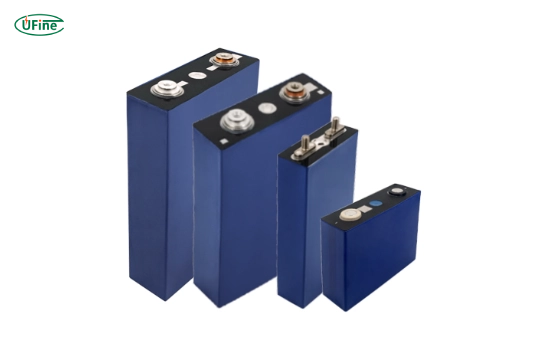
Definition: LiFePO4 (lithium iron phosphate) is a lithium-ion chemistry known for high thermal stability, long cycle life, and safe deep-cycle performance — preferred for solar storage, RV, and EV battery packs.
A lithium iron phosphate battery uses lithium iron phosphate as the cathode. Common cathode materials across lithium batteries include lithium cobalt oxide, lithium manganate, nickel-based ternary materials, and lithium iron phosphate. During charge/discharge, lithium ions shuttle between electrodes through the separator and electrolyte.
Part 3. LiFePO4 battery advantages
- Long life: LiFePO4 typically exceeds 2,000 cycles and can reach 7,000 cycles under controlled conditions; practical lifespan is often 7–10 years for stationary applications.
- Safe to use: LiFePO4 shows high thermal stability and is much less likely to experience thermal runaway; nail-penetration and overcharge tests often show heat rise without combustion.
- Fast charging: Using appropriate chargers and cell designs, LiFePO4 supports high-rate charging (e.g., 1–1.5C) with limited heat when properly managed.
- High-temperature resistance: LiFePO4 cathode materials retain structure at high temperatures and resist oxygen release — improving safety during abuse.
- Large capacity (vs lead-acid): LiFePO4 packs are significantly lighter and more compact than lead-acid equivalents while delivering deeper usable capacity with no memory effect.
- Lightweight: Compared with lead-acid of equal capacity, LiFePO4 batteries are smaller and lighter (roughly 1/3 weight of lead-acid for the same usable energy).
Part 4. LiFePO4 battery disadvantages
- Poor low-temperature performance: Capacity and power drop significantly below -20°C unless cell chemistry and system-level thermal management are used.
- Lower energy density: Compared with LiPo / NMC, LiFePO4 requires larger volume/weight for the same energy.
- Pack-level inconsistency: Manufacturing variability can cause inconsistent cell-to-cell performance if not tightly controlled.
- Higher upfront cost: Production costs and materials can make LiFePO4 more expensive per kWh upfront; total cost of ownership often favors LiFePO4 for long-use cases.
Part 5. What are lithium-ion batteries?
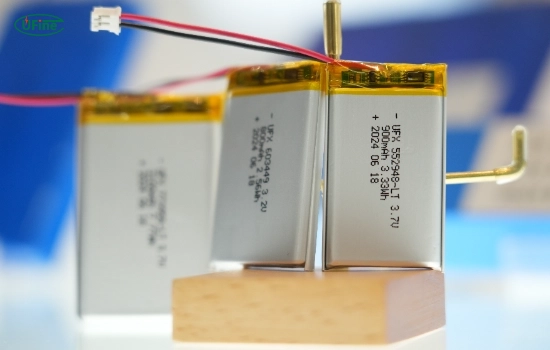
Lithium-ion polymer batteries use a polymer or gel electrolyte and often cobalt/nickel-based cathodes to achieve higher energy density and thin form factors for mobile and compact devices.
Lithium-ion batteries (including LiPo) are secondary batteries using lithium ions migrating between cathode and anode through an electrolyte and separator. They typically consist of positive electrode, negative electrode, electrolyte, and separator.
Part 6. Lithium-ion battery advantages
- High voltage per cell: Nominal cell voltages around 3.6–3.8V enable higher pack energy for fewer cells.
- High specific energy: LiPo/NMC chemistries achieve higher Wh/kg (150–200 Wh/kg typical), enabling thinner, lighter devices.
- Good cycle life for moderate use: Many Li-ion cells exceed 500 cycles; more advanced chemistries and cycling strategies push this higher.
- Low self-discharge: Li-ion self-discharge is low compared to NiCd/NiMH.
- Fast charging: Certain designs support rapid charging; system-level controls required to protect against abuse.
Part 7. Lithium-ion battery disadvantages
- Higher thermal runaway risk: Certain cobalt-rich cathodes can release oxygen under abuse and propagate thermal events without robust protection.
- Voltage variability: Discharge voltage varies more than older chemistries, requiring electronics to manage available energy interpretation.
- Sensitivity to high-rate discharge: High C-rate discharging may accelerate capacity loss and increase internal heating if not engineered for the application.
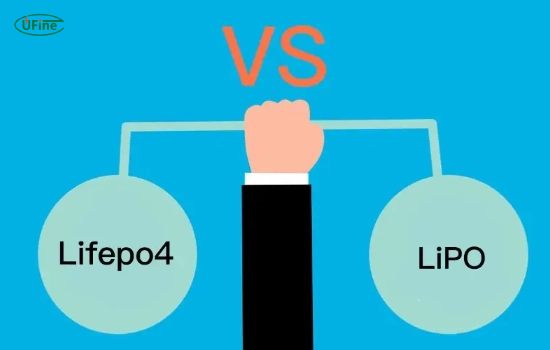
Part 8. LiFePO4 vs lithium-ion polymer: 5 Critical differences you must know
1 Chemical Stability & Safety
LiFePO4 uses an olivine iron-phosphate structure that prevents oxygen release even at elevated temperatures, making it inherently safer. LiPo/NMC chemistries require robust BMS and protective hardware to manage thermal risks.
2 Temperature Performance
Operational range comparison:
- LiFePO4: -20°C to 60°C (approx. 80% capacity retention at -20°C with cell/pack design)
- Li-ion Polymer: 0°C to 45°C (capacity degrades more quickly at negative temps)
Field tests often show LiFePO4 retains higher efficiency at elevated temperatures vs LiPo chemistry.
3 Energy Density Comparison
| Type | Volumetric Density | Gravimetric Density |
|---|---|---|
| LiFePO4 | ~220 Wh/L | 90-120 Wh/kg |
| Li-ion Polymer | ~300 Wh/L | 150-200 Wh/kg |
Example: A 10Ah LiPo pack can be ~30% smaller than a LiFePO4 pack of the same energy.
4 Lifespan & Cost Efficiency
Cycle Life:
- LiFePO4: 2,000–7,000 cycles (80% DoD target)
- Lithium-ion Polymer: 300–1,000 cycles (varies by chemistry and DoD)
Long-term cost-per-cycle for LiFePO4 is frequently lower due to extended cycle life despite higher upfront cost.
5 Cost Analysis
Initial Cost (approx):
- LiFePO4: $0.25–$0.35/Wh
- Lithium-ion Polymer: $0.15–$0.25/Wh
Long-term Value: Over 10 years, LiFePO4’s cost-per-cycle can be 60–80% lower depending on usage profile.
Recommended Reads
Part 9. LiFePO4 vs Lithium-ion Polymer: Best Choice by Use Case
1 Solar Storage / RV / Off-grid
Problem: Need stable power, deep cycles, high calendar life.
Best Choice: LiFePO4 — long cycle life, strong thermal stability, lower maintenance.
Related Product: Ufine LFP-12V100Ah — example: 85% capacity retention after five years of daily cycling (field result).
2 Drones / FPV / Robotics
Problem: Need high discharge (C-rate) and light weight.
Best Choice: Lithium-ion Polymer — higher Wh/kg and high discharge designs (e.g., 60–150C packs).
Related Product: Ufine High-Rate LiPo Series
3 Consumer Electronics (Phones, Tablets)
Problem: Thin profile, high energy in small volume.
Best Choice: Lithium-ion Polymer.
Related Product: Ufine 3.7V Ultra-thin LiPo
4 EV / ESS Battery Packs
Problem: Heat resistance, deep cycling, long TCO (total cost of ownership).
Best Choice: LiFePO4.
Related Product: Ufine LFP 3.2V Cells (Module-grade)
Part 10. LiFePO4 vs lithium-ion polymer: Top 7 FAQs
Which battery lasts longer: LiFePO4 or lithium polymer?
LiFePO4 lasts substantially longer — typically 2,000–7,000 cycles vs LiPo 300–1,000 cycles.
- LiFePO4: 2,000–7,000 cycles (80% DoD benchmark)
- LiPo: 300–1,000 cycles depending on chemistry and DoD
Is it worth paying 30% more for a LiFePO4 battery?
Yes for long-term applications — LiFePO4 often yields lower cost-per-cycle and fewer replacements.
- LiFePO4: lower replacement frequency and lower maintenance
- LiPo: lower initial cost but more frequent replacements for similar service life
Can a lithium-ion charger charge a LiFePO4 battery?
No — voltage profiles differ. Use a dedicated LiFePO4 charger or a charger with LiFePO4 profile.
- Li-ion charger cutoff ~4.20V/cell (NMC/NCA), LiFePO4 full ~3.60–3.65V/cell
- Mismatch increases risk of under/overcharge and reduces life
Can LiFePO4 batteries explode if overcharged?
Very unlikely — LiFePO4 is far less prone to catastrophic thermal events than LiPo/NMC.
- LiFePO4 typically heats without oxygen release; LiPo/NMC can more easily run away under severe abuse
- Still use a BMS and proper charging controls
Which battery performs better in cold temperatures?
LiFePO4 generally retains more usable capacity at moderate cold compared to some LiPo chemistries, but both suffer at extreme subzero temps.
- Capacity retention at -20°C: LiFePO4 ≈80% (cell/pack dependent), LiPo often drops more sharply
- Thermal management improves cold-start performance for both
How to choose between LiFePO4 and LiPo for product design?
Choose LiFePO4 for energy storage, long-life, and safety-critical applications; choose LiPo for weight/volume-sensitive, high-power devices.
What protection is needed for each chemistry?
Both require BMS, cell balancing, and proper enclosure; LiPo often needs stricter thermal monitoring and overcurrent protection.
Related Tags:

More Articles
Best 24V Lithium Battery: Top 10 Compared
Discover the top 24V lithium batteries. We compare capacity, price, cycle life, safety features, and the best options for different applications.
Top LFP Cell Manufacturers in China You Should Know
Looking for reliable LiFePO4 cells? Explore China's top LFP battery manufacturers, key technologies, production capabilities, and supplier selection tips.
Check If Your Charger Works: Simple Test Guide
Think your battery charger's broken? Quick tests can show you for sure. See if it’s the charger or the battery that's causing issues. Read more.
Best Camera Batteries: 7 Brands Compared & Tested
Looking for the best camera battery? Compare 7 top brands, including OEM and third-party options, to find the right battery for your camera.
What You Need to Know About Portable Fan Batteries
Discover the best portable electric fan battery, its types, lifespan, and maintenance tips. Learn how to choose the right one and keep it running longer.


