
- Part 1. What battery does a circular saw use?
- Part 2. Circular saw battery specifications explained
- Part 3. Battery chemistry comparison
- Part 4. Battery cell types
- Part 5. How many amps does a circular saw use?
- Part 6. How long does a circular saw battery last?
- Part 7. How to choose the right battery for your circular saw
- Part 8. Common battery problems and how to solve them
- Part 9. Charging and maintenance best practices
- Part 10. Can you use different brand batteries?
- Part 11. FAQs
Whether you’re cutting plywood for a home renovation or framing walls on a construction site, your circular saw is only as reliable as the battery powering it.
Many users focus on blade size or motor power but overlook one of the most important components—the battery. Choosing the wrong battery can lead to shorter runtime, overheating, reduced cutting performance, and even premature battery failure.
Key Takeaways
- Choosing the right battery for a circular saw is about more than voltage—you should also consider capacity (Ah), continuous discharge rate, battery chemistry, and compatibility.
- Most modern cordless circular saws use 18V or 20V Max lithium-ion batteries, while heavy-duty models may use 36V or 40V systems.
- Battery capacity affects runtime, not cutting power. A higher Ah battery lets you work longer between charges.
- Circular saws can draw 10–20 amps or more under heavy loads, making high-quality cells and a reliable Battery Management System (BMS) essential.
- Temperature, charging habits, and battery quality all influence battery lifespan and overall performance.
- Understanding battery specifications helps you choose a safer, more efficient solution for DIY projects, professional construction, or OEM tool development.
Part 1. What battery does a circular saw use?
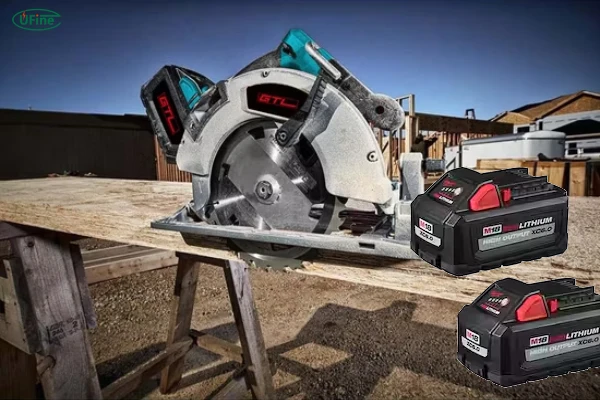
Most modern cordless circular saws are powered by rechargeable lithium-ion (Li-ion) battery packs. Compared with older nickel-based batteries, lithium-ion technology offers higher energy density, lighter weight, faster charging, and longer service life.
The most common battery systems include:
| Battery Voltage | Typical Applications |
|---|---|
| 12V | Compact DIY saws and light-duty cutting |
| 18V | Most consumer and professional circular saws |
| 20V Max | Popular platform for cordless power tools |
| 36V | Heavy-duty construction tools |
| 40V | Industrial or high-performance cutting applications |
Although many people compare 18V and 20V Max batteries, they are often very similar in actual operating voltage. The “20V Max” label refers to the battery’s maximum voltage immediately after charging, while its nominal operating voltage is approximately 18V.
For most users, choosing the right battery platform is more important than focusing solely on the voltage printed on the label.
Part 2. Circular saw battery specifications explained
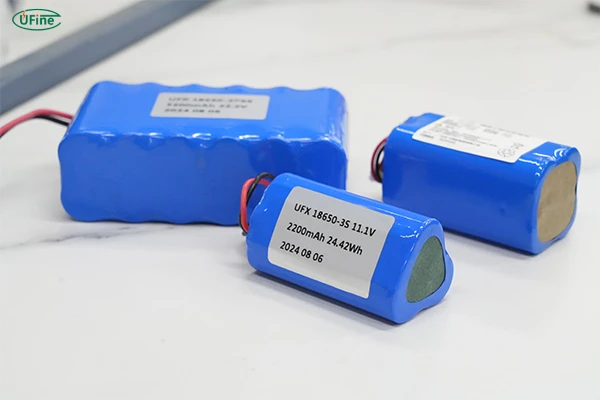
When comparing a circular saw battery, many buyers only look at voltage or price. However, manufacturers evaluate several key specifications before selecting a battery for a cordless power tool.
Voltage (V)
Voltage determines the motor’s operating potential and influences how much power the tool can deliver under load.
Higher voltage generally provides:
- Better cutting performance
- Improved efficiency in dense materials
- Higher torque for demanding applications
However, higher voltage also increases battery size, weight, and cost.
Capacity (Ah)
Capacity, measured in amp-hours (Ah), indicates how much energy the battery stores.
Common capacities include:
- 2Ah
- 3Ah
- 4Ah
- 5Ah
- 6Ah
- 8Ah
A larger capacity does not make your saw more powerful—it simply allows the tool to run longer before recharging.
For example:
| Battery Capacity | Typical Use |
|---|---|
| 2Ah | Quick household repairs |
| 4Ah | General woodworking |
| 5Ah | Deck building and remodeling |
| 6–8Ah | Professional construction and extended operation |
Continuous discharge current
One specification that many users overlook is the battery’s continuous discharge current.
Circular saws require significant current when cutting hardwood, thick lumber, or engineered materials. If a battery cannot safely supply enough current, you may experience:
- Reduced cutting performance
- Voltage drop
- Unexpected shutdowns
- Excessive heat generation
For demanding power tools, high-discharge lithium-ion cells are often a better choice than standard energy cells.
Battery Management System (BMS)
Every quality cordless circular saw battery should include a Battery Management System (BMS).
A modern BMS helps protect the battery by monitoring:
- Overcharge
- Over-discharge
- Overcurrent
- Short circuit
- Cell balancing
- High and low temperatures
Without proper battery management, lithium batteries may experience reduced lifespan or unsafe operating conditions.
Part 3. Battery chemistry comparison
Not all rechargeable batteries perform the same. Understanding battery chemistry helps explain why lithium-ion technology dominates today’s cordless tools.
| Chemistry | Advantages | Limitations |
|---|---|---|
| Lithium-ion (Li-ion) | Lightweight, high energy density, long cycle life | Higher manufacturing cost |
| Lithium Polymer (LiPo) | Flexible shape, high discharge capability, lightweight | Requires advanced protection circuitry |
| Nickel Metal Hydride (NiMH) | Lower cost, environmentally friendlier than NiCd | Heavier and lower energy density |
| Nickel Cadmium (NiCd) | Durable in harsh conditions | Memory effect and environmental concerns |
Today, nearly all premium cordless circular saws use lithium-ion batteries because they provide the best balance of performance, weight, charging speed, and lifespan.
For specialized applications requiring high discharge rates, customized lithium polymer battery solutions may also be considered, particularly in OEM equipment where battery dimensions or power output need to meet unique design requirements.
Part 4. Battery cell types

Most users see only the battery pack, but inside are individual rechargeable cells that determine the battery’s performance.
The three most common options include:
1 18650 cylindrical cells
For many years, 18650 cells have been the industry standard for cordless power tools.
Advantages include:
- Proven reliability
- Good energy density
- Wide availability
- Mature manufacturing processes
2 21700 cylindrical cells
Many newer professional battery packs now use 21700 cells.
Compared with 18650 cells, they generally offer:
- Higher capacity
- Greater continuous current
- Better thermal management
- Improved efficiency
As a result, many high-performance cordless circular saw batteries now use 21700 cells to support more demanding applications.
3 Lithium polymer pouch cells
Unlike cylindrical cells, lithium polymer batteries use flexible pouch packaging.
Their advantages include:
- Lightweight construction
- Flexible form factors
- Excellent high-rate discharge capability
- Easier customization for OEM projects
While less common in consumer power tools, lithium polymer batteries are increasingly used in custom industrial equipment where size, weight, or product design requires greater flexibility.
Part 5. How many amps does a circular saw use?
The answer depends on several factors:
- Motor efficiency
- Blade diameter
- Material being cut
- Feed speed
- Battery voltage
- Load conditions
In general, cordless circular saws draw approximately 10–20 amps during normal operation, while heavy cutting through hardwood or thick lumber can temporarily require even higher current.
This is why battery quality matters so much. A battery with insufficient discharge capability may experience voltage sag, causing reduced performance or automatic shutdown.
Understanding power consumption
Electrical power can be estimated using the following formula:
Power (W) = Voltage (V) × Current (A)
For example:
| Battery | Current | Approximate Power |
|---|---|---|
| 18V | 10A | 180W |
| 18V | 15A | 270W |
| 20V | 18A | 360W |
These values are simplified examples. Actual power varies continuously depending on cutting conditions.
A circular saw cutting softwood may require significantly less current than when ripping hardwood or engineered lumber.
Part 6. How long does a circular saw battery last?
Battery runtime depends on much more than battery capacity alone.
Important factors include:
- Battery capacity (Ah)
- Material hardness
- Blade sharpness
- Cutting depth
- Ambient temperature
- Operator technique
- Motor efficiency
As a general guideline:
| Battery | Approximate Runtime* |
|---|---|
| 2Ah | Light DIY projects |
| 4Ah | Medium woodworking tasks |
| 5Ah | Extended remodeling work |
| 8Ah | Long construction sessions |
*Actual runtime varies considerably depending on workload.
For example, repeatedly cutting thick hardwood places much greater demand on the battery than making occasional cuts through plywood.
A dull blade can also increase current draw, reducing runtime even when using a large-capacity battery.
Estimate battery life with our online calculator:
Part 7. How to choose the right battery for your circular saw
Selecting the best battery for a circular saw involves balancing performance, runtime, weight, and budget.
Before purchasing a replacement battery or designing a new battery pack, consider the following factors:
Match the correct voltage
Always use the voltage specified by the tool manufacturer. Using an incompatible voltage can damage the tool or prevent it from operating properly.
Choose capacity based on your workload
If you only make occasional household repairs, a smaller battery may provide sufficient runtime while keeping the tool lightweight.
For professionals who use a cordless circular saw throughout the day, higher-capacity batteries reduce downtime and improve productivity.
Look beyond Ah ratings
Capacity is important, but so are cell quality, discharge capability, and battery protection. Two batteries with the same Ah rating can perform very differently under heavy loads depending on their internal cell design and Battery Management System.
Consider battery weight
Larger batteries provide longer runtime but also add weight. For overhead cutting or extended use, finding the right balance between runtime and ergonomics can reduce user fatigue.
Part 8. Common battery problems and how to solve them
Even a high-quality circular saw battery can occasionally experience performance issues. Understanding the most common problems can help you troubleshoot quickly and extend battery life.
Battery won’t charge
If your battery refuses to charge, check the following:
- Ensure the charger is compatible with the battery pack.
- Inspect the battery terminals for dirt, corrosion, or damage.
- Verify that the battery temperature is within the recommended charging range.
- Try another charger if available to rule out charger failure.
Many smart battery packs temporarily disable charging if the battery becomes too hot or too cold.
Battery drains too quickly
Rapid battery drain is usually caused by one or more of these factors:
- Aging battery cells
- Low battery capacity for the workload
- Dull saw blade creating excessive resistance
- Continuous heavy-duty cutting
- Low ambient temperatures
Replacing a worn blade often improves battery runtime more than users expect because the motor requires less current to make each cut.
Battery gets hot
Some heat during operation is normal, especially when cutting dense hardwood or composite materials.
However, excessive heat may indicate:
- Overloaded motor
- Poor ventilation
- Battery operating beyond its discharge capability
- High ambient temperatures
- Aging or damaged battery cells
If the battery becomes unusually hot, allow it to cool naturally before charging or using it again.
Battery suddenly shuts off
Unexpected shutdown is often the result of the Battery Management System protecting the battery.
Possible causes include:
- Overcurrent protection
- Low voltage protection
- Over-temperature protection
- Short circuit detection
This protection helps prevent permanent battery damage and improves user safety.
Part 9. Charging and maintenance best practices
Proper charging habits can significantly increase battery lifespan and maintain consistent cutting performance.
Follow the manufacturer’s charger recommendations
Always use the charger designed for your battery platform. Chargers communicate with the Battery Management System to control charging current and voltage safely.
Using incompatible chargers may reduce battery performance or damage the battery pack.
Avoid deep discharge
Unlike older nickel-cadmium batteries, lithium-ion batteries do not require full discharge before recharging.
Instead, recharge the battery when it reaches approximately 20–30% remaining capacity whenever practical.
Don’t leave batteries in extreme heat
High temperatures accelerate battery aging.
Avoid leaving batteries:
- Inside parked vehicles
- In direct sunlight
- Near heaters or furnaces
Keeping batteries cool during storage can noticeably extend service life.
Store partially charged
If you won’t use the battery for several months, store it with approximately 40–60% charge in a cool, dry environment.
This storage level reduces stress on the battery chemistry while minimizing self-discharge.
Part 10. Can you use different brand batteries?
Many users wonder whether one brand’s battery can power another brand’s circular saw.
In most cases, the answer is no.
Even when battery voltages appear similar, manufacturers often use different:
- Mechanical connectors
- Communication protocols
- Battery management systems
- Safety protections
While aftermarket battery adapters are available, they may bypass important safety features or interfere with communication between the battery and the tool.
For professional or commercial use, it’s generally safest to use batteries approved for your specific tool platform.
Part 11. FAQs
Does a higher Ah battery make a circular saw more powerful?
No. A higher Ah rating increases runtime rather than cutting power. Power is primarily determined by the battery voltage, motor design, and the amount of current the battery can safely deliver.
What battery capacity is best for a circular saw?
For occasional DIY work, a 2Ah or 4Ah battery is often sufficient. Professionals performing continuous cutting generally benefit from 5Ah to 8Ah batteries because they provide longer runtime.
Why does my circular saw battery lose power in winter?
Low temperatures slow the chemical reactions inside lithium-ion batteries, temporarily reducing available capacity and power output. Once the battery returns to room temperature, performance usually improves.
Can I leave my battery on the charger overnight?
Many modern smart chargers automatically stop charging once the battery reaches full capacity. However, following the manufacturer’s charging recommendations is still the best practice for maximizing battery life.
Why does my battery stop working during heavy cuts?
The Battery Management System may temporarily disconnect the battery if it detects excessive current, overheating, or low voltage. This protection helps prevent damage to both the battery and the tool.
Can I replace the cells inside my battery pack?
Replacing battery cells requires specialized equipment and knowledge of battery safety, cell matching, and BMS calibration. For most users, replacing the entire battery pack is the safer option.
Related Tags:

More Articles

Comparative Analysis: 14500 Battery Vs. 18650 Battery
Compare 14500 vs 18650 batteries by size, voltage, capacity, runtime, discharge current, charging, safety, and applications to choose the right cell.
12V Lithium-Ion What Voltage at Fully Charged and Why Your Battery Might Not Reach It
Check the 12V lithium battery voltage chart for 3S Li-ion and 4S LiFePO4. Learn full charge, resting voltage, charger limits, and fault checks.
LiFePO4 Voltage Chart Guide: Everything You Need to Know
Check the LiFePO4 voltage chart for 3.2V, 12V, 24V and 51.2V batteries. Compare SOC, charging voltage, cutoff limits and internal resistance.
Lithium Ion Cell Sizes: A Comprehensive Guide
Compare lithium ion cell sizes with a chart of dimensions, capacity ranges, cell types, applications, and key factors for selecting the right battery.
6 Volt Tractor Battery vs 12 Volt: Which One Fits Your Farm Equipment Best?
Compare 6V and 12V tractor batteries. Learn which voltage fits vintage or modern tractors, which specifications matter, and how to convert safely.


