- Key Takeaways
- Part 1. What is a nuclear battery?
- Part 2. How does a nuclear battery work?
- Part 3. Main components of a nuclear battery
- Part 4. Nuclear battery advantages and disadvantages
- Part 5. Nuclear batteries vs lithium-ion batteries
- Part 6. Real-world applications of nuclear batteries
- Part 7. Nuclear battery environmental impact and safety
- Part 8. Key challenges of nuclear battery technology
- Part 9. When should you consider nuclear batteries?
- Part 10. FAQs about nuclear batteries
Nuclear batteries are gaining attention as a long-life power solution for extreme and maintenance-free applications. Unlike chemical batteries, they use radioactive decay to produce electricity continuously for years or even decades.
This makes nuclear battery technology highly attractive for aerospace, medical devices, and remote monitoring systems where replacing or recharging batteries is difficult.
Key Takeaways
- Nuclear batteries provide decades-long power without recharging, making them ideal for remote or sealed systems.
- They offer high energy density and reliability, especially in extreme environments.
- However, low power output and strict regulations limit their widespread commercial use.
- Compared with lithium-ion batteries, they are not suitable for high-power applications like EVs.
- The most practical applications today are space missions, implants, and industrial sensors.
Part 1. What is a nuclear battery?
A nuclear battery (also called a radioisotope battery) generates electricity from the natural decay of radioactive materials rather than chemical reactions.
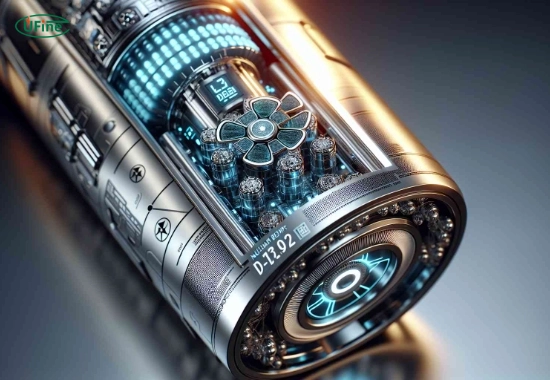
Main Types Of Nuclear Batteries
Radioisotope Thermoelectric Generators (Rtgs)
- Convert heat from radioactive decay into electricity using thermoelectric materials.
- Widely used in space missions.
Betavoltaic Batteries
- Convert beta radiation directly into electricity.
- Suitable for low-power, long-life electronics.
👉 For comparison with chemical systems, see our guide on secondary battery types and applications.
Part 2. How does a nuclear battery work?
The core principle behind how nuclear batteries work is simple:
- A radioactive isotope decays naturally
- It releases heat or particles
- That energy is converted into electricity
Key Materials Used
- Plutonium-238 (Pu-238) – used in RTGs
- Strontium-90 (Sr-90) – used in industrial systems
Conversion Mechanisms
- Thermoelectric conversion (heat → electricity)
- Direct radiation conversion (beta particles → current)
Unlike lithium-ion batteries, there is no charging cycle—energy output is continuous but relatively low.
Part 3. Main components of a nuclear battery
Understanding the structure helps explain performance and limitations.
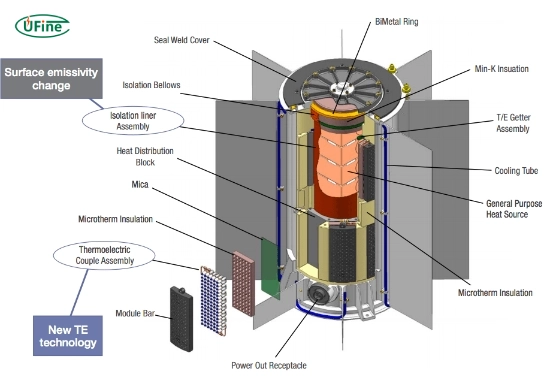
Core Components
- Radioactive Isotope Core: Determines lifespan and energy output
- Energy Converter: Converts decay energy into electricity
- Radiation Shielding: Ensures safe operation and containment
- Protective Housing: Provides mechanical stability and environmental resistance
Part 4. Nuclear battery advantages and disadvantages
This is one of the most searched topics: nuclear battery advantages and disadvantages.
Advantages
- Ultra-long lifespan (10–50+ years)
- High energy density (per unit mass)
- No maintenance or charging required
- Works in extreme environments (space, deep sea, polar regions)
Disadvantages
- Low power output (not suitable for high-load devices)
- High cost of materials and manufacturing
- Strict regulatory control
- Public safety concerns
👉 For high-power applications like EVs, lithium-ion batteries remain the dominant solution.
Part 5. Nuclear batteries vs lithium-ion batteries
| Feature | Nuclear Battery | Lithium-Ion Battery |
|---|---|---|
| Lifespan | 10–50+ years | 3–10 years |
| Energy Density | Very high (total energy) | High |
| Power Output | Low | High |
| Maintenance | None | Requires charging |
| Applications | Space, sensors, implants | EVs, electronics |
Conclusion: Nuclear batteries are not replacements—they are specialized solutions.
Part 6. Real-world applications of nuclear batteries
- Space Exploration
Used by NASA in missions like Voyager and Mars rovers.
- Operates without sunlight
- Works in extreme temperatures
- Proven reliability for decades
👉 See technical reference: U.S. Department of Energy – Radioisotope Power Systems
- Medical Devices
- Pacemakers
- Implantable sensors
Benefit: no need for surgical battery replacement
- Remote And Industrial Sensors
- Oil & gas pipelines
- Arctic monitoring systems
- Deep-sea equipment
These environments make battery replacement impractical.
Part 7. Nuclear battery environmental impact and safety
Key Considerations
- Low carbon footprint during operation
- Long lifespan reduces material waste
- Radioactive handling requires strict regulation
Compared to traditional batteries:
- Fewer replacements → less waste
- But requires controlled disposal and shielding
Part 8. Key challenges of nuclear battery technology
Despite strong potential, several barriers remain:
Technical Limitations
- Low conversion efficiency
- Limited power output
Regulatory Constraints
- Strict global nuclear material regulations
- High compliance costs
Market Acceptance
- Public concerns about radiation
- Limited commercial awareness
Part 9. When should you consider nuclear batteries?
Best-fit scenarios:
- No access to maintenance or charging
- Extreme environmental conditions
- Long-life, low-power systems
Not suitable for:
- Electric vehicles
- Consumer electronics
- High-drain applications
Part 10. FAQs about nuclear batteries
How long does a nuclear battery last?
Most nuclear batteries last 10 to 50+ years, depending on the isotope used.
Are nuclear batteries safe?
Yes, when properly designed with shielding and used under regulations, they are considered safe.
Why are nuclear batteries not widely used?
High cost, low power output, and strict regulations limit mass adoption.
Can nuclear batteries replace lithium-ion batteries?
No. They serve different use cases—long-life vs high power.
What is the future of nuclear battery technology?
Advances in betavoltaic materials may enable smaller, safer, and more efficient designs for niche applications.
Related Tags:

More Articles

JST vs Molex: The Right Battery Connector Choice
JST or Molex for your battery? Learn how connector selection affects current, voltage drop, reliability, and device performance.
Custom Battery Pricing: Costs Manufacturers Don’t Mention
A low battery quote may not be the final cost. Discover common hidden expenses that affect custom lithium battery projects.
Battery Wire Length: Hidden Cause of Power Loss
A longer battery wire can cause voltage drop, power loss, and unstable operation. Learn how wire length affects battery performance.
How Device Sleep Modes Affect Battery Life
Think sleep mode extends battery life? Learn why devices still drain power and how firmware, hardware, and batteries affect runtime.
LiPo Battery and PCB Design: Clearance, Insulation, and Placement
Learn how to optimize LiPo battery PCB clearance, insulation, placement, wiring, and thermal design—and avoid common integration mistakes.