
- Part 1. What is an 18650 battery?
- Part 2. Voltage
- Part 3. Capacity
- Part 4. Price
- Part 5. Who makes the best 18650 batteries?
- Part 6. 18650 lithium ion cell vs. 18650 lithium ion pack
- Part 7. AA lithium battery vs. 18650 lithium ion batteries
- Part 8. Are all 18650 batteries lithium-ion?
- Part 9. Different 18650 battery types explained
- Part 10. Protected vs unprotected 18650 batteries
- Part 11. 18650 vs 21700 batteries
- Part 12. How long does an 18650 battery last?
- Part 13. Is the 18650 lithium ion battery rechargeable?
- Part 14. How to charge an 18650 battery safely
- Part 15. How to spot fake 18650 batteries
If you’ve ever used a high-powered flashlight, a laptop, or even an electric vehicle, chances are you’ve encountered a 18650 lithium ion battery. These batteries are incredibly popular because they pack a punch in terms of energy density, have a long lifespan, and, best of all, are rechargeable. In this comprehensive guide, we’ll dive deep into everything you need to know about 18650 lithium ion batteries. We’ll cover their voltage, capacity, price, brands, and much more. So, whether you’re a tech enthusiast or just curious, stick around because we’re about to get battery-savvy!
Key takeaways
- An 18650 battery is a rechargeable lithium-ion cylindrical cell measuring 18mm × 65mm.
- Different 18650 battery types are designed for different purposes, including high capacity, high discharge, or balanced performance.
- Battery chemistry, protection circuits, charging habits, and operating temperature all affect safety and lifespan.
- Although newer formats like 21700 and 4680 are growing, 18650 batteries remain widely used because of their reliability, availability, and mature ecosystem.
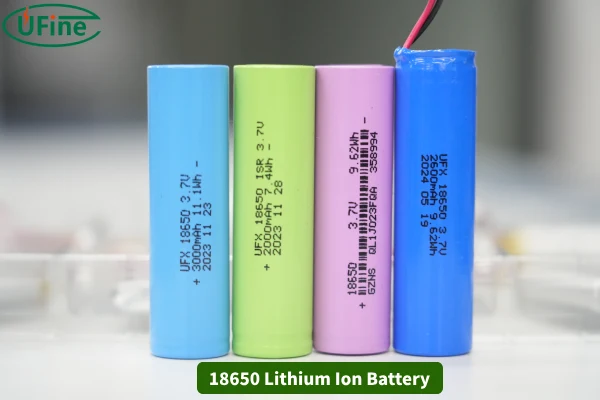
Part 1. What is an 18650 battery?
An 18650 battery is a rechargeable lithium-ion battery with a cylindrical shape. The name itself actually describes the physical dimensions:
- 18 = 18mm diameter
- 65 = 65mm length
- 0 = cylindrical form factor
Unlike disposable AA batteries, 18650 lithium batteries are designed for hundreds or even thousands of charge cycles depending on chemistry and usage conditions.
Most 18650 li-ion batteries operate at a nominal voltage of 3.6V or 3.7V and reach 4.2V when fully charged. Because they can store a large amount of energy relative to their size, manufacturers commonly use them in high-drain electronics and battery packs.
Interestingly, many people first heard about the battery 18650 lithium ion battery format because of electric vehicles. Early vehicles from Tesla famously used thousands of small 18650 cells combined into large battery packs. That decision helped make the format globally recognizable.
1 18650 battery specifications
Although not every 18650 battery is identical, most cells fall within similar operating ranges.
| Specification | Typical Range |
|---|---|
| Battery Type | Lithium-ion |
| Nominal Voltage | 3.6V–3.7V |
| Full Charge Voltage | 4.2V |
| Capacity | 1200mAh–4000mAh |
| Diameter | 18mm |
| Length | 65mm |
| Recharge Cycles | 300–1000+ |
| Common Uses | Flashlights, EVs, power tools |
One important thing to remember is that capacity and discharge rate usually involve tradeoffs. A cell optimized for maximum runtime may not deliver extremely high current safely.
That’s why professional users often choose batteries based on application rather than simply selecting the highest mAh number.
2 Inside an 18650 battery
From the outside, an 18650 battery looks simple. Inside, however, it contains several highly engineered layers working together.
A typical 18650 lithium battery includes:
- A graphite anode
- A lithium-based cathode
- A separator to prevent short circuits
- Liquid electrolyte for ion transfer
- Steel casing for structural protection
- Safety mechanisms such as CID and PTC devices
During charging, lithium ions move from the cathode to the anode. During discharge, the ions move back, releasing energy to power your device.
This repeated ion movement is the reason lithium-ion batteries eventually degrade over time. Heat, overcharging, and deep discharge accelerate that process.
Part 2. Voltage
Let’s kick things off with voltage. When we talk about the voltage of a 18650 lithium ion battery, we’re referring to the electric potential it provides. Typically, an 18650 battery has a voltage of 3.7 volts. This is quite a bit higher than many standard batteries, like AA batteries, which usually clock in at 1.5 volts.
Why does this matter? Well, the higher voltage means more power, which is why 18650 batteries are a favorite for high-drain devices like flashlights, laptops, and even electric vehicles. Imagine you’re using a high-powered flashlight; the 18650 battery’s 3.7 volts ensure that the light burns brightly and consistently for a longer period.
Part 3. Capacity
Next up, let’s talk about capacity. The capacity of a 18650 lithium ion battery is measured in milliampere-hours (mAh). This indicates how much energy the battery can store. Generally, the capacity of these batteries ranges from 100mAh to 3500mAh.
So, what does this mean in practical terms? A higher capacity means the battery can store more energy and, consequently, power your devices for a longer time before needing a recharge. For example, a battery with a capacity of 3000mAh will last longer than one with 2000mAh. This is particularly important if you’re using the battery in a device like a laptop or an electric bike, where you need extended runtime without frequent recharges.
Part 4. Price
Now, let’s discuss the cost. The price of 18650 lithium ion batteries can vary based on several factors, including the brand, capacity, and whether you’re buying single cells or packs. On average, you can expect to pay between $5 to $15 per battery.
Higher capacity batteries or those from well-known brands tend to be on the pricier side. However, considering their longevity and the fact that they are rechargeable, they offer great value for money in the long run. It’s like investing in a quality product that saves you from buying disposable batteries over and over again.
Part 5. Who makes the best 18650 batteries?
When it comes to brands, there are several reputable manufacturers of 18650 lithium ion batteries. Some of the well-known brands include:
- Samsung: Known for their high-quality and reliable batteries. Samsung 18650 batteries are often used in electric vehicles and other high-drain applications.
- LG: Offers a range of batteries with different capacities and performance levels. LG batteries are popular in laptops and power tools.
- Panasonic: Trusted for their durable and long-lasting batteries. Panasonic batteries are frequently found in high-end flashlights and medical devices.
- Sony: Another reliable brand with a variety of options. Sony batteries are often used in consumer electronics.
- Ufine Battery: A famous lithium battery customization manufacturer in China, Ufine Battery is known for producing high-quality and tailored lithium batteries. They offer customized solutions for various applications, making them a go-to for specialized needs.
Each of these brands offers various models, allowing you to choose the one that best fits your needs. Whether you need a battery for a flashlight, laptop, or electric bike, there’s a brand and model out there for you.
Part 6. 18650 lithium ion cell vs. 18650 lithium ion pack
You might come across terms like “18650 cell” and “18650 pack.” So, what’s the difference?
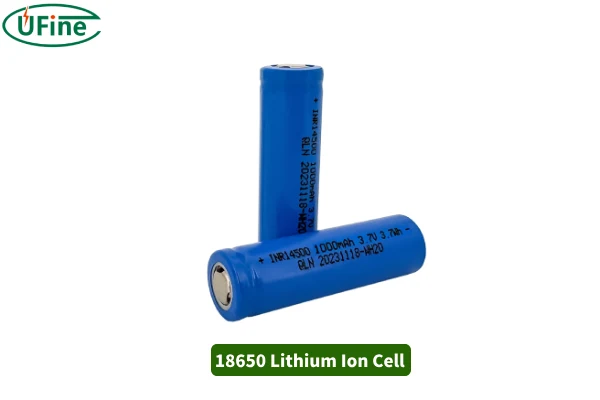
18650 Lithium Ion Cell
This is a single 18650 battery. It’s a standalone unit that can be used individually. Think of it as a single AA battery that you might use in a remote control.
This is a collection of 18650 cells connected together to form a larger battery pack. These packs can provide more voltage or capacity, depending on how the cells are arranged. For instance, an 18650 battery pack might be used in electric bikes, laptops, or power tools where more power is needed.
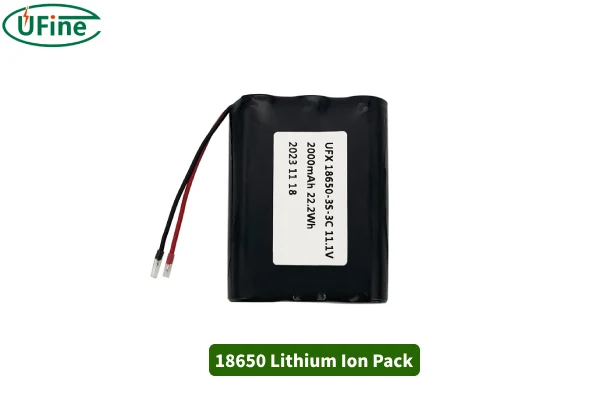
Imagine you’re building a battery pack for an electric bike. You wouldn’t just use one 18650 cell; you’d use a pack of them to ensure you have enough power and capacity to travel long distances. The cells are arranged in a specific configuration to achieve the desired voltage and capacity.
Part 7. AA lithium battery vs. 18650 lithium ion batteries
Now, let’s compare AA lithium batteries and 18650 lithium ion batteries. This is a common point of confusion, but the differences are quite significant.
- Size: AA batteries are smaller in size compared to 18650 batteries. Think of AA batteries as the go-to for everyday household items like remote controls and clocks.
- Voltage: AA batteries typically have a voltage of 1.5V, while 18650 batteries have a higher voltage of 3.7V. This higher voltage is crucial for devices that require more power.
- Capacity: 18650 batteries generally have a higher capacity, ranging from 100mAh to 3500mAh, compared to AA batteries. This means they can store more energy and power devices for longer periods.
- Rechargeability: Most AA lithium batteries are not rechargeable, whereas 18650 lithium ion batteries are. This makes 18650 batteries more cost-effective and environmentally friendly in the long run.
- In summary, while AA batteries are great for low-drain devices like clocks and remote controls, 18650 batteries are better suited for high-drain devices that need more power and longer battery life.
Part 8. Are all 18650 batteries lithium-ion?
You might be wondering if all 18650 batteries are lithium-ion. The answer is yes. The term “18650” refers to the battery’s size and shape, but they are all lithium-ion by chemistry. This means they offer high energy density, long cycle life, and are rechargeable. So, whenever you see an 18650 battery, you can be sure it’s a lithium-ion battery designed to provide reliable and long-lasting power.
Part 9. Different 18650 battery types explained
Not all 18650 batteries behave the same way. In fact, chemistry can dramatically change performance characteristics.
ICR batteries
ICR cells use lithium cobalt oxide chemistry. They usually offer higher energy density and larger capacity, making them suitable for devices prioritizing runtime.
However, they generally have lower discharge capability and require strong protection systems.
IMR batteries
IMR batteries use lithium manganese oxide chemistry. These cells are known for higher discharge rates and improved thermal stability.
That makes them common in high-drain applications.
INR batteries
INR chemistry combines nickel, manganese, and cobalt. Many modern manufacturers favor INR because it balances capacity, safety, and current output very effectively.
NCA batteries
NCA chemistry emphasizes high energy density and is often used in electric vehicle applications.
Part 10. Protected vs unprotected 18650 batteries
This is one of the most misunderstood areas for beginners.
Protected 18650 batteries include a built-in protection circuit board that helps prevent:
- Overcharging
- Over-discharging
- Overcurrent
- Short circuits
Unprotected cells lack these electronic safeguards. They are smaller and often preferred in custom battery packs, but they require proper battery management systems and more user knowledge.
If you are using loose cells for flashlights or consumer electronics, protected batteries are usually the safer option.
Part 11. 18650 vs 21700 batteries
As newer battery formats emerge, many users wonder whether 18650 batteries are becoming obsolete.
Not exactly.
21700 batteries generally provide higher capacity and better energy density, but 18650 cells still offer advantages in thermal management, availability, and compatibility.
| Feature | 18650 | 21700 |
|---|---|---|
| Diameter | 18mm | 21mm |
| Capacity | Lower | Higher |
| Weight | Lighter | Heavier |
| Energy Density | Good | Better |
| Availability | Extremely common | Growing rapidly |
| Mature Ecosystem | Excellent | Still developing |
For many consumer devices, the performance difference is not large enough to justify redesigning entire systems.
Part 12. How long does an 18650 battery last?
Battery lifespan depends on far more than just capacity.
Temperature, charging habits, discharge depth, and load current all affect cycle life. Under good conditions, many quality 18650 lithium-ion batteries can last between 300 and 1000 charge cycles.
A battery used gently at room temperature may continue performing well for years. Meanwhile, a heavily stressed high-drain cell exposed to heat could degrade much faster.
Runtime can be estimated using a simple calculation:
Runtime (hours)=Battery Capacity (mAh)Device Current (mA)\text{Runtime (hours)} = \frac{\text{Battery Capacity (mAh)}}{\text{Device Current (mA)}}Runtime (hours)=Device Current (mA)Battery Capacity (mAh)
For example, a 3000mAh battery powering a 1000mA device may theoretically last around 3 hours under ideal conditions.
Real-world runtime will usually be lower because of voltage sag, efficiency losses, and varying load demands.
Part 13. Is the 18650 lithium ion battery rechargeable?
Absolutely! One of the biggest advantages of 18650 lithium ion batteries is that they are rechargeable. This makes them a cost-effective and environmentally friendly option. You can recharge these batteries hundreds of times before they need to be replaced, reducing the number of disposable batteries you use.
For instance, if you have a high-powered flashlight that uses 18650 batteries, you can recharge the batteries whenever they run low instead of constantly buying new ones. This not only saves money but also reduces waste, making it a win-win situation.
Part 14. How to charge an 18650 battery safely
Charging safety matters more than many people realize.
Lithium-ion batteries require controlled charging methods, usually called CC/CV charging (constant current / constant voltage). A quality smart charger gradually reduces current as the battery approaches full charge.
Using the wrong charger can damage the cell or create dangerous overheating conditions.
Good charging habits include avoiding extreme temperatures, not leaving damaged batteries unattended, and storing partially charged cells for long-term storage.
One common mistake is using cheap no-name chargers with inconsistent voltage regulation. While the battery may appear to charge normally at first, unstable charging behavior often shortens lifespan significantly.
Part 15. How to spot fake 18650 batteries
Unfortunately, counterfeit 18650 batteries are extremely common online.
If you ever see an “UltraFire 9900mAh” 18650 battery, that should immediately raise suspicion. Genuine 18650 cells rarely exceed realistic physical energy limits.
Signs of fake batteries include unusually light weight, exaggerated capacity claims, poor wrapping quality, and inconsistent voltage behavior.
Trusted manufacturers typically include traceable markings and accurate specification sheets.
Counterfeit lithium batteries are not only disappointing — they can also become serious safety hazards under load.
Related Tags:

More Articles
Buck vs. Boost vs. Buck-Boost Converter: Which Is Best for Battery?
Not sure which converter your battery-powered device needs? Compare Buck, Boost, and Buck-Boost designs and discover what affects voltage stability and runtime.
How to Match 18650 Cells for a Reliable Battery Pack?
Building an 18650 battery pack? Learn how to compare cell capacity, voltage, and internal resistance to avoid mismatches and improve reliability.
Why Do 18650 Battery Packs Get Hot During Discharge?
Is your 18650 battery pack overheating under load? Learn what causes excess heat, how to spot dangerous symptoms, and what to do next.
18650 Battery BMS: How to Get the Specs Right
Learn how to choose a BMS for an 18650 battery pack. Compare voltage, current ratings, protection features, and balancing before you buy.
Why Does My Ring Camera Battery Drain So Fast or Stop Charging?
Is your Ring camera battery draining fast or not charging? Discover common causes, practical fixes, and when to replace the battery.


