
- Key Takeaways
- Part 1. What is the current lithium battery cost per kwh?
- Part 2. What raw materials affect lithium battery cost?
- Part 3. How manufacturing scale impacts lithium battery cost?
- Part 4. How battery chemistry influences lithium battery cost?
- Part 5. How R&D, government policy and supply chain affect cost?
- Part 6. How energy density, market competition and recycling impact cost?
- Part 7. How geopolitics influences lithium battery cost?
- Part 8. Practical guide to evaluating lithium battery cost
- Part 9. FAQs about lithium battery cost
Lithium battery cost is a key decision factor across EVs, energy storage, and industrial systems. Many buyers ask: is lithium expensive? The answer depends on materials, chemistry, scale, and application. While the cost of lithium-ion batteries has dropped significantly, pricing still fluctuates due to supply chains and technology changes.
This guide explains what drives lithium battery cost, how to evaluate cost per kWh, and how to make better purchasing decisions.
Key Takeaways
- Lithium battery cost is mainly driven by raw materials (40–60%), especially lithium, nickel, and cobalt.
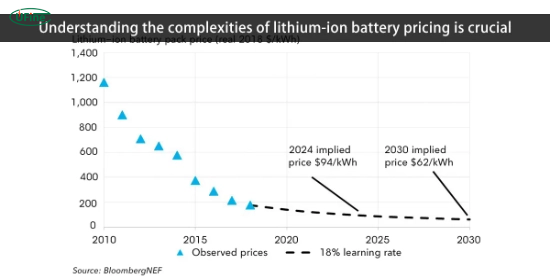
- The average lithium battery cost per kWh ranges from $100–$150, depending on chemistry and scale.
- LFP batteries are typically 15–30% cheaper than NMC due to no cobalt use.
- Large-scale production significantly reduces costs through automation and supply contracts.
- Recycling and new chemistries may reduce battery costs to $60–80/kWh by 2030.
Part 1. What is the current lithium battery cost per kwh?
The cost of lithium batteries is usually measured in $/kWh:
- EV batteries: ~$100–$130/kWh
- Energy storage systems: ~$120–$180/kWh
- Small custom batteries: $200+/kWh
This explains why how expensive lithium is depends heavily on the application and production scale.
For a deeper breakdown of battery types and pricing, see: 👉 secondary battery types and applications
Part 2. What raw materials affect lithium battery cost?
Raw materials account for the largest share of total cost.
- Lithium: Core material; price volatility directly impacts battery pricing
- Cobalt: Expensive and supply-constrained
- Nickel: Improves energy density but increases cost
- Graphite: Key anode material; synthetic graphite adds cost
The cost of mining lithium is rising due to environmental regulations and extraction complexity. According to the International Energy Agency, demand for lithium could grow over 40× by 2040, putting pressure on prices.
Part 3. How manufacturing scale impacts lithium battery cost?
Mass production significantly lowers lithium battery cost per kWh:
- Bulk material contracts reduce input costs
- Automation lowers labor expenses
- Yield improvements reduce waste
Large manufacturers can produce batteries at 20–40% lower cost than small-scale producers. This is why EV batteries are cheaper than custom industrial packs.
Part 4. How battery chemistry influences lithium battery cost?
Different chemistries result in different pricing structures:
1 Lfp (Lithium Iron Phosphate)
- Lower cost (no cobalt or nickel)
- Longer lifespan
- Lower energy density
2 Nmc (Nickel Manganese Cobalt)
- Higher energy density
- Higher cost due to cobalt and nickel
3 Solid-State Batteries
- Very high cost today (up to 10×)
- Potential future cost reduction
If you’re comparing chemistries, see: 👉 fuel cells vs lithium-ion batteries
Part 5. How R&D, government policy and supply chain affect cost?
1 How R&D Affects Lithium Battery Cost
Advanced features increase cost but improve performance:
- Fast charging capability
- Longer cycle life
- Enhanced safety systems
These innovations can add 5–15% to battery cost, but often reduce total lifecycle cost.
2 How Government Policy Impacts Lithium Battery Cost
Policies directly affect the cost of lithium batteries:
- Subsidies reduce effective cost per kWh
- Environmental regulations increase mining costs
- Localization incentives reshape supply chains
For example, the U.S. Department of Energy supports domestic battery production, lowering dependence on imports.
3 How Supply Chain Disruptions Affect Lithium Battery Cost
Battery pricing is sensitive to global disruptions:
- Logistics costs (shipping, delays)
- Energy prices for manufacturing
- Regional supply constraints
These factors explain short-term spikes in lithium battery cost.
Part 6. How energy density, market competition and recycling impact cost?
1 Why Energy Density Affects Lithium Battery Cost Per Kwh
Higher energy density reduces cost per usable energy unit:
- More energy stored per cell
- Fewer materials needed per kWh
- Lower system-level costs
A 10% improvement in energy density can reduce costs by $10–20/kWh.
2 How Market Competition Impacts Lithium Battery Cost
Global competition drives cost reduction:
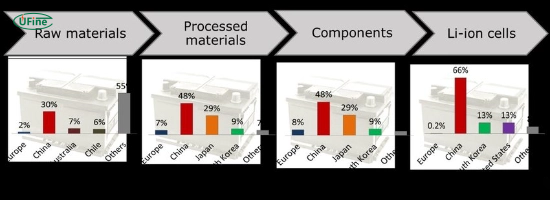
- Chinese manufacturers dominate low-cost LFP
- Korean companies focus on premium NMC
- Startups push innovation (solid-state, recycling)
This competition is pushing the industry toward the $80/kWh benchmark.
3 Can Recycling Reduce Lithium Battery Cost
Recycling is becoming a major cost lever:
- Recover lithium, nickel, cobalt
- Reduce dependence on mining
- Lower environmental impact
The European Commission mandates higher recycling rates, accelerating adoption. However, recycling is still developing, with limited infrastructure today.
Part 7. How geopolitics influences lithium battery cost?
Geopolitical factors create cost uncertainty:
- Resource nationalism limits supply
- Trade tariffs increase import costs
- Regional production gaps affect pricing
This is why lithium battery cost can vary 8–15% by region.
Part 8. Practical guide to evaluating lithium battery cost
When assessing how expensive lithium batteries are, focus on:
| Factor | What to Check |
|---|---|
| Cost per kWh | Compare across suppliers |
| Cycle life | Lower cost over time |
| Chemistry | LFP vs NMC trade-offs |
| Application | EV, storage, or industrial |
| Supplier scale | Impacts pricing |
For custom solutions: 👉 Ufine Battery custom lithium battery solutions
Part 9. FAQs about lithium battery cost
Is lithium expensive compared to other materials?
Yes. Lithium is relatively expensive due to extraction complexity and growing demand, but it delivers higher energy density than alternatives.
What is the average lithium battery cost per kWh?
Typically $100–$150/kWh, depending on chemistry and production scale.
Why does lithium battery cost fluctuate?
Because of raw material prices, supply chain disruptions, and global demand changes.
Are lithium batteries cheaper in the long run?
Yes. Despite higher upfront cost, longer lifespan makes them more cost-effective than lead-acid.
Will lithium battery prices continue to drop?
Most forecasts suggest costs could fall to $60–80/kWh by 2030 due to scaling and recycling.
Related Tags:

More Articles
Best 24V Lithium Battery: Top 10 Compared
Discover the top 24V lithium batteries. We compare capacity, price, cycle life, safety features, and the best options for different applications.
Top LFP Cell Manufacturers in China You Should Know
Looking for reliable LiFePO4 cells? Explore China's top LFP battery manufacturers, key technologies, production capabilities, and supplier selection tips.
Check If Your Charger Works: Simple Test Guide
Think your battery charger's broken? Quick tests can show you for sure. See if it’s the charger or the battery that's causing issues. Read more.
Best Camera Batteries: 7 Brands Compared & Tested
Looking for the best camera battery? Compare 7 top brands, including OEM and third-party options, to find the right battery for your camera.
What You Need to Know About Portable Fan Batteries
Discover the best portable electric fan battery, its types, lifespan, and maintenance tips. Learn how to choose the right one and keep it running longer.


