
- Key Takeaways
- Part 1. What are batteries in series?
- Part 2. What are batteries in parallel?
- Part 3. Series and parallel together: the best of both worlds
- Part 4. Charging lithium batteries in series
- Part 5. Charging lithium batteries in parallel
- Part 6. How to calculate the number of series and parallel battery packs?
- Part 7. Batteries in series of different voltages
- Part 8. Batteries in parallel with different capacities
- Part 9. Should the battery pack be connected in parallel or in series first?
- Part 10. Common mistakes you should avoid
- Part 11. FAQs
The voltage and capacity of a single lithium battery cell are limited. In actual use, lithium batteries need to be combined in parallel and series to obtain a lithium battery pack with a higher voltage and capacity to meet the actual power supply needs of the equipment.
Key Takeaways
- Series connection increases voltage, while capacity remains the same.
- Parallel connection increases capacity, while voltage stays constant.
- Charging batteries in series requires careful balancing, often with a BMS.
- Understanding your application is critical: the wrong configuration can lead to inefficiency or safety risks.
- Real-world usage, proper maintenance, and monitoring can dramatically extend battery life and safety.
Part 1. What are batteries in series?
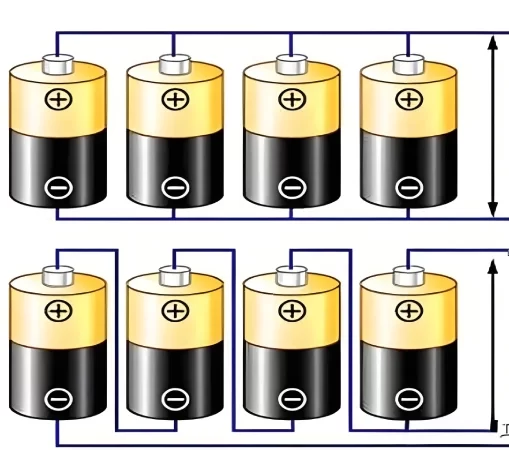
Connecting batteries in series is conceptually simple: you connect the positive terminal of one battery to the negative terminal of the next. When you do this, the voltages of the batteries add up, but the capacity (mAh) stays the same.
For example, if you have three 3.7V 2500mAh cells in series:
- Total Voltage: 3.7V + 3.7V + 3.7V = 11.1V
- Total Capacity: 2500mAh
Series connections are ideal for applications that need higher voltage, like power tools, electric bikes, and certain robotics projects. The trade-off is that if one battery underperforms or fails, it affects the entire pack, which is why monitoring and balancing is critical.
When assembling a series pack yourself, always check the voltage of each individual cell before connecting. Even a small mismatch can lead to heat generation or reduced performance.
Part 2. What are batteries in parallel?
Parallel connections are a bit different. Here, you connect positive terminals together and negative terminals together. The voltage remains the same as a single cell, but the capacity adds up.
So, if you connect three 3.7V 2500mAh cells in parallel:
- Total Voltage: 3.7V
- Total Capacity: 2500 + 2500 + 2500 = 7500mAh
Parallel configurations are excellent when you want longer runtime or higher total energy storage, such as power banks, solar energy storage, or long-lasting consumer electronics. One thing to note: cells should be closely matched in voltage and age to avoid current imbalances that can reduce lifespan or create heat issues.
Before paralleling batteries, let them rest after charging for at least 30 minutes. This ensures their voltages stabilize and reduces the risk of sudden current spikes.
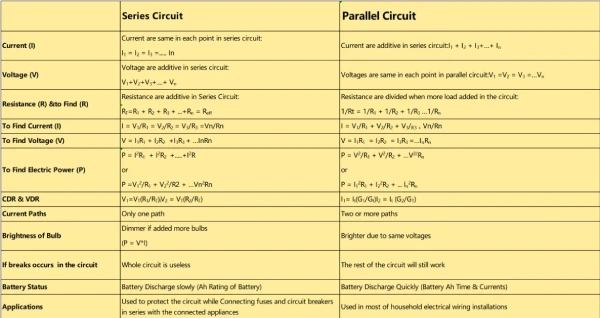
Battery Parallel vs Series: Key Differences
| Feature | Series | Parallel |
|---|---|---|
| Voltage | Increase | Same |
| Capacity | Same | Increase |
| Risk | Higher (imbalance) | Lower |
Part 3. Series and parallel together: the best of both worlds
Sometimes, one configuration alone isn’t enough. You might see a battery pack described as 3S2P, which means three cells in series and two in parallel. This approach allows you to increase both voltage and capacity simultaneously.
Here’s a quick illustration:
| Configuration | Voltage | Capacity | Example Use |
|---|---|---|---|
| 3S1P | 11.1V | 2500mAh | High-voltage tools |
| 3S2P | 11.1V | 5000mAh | Electric bikes, drones |
| 2S3P | 7.4V | 7500mAh | Longer runtime for moderate voltage devices |
By combining series and parallel connections carefully, you can design packs that match your exact power and runtime requirements, but it requires more attention to charging and safety.
When designing combined packs, consider including small fuses or a temperature sensor in each parallel group. This helps protect against short circuits or overheating without adding too much complexity.
Part 4. Charging lithium batteries in series
Charging batteries in series is trickier than parallel. Since the cells are stacked in voltage, one weak or overcharged cell can affect the whole pack. That’s why a Battery Management System (BMS) is essential.
Here’s what you need to remember:
- Always use a charger designed for series packs.
- Ensure the BMS balances the voltage between cells.
- Never mix old and new cells; imbalance can cause overheating.
Even a small mismatch in cell voltage can significantly reduce the pack’s lifespan.
Part 5. Charging lithium batteries in parallel
Charging parallel batteries is relatively safer but still requires care. Because the voltage is the same across all cells, the current is shared. However:
- Ensure cells are at the same voltage before connecting in parallel.
- Be aware of internal resistance differences, which can lead to uneven charging.
- Avoid combining cells of different chemistries or ages.
Parallel charging is often used in consumer electronics and large storage arrays, where long runtime is more important than high voltage.
For large parallel packs, consider adding a small balancing resistor or using a smart charger that monitors each cell group. This helps prevent minor mismatches from becoming long-term degradation issues.
Part 6. How to calculate the number of series and parallel battery packs?

The voltage of lithium batteries increases when connected in series, and the capacity increases when connected in parallel.
So how to calculate how many series and parallels a lithium battery pack consists of, and how many cells it consists of?
Before calculation, we need to know the specifications of the cells from which this lithium battery pack is assembled. Because different lithium battery cells have different voltage capacities. The number of series and parallel required is different to assemble a lithium battery pack of specific specifications.
Common lithium cell types include 3.7V lithium cobalt oxide cells, 3.6V ternary cells, 3.2V lithium iron phosphate cells, and 2.4V lithium titanate cells. The capacity of lithium batteries varies depending on cell size, materials, and manufacturers.
Take the 48V 20mAh lithium battery pack as an example:
Assume that the single cell used is 18650 3.7V 2Ah
Number of cells connected in parallel: 20Ah/2Ah=10, that is, 10 cells connected in parallel
Number of cells in series: 48V/3.7=13, that is, 13 cells in series
The entire lithium battery pack: 13×10=130 cells
Part 7. Batteries in series of different voltages
Due to the consistency problem of lithium batteries, when lithium batteries are connected in parallel or in series under the same system (such as ternary batteries or LiFePo4 batteries), it is also necessary to select lithium batteries with the same voltage, internal resistance, and packing capacity.
Connecting lithium batteries with different voltages and internal resistances in series will cause a certain lithium battery to be fully charged first and discharged first in each cycle.
If the lithium battery has a PCB and does not fail, it will only cause the capacity of the entire set to decrease. However, suppose the lithium battery does not have a PCB. In that case, it may cause the battery to be overcharged, over-discharged, or even damaged.
For more details on why a lithium battery protection board matters and how it works, check out our article on lithium battery protection board necessity.
Part 8. Batteries in parallel with different capacities
If different capacities or old and new lithium batteries are mixed, leakage, zero voltage, etc. may occur. This is due to the difference in capacity during the charging process, which causes some lithium batteries to be overcharged during charging.
Some lithium batteries are not fully charged. Some lithium batteries with high capacity are not fully discharged during discharge, while those with low capacity are over-discharged.
In such a vicious cycle, the lithium battery will be damaged and produce leakage or low (zero) voltage.
Part 9. Should the battery pack be connected in parallel or in series first?

Typical connection methods to form a lithium battery pack include parallel connection first and then series connection, first series connection, then parallel connection, and mixed connection.
For example, lithium battery packs for pure electric buses are usually connected in parallel first and then in series. Lithium battery packs used for grid energy storage often adopt a serial connection first and then a parallel connection.
Advantages of batteries first in parallel and then in series
The lithium battery cell will automatically exit after failure. In addition to the battery capacity being reduced, it will not affect its use after a parallel connection;
When a certain lithium battery cell in a parallel connection is short-circuited, the parallel circuit current will be very large. However, it is usually avoided by adding fuse protection technology.
Disadvantages of batteries first in parallel and then in series
Due to differences in the internal resistance of lithium battery cells and uneven heat dissipation, the cycle life of lithium battery packs after parallel connection will be affected.
Advantages of batteries in series first and then in parallel
If the lithium batteries are connected in series first and then in parallel, the failure probability of the large-capacity lithium battery pack is reduced. Stringing first and then paralleling is very helpful for the consistency of the lithium battery pack.
From the perspective of the reliability of lithium battery pack connection and the development trend and performance impact of voltage inconsistency, the first parallel and then series connection method is better than the first series and then parallel connection method. The lithium battery topology of serial first and then parallel is conducive to detecting and managing each lithium battery cell in the system.
Part 10. Common mistakes you should avoid
In a small DIY drone battery project, the builder paralleled two batteries of slightly different capacities. Over a few cycles, the lower-capacity battery overheated and reduced the pack’s overall lifespan.
Even a 10% mismatch can cause measurable issues over time.
Even experienced users sometimes fall into common traps:
- Mixing cell types or ages – can create imbalance and overheating.
- Skipping the BMS in series packs – one weak cell can compromise the entire battery.
- Directly charging mismatched parallel packs – voltage differences can lead to high current spikes.
Part 11. FAQs
How do internal resistance differences impact battery packs?
Mismatched resistance can cause uneven current flow, faster aging, and potential overheating, especially in parallel or mixed configurations.
Can old batteries be safely added to a new series pack?
Not recommended; aging cells can create imbalance and risk overcharge or underperformance in the pack.
How do you safely test a DIY series-parallel pack before full use?
Measure individual cell voltages, monitor temperature during initial charge, and use a BMS with balance monitoring before regular operation.
Can I expand an existing battery pack later?
Expansion is possible but requires careful matching of voltage, capacity, and chemistry; mismatched additions can shorten pack life.
Do lithium battery chemistries affect series vs parallel choice?
Yes, for example, LiFePO4 handles series-parallel scaling more safely than standard Li-ion cells due to lower thermal runaway risk.
Related Tags:

More Articles

JST vs Molex: The Right Battery Connector Choice
JST or Molex for your battery? Learn how connector selection affects current, voltage drop, reliability, and device performance.
Custom Battery Pricing: Costs Manufacturers Don’t Mention
A low battery quote may not be the final cost. Discover common hidden expenses that affect custom lithium battery projects.
Battery Wire Length: Hidden Cause of Power Loss
A longer battery wire can cause voltage drop, power loss, and unstable operation. Learn how wire length affects battery performance.
How Device Sleep Modes Affect Battery Life
Think sleep mode extends battery life? Learn why devices still drain power and how firmware, hardware, and batteries affect runtime.
LiPo Battery and PCB Design: Clearance, Insulation, and Placement
Learn how to optimize LiPo battery PCB clearance, insulation, placement, wiring, and thermal design—and avoid common integration mistakes.


