
- Key takeaways
- Part 1. Why BYD batteries are not just “another lithium battery”
- Part 2. The chemistry choice behind BYD lithium battery strategy
- Part 3. Voltage, capacity, and real-world performance
- Part 4. The blade battery: BYD’s boldest innovation
- Part 5. Why BYD doesn’t rely on cylindrical cells
- Part 6. What “BYD lithium free battery” really means in practice
- Part 7. How BYD battery technology performs in real usage
- Part 8. Where byd battery technology fits best (and where it doesn’t)
- Part 9. BYD vs other battery giants: CATL, Panasonic, LG
- Part 10. The future direction of BYD lithium battery systems
- Part 11. FAQs
Key takeaways
- BYD batteries are not just “better lithium batteries” — they are part of a vertically integrated EV and energy system strategy.
- The Blade Battery design is mainly a structural innovation, not just a chemistry upgrade.
- BYD’s strong focus on LFP chemistry trades energy density for safety, cost stability, and long cycle life.
- Most “BYD lithium free battery” searches are actually about cobalt-free or low-maintenance battery systems.
- BYD largely avoids cylindrical cells because prismatic and Blade formats are more efficient at pack level integration.
Part 1. Why BYD batteries are not just “another lithium battery”
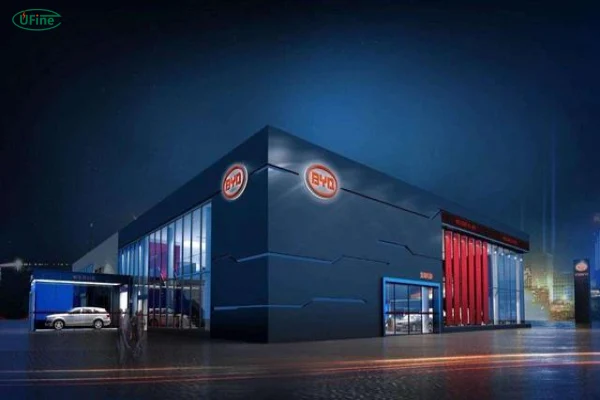
BYD is not just a battery manufacturer. It’s also an EV maker and a full system integrator.
Because of this structure, BYD doesn’t design batteries in isolation. Instead, it designs them around real vehicle constraints: packaging space, safety thresholds, thermal behavior, and cost per kilometer.
So when you look at BYD battery technology, you’re really looking at system-level engineering, not just chemistry improvements.
Part 2. The chemistry choice behind BYD lithium battery strategy
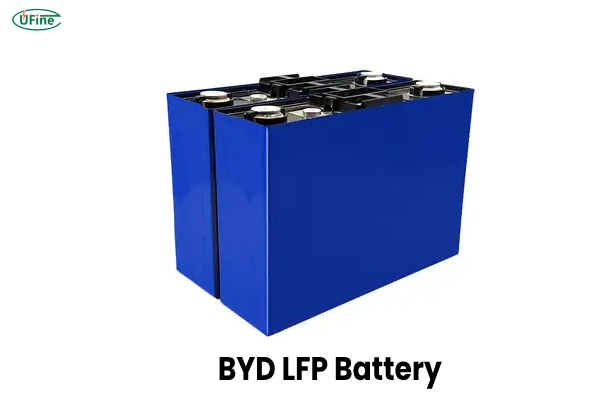
At the core of byd lithium battery technology is one clear decision: prioritizing LFP chemistry.
A BYD lithium battery is more than just a power source. It’s a result of years of research, rigorous safety testing, and smart design. Most BYD batteries are built using lithium iron phosphate (LiFePO4) chemistry, known for its safety, stability, and long cycle life.
You might wonder—why not use the more popular NMC batteries that offer higher energy density?
Here’s why LFP wins in real life:
- Safety: LFP is thermally stable and doesn’t easily catch fire. That’s huge.
- Longer life: Up to 5,000 charge cycles, which means your battery could last 10+ years.
- Eco-friendly: LFP contains no cobalt or nickel—two materials with harsh environmental and ethical issues.
- Cost-effective: It’s cheaper to produce, but that doesn’t mean lower quality.
So, when BYD chose LFP, they weren’t cutting corners—they were thinking ahead.
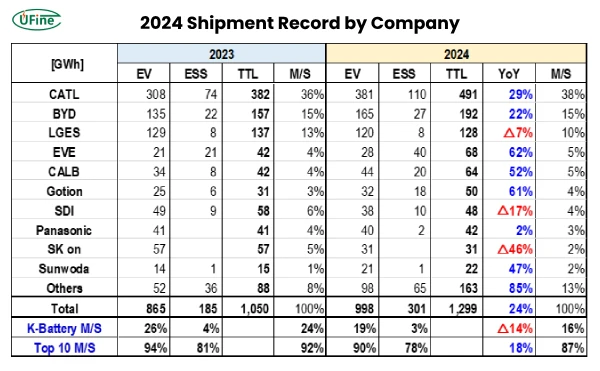
They power a wide range of applications—from passenger EVs like the BYD Dolphin and Seal, to electric buses, home battery systems, and grid-level energy storage. These batteries are efficient, powerful, and surprisingly affordable.
Most BYD systems rely heavily on Lithium Iron Phosphate (LFP), and that choice is not random. It’s a trade-off that many people misunderstand.
Here’s a simplified comparison:
| Factor | LFP (BYD focus) | NCM/NCA (typical high-energy EV batteries) |
|---|---|---|
| Energy density | Lower | Higher |
| Thermal stability | Very high | Medium |
| Cost volatility | Low | High (Ni/Co dependency) |
| Cycle life | Long | Medium to high |
BYD doesn’t try to “beat” NCM on energy density. Instead, it redesigns the entire pack so that LFP’s weaknesses matter less.
That’s where engineering matters more than chemistry alone.
To better understand why BYD mainly relies on LFP chemistry instead of NMC, it’s worth checking the difference between LFP vs NMC batteries in real-world applications.
Part 3. Voltage, capacity, and real-world performance
Let’s break down the numbers. A typical BYD lithium battery offers:
- Voltage: ~3.2V per LFP cell
- Capacity: Varies by model—up to 200Ah or more for storage systems
- Energy density: About 140–160 Wh/kg for Blade Battery
- Cycle life: Up to 5,000 cycles
- Charging speed: Fast charging supported—some EVs charge from 30% to 80% in under 30 minutes
And here’s the best part—BYD batteries maintain their performance even in extreme temperatures. Whether you’re driving through a freezing Canadian winter or a desert in Australia, BYD’s lithium batteries are designed to last.
Part 4. The blade battery: BYD’s boldest innovation
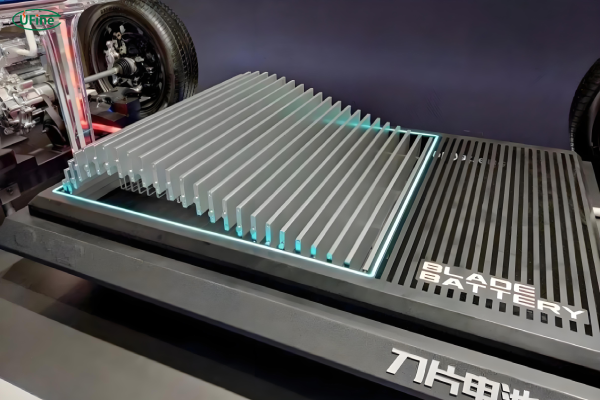
We can’t talk about BYD lithium batteries without mentioning the game-changer: the Blade Battery.
Launched in 2020, the Blade Battery redefines what a lithium battery can be. Instead of stacking cylindrical or pouch cells, BYD designed long, narrow cells—like blades—that are arranged directly into the battery pack.
Here’s what makes the Blade Battery special:
- Higher space utilization: It fits more energy into less space.
- Unmatched safety: It passed the nail penetration test without catching fire. That’s unheard of.
- Rigid structure: It strengthens the car’s body and absorbs crash energy.
- Long cycle life: Over 3,000–5,000 cycles with minimal degradation.
BYD Blade Battery Comprehensive Guide
BYD’s Blade Battery now powers almost all of its new models and is even being tested by Toyota for future EVs. That tells you how much the industry trusts it.
Part 5. Why BYD doesn’t rely on cylindrical cells
If you’ve been searching for byd li ion cylindrical rechargeable battery, you might be expecting something like 18650 or 21700-style cells.
But here’s the reality: BYD’s core architecture does not rely on cylindrical cells at scale.
Instead, it focuses on prismatic and Blade formats.
Why? Because cylindrical cells solve one problem well — individual cell performance — but they introduce complexity at pack level integration.
Here’s a practical comparison:
| Cell type | Strength | Weakness |
|---|---|---|
| Cylindrical | High consistency, mature manufacturing | Lower packing efficiency |
| Prismatic | Better space utilization | Thermal management complexity |
| Blade (BYD) | High structural efficiency, improved safety behavior | Less flexible for certain designs |
So when you see BYD systems, the real optimization is not at the cell level — it’s at the pack architecture level.
And that’s where BYD quietly wins.
If you want to understand how different cell formats affect performance and design, you can read more about lithium battery cell types in this guide on cylindrical vs prismatic vs pouch cells.
Part 6. What “BYD lithium free battery” really means in practice
BYD lithium-free battery.
This phrase doesn’t actually refer to a standard technical category. Instead, it usually reflects user intent around:
- cobalt-free batteries
- low-maintenance systems
- long-life EV batteries
In BYD’s case, the closest real technical match is LFP chemistry.
Because LFP does not require cobalt or nickel in the same way as high-energy chemistries, it reduces both cost and supply chain risk.
And more importantly, it reduces long-term degradation sensitivity.
So while “free battery” is not a real engineering term, the underlying idea is actually valid: people are looking for batteries that are more stable, predictable, and maintenance-light.
And BYD’s system design aligns quite closely with that expectation.
Part 7. How BYD battery technology performs in real usage
In real-world EV usage, byd batteries are less about peak performance and more about consistency over time.
Instead of pushing extreme fast-charging or maximum energy density, BYD systems tend to operate within more conservative thermal and SOC (state-of-charge) windows.
That sounds simple, but it has a big impact.
Because battery degradation is not just about chemistry — it’s about how you use that chemistry.
To make this more concrete, here’s a simplified view:
| Real-world factor | BYD approach | Result |
|---|---|---|
| Charging speed | Moderate | Less thermal stress |
| SOC window | Conservative | Longer cycle life |
| Thermal behavior | Stability-focused | Lower degradation risk |
This is why BYD systems are often seen as “long-life oriented” rather than “performance peak oriented.”
And depending on your use case, that trade-off can actually be exactly what you want.
Part 8. Where byd battery technology fits best (and where it doesn’t)
Like every engineering system, BYD’s approach is not universal.
It performs extremely well in:
- city EVs
- fleet vehicles
- buses and commercial transport
- grid storage systems
But if you’re chasing ultra-high performance EV behavior — very high acceleration, extreme energy density requirements — then high-nickel chemistries may still lead.
The important point is not which one is “better,” but which one fits your usage pattern.
Part 9. BYD vs other battery giants: CATL, Panasonic, LG
Let’s be honest—there’s a lot of competition in the battery world. So how does BYD compare?
| Manufacturer | Chemistry Used | Safety Rating | Key Innovation | Battery Integration |
|---|---|---|---|---|
| BYD | LFP | Excellent | Blade Battery | In-house & external |
| CATL | LFP + NMC | Very good | Cell-to-pack (CTP) | Mostly external |
| Panasonic | NMC | Moderate | High energy density | Tesla-focused |
| LG Energy | NMC | Good | Fast charging tech | EV partnerships |
BYD shines in safety, vertical integration, and cost-efficiency. And since they use their batteries in their own cars, they get immediate feedback—making their products better, faster.
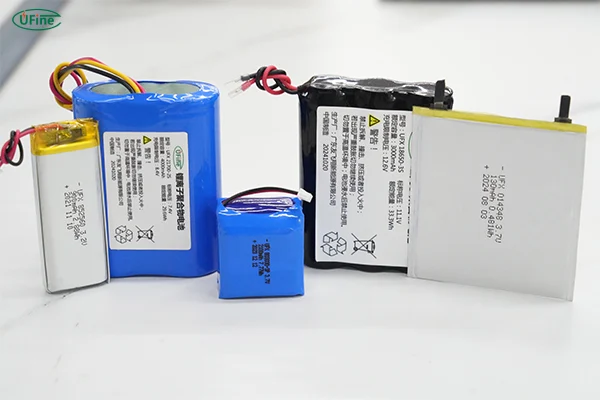
Looking for a reliable lithium battery supplier? You can also consider Ufine Battery, a Chinese manufacturer offering custom lithium battery solutions, including LiFePO4, lithium polymer, and cylindrical cells. Whether you need high-rate, ultra-thin, or temperature-resistant batteries, Ufine Battery provides flexible options to fit your needs. Feel free to contact us for custom solutions tailored to your project.
Part 10. The future direction of BYD lithium battery systems
Looking ahead, byd battery technology is likely to evolve in two parallel directions.
On one side, LFP chemistry is still being refined, especially in terms of energy density improvements at pack level.
On the other side, BYD is also exploring alternative chemistries such as sodium-ion for cost-sensitive applications, especially in stationary storage.
The industry as a whole is moving toward diversification rather than a single “perfect battery chemistry.”
And BYD is one of the companies actively shaping that transition, not just reacting to it.
Part 11. FAQs
1. Are BYD batteries safer than traditional lithium-ion batteries?
Yes, especially under thermal stress. BYD’s LFP-based Blade Battery design reduces thermal runaway risk by slowing heat propagation at pack level.
2. Do BYD batteries support fast charging?
Yes, but they are generally optimized for balanced charging rather than extreme ultra-fast charging, prioritizing thermal stability and long-term degradation control.
3. What is the main difference between BYD batteries and CATL batteries?
Contemporary Amperex Technology Co. Limited focuses heavily on high-energy-density chemistry (NCM/NCA), while BYD emphasizes system integration and LFP-based safety-first design.
4. Are BYD batteries used only in electric cars?
No. They are also widely used in energy storage systems, commercial fleets, buses, and grid-scale storage applications where stability is more important than energy density.
5. Why don’t BYD batteries use cobalt?
Because most BYD LFP-based systems are designed without cobalt, reducing cost volatility and avoiding supply chain risks associated with cobalt mining.
6. Can BYD batteries be recycled easily?
Yes. LFP-based chemistries generally have fewer toxic materials compared to cobalt-heavy batteries, making them more environmentally manageable in recycling processes.
Related Tags:

More Articles
Buck vs. Boost vs. Buck-Boost Converter: Which Is Best for Battery?
Not sure which converter your battery-powered device needs? Compare Buck, Boost, and Buck-Boost designs and discover what affects voltage stability and runtime.
How to Match 18650 Cells for a Reliable Battery Pack?
Building an 18650 battery pack? Learn how to compare cell capacity, voltage, and internal resistance to avoid mismatches and improve reliability.
Why Do 18650 Battery Packs Get Hot During Discharge?
Is your 18650 battery pack overheating under load? Learn what causes excess heat, how to spot dangerous symptoms, and what to do next.
18650 Battery BMS: How to Get the Specs Right
Learn how to choose a BMS for an 18650 battery pack. Compare voltage, current ratings, protection features, and balancing before you buy.
Why Does My Ring Camera Battery Drain So Fast or Stop Charging?
Is your Ring camera battery draining fast or not charging? Discover common causes, practical fixes, and when to replace the battery.


