- Part 1. What is a big square battery?
- Part 2. Who uses big square batteries?
- Part 3. How is a big square battery built?
- Part 4. Types of big square batteries (NMC vs LFP vs LTO)
- Part 5. How to choose the right big square battery?
- Part 6. Use cases of big square batteries
- Part 7. Why big square LiFePO₄ batteries are so popular?
- Part 8. Recommended big square batteries for most scenarios
- Part 9. Common mistakes when buying big square batteries
- Part 10. Which big square battery should you choose?
- Part 11. FAQs about big square battery guide
If you’re searching for a big square lithium battery, you’re likely facing one of these situations:
- Your EV project requires a large-format cell with higher stability or energy density
- Your solar energy system needs a safer, long-life solution
- Your RV/Marine setup needs more storage without increasing weight
- Your industrial AGV/forklift needs a high-power LFP battery
- Or you’re comparing NMC, LFP, and LTO square batteries but unsure which type fits your scenario
This guide is designed to help you make the correct decision, not just understand definitions. You’ll see professional yet practical examples showing where Ufine High-Power 3.2V 160Ah LiFePO₄ Battery fits real applications naturally.
Part 1. What is a big square battery?
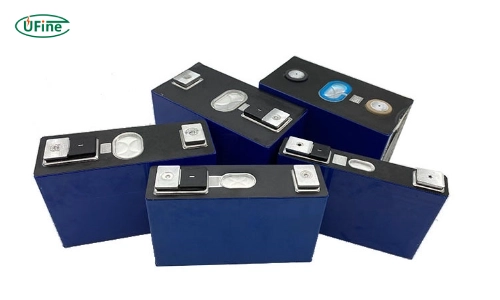
A big square battery is a large-format lithium cell—square or rectangular—engineered for high-capacity energy storage. Its geometry allows:
- High volumetric energy density
- Better pack assembly (stackable blocks)
- Improved thermal pathways
- Lower structural complexity in packs (ideal for EV CTP/CTC designs)
Common chemistries:
- LiFePO₄ (LFP) – safest, longest cycle life
- NMC/NCA – highest energy density, common in EVs
- LTO – ultra-fast charging, extremely long cycle life
Typical specs:
- Capacity: 50Ah–500Ah
- Voltage: 3.2V (LFP), 3.7V (NMC)
- Cycle life: 2000–8000 cycles depending on chemistry
✅ Square format = more efficient pack space + better heat management.
Part 2. Who uses big square batteries?
Identifying your role makes choosing the right battery much clearer.
Scenario 1: EV Pack Engineer
Prioritize energy density, thermal stability, and pack-level efficiency.
Scenario 2: Solar/ESS Installer
Need long cycle life, safety, and easy modular installation.
Scenario 3: RV/Marine User
Want lightweight, safe, and maintenance-free power storage.
Scenario 4: Industrial Equipment Manager
Forklifts, AGVs, or UPS systems need high discharge current and durability.
Scenario 5: Backup Power Planner (Data centers, hospitals)
Priority is long-term reliability and certifications.
Each role leads to different battery choices. Matching chemistry and structure to your exact scenario is key.
Part 3. How is a big square battery built?
A big square battery consists of:
- Cathode: LFP or NMC material
- Anode: Graphite
- Separator: Microporous membrane
- Electrolyte: Lithium salt solution
- Casing: Square metal housing for mechanical protection
- Safety valves & terminals
- Optional: BMS (external or integrated)
Because big square cells are physically larger, thermal control and mechanical rigidity are essential. This is why EV pack designers increasingly prefer square cells for CTP/CTC structures.
Part 4. Types of big square batteries (NMC vs LFP vs LTO)
1 Big Square LiFePO₄ (LFP) Battery
- Safest chemistry
- Long cycle life (3000–6000+ cycles)
- Ideal for solar, RV, industrial use
- Excellent thermal stability
Best for: Solar ESS, RV, Marine, Industrial Equipment
2 Big Square NMC/NCA Battery
- High energy density
- Common in EVs and power tools
- Faster charging
- Slightly lower thermal stability than LFP
Best for: EVs, Drones, Compact high-power systems
3 Big Square LTO Battery
- Extreme fast charging (10–15 minutes)
- 10,000+ cycles
- Low energy density
Best for: Public transport, heavy-duty machinery, smart grids
Still comparing battery formats? See our full comparison between square and cylindrical cells: Big Square vs Cylindrical Battery Guide .
Part 5. How to choose the right big square battery?
Need a deeper step-by-step selection guide? Read our full guide here: How to Choose the Right Big Square Battery for Your Device .
Identify Your Application
Determine if your battery is for Solar, EV, industrial, or RV use.
Pick the Correct Chemistry
Choose LFP for safety & long life, NMC for energy density, or LTO for fast charging.
Determine Voltage & Capacity
Select appropriate voltage and capacity, e.g., 12V/24V/48V systems using 3.2V cells.
Identify Discharge Requirements
Match the continuous discharge rate to your device’s needs.
Check BMS Requirements
Some cells require an external Battery Management System (BMS).
Validate Certifications
Ensure the battery has UL, CE, UN38.3, MSDS, and IEC62133 certifications.
Choose a Reliable Manufacturer
Consider reputable brands like CATL, EVE, BYD, or Ufine for custom solutions.
Part 6. Use cases of big square batteries
Looking for deeper real-world system examples? Explore more solar and industrial use cases here: Big Square Battery Applications in Solar & Industrial Equipment .
Here we cover different real-world scenarios, with multi-brand recommendations.
Scenario 1: Solar Energy Storage (ESS)
Problem: Need long lifespan + high safety
Best chemistry: LiFePO₄
Recommended options:
- Ufine 3.2V 160Ah LiFePO₄ Battery (ideal cost-performance)
- CATL 3.2V 170Ah LiFePO₄ Battery (alternative high-quality choice)
Scenario 2: RV / Camper Van / Marine Systems
Problem: Lightweight, safe, maintenance-free power
Best chemistry: LiFePO₄
Recommended options:
- Ufine 160Ah LFP big square cell
- BYD 3.2V 150Ah LiFePO₄ Battery
Scenario 3: Industrial AGV / Forklift / Robotics
Problem: High power output + long cycle life
Best chemistry: LFP or LTO
Recommended options:
- Ufine 3.2V 160Ah LFP
- Microvast LTO 120Ah fast charge for heavy-duty AGV
Scenario 4: Backup Power (UPS, hospitals, data centers)
Problem: Reliability and predictable cycle life
Recommended options:
- Ufine 160Ah LFP
- EVE 3.2V 150Ah LFP Battery for redundancy
Scenario 5: EV Battery Packs (CTP / CTC)
Problem: Energy density + thermal performance
Recommended options:
- NMC for energy density: CATL / Panasonic / EVE
- LFP for safety: Ufine 160Ah modular blocks
Scenario 6: Off-Grid Homes / Tiny Houses
Problem: Stable solar charging + long cycle life
Recommended options:
- Ufine 160Ah LiFePO₄ in 48V battery banks
- BYD 3.2V 150Ah LFP as alternative
Scenario 7: Marine Electric Propulsion
Problem: Safety + discharge + vibration resistance
Recommended options:
- Ufine 3.2V 160Ah LiFePO₄
- CALB 3.2V 150Ah LFP
Part 7. Why big square LiFePO₄ batteries are so popular?
| Feature | Benefit |
|---|---|
| High energy density | More power in less space |
| Long cycle life | 3000–6000+ cycles |
| High safety | Very low thermal runaway risk |
| Fast charging | Good for RV, ESS, EV |
| Lightweight | Easier to install |
| Low self-discharge | Better standby performance |
Big square LFP batteries combine safety, stability, cost performance, and lifespan, making them the most balanced choice.
Part 8. Recommended big square batteries for most scenarios
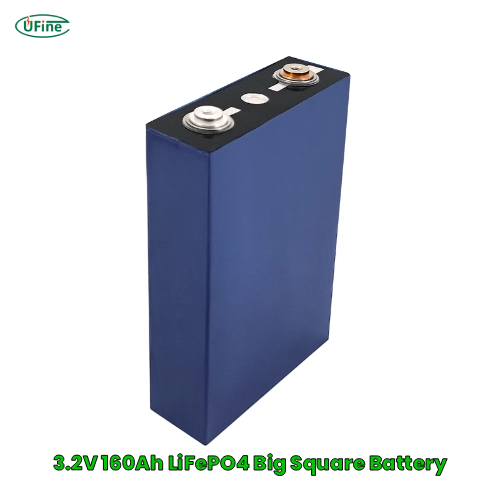
Ufine High-Power 3.2V 160Ah LiFePO₄ Big Square Battery
Why it fits most users:
- 160Ah capacity fits 12V/24V/48V systems
- Excellent thermal stability
- Long cycle life
- Supports high discharge current for industrial systems
- Perfect for solar ESS, RVs, marine, industrial automation
Part 9. Common mistakes when buying big square batteries
- Ignoring required discharge current
- Not checking certifications
- Mixing battery types in one system
- Choosing NMC when LFP is safer for your case
- Forgetting to evaluate temperature conditions
- Buying cheap unbranded cells without a BMS plan
Many of these mistakes are caused by ignoring compliance. This safety guide explains all mandatory standards in detail: Big Square Battery Safety Standards You Must Know .
Part 10. Which big square battery should you choose?
- Highest safety → LFP
- Highest energy density → NMC
- Fastest charging → LTO
By application:
- Solar / ESS → LFP
- RV / Marine → LFP
- Industrial AGV → LFP or LTO
- EV pack → NMC or LFP
For a stable, flexible solution that fits 80% of applications:
Pro Tip: Ufine 3.2V 160Ah LFP big square cell is the safest and most balanced choice.
Part 11. FAQs about big square battery guide
What is a big square battery?
A high-capacity rectangular lithium battery commonly used in EVs, solar storage, RVs, and industrial systems.
Is a big square battery better than a normal battery?
Yes. It has higher capacity, better thermal control, and longer lifespan.
Which chemistry is best?
LiFePO₄ for safety and cycle life, NMC for energy density, LTO for fast charging.
How long does a big square battery last?
Typically 3000–6000 cycles for LFP and up to 10,000 cycles for LTO.
Can I use a big square LiFePO₄ battery in my RV?
Yes. It is the safest and most reliable choice. Options include Ufine 160Ah LFP or BYD 3.2V 150Ah LFP.
Related Tags:

More Articles

고방전 배터리는 높은 전류와 발열로 배터리수명이 줄어듭니다. 구조적 한계, 사용 패턴, 충전 습관 등 실제 수명 단축 요인을 체계적으로 분석했습니다.
Capacitor vs Battery: What is the Difference?
Capacitor vs battery explained in detail. Learn the difference between capacitor and battery in energy storage, charging speed, lifespan, and real applications.
18650 Battery vs AA: Which Is Better for Your Device?
Compare 18650 vs AA batteries in capacity, voltage, rechargeability, and applications. Learn which battery type fits high-drain or everyday devices.
What is the Difference Between Battery Cell, Battery Control Module, and Battery Pack?
Compare battery cells, modules, and packs. Learn functions, design differences, control modules, and selection tips for EV, ESS, and industrial use.
How to Prevent LiPo Battery Explosion?
Can LiPo batteries explode or catch fire? Learn key causes of LiPo battery fires and proven charging, storage, and handling tips to reduce explosion risk.