
- Key Takeaways
- Part 1. What is battery nominal voltage?
- Part 2. Nominal vs peak vs cut-off voltage
- Part 3. Factors affecting battery nominal voltage
- Part 4. Practical applications of nominal voltage
- Part 5. Common battery types and nominal voltage chart
- Part 6. How to measure battery voltage (correct way)
- Part 7. Impact of nominal voltage on battery performance
- Part 8. Nominal voltage vs capacity (ah vs v)
- Part 9. Nominal voltage common misunderstandings
- Part 10. FAQ: Battery nominal voltage questions
Battery performance is strongly linked to one key parameter: nominal voltage. If you are designing or selecting batteries for devices, EVs, or energy storage, you must understand what nominal voltage means and how it affects performance.
This guide explains the definition of nominal voltage, how it differs from other voltage values, and how to use it in real-world battery selection.
Key Takeaways
- Nominal voltage is the average working voltage of a battery during discharge, not the maximum or minimum voltage.
- Battery nominal voltage is mainly determined by battery chemistry (Li-ion ≈ 3.7V, LiFePO₄ ≈ 3.2V, lead-acid ≈ 2V per cell).
- Devices are designed around a specific nominal voltage range, making it critical for compatibility and safety.
- Nominal voltage must be considered together with capacity (Ah) to evaluate real energy (Wh).
- Using the wrong nominal voltage can lead to reduced efficiency, shorter lifespan, or system failure.
Part 1. What is battery nominal voltage?
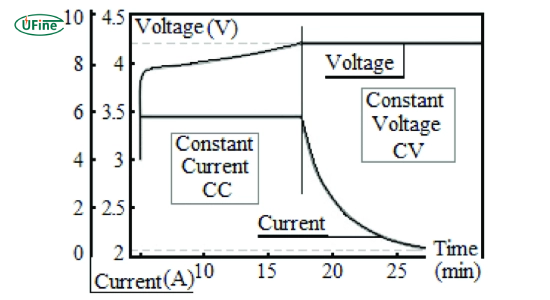
Battery nominal voltage is the standardized average voltage that a battery provides during normal operation. It is not a fixed value, but a reference used for design, comparison, and system compatibility.
Simple Definition
Nominal voltage = average operating voltage during discharge
This value helps engineers answer key questions:
- Will this battery match my device voltage requirements?
- Is it compatible with my battery management system (BMS)?
- Can it replace another battery safely?
How is nominal voltage determined?
The nominal voltage of a battery depends mainly on its electrochemical system. Each battery chemistry has a typical voltage curve during charge and discharge.
Example: Lithium-Ion Battery
- Fully charged: ~4.2V
- Nominal voltage: ~3.7V
- Cut-off voltage: ~3.0V
The nominal value (3.7V) represents the midpoint of the discharge curve where the battery operates most of the time.
👉 For a deeper explanation of voltage behavior, see: Battery University – Confusion with Voltages
Part 2. Nominal vs peak vs cut-off voltage
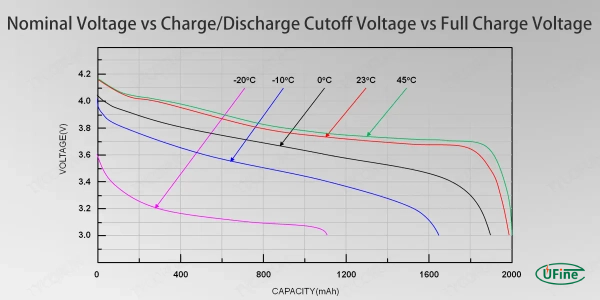
Understanding different voltage terms is essential for battery design and safe operation.
- Nominal Voltage
Average working voltage
Used for system design and battery selection
Example: 3.7V (Li-ion) - Peak Voltage (Full Charge Voltage)
Maximum voltage when fully charged
Example: 4.2V (Li-ion)
Important for charger design - Cut-Off Voltage
Minimum safe discharge voltage
Example: 3.0V (Li-ion)
Prevents over-discharge damage
👉 Related reading: Voltage vs Current: What is the Difference?
Part 3. Factors affecting battery nominal voltage
Although nominal voltage is standardized, real-world performance can vary.
- Battery Chemistry (Primary Factor)
Lithium-ion: ~3.6–3.7V
LiFePO₄: ~3.2V
Lead-acid: ~2V per cell
NiMH / NiCd: ~1.2V - Temperature
High temperature → slightly higher voltage
Low temperature → reduced voltage output - Aging and Usage
Increased internal resistance over time
Voltage drops faster under load
Deep cycles accelerate degradation
Part 4. Practical applications of nominal voltage
Consumer Electronics
Smartphones and laptops rely on stable nominal voltage to ensure:
- Stable power delivery
- Efficient charging cycles
- Reduced overheating risk
Electric Vehicles (EVs)
Battery packs are built by combining cells:
- Example: 3.7V × 100 cells = 370V system
- Nominal voltage defines system architecture and range performance
Solar & Energy Storage Systems
Common system voltages: 12V, 24V, 48V
Matching nominal voltage ensures inverter compatibility and efficiency
Part 5. Common battery types and nominal voltage chart
| Battery Type | Nominal Voltage (Per Cell) | Typical Applications |
|---|---|---|
| Lithium-ion (Li-ion) | 3.6V–3.7V | Phones, laptops, EVs |
| LiFePO₄ | 3.2V | Solar storage, RV, backup |
| Lead-acid | 2.0V | Automotive, UPS |
| NiMH | 1.2V | AA/AAA rechargeable |
| NiCd | 1.2V | Tools, emergency systems |
Part 6. How to measure battery voltage (correct way)
Using a Multimeter
- Set to DC voltage
- Connect probes to terminals
- Read the voltage
Important Notes
- Fully charged voltage > nominal voltage
- Discharged voltage < nominal voltage
- Measure at rest (no load) for accuracy
Part 7. Impact of nominal voltage on battery performance
- Efficiency
Devices are optimized for a specific voltage range.
Mismatch leads to energy loss and instability. - Lifespan
Operating outside the designed voltage range:- Accelerates degradation
- Increases internal stress
- Safety
Incorrect voltage may cause:- Overheating
- Overcharging risks
- System failure
Part 8. Nominal voltage vs capacity (ah vs v)
Many users confuse voltage with capacity.
- Voltage (V) = electrical pressure
- Capacity (Ah) = stored charge
- Energy (Wh) = V × Ah
Practical Insight
A higher nominal voltage does NOT always mean longer runtime.
You must evaluate total energy (Wh).
Part 9. Nominal voltage common misunderstandings
- ❌ Higher nominal voltage = better battery
- ❌ Nominal voltage is a fixed value
- ❌ You can replace batteries with different voltages freely
✔ Correct approach:
- Match nominal voltage first
- Then compare capacity and system compatibility
Part 10. FAQ: Battery nominal voltage questions
What is the nominal voltage of a battery?
Nominal voltage is the average operating voltage during discharge. It is used as a standard reference for battery design and selection.
Why is nominal voltage important?
It ensures device compatibility, stable performance, and safe operation within the designed voltage range.
Can nominal voltage change over time?
Yes. Aging, temperature, and usage patterns can slightly affect real operating voltage.
What happens if I use the wrong nominal voltage?
It may cause poor performance, overheating, reduced lifespan, or permanent device damage.
How do I find the nominal voltage of a battery?
Check the battery label or datasheet. If unavailable, identify the battery chemistry and refer to standard nominal values.
Related Tags:

More Articles

Dead Battery or Device Failure? How to Find the Cause
Think your device is broken? Learn how to tell if the problem comes from battery aging or hardware failure before replacing your electronics.
Why iPhone Duo Uses Two Batteries: The Engineering Behind Foldable Phone Power
Why do foldable phones need two batteries? Explore the engineering challenges behind iPhone Duo’s dual-battery architecture and future battery trends.
Solid-State Batteries: 3 Myths You Need to Know
Solid-state batteries promise safer EVs and longer range, but the reality is more complex. Discover the challenges behind this next-gen technology.
Battery Capacity vs Discharge Rate: The Choice Engineers Face
Higher capacity or higher discharge rate? Learn how to choose the right LiPo battery for longer runtime, stable power output, and better device performance.
Battery Cable Size Guide: Choose the Right Wire Fast
Not sure what battery cable size you need? Learn how to select the right wire gauge, terminal size, and cable for safer, more efficient battery systems.


