- Key Takeaways
- Part 1. What is a ptc thermistor?
- Part 2. How do ptc thermistors work?
- Part 3. Types of ptc thermistors
- Part 4. Ptc thermistors advantages and limitations
- Part 5. Applications of ptc thermistors
- Part 6. Ptc thermistor vs fuse: Key differences
- Part 7. Ptc thermistor selection guide for applications
- Part 8. FAQs about ptc thermistors
PTC thermistors are widely used in modern electronics, especially in battery packs, power circuits, and temperature protection systems. They are simple components, but they solve critical safety problems such as overcurrent and overheating.
Key Takeaways
- A PTC thermistor increases resistance sharply as temperature rises, enabling self-regulating protection.
- It is widely used in battery packs, motor circuits, and power electronics for overcurrent protection.
- Compared with fuses, PTC thermistors are resettable and reduce maintenance cost.
- Material structure (often barium titanate) drives the nonlinear resistance behavior.
- Selection should consider trip temperature, hold current, voltage rating, and environment.
Part 1. What is a ptc thermistor?
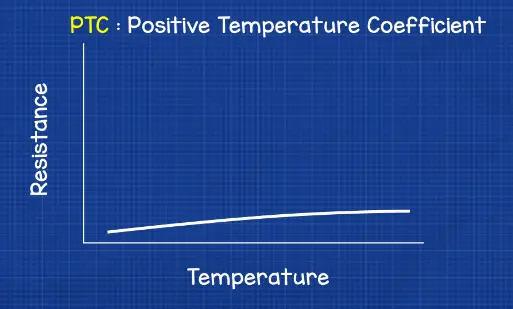
A PTC thermistor (Positive Temperature Coefficient thermistor) is a resistor whose resistance increases as temperature rises.
Unlike fixed resistors, PTC thermistors react strongly to temperature changes. At a certain threshold (called the Curie temperature), resistance increases rapidly. This behavior allows automatic current limiting.
In battery systems, PTC thermistors are often used as a secondary protection layer. For example, in lithium battery packs, they help prevent overheating alongside BMS circuits. You can see how protection integrates with cell design in our guide to the battery production process.
Part 2. How do ptc thermistors work?
PTC thermistors are usually made from ceramic materials such as barium titanate.
- At low temperature → crystal structure allows electrons to flow → low resistance
- At high temperature → structure changes → electron flow is restricted → high resistance
This creates a self-regulating effect:
- When current increases → temperature rises
- Resistance increases → current is reduced automatically
This makes PTC thermistors ideal for:
- Overcurrent protection
- Temperature sensing
- Self-heating control
For deeper material science background, refer to IEEE publications on thermistor behavior.
Part 3. Types of ptc thermistors
Different applications require different structures and packaging.
1. Chip Ptc Thermistors
- Small size, SMD compatible
- Used in PCB circuits and compact electronics
- Common in consumer devices and battery boards
2. Bead Ptc Thermistors
- Encapsulated in glass or epoxy
- High accuracy for sensing
- Used in HVAC, automotive, and medical systems
3. Disk Ptc Thermistors
- Larger size with higher power handling
- Suitable for motor starting and current limiting
- Common in industrial equipment
4. Glass-Coated Ptc Thermistors
- Protected against moisture and chemicals
- Stable in harsh environments
- Used in automotive and aerospace systems
5. Surface Mount Ptc Thermistors
- Designed for SMT production
- Easy integration into high-density PCBs
- Used in telecom and control boards
6. Probe Ptc Thermistors
- Packaged in metal or plastic housings
- Used for direct temperature measurement in liquids or gases
- Common in industrial and lab environments
Part 4. Ptc thermistors advantages and limitations
Advantages
- Self-resetting protection: Automatically returns to low resistance after cooling
- Fast response time: Reacts quickly to temperature rise
- Simple circuit design: No complex control system required
- Wide application range: Works in electronics, automotive, and battery systems
- Reliable and durable: Long lifespan when properly designed
Limitations
- Nonlinear behavior: Resistance change is not linear, making precise measurement harder
- Limited voltage and current ratings: Not suitable for very high-power systems
- Thermal hysteresis: Behavior differs during heating and cooling cycles
- Environmental sensitivity: Moisture and vibration can affect performance
- Tolerance variation: Manufacturing differences require careful selection
Part 5. Applications of ptc thermistors
PTC thermistors are widely used across industries.
1. Battery Protection (Critical Application)
- Prevents overcurrent and overheating
- Common in lithium-ion packs and modules
- Often combined with protection circuits in products like li-ion 18650 battery
2. Temperature Sensing And Control
- Used in thermostats and HVAC systems
- Helps maintain stable operating temperatures
3. Overcurrent Protection
- Acts as a resettable fuse (PPTC)
- Protects circuits from short circuits
4. Motor Starting Circuits
- Limits inrush current
- Protects motors from damage
5. Heating Elements
- Used in self-regulating heaters
- Applications include seat heaters and small appliances
Part 6. Ptc thermistor vs fuse: Key differences
| Aspect | PTC Thermistor | Fuse |
|---|---|---|
| Operation | Resistance increases with temperature | Melts when current exceeds limit |
| Resettable | Yes | No |
| Response | Fast, automatic limiting | Slower, thermal melting |
| Maintenance | No replacement needed | Must be replaced after failure |
| Application | Electronics, batteries | Power systems, appliances |
Engineering insight: PTC thermistors are preferred in systems where automatic recovery is required. Fuses are still better for high-current, fail-safe protection.
Part 7. Ptc thermistor selection guide for applications
When selecting a PTC thermistor, consider:
| Parameter | Why It Matters |
|---|---|
| Trip temperature | Defines activation point |
| Hold current | Maximum current before triggering |
| Voltage rating | Prevents breakdown |
| Response time | Critical for fast protection |
| Environment | Moisture, vibration, temperature range |
Example: For compact electronics like wearable devices, a small chip PTC is ideal. For battery packs, a higher power disk-type PTC is more suitable.
Part 8. FAQs about ptc thermistors
What is a PTC thermistor used for?
PTC thermistors are used for overcurrent protection, temperature sensing, and self-regulating heating in electronics and battery systems.
What is the difference between PTC and NTC thermistors?
PTC thermistors increase resistance with temperature, while NTC thermistors decrease resistance. NTC is better for precise sensing, PTC is better for protection.
What is a PTC thermistor in a battery pack?
It acts as a safety device that limits current when temperature rises, helping prevent overheating or short circuits.
Can a PTC thermistor replace a fuse?
In many low-power applications, yes. It provides resettable protection. However, for high-power systems, a fuse is still required.
How do you choose the right PTC thermistor?
You should evaluate trip temperature, current rating, voltage rating, and application environment to match system requirements.
Related Tags:

More Articles

All You Need to Know About CB Certification for Lithium Batteries
Learn what CB certification and the IECEE CB Scheme mean for lithium batteries. Explore requirements, testing, benefits, and global market access.
How to Choose the Right 3S LiPo Battery 5000mAh for Your RC Hobby Projects?
Learn how to choose the best 3S LiPo battery 5000mAh for RC cars, drones, boats, and planes. Compare C ratings, runtime, connectors, charging, and safety tips.
Comparing Semi Truck Batteries vs. Truck Batteries
Compare semi truck batteries and truck batteries by size, CCA, lifespan, and battery type. Learn how to choose the right truck battery for your vehicle.
Top 10 Flat Lithium Ion Battery Options for Compact Devices
Explore top flat lithium ion battery options, key specifications, and selection factors for compact electronics, medical devices, and energy storage systems.
Top 10 High Capacity Batteries: Best Large Capacity Battery Options
Compare 10 high capacity batteries for portable devices, backup systems, and industrial use. Find the best large capacity battery.