- Key takeaways
- Part 1. What is a 26650 rechargeable battery?
- Part 2. Chemistry and structure of 26650 batteries
- Part 3. What is the difference between flat-top and button-top 26650 cells?
- Part 4. Can a 26650 battery be charged and how long does it last?
- Part 5. 26650 battery runtime: how long can it last?
- Battery Run Time
- Part 6. Key parameters when selecting a 26650 battery
- Part 7. 26650 vs 18650: understanding the differences
- Part 8. 26650 battery packs applications
- Part 9. Charging, maintenance, and safety tips
- Part 10. FAQs
Key takeaways
- 26650 batteries are large, high-capacity lithium-ion cells, commonly used in high-drain devices like flashlights, e-bikes, power tools, and energy storage systems.
- These batteries are rechargeable, with typical lifespans of 500–1000 cycles, depending on usage, charging, and environmental conditions.
- Choosing the right 26650 battery requires careful consideration of capacity, nominal voltage, discharge rate, chemistry, and brand reliability.
- Compared with 18650 cells, 26650 batteries offer higher energy density but require larger housings, affecting device design and portability.
Part 1. What is a 26650 rechargeable battery?
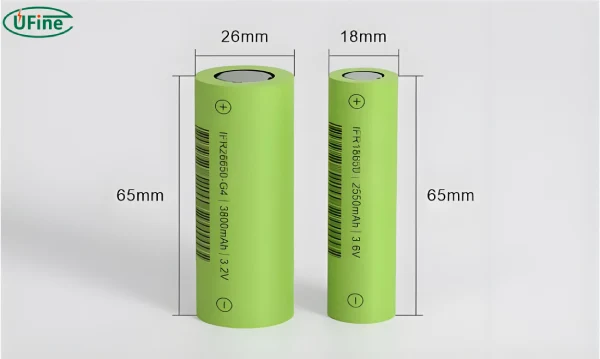
A 26650 battery is a cylindrical lithium-ion rechargeable cell measuring 26 mm in diameter and 65 mm in length, hence the “26650” name. Its larger volume compared with 18650 cells allows for higher capacity and higher continuous discharge rates. This makes it ideal for high-power devices and long-duration applications.
Most 26650 batteries are based on lithium-ion chemistry (Li-ion), although some use LiFePO4 for higher thermal stability and safety. They are rechargeable, which differentiates them from non-rechargeable lithium metal batteries, and they can deliver hundreds to thousands of cycles if used properly.
These batteries are widely used in applications where consistent, high-energy output is required, such as:
- Flashlights, torches, and tactical lighting
- E-bikes and scooters
- DIY battery packs and portable power stations
- High-drain electronic devices like radios, RC toys, and tools
Part 2. Chemistry and structure of 26650 batteries
Understanding a 26650 battery at a chemical and structural level is key for performance, safety, and longevity. Most 26650 cells use lithium-ion chemistry, which involves:
- Cathode (positive electrode): Usually made of LiCoO2, LiMn2O4, or NMC (Nickel-Manganese-Cobalt oxide). Determines capacity, voltage, and thermal stability.
- Anode (negative electrode): Typically graphite, which stores lithium ions during charging.
- Electrolyte: Lithium salts in organic solvents, enabling ion flow between electrodes.
- Separator: Thin porous membrane preventing short circuits while allowing ion movement.
Structurally, 26650 cells are cylindrical wound (jelly-roll) designs: cathode, separator, and anode rolled tightly inside a metal canister. This design provides:
- High mechanical strength
- Efficient heat dissipation
- Consistent capacity and discharge performance
Cells using LiFePO4 chemistry have slightly lower energy density but excel in thermal stability, long cycle life, and safety, making them ideal for industrial or high-temperature applications.
Part 3. What is the difference between flat-top and button-top 26650 cells?
When choosing 26650 batteries, you might notice flat-top and button-top designs. The difference is subtle but important for device compatibility and pack design.
- Flat-top cells have a completely flat positive terminal. They are often preferred in custom battery packs, multi-cell configurations, or devices where the battery holder is spring-loaded. Flat-top cells allow closer packing, which is ideal when building compact packs for DIY projects or power banks.
- Button-top cells feature a small protruding positive terminal, like a miniature “button.” This design is common in flashlights, high-drain torches, and retail batteries. The raised terminal ensures good contact in devices that rely on top pressure for connection.
Using the wrong type can prevent a battery from fitting properly or make the pack unstable. For example, a flashlight designed for button-top cells may not work with flat-top cells without an adapter. In custom packs, engineers often choose flat-top cells to maximize space efficiency and ensure uniform contact.
To understand the differences more clearly, check out our guide on 18650 battery flat-top vs button-top.
Part 4. Can a 26650 battery be charged and how long does it last?
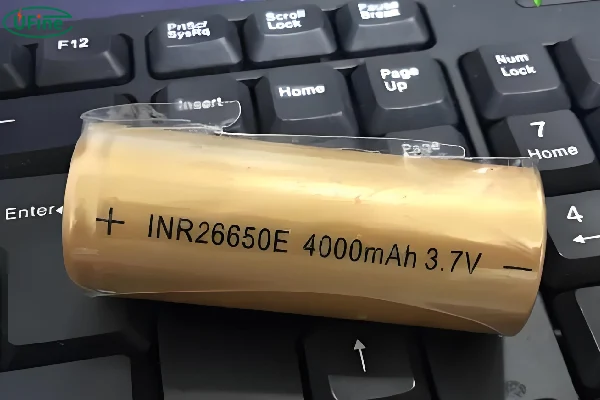
Yes, a 26650 battery can be charged safely, but it’s crucial to use a compatible charger and follow proper charging practices. Overcharging, high currents, or extreme temperatures can accelerate capacity degradation or cause safety hazards.
Battery lifespan depends on several factors:
- Charge cycles: Typical high-quality 26650 cells last 500–1000 full charge cycles. Partial charges can extend this lifespan.
- Depth of discharge (DoD): Using 50–80% of capacity per cycle is healthier than full discharges.
- Temperature: Batteries degrade faster at high temperatures (>45°C/113°F) or freezing conditions (<0°C/32°F).
- Charging speed: Fast charging may slightly reduce total cycle life, while moderate charging prolongs it.
In practice, if you charge your battery once per day under ideal conditions, it can last 2–3 years, or longer with careful usage.
Part 5. 26650 battery runtime: how long can it last?
A common question is: “How long will a 26650 battery last in my device?” Runtime depends on battery capacity, device power draw, and efficiency.
Basic runtime formula:
Runtime (hours)=Battery Capacity (mAh)/Device Current Draw (mA)
For example, a 5000 mAh 26650 battery powering a flashlight drawing 1000 mA (1A):
Runtime=5000/1000=5 hours
This is a theoretical maximum; real-world runtime is slightly lower due to internal resistance, voltage drop, and efficiency losses.
Typical runtime scenarios:
| Device Type | Typical Load (A) | Estimated Runtime with 5000 mAh 26650 |
|---|---|---|
| High-powered flashlight | 2 A | ~2.5 hours |
| E-bike motor (low power) | 5 A | ~1 hour |
| DIY portable power bank | 1 A | ~5 hours |
| LED lantern | 0.5 A | ~10 hours |
Tips to maximize runtime:
- Use higher-capacity cells (5500–6000 mAh) for longer operation.
- Connect cells in parallel to increase runtime without changing voltage.
- Avoid pushing the battery to maximum current constantly to reduce heat and efficiency loss.
- Keep batteries at optimal temperatures to prevent performance drop.
If you’re planning a custom pack, learn how to connect two batteries in parallel safely and efficiently.
Estimate battery runtime using our online calculator:
Part 6. Key parameters when selecting a 26650 battery
Choosing a 26650 battery isn’t just about picking the one with the highest mAh. Important parameters include:
| Parameter | Description | Recommended Range / Note |
|---|---|---|
| Capacity (mAh) | Total energy the cell can store | 4000–6000 mAh for high-drain, 5000–6000 mAh for long runtime |
| Nominal voltage (V) | Voltage under normal load | 3.6–3.7V per cell; packs often 7.4V or 14.8V |
| Maximum continuous discharge (A) | Highest safe current | 10–35A depending on model; essential for power tools or high-power LEDs |
| Chemistry | Li-ion, LiFePO4, etc. | LiFePO4 offers higher thermal stability; Li-ion offers higher energy density |
| Internal resistance (mΩ) | Affects heat generation | Lower is better for high-drain applications |
| Protection circuit | Built-in PCM/BMS | Recommended for safe operation, prevents overcharge, over-discharge, short-circuits |
Part 7. 26650 vs 18650: understanding the differences
26650 cells are perfect for long runtime and high-current applications, while 18650 cells are better for compact or portable devices.
| Feature | 26650 | 18650 |
|---|---|---|
| Dimensions | 26 mm × 65 mm | 18 mm × 65 mm |
| Typical Capacity | 4000–6000 mAh | 2000–3500 mAh |
| Maximum Discharge | 10–35A | 5–20A |
| Applications | High-drain flashlights, e-bikes, power tools | Laptops, smaller flashlights, portable electronics |
| Weight | 70–90 g | 40–50 g |
26650 vs 18650 Rechargeable Batteries: The Ultimate Guide
Part 8. 26650 battery packs applications
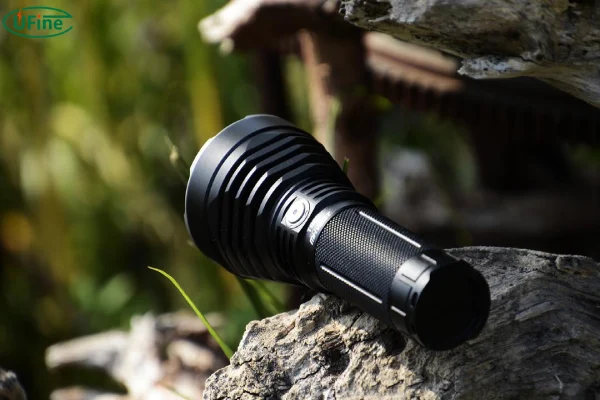
These batteries shine in applications where high-current discharge and long runtime are critical. Proper pack design ensures both performance and safety.
- High-powered flashlight: Two cells in series power 20–30W LEDs for hours.
- E-bike: Four to six cells in series-parallel provide the voltage and capacity for rides.
- DIY solar generator: 26650 packs store enough energy for lighting and small appliances overnight.
Part 9. Charging, maintenance, and safety tips
- Always use a charger compatible with lithium-ion batteries.
- Avoid fully draining batteries frequently; partial discharges extend life.
- Inspect for swelling, leakage, or corrosion, and replace damaged cells immediately.
- Keep batteries away from metal objects to prevent short circuits.
Part 10. FAQs
Can 26650 batteries handle extreme cold or hot environments?
Some 26650 chemistries like LiFePO4 perform better in high temperatures, but all lithium-ion cells lose efficiency in extreme cold or heat.
How do I safely dispose of old 26650 batteries?
Take them to a certified recycling center; never throw lithium-ion batteries in household trash to avoid fire hazards.
Are protected 26650 batteries necessary for all devices?
Not always, but using a protection circuit or BMS greatly reduces risks of overcharge, over-discharge, and short circuits.
Can I mix different brands or capacities in a battery pack?
Mixing cells is not recommended; differences in capacity, internal resistance, or age can cause imbalance and reduce pack performance.
Do 26650 batteries self-discharge when stored?
Yes, like all lithium-ion cells, they slowly lose charge over time, typically 2–5% per month at room temperature.
Can a 26650 battery explode or catch fire?
While rare, unsafe usage (overcharging, short-circuit, physical damage, or high heat) can cause thermal runaway; always follow safety guidelines.
Related Tags:

More Articles

JST vs Molex: The Right Battery Connector Choice
JST or Molex for your battery? Learn how connector selection affects current, voltage drop, reliability, and device performance.
Custom Battery Pricing: Costs Manufacturers Don’t Mention
A low battery quote may not be the final cost. Discover common hidden expenses that affect custom lithium battery projects.
Battery Wire Length: Hidden Cause of Power Loss
A longer battery wire can cause voltage drop, power loss, and unstable operation. Learn how wire length affects battery performance.
How Device Sleep Modes Affect Battery Life
Think sleep mode extends battery life? Learn why devices still drain power and how firmware, hardware, and batteries affect runtime.
LiPo Battery and PCB Design: Clearance, Insulation, and Placement
Learn how to optimize LiPo battery PCB clearance, insulation, placement, wiring, and thermal design—and avoid common integration mistakes.