
- Key takeaways
- Part 1. What is a high drain 18650 battery?
- Part 2. What makes a battery high drain?
- Part 3. Key features of 18650 high drain batteries
- Part 4. 18650 high drain battery discharge ratings
- Part 5. Common applications of 18650 high drain batteries
- Part 6. 18650 high drain battery vs standard 18650 battery
- Part 7. How to protect your 18650 high drain battery?
- Part 8. How to choose the best 18650 high drain battery?
- Part 9. FAQs about 18650 high drain batteries
The 18650 high drain battery is a lithium-ion cell designed to deliver high current output for demanding devices. It is widely used in power tools, flashlights, drones, robotics, and battery packs. Compared with standard 18650 cells, a high drain 18650 battery provides stronger power delivery and better performance under heavy loads.
Key takeaways
- A high drain 18650 battery can safely deliver high current output without excessive voltage drop.
- Typical high-drain cells provide continuous discharge ratings from 15A to 35A.
- Some specialized 18650 batteries with 35A max discharge rate are designed for extreme power demands.
- High-drain cells are commonly used in power tools, flashlights, drones, robotics, and battery packs.
- Choosing the correct discharge rating is often more important than choosing the highest capacity.
- Proper charging, storage, and temperature control significantly extend battery life.
- Always buy genuine cells from reputable manufacturers to ensure safety and performance.
Part 1. What is a high drain 18650 battery?
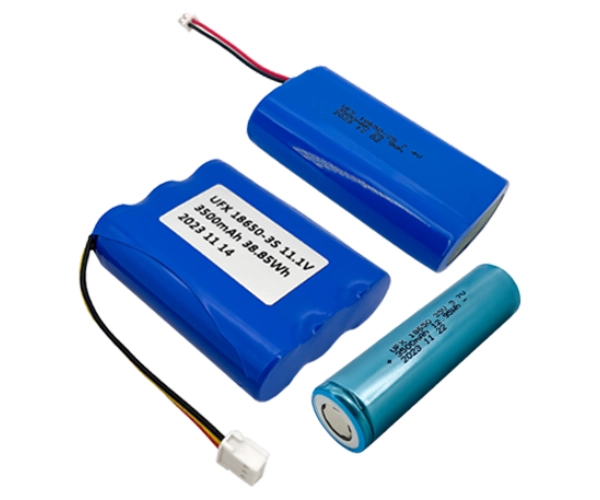
An 18650 high drain battery is a rechargeable lithium-ion cell measuring approximately:
- 18 mm diameter
- 65 mm length
- Cylindrical shape
The term high drain refers to the battery’s ability to deliver a large amount of current continuously and safely.
Unlike standard lithium-ion cells optimized for runtime, high-drain cells are engineered with lower internal resistance. This allows them to provide strong power output while minimizing heat generation and voltage sag.
Part 2. What makes a battery high drain?
A battery is considered high drain when it can support:
- High continuous discharge current
- Stable voltage under load
- Lower internal resistance
- Better thermal performance
For example:
| Battery Type | Typical Continuous Discharge |
|---|---|
| Standard 18650 | 3A–10A |
| High Drain 18650 | 15A–35A |
| Specialized High Power Cells | Up to 35A+ |
This is why keywords such as 18650 battery high drain, high drain lithium battery, and 18650 high drain are often associated with power-demanding devices.
Part 3. Key features of 18650 high drain batteries
High current output
The biggest advantage of a high-drain cell is its ability to deliver large amounts of current without damaging the battery.
This is critical for applications that experience sudden power spikes, such as:
- Cordless drills
- Electric scooters
- RC vehicles
- Drones
- Robotics systems
Many users searching for 18650 batteries with 35A max discharge rate are looking for cells capable of supporting these demanding loads.
High energy density
Despite their compact size, 18650 cells store substantial energy.
Modern cells typically offer:
- 2000mAh to 4000mAh capacity
- Nominal voltage of 3.6V or 3.7V
- Rechargeable operation for hundreds of cycles
This balance between size and energy storage makes them ideal for portable devices.
Long cycle life
Quality lithium-ion cells can often achieve:
- 300–500 cycles under heavy use
- 500–1000+ cycles under moderate conditions
Actual lifespan depends on:
- Charge voltage
- Discharge depth
- Temperature
- Load conditions
For longer service life, avoid frequent deep discharges and overheating.
Compact standardized format
The standardized 18650 size simplifies battery pack design and replacement.
Manufacturers can easily integrate 18650 cells into:
- Portable electronics
- Medical equipment
- Industrial devices
- Energy storage systems
Part 4. 18650 high drain battery discharge ratings
When choosing a high drain 18650 battery, capacity alone should not be the deciding factor.
Continuous discharge rating (CDR)
CDR indicates the maximum current a battery can safely deliver continuously.
Common ratings include:
| Continuous Discharge Rating | Typical Applications |
|---|---|
| 10A | Laptops, low-power devices |
| 15A | Flashlights, portable electronics |
| 20A | Power tools, drones |
| 25A | High-performance battery packs |
| 30A–35A | Extreme high-drain applications |
Pulse discharge rating
Some manufacturers also publish pulse ratings. These ratings represent short bursts of current rather than continuous operation.
When designing battery-powered equipment, engineers should primarily rely on the continuous discharge rating, not pulse ratings.
Part 5. Common applications of 18650 high drain batteries
Power tools
Power tools place heavy loads on batteries. High-drain cells provide:
- Fast energy delivery
- Stable voltage
- Reliable operation under load
Applications include: Drills, impact drivers, circular saws, grinders.
High-performance flashlights
Professional and tactical flashlights often require large current output to drive high-lumen LEDs. A high-drain 18650 battery helps maintain:
- Consistent brightness
- Longer runtime
- Reduced voltage sag
Drones and robotics
Drones and robotic systems frequently experience rapid current spikes. High-drain cells help support:
- Motor acceleration
- Flight stability
- Peak load performance
Medical equipment
Some portable medical devices use high-performance lithium-ion batteries because of their:
- Reliability
- Compact size
- Long operating time
Electric mobility devices
Many electric mobility applications use cylindrical lithium-ion cells. Examples include: E-bikes, electric scooters, portable mobility systems.
Custom battery packs
Battery manufacturers often use high-drain 18650 cells in custom packs for:
- Industrial equipment
- Portable power stations
- Backup systems
- Specialized electronics
For custom battery solutions, see our guide on custom lithium battery packs.
Part 6. 18650 high drain battery vs standard 18650 battery
Choosing between a high-drain and standard cell depends on the application.
| Feature | High Drain 18650 | Standard 18650 |
|---|---|---|
| Current Output | High | Moderate |
| Internal Resistance | Lower | Higher |
| Power Tool Use | Excellent | Limited |
| Flashlight Performance | Excellent | Good |
| Runtime Focus | Moderate | Higher |
| Heat Handling | Better | Lower |
| Cost | Usually Higher | Usually Lower |
When to choose a high drain battery
Select a high-drain battery if your device:
- Requires over 10A current
- Uses motors
- Produces high power output
- Experiences frequent power surges
When a standard battery is enough
A standard cell may be sufficient for:
- Laptops
- Low-power electronics
- Monitoring devices
- Backup applications
Part 7. How to protect your 18650 high drain battery?
Use the correct charger
Always use a charger designed for lithium-ion batteries.
Avoid:
- Overcharging
- Improper charging voltage
- Poor-quality chargers
For safety guidance, refer to the recommendations from the Battery University.
Avoid excessive heat
Heat is one of the biggest causes of lithium-ion degradation.
Avoid:
- Direct sunlight
- Hot vehicles
- High-temperature environments
Most lithium-ion cells perform best between 20°C and 25°C.
Prevent over-discharge
Do not allow the cell voltage to drop too low. Deep discharge can:
- Reduce capacity
- Increase internal resistance
- Shorten cycle life
Prevent short circuits
Never carry loose batteries with metal objects such as:
- Keys
- Coins
- Tools
Use protective battery cases whenever possible.
Store batteries properly
For long-term storage:
- Store at approximately 40–60% charge
- Keep in a cool, dry location
- Check voltage periodically
Part 8. How to choose the best 18650 high drain battery?
Before purchasing, evaluate the following factors:
1. Required current
Determine the maximum current your device draws. Choose a battery with sufficient continuous discharge capability.
2. Capacity
Higher capacity provides longer runtime but may reduce maximum discharge capability. Balance runtime and power requirements.
3. Cycle life
Industrial and commercial users should consider long-term operating costs, not just initial battery price.
4. Safety features
Look for:
- Genuine cells
- Quality control testing
- Manufacturer certifications
- Reliable supply chains
5. Application requirements
A flashlight battery may prioritize runtime. A power tool battery may prioritize discharge rate. The correct battery depends on the application.
For more information about lithium-ion cell selection, see our guide on Types of 18650 Battery .
Part 9. FAQs about 18650 high drain batteries
What is considered a high drain 18650 battery?
A high-drain 18650 battery is a lithium-ion cell designed to provide high continuous current output, typically 15A to 35A, while maintaining safe operating temperatures and stable voltage.
What is the best discharge rate for a high drain 18650 battery?
The best discharge rate depends on the application. Flashlights may only require 10A–15A, while power tools and high-performance devices may require 20A–35A continuous discharge.
Are all 18650 batteries high drain?
No. Some 18650 cells are optimized for capacity and runtime rather than high current output. Always check the continuous discharge rating before purchasing.
How long does an 18650 high drain battery last?
Most quality cells last between 300 and 1000 charge cycles, depending on temperature, charging habits, and discharge depth.
Can I use a high drain 18650 battery in a low-power device?
Yes. A high-drain battery can generally be used in a low-power device. The device will only draw the current it requires. However, a higher-capacity standard cell may provide longer runtime in some low-drain applications.
Related Tags:

More Articles

The Ultimate Guide to Battery Posts and Battery Terminals
Learn battery post and battery terminal types, identify positive and negative terminals, clean corrosion, and maintain reliable battery connections safely.
How to Choose the Right Battery for Blower?
Choosing the right blower battery? Learn voltage, Ah, battery type, and compatibility to pick the best battery for leaf blower performance and runtime.
A gravity battery stores electricity using gravitational energy. Learn how it works, key components, benefits, applications, and real-world projects.
Before You Buy 9V Battery Must-Knows
Not all 9V batteries perform the same. Learn which type lasts longer, works better, and which one you should actually buy.
Understanding USB Rechargeable Cells: A Simple Guide
Learn how USB rechargeable cells work and why they're a smart choice for your devices. Discover convenience now—switch to USB cells today!


