
Part 1. Why heated gloves require application-specific battery design?
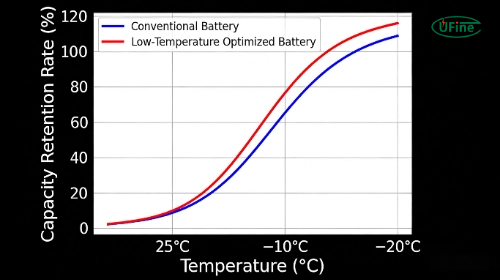
Unlike standard wearables, heated gloves operate under continuous electrical load in sub-zero environments. Independent industry research shows that lithium-ion batteries can experience significant performance degradation below 0 °C, primarily due to reduced ion mobility and increased internal resistance, which directly limits usable capacity and discharge stability. Lithium battery low-temperature performance degradation.

In practical cold-weather applications, usable battery capacity may drop sharply. For example, a lithium-ion battery rated at room temperature may deliver only around 50% of its nominal capacity at –18 °C, resulting in shortened heating duration and unstable output.
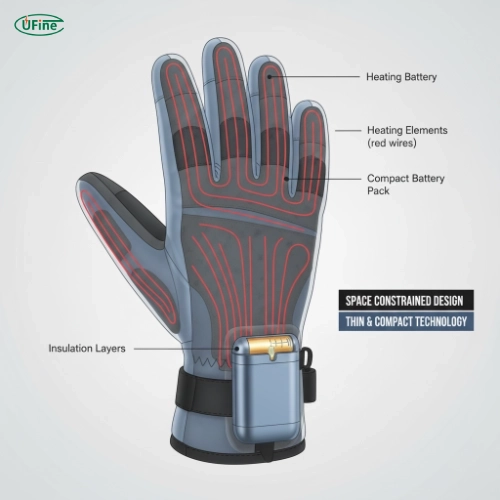
Key application constraints for heated gloves include:
- Operating temperatures commonly between –10 °C and –20 °C
- Continuous discharge for 3–8 hours, depending on heating level
- Installation space typically <15 mm thickness in glove compartments
- Frequent exposure to snow, sweat, and condensation
Part 2. Key battery performance requirements (Engineering Perspective)
Low-Temperature Discharge Stability
Cold environments directly affect lithium battery electrochemistry. Low temperatures reduce conductivity and hinder ion transport inside the cell, leading to higher impedance, voltage sag, and reduced effective capacity under load.
Design targets for heated gloves batteries:
- Stable discharge at –10 °C to –20 °C
- Voltage drop <10% under continuous heating load
- Reduced internal resistance through optimized cell selection and BMS tuning
Compact Form Factor & Weight Control
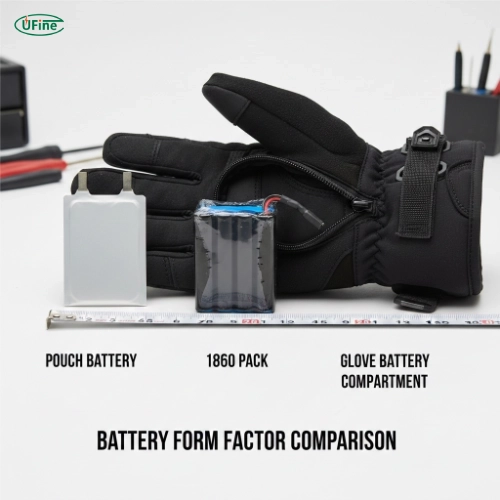
Handwear ergonomics impose strict physical constraints:
- Typical battery volume: <25–40 cm³
- Weight target: <60 g per battery module
- Preference for flat pouch cells or compact cylindrical layouts
Battery geometry must align with glove structure without compromising comfort or dexterity.
Safety in Wet & Snowy Conditions
Heated gloves operate in environments where moisture ingress, condensation, and repeated thermal cycling are unavoidable. International safety standards such as IEC 62133-2 define test requirements for electrical, mechanical, and environmental safety of lithium-ion batteries used in portable and wearable devices. IEC 62133 lithium battery safety standard overview.
Compliance with IEC 62133 and UN38.3 helps ensure reliable operation, reduced failure risk, and smoother global market access for heated glove products.
Part 3. Scenario-based battery solution recommendations
Below are application-matched battery solutions, not generic product listings.
Scenario 1: Lightweight Heated Gloves for Recreational Skiing
Design goal: Slim profile, 3–5 hours runtime, minimal hand fatigue
Recommended solutions:
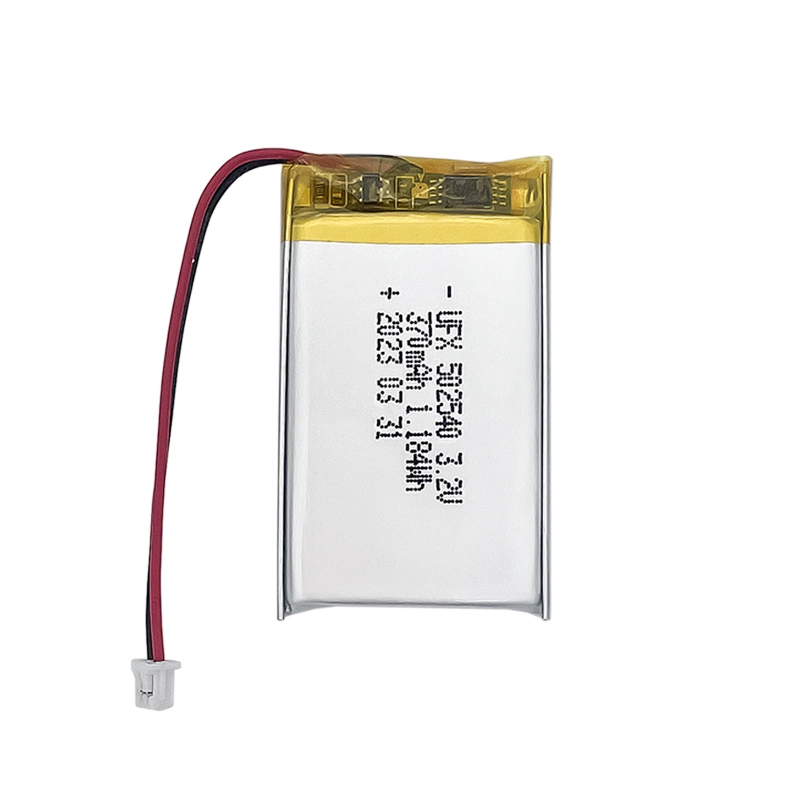
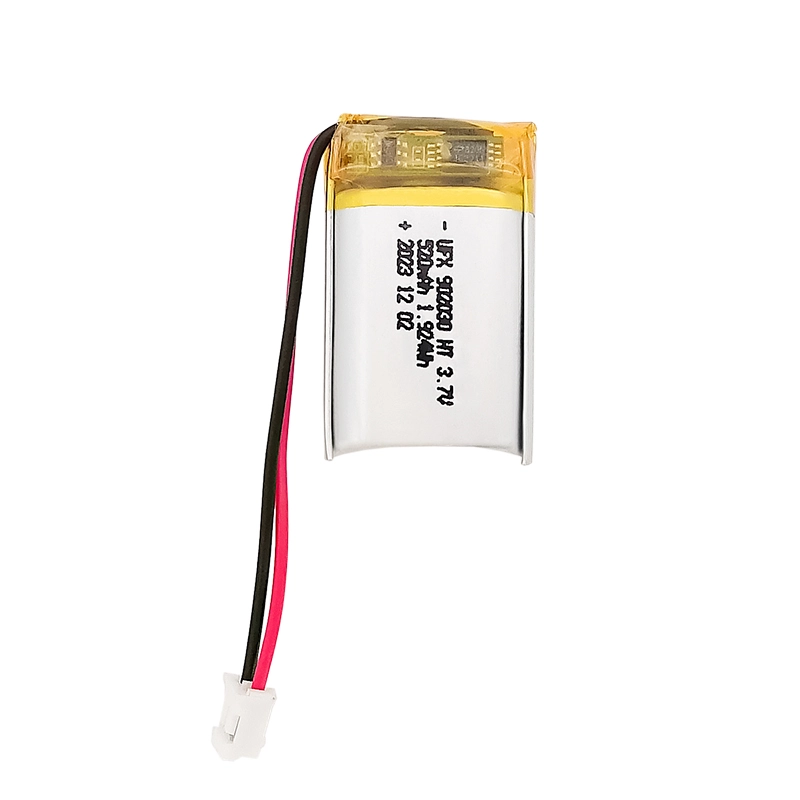
- 3.7V 1000mAh Li-ion Battery (102050)
Compact pouch design, ideal for internal glove pockets - 3.7V 850mAh Li-ion Battery (503055)
Balanced energy density and weight for featherweight heated gloves
Scenario 2: High-Performance Heated Gloves for Alpine & Backcountry Skiing
Design goal: Longer heating duration, stable output under extreme cold
Recommended solutions:
- 7.4V 1500mAh Li-ion Battery Pack (123450-2S)
Higher voltage improves heating efficiency and control stability - 7.4V 2000mAh Li-ion Battery Pack (103450-2S)
Suitable for multi-hour skiing sessions in sub-zero conditions
Scenario 3: Extended Runtime Heated Gloves for Multi-Day Ski Trips
Design goal: Maximum runtime with external or modular battery placement
Recommended solutions:
- 7.4V 5200mAh 18650 Battery Pack (18650-2S2P)
- 3.7V 7500mAh 18650 Battery Pack (18650-3P)
Part 4. Battery decision parameters (OEM & Engineering Reference)
| Parameter | Typical Range for Heated Gloves |
|---|---|
| Nominal Voltage | 3.7V / 7.4V |
| Capacity | 800–5200mAh (internal) / up to 7500mAh (external) |
| Cell Type | Li-ion pouch / 18650 cylindrical |
| Operating Temperature | –20 °C to +60 °C |
| Protection | OVP, UVP, SCP, NTC |
| Certifications | UN38.3, MSDS, IEC 62133 support |
Customization & Manufacturing Support
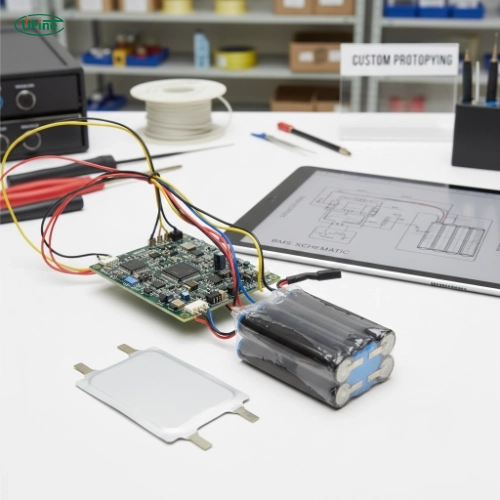
As a lithium battery heated gloves factory, Ufine provides:
- Custom battery dimensions based on glove CAD drawings
- Connector and cable customization for heating controllers
- Low-temperature optimized cell selection
- Small-batch OEM support for prototype and pilot production
Talk to Ufine’s battery engineers to receive application-matched battery recommendations, drawing support, and compliance guidance for your heated gloves project.
Get Custom Heated Gloves Battery SolutionsHigh Energy Density
It stores large amounts of energy in a smaller and lighter package
Longer Cycle Life
Withstands extensive charge and discharge cycles
Low Self-Discharge
Maintains power longer when not in use
Safety
Minimizes the risk of accidents and ensures safe operation
More Information About Heated Gloves Battery
-
What battery chemistry works best for heated gloves in low temperatures?
-
What voltage is typically used in heated gloves battery systems?
-
Can heated glove batteries be customized for slim or irregular glove spaces?
-
What safety protections are required for heated gloves used in snow and moisture?
-
Do you support small-batch OEM or pilot production for heated gloves?
Latest Blogs
About Lithium Battery Industry News
12V Lithium-Ion What Voltage at Fully Charged and Why Your Battery Might Not Reach It
Check the 12V lithium battery voltage chart for 3S Li-ion and 4S LiFePO4. Learn full charge, resting voltage, charger limits, and fault checks.
2026/08/03 Ufine
LiFePO4 Voltage Chart Guide: Everything You Need to Know
Check the LiFePO4 voltage chart for 3.2V, 12V, 24V and 51.2V batteries. Compare SOC, charging voltage, cutoff limits and internal resistance.
2026/07/29 Ufine
Lithium Ion Cell Sizes: A Comprehensive Guide
Compare lithium ion cell sizes with a chart of dimensions, capacity ranges, cell types, applications, and key factors for selecting the right battery.
2026/07/29 Ufine

6 Volt Tractor Battery vs 12 Volt: Which One Fits Your Farm Equipment Best?
Compare 6V and 12V tractor batteries. Learn which voltage fits vintage or modern tractors, which specifications matter, and how to convert safely.
2026/07/28 Ufine

The Ultimate Guide to a Molten Salt Battery
Learn how a molten salt battery works, its main types, advantages, disadvantages, operating temperature, safety, and grid energy storage uses.
2026/07/28 Ufine
2000mAh Battery Runtime: How Long Will It Last in Real Devices?
Learn how to calculate 2000mAh battery runtime and backup time. See real device examples, power-loss factors, and battery replacement checks.
2026/07/28 Ufine