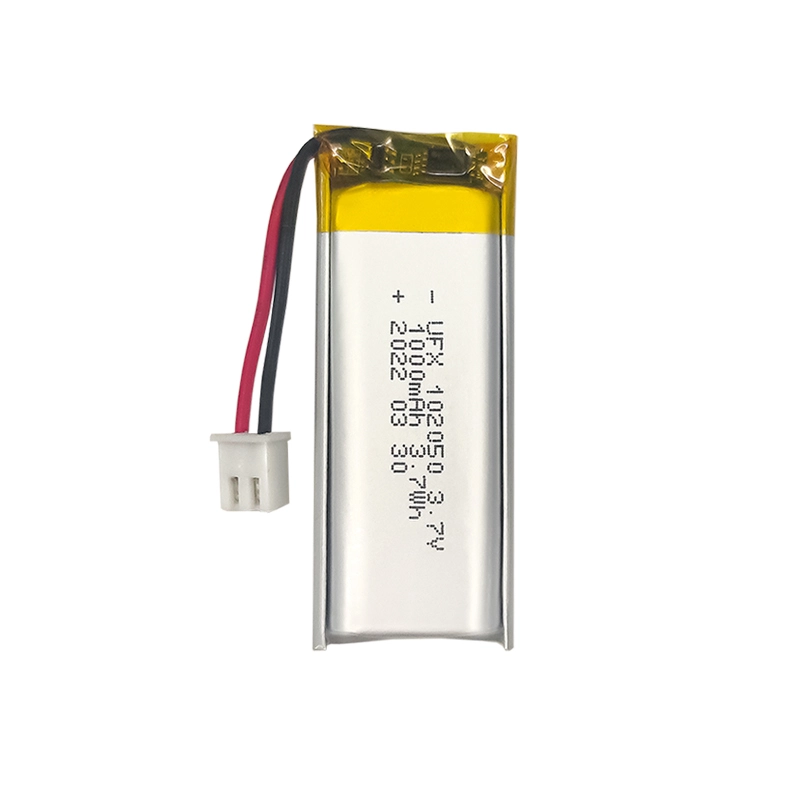
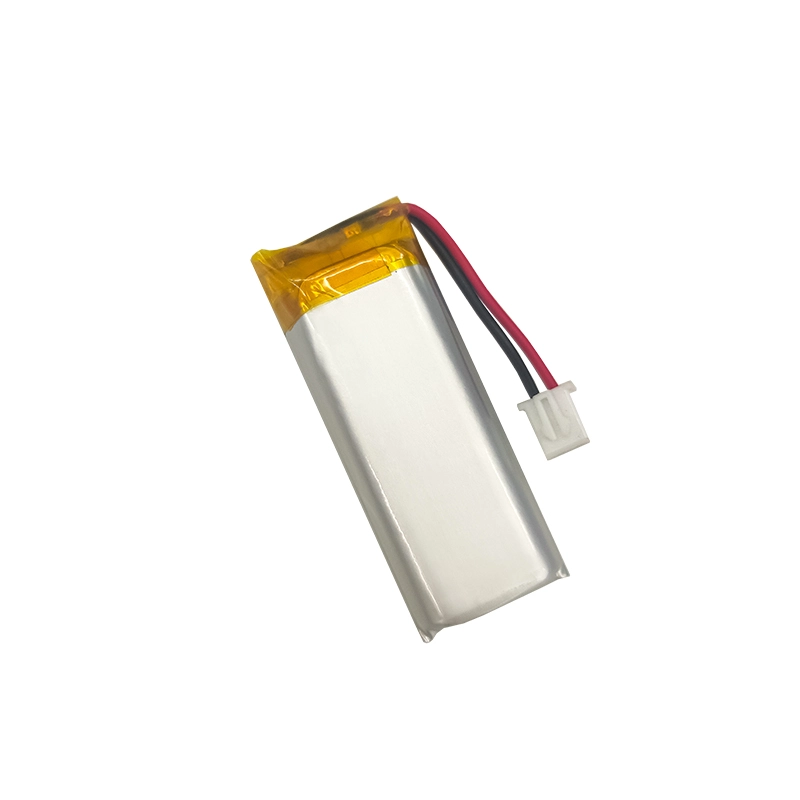
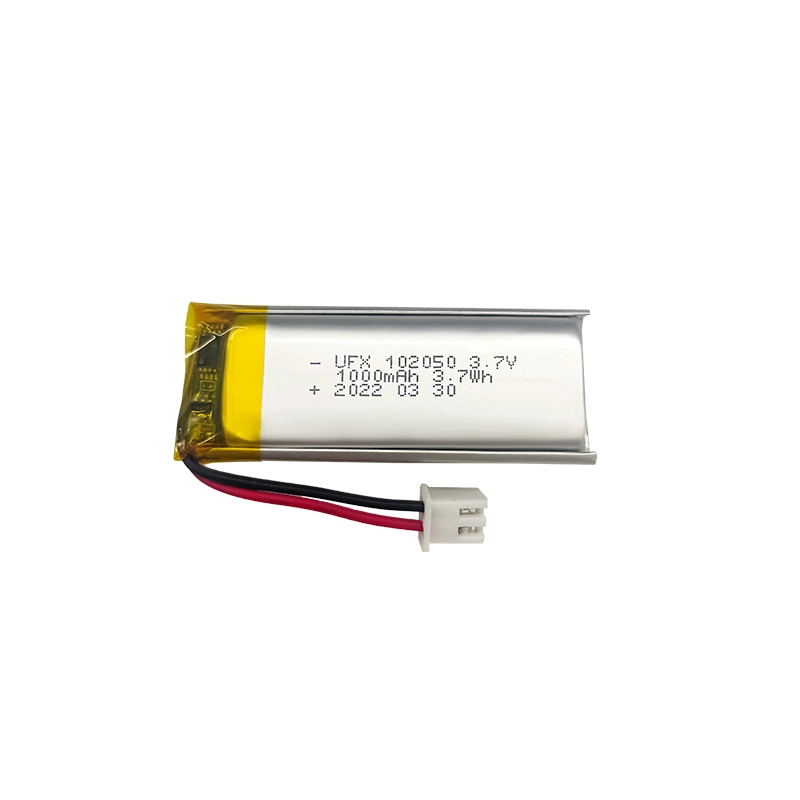
3.7 V 1000mAh Lithium Ion Battery 102050


-
Product Details
-
Specs
-
Capacity Fast Calculator
-
Application
-
Content
-
FAQs
-
Reviews

Product Details


Discharge Rate
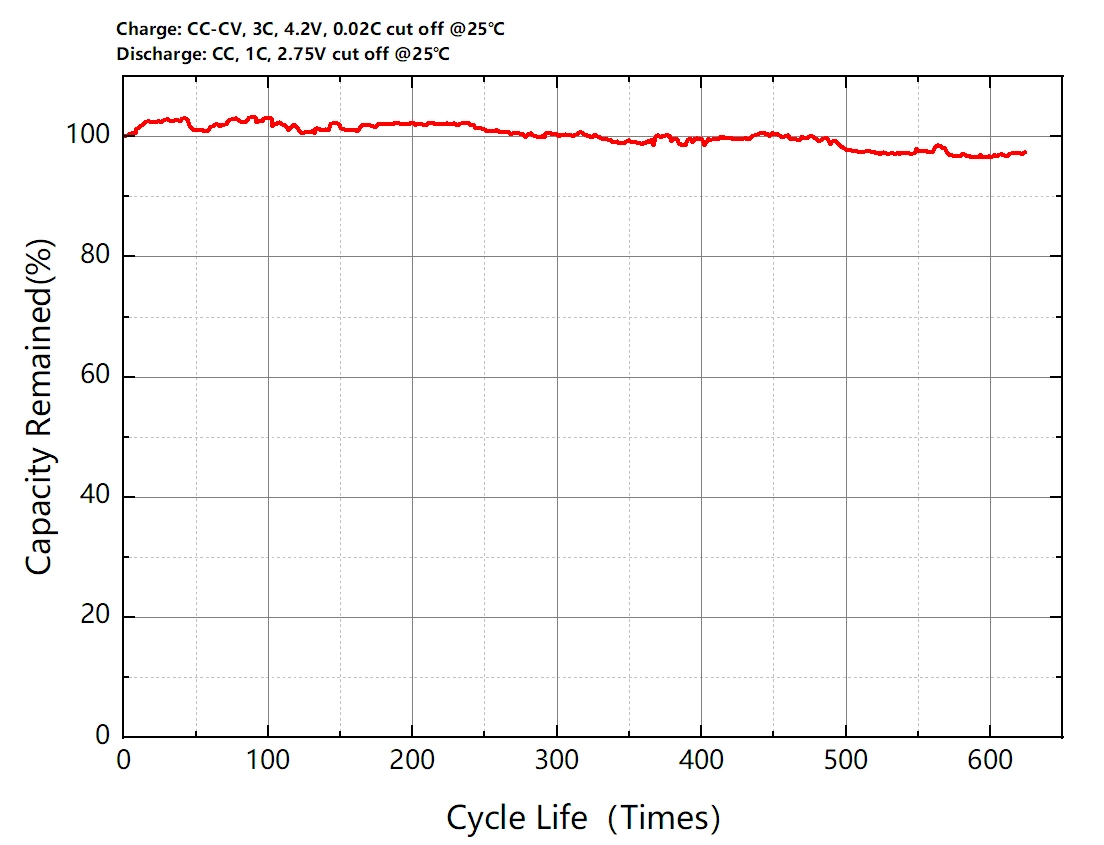
Long Cycle Life
Ultra-Low Self-Discharge
Wide Temperature Range
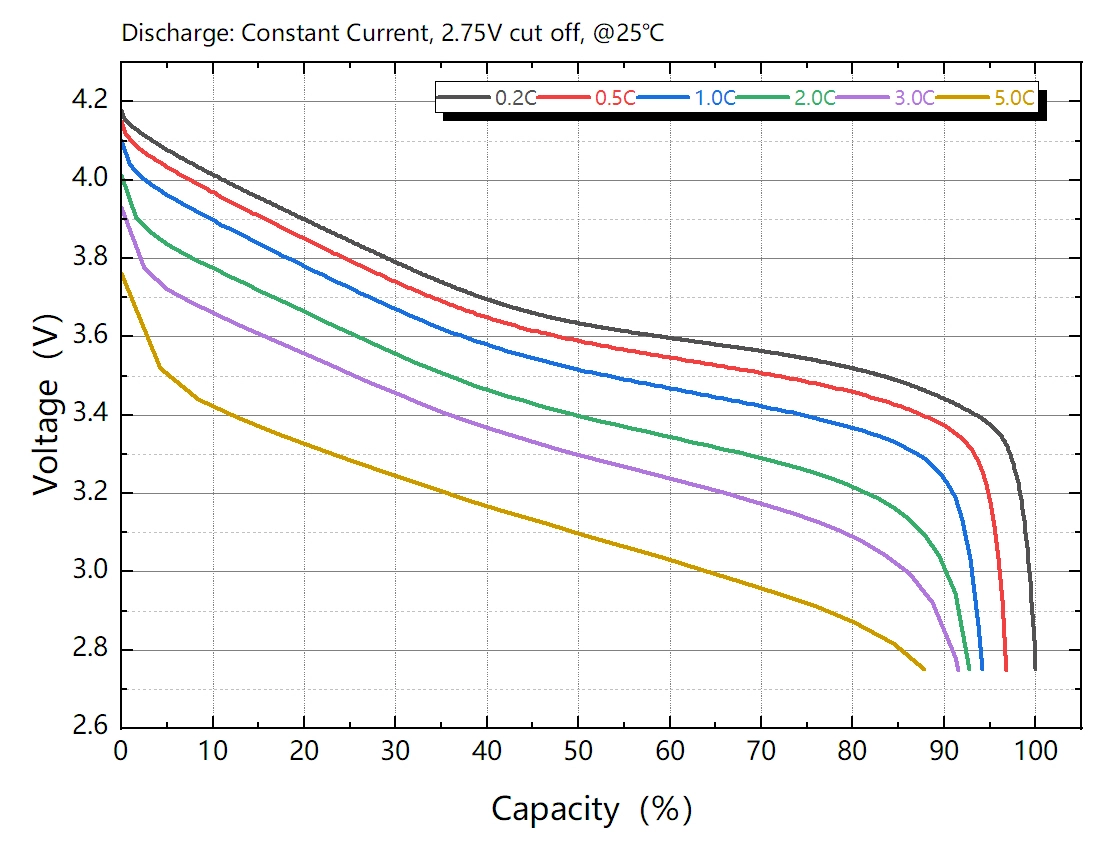
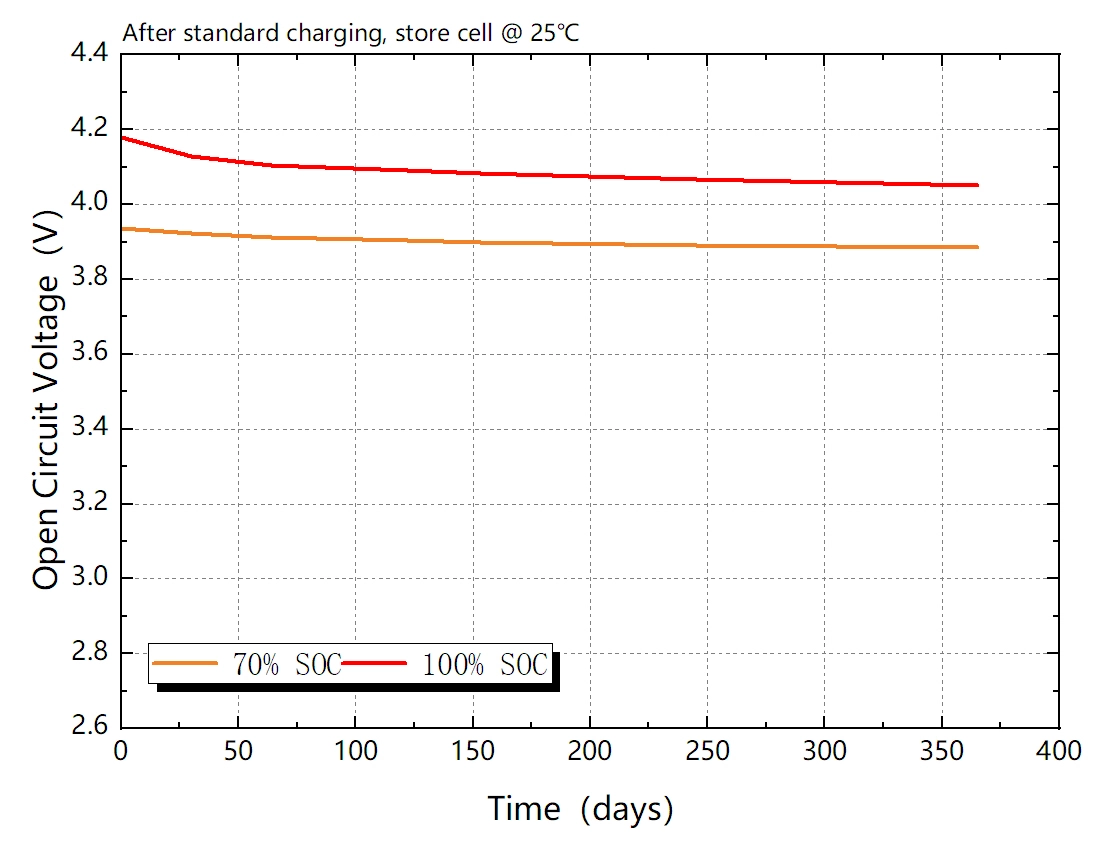
Self-discharge is higher at 100% state of charge (SOC) compared to 70% SOC.
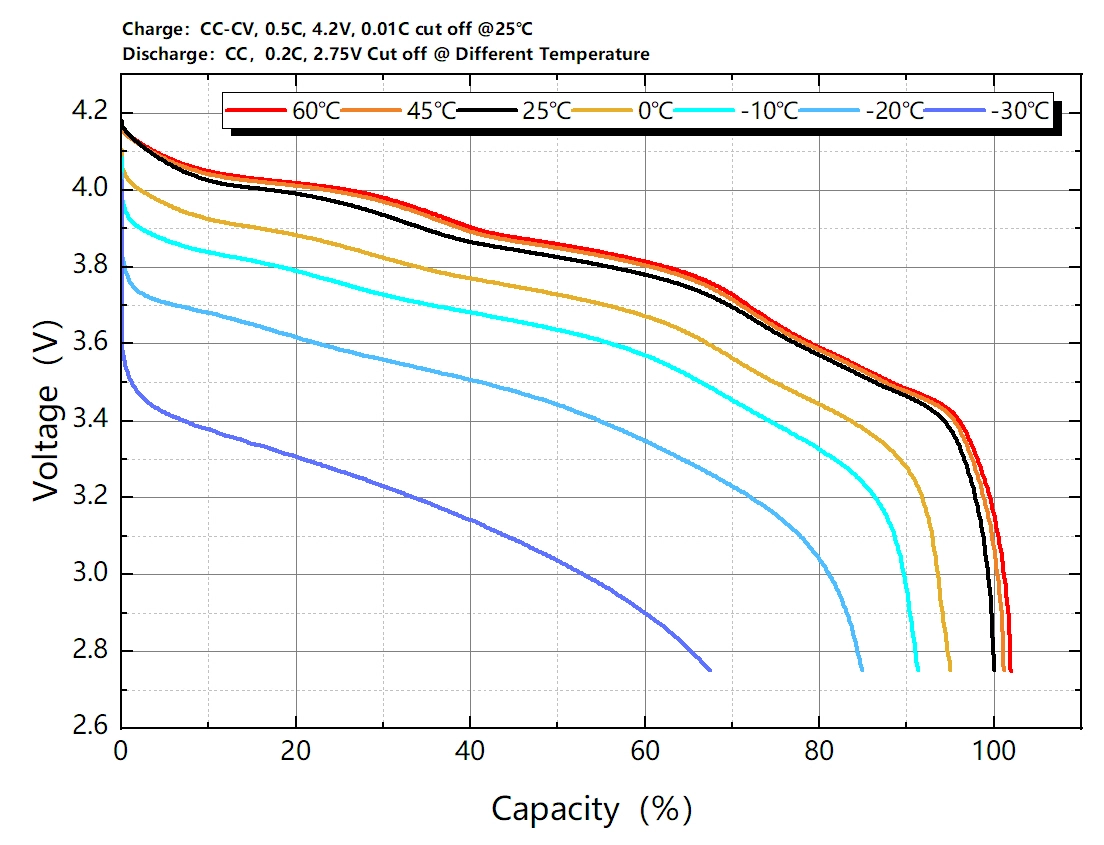
Ufine's custom low-temperature batteries can be used for -40°C to 55°C operation, catering to diverse outdoor scenarios.
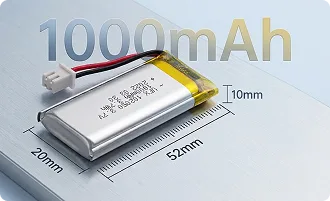
1000mAh Balanced Capacity and Size
Delivers 1000mAh energy capacity in a slim 10×20×52mm form factor without significantly increasing product dimensions. Provides reliable runtime for portable electronics, reducing the frequency of charging.
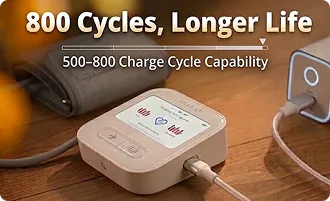
800 Charge Cycle Capability for Extended Product Usage
A durable battery solution helps manufacturers reduce after-sales issues caused by premature battery degradation. 102050 battery is suitable for consumer electronics that require frequent charging and continuous usage.
Multiple Safety Certifications Available
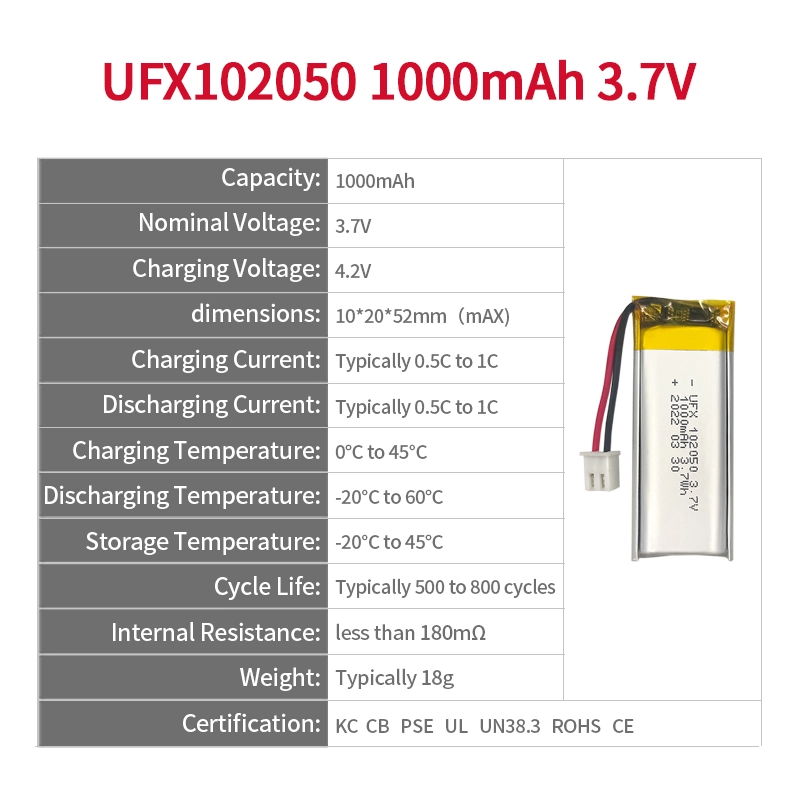
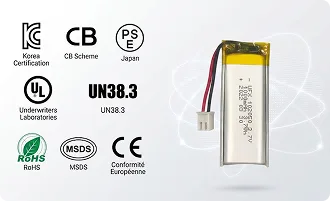
Certified with KC, CB, PSE, UL, UN38.3, RoHS, and CE standards. 102050 LiPo battery suitable for global consumer electronics – Certification support simplifies product testing and market entry processes.
Applications
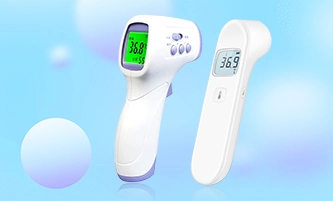
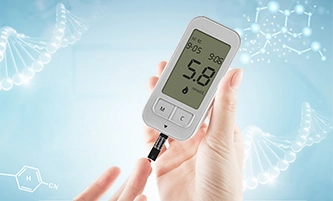
The battery is designed for use in various applications, including but not limited to beauty device medical device, Led lighting, 3C digital, pet toys, massage device.



Recommended Products
Explore similar lithium batteries with different sizes and capacities to find the right battery solution for your application.
| Recommended Products | Voltage | Model | Capacity | Size (mm) |
|---|---|---|---|---|
| Compact Pouch Battery | 3.7V | 102246 | 1000mAh | 10 × 22 × 48 |
| Slim Pouch Battery | 3.7V | 702560 | 1000mAh | 7 × 25 × 62 |
| Slim Pouch Battery | 3.7V | 702155 | 1000mAh | 7 × 21 × 57 |
| Slim Pouch Battery | 3.7V | 404050 | 900mAh | 4 × 40 × 52 |
| Slim Pouch Battery | 3.7V | 424356 | 1000mAh | 4.2 × 43 × 58 |
| Ultra Thin Pouch Battery | 3.7V | 285272 | 1000mAh | 2.8 × 52 × 74 |
| Slim Pouch Battery | 3.7V | 405050 | 1000mAh | 4 × 50 × 52 |
| Slim Pouch Battery | 3.7V | 602562 | 1000mAh | 6 × 25 × 64 |
| Compact Pouch Battery | 3.7V | 853334 | 1000mAh | 8.5 × 33 × 36 |
Battery Specification
-
1. Mechanical Characteristics
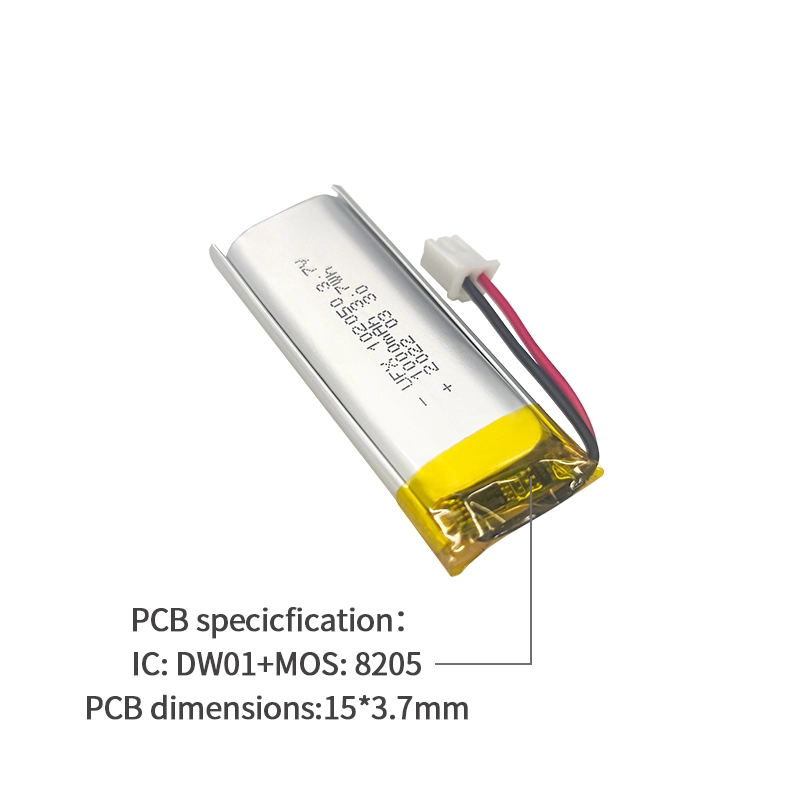
Cell 102050 PCM Yes NTC No Weight appr. 18g Configuration 1S1P -
2. Electrical Specification
Capacity 1000mAh Nominal Voltage 3.7V Energy 3.7Wh Internal Resistance less than 180mΩ Max. Charge Voltage 4.2V Discharge Cut Off 2.75V Max. Charge Current 1000mA
Max. Discharge Current 1000mA Standard Charge Current 200mA Standard Discharge Current 200mA Charging Temperature 0℃ to 45℃ Discharging Temperature -20℃ to 60℃ Storage Temp.Range 1 year at -20℃ to +30℃ 3 mos. at -20℃ to +45℃ 1 mo. at -20℃ to +60℃ Cycle life 100 cycles ≥92% 300 cycles ≥88% 500 cycles ≥80% -
3. Cell protection
Overcharge Detection 4.28V ±50mV (80 to 200msec delay, release 4.08V ±50mV) Overdischarge Detection 2.4V ±100mV (40 to 120msec. delay, release 3.0V ±100mV) Overcurrent Detection 2.5A to 4.5A (5 to 10msec. delay) Short protection Yes
Lipo Battery Cell Capacity Fast Calculator
Please enter your battery information to calculate the battery capacity and energy.
The capacity calculated by this tool is only an approximate value. If you need an accurate assessment, please contact our professional engineers.
102050 3.7V 1000mAh LiPo Battery Application
Lithium polymer battery for wearable devices
Wearable devices require batteries that are lightweight, compact, and reliable for daily use. The 102050 3.7V 1000mAh LiPo battery is suitable for smart watches, fitness trackers, wearable sensors, and health monitoring devices with limited internal space. Its compact pouch cell structure, lightweight 18g design, and balanced 1000mAh capacity help manufacturers achieve longer runtime without increasing product size. Custom wire lengths, connectors, and protection circuits are also available to simplify integration into different wearable designs.
- Compact 10×20×52mm form factor for space-limited products.
- Lightweight construction for comfortable wearable designs.
- Customizable wires, connectors, and protection circuits.
Lithium polymer battery for IoT devices and smart sensors
IoT devices and smart sensors often require stable and efficient power solutions because many products operate continuously with limited maintenance access. The 102050 1000mAh LiPo battery provides reliable rechargeable power with compact dimensions, stable 3.7V output, and long-term operating performance. It is suitable for wireless sensors, smart monitoring devices, and connected equipment where battery reliability directly affects product maintenance and user experience.
- Stable 3.7V output for common electronic systems.
- Compact design for smart connected devices.
- Rechargeable performance for long-term operation.
Lithium polymer battery for portable consumer electronics
Portable electronic products require batteries that balance energy capacity, size, and weight. The 102050 LiPo battery provides a practical power solution for handheld terminals, wireless accessories, smart controllers, and other portable equipment. Its 1000mAh capacity, slim design, and flexible installation options allow manufacturers to create thinner and more compact products compared with traditional cylindrical battery solutions.
- 1000mAh capacity for extended operating time.
- Slim design for compact electronic products.
- Flexible installation options for different structures.
Lithium polymer battery for smart medical devices
Smart medical and healthcare devices require batteries with stable performance and high safety standards. The 102050 battery supports portable monitoring equipment, healthcare accessories, and diagnostic devices with reliable charging and discharging performance. Its low internal resistance below 180mΩ, wide operating temperature range, and multiple certifications including UL, CE, CB, PSE, KC, and UN38.3 make it suitable for applications that require dependable power.
- Stable charging and discharging performance.
- Low internal resistance for reliable output.
- Multiple certifications for global applications.
Lithium polymer battery for smart home and security devices
Smart home products and security equipment require compact rechargeable batteries to support wireless operation. The 102050 LiPo battery is suitable for smart sensors, wireless controllers, smart locks, and portable security devices. Its stable voltage output helps maintain reliable operation for wireless communication modules, sensors, and control systems while keeping product designs compact.
- Suitable for wireless smart home applications.
- Stable power output for sensors and control systems.
- Compact size for flexible product design.
Lithium polymer battery for GPS tracking devices
GPS tracking and portable monitoring devices require batteries that provide consistent power while maintaining a small and lightweight design. The 102050 battery offers reliable rechargeable performance, compact dimensions, and customizable connection options, making it suitable for asset trackers, personal trackers, and portable monitoring equipment where battery size and runtime are both important.
- Compact size for easy integration.
- Reliable rechargeable performance.
- Custom connection options for different designs.
Why choose 102050 LiPo battery for your application
The UFX102050 3.7V 1000mAh LiPo battery provides a balanced solution for compact electronic products by combining small size, stable performance, lightweight construction, and flexible customization. It supports wearable devices, IoT products, portable electronics, and smart equipment with reliable power solutions from prototype development to mass production.
- Compact 10×20×52mm battery design.
- 1000mAh capacity with stable 3.7V output.
- Lightweight 18g construction.
- 500–800 cycle life for extended service.
- Multiple international certifications.
- OEM and ODM customization support.
Learn About Ufine's 102050 3.7V 1000mAh LiPo Battery
The 102050 3.7V 1000mAh LiPo battery is a compact rechargeable lithium polymer battery designed for portable electronic devices that require stable power output, lightweight construction, and flexible integration.
This guide covers runtime calculation, lifespan factors, pricing considerations, certification requirements, battery components, and key points to check before ordering.
Part 1. Runtime and performance of 102050 1000mAh battery
The operating time of a 102050 1000mAh LiPo battery depends on the power consumption of the connected device.
The basic runtime calculation method is:
Battery Runtime (hours) ≈ Battery Capacity (mAh) ÷ Device Current Consumption (mA)
For example, when a device consumes 100mA of current, a fully charged 1000mAh battery can theoretically provide approximately 10 hours of operation.
However, actual runtime may vary due to several real-world factors:
- Battery discharge efficiency. - Operating temperature. - Device power management. - Battery aging. - Voltage conversion losses.
Devices with standby modes or optimized power management can achieve longer runtime compared with products operating continuously at maximum power.
Part 2. Factors that affect the lifespan of 102050 battery
The service life of a 102050 LiPo battery is influenced by charging habits, operating conditions, discharge depth, and battery management design.
To extend battery lifespan, users and manufacturers should consider:
- Avoiding frequent deep discharge cycles. - Using a suitable charging system. - Maintaining proper operating temperatures. - Selecting suitable protection features.
Excessive heat, overcharging, over-discharging, and high current stress may accelerate battery aging and reduce long-term performance.
Matching battery specifications with application requirements is essential for maintaining reliable operation and achieving longer cycle life.
Part 3. Price factors of 102050 3.7V 1000mAh LiPo battery
The price of a 102050 3.7V 1000mAh LiPo battery depends on multiple factors rather than capacity and size alone.
Key factors that influence battery cost include:
- Order quantity and production volume. - Battery customization requirements. - Certification requirements. - Production specifications. - Supplier manufacturing capability.
Prototype orders usually have higher unit costs because engineering and setup expenses are distributed across fewer batteries, while mass production orders benefit from improved manufacturing efficiency and lower unit prices.
Custom options such as wire length, connector type, PCM protection design, labeling, packaging, and customized dimensions may also affect pricing.
Part 4. Why battery certification matters
Battery certification plays an important role in ensuring safety, transportation compliance, and international market acceptance.
The UFX102050 3.7V 1000mAh LiPo battery supports certifications including:
- KC certification. - CB certification. - PSE certification. - UL certification. - UN38.3 testing. - RoHS compliance. - CE compliance.
UN38.3 certification is especially important for lithium battery transportation, while UL certification supports safety requirements in North America.
CE and RoHS compliance help products meet European market regulations. Choosing a certified battery supplier helps reduce risks such as shipping restrictions, failed product testing, and delayed product launches.
Part 5. Protection circuit, wires, connectors and chargers
A complete LiPo battery solution includes more than the battery cell itself. The protection circuit module (PCM), wires, connectors, and charger all influence battery safety and product integration.
The PCM provides protection against:
- Overcharging. - Over-discharging. - Over-current. - Short circuits.
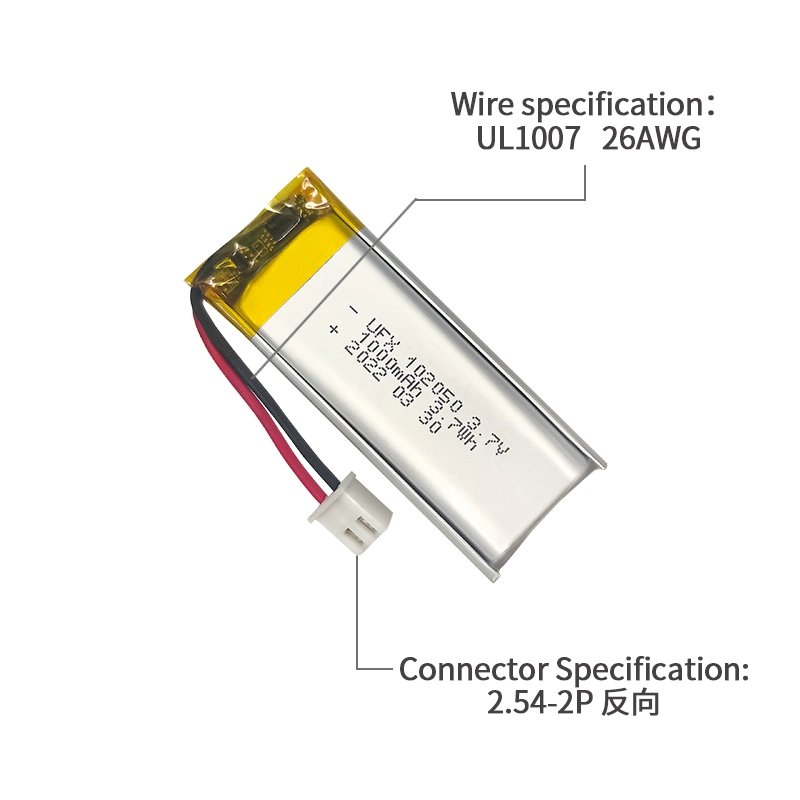
Wire specifications such as length, gauge, flexibility, and temperature resistance should match the product design.
Connector selection depends on PCB space, current requirements, and assembly processes. Common connector options include JST and Molex connectors.
For charging, a 3.7V LiPo battery requires a CC/CV charging method with a 4.2V charging voltage.
Selecting an appropriate charging current helps maintain battery performance:
- 0.5C charging ≈ 500mA. - 1C charging ≈ 1000mA.
Part 6. 102050 battery selection guide before ordering
Before ordering a 102050 3.7V 1000mAh LiPo battery, manufacturers should evaluate battery dimensions, electrical specifications, discharge requirements, certification needs, and supplier capabilities.
The UFX102050 battery features a compact 10×20×52mm (MAX) design. However, engineers should also consider:
- PCM thickness. - Wire routing. - Connector position. - Available installation space.
Voltage compatibility, capacity requirements, operating current, and peak discharge demand should be confirmed before production.
Selecting a battery that matches the application prevents issues such as insufficient runtime, voltage drops, assembly problems, and costly redesigns.
Part 7. Choose a reliable LiPo battery manufacturer
Working with an experienced LiPo battery manufacturer provides advantages in product development, customization, quality control, and cost management.
A professional supplier should offer:
- Stable production capability. - Engineering support. - Certification assistance. - Flexible customization options.
Customization options may include:
- Battery size. - Capacity. - Connector type. - Wire specifications. - PCM protection. - Labeling requirements.
Ufine provides battery solutions from prototype development to mass production, helping customers create reliable power solutions for consumer electronics and portable devices.
FAQs
-
What Is The Difference Between A 102050 LiPo Battery And A 18650 Battery?
A 102050 LiPo battery uses a flexible pouch cell design, while an 18650 battery uses a cylindrical structure. The 102050 LiPo battery provides better space utilization, lighter weight, and more flexible design options, making it suitable for compact consumer electronics and portable devices. -
Can A 102050 Battery Replace Another 3.7V Battery?
A 102050 battery can replace another 3.7V battery only when the voltage, size, capacity, connector, and charging system are compatible. Always confirm the battery specifications and device requirements before replacement. -
Can A 102050 LiPo Battery Work In Cold Environments?
Yes, the UFX102050 LiPo battery supports discharge temperatures from -20°C to 60°C. However, low temperatures may reduce available capacity and affect battery performance, so applications in cold environments should consider temperature requirements during battery selection.
Reviews
High Energy Density
It stores large amounts of energy in a smaller and lighter package
Longer Cycle Life
Withstands extensive charge and discharge cycles
Low Self-Discharge
Maintains power longer when not in use
Safety
Minimizes the risk of accidents and ensures safe operation
Related Articles
About Lithium Battery Industry News

JST vs Molex: The Right Battery Connector Choice
JST or Molex for your battery? Learn how connector selection affects current, voltage drop, reliability, and device performance.
2026-9-15 Ufine
Custom Battery Pricing: Costs Manufacturers Don't Mention
A low battery quote may not be the final cost. Discover common hidden expenses that affect custom lithium battery projects.
2026-9-15 Ufine

Battery Wire Length: Hidden Cause of Power Loss
A longer battery wire can cause voltage drop, power loss, and unstable operation. Learn how wire length affects battery performance.
2026-9-14 Ufine