123450-2S 7.4V 1500mAh Rechargeable Battery Pack

- 16 Years Experience
- 200+ Certifications
- 1000+ Customers
- 7X24 Customer Support
-
Product Details
-
Specs
-
Content
-
FAQs

A 7.4V Battery Pack for Your Next Portable Device
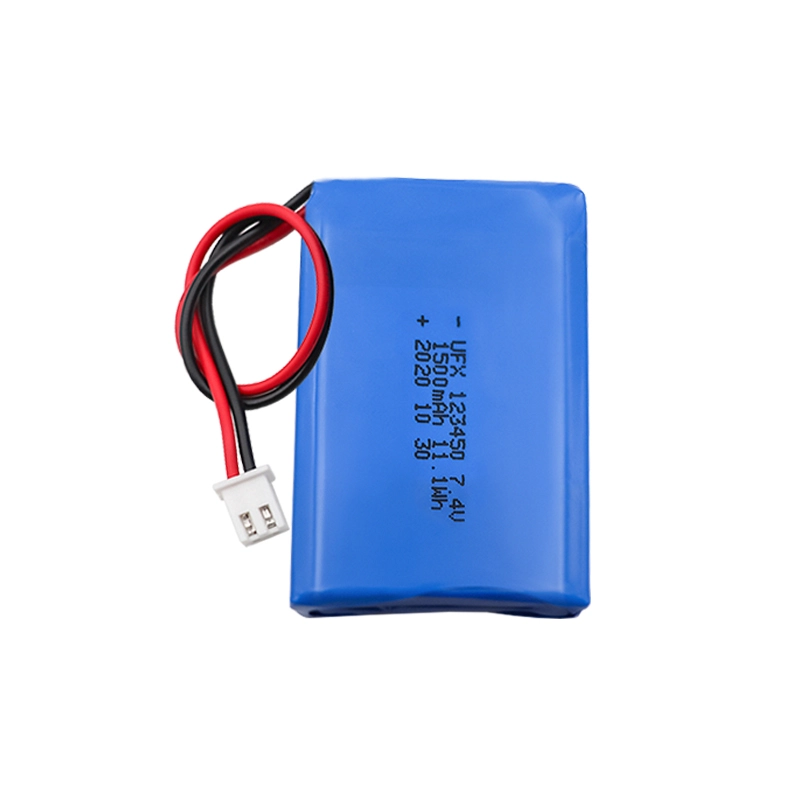
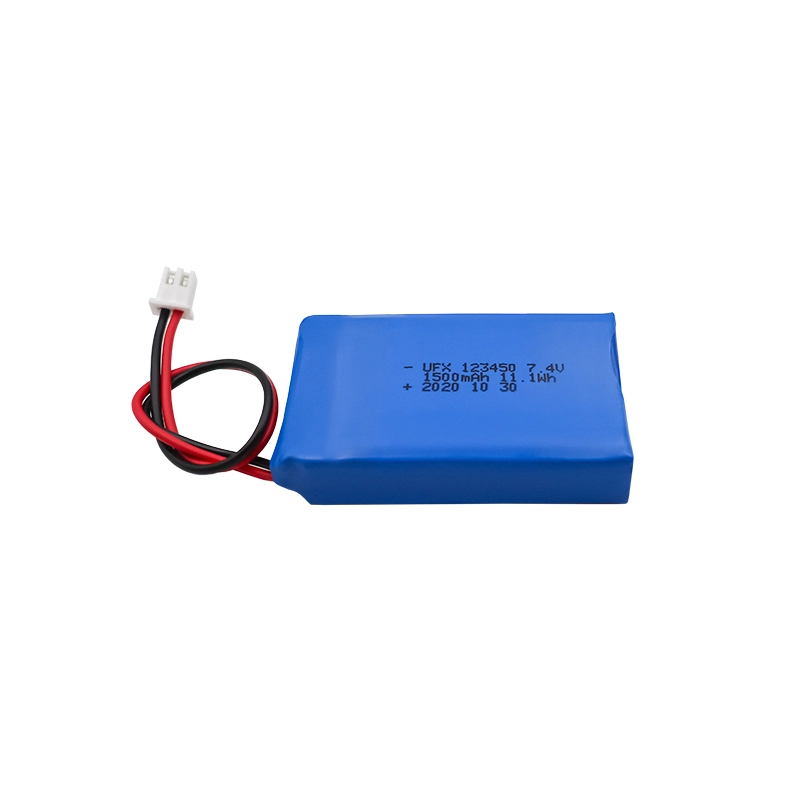
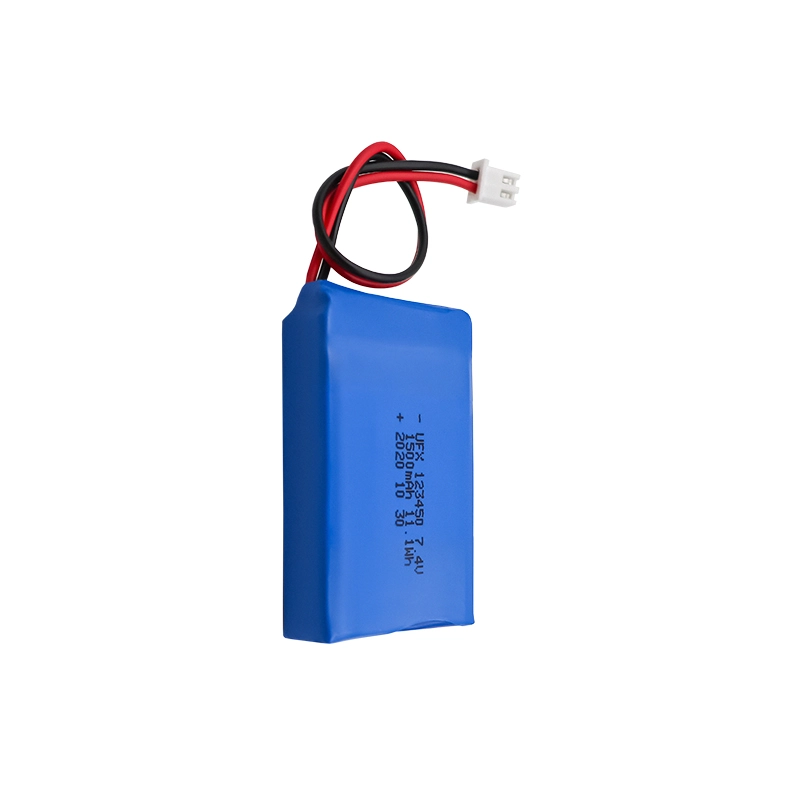
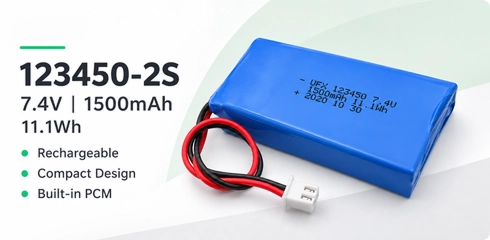
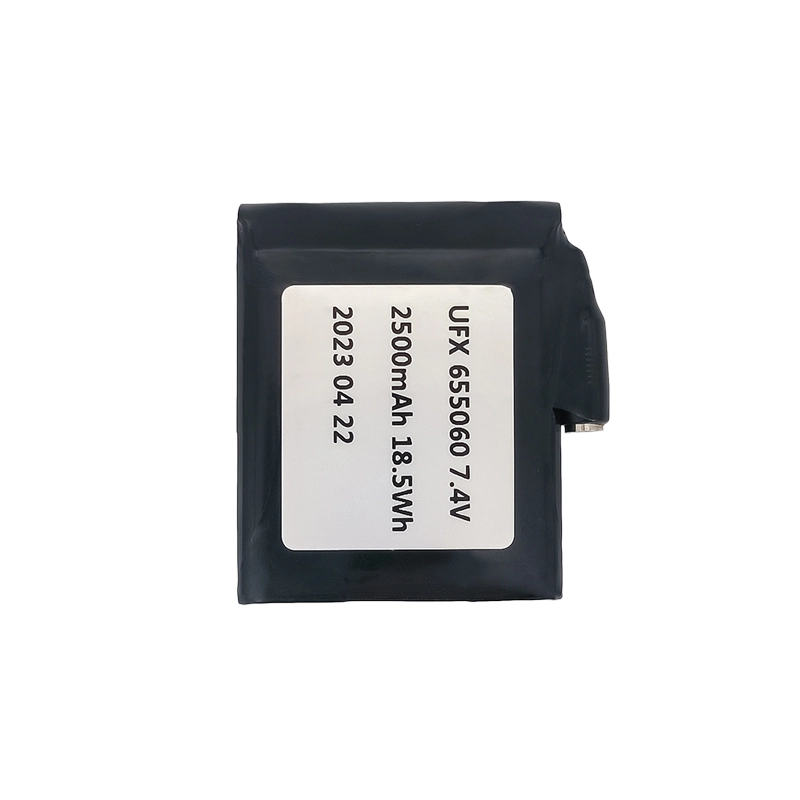
The Ufine 123450-2S is a rechargeable lithium polymer battery pack with 7.4V nominal voltage, 1500mAh capacity, and 11.1Wh nominal energy. Its 2S1P design uses two cells in series. The listed maximum pack size is 12 × 34 × 52mm.
The standard pack includes a protection board. Share your device load and available space so we can review the pack before you order samples.
Understand the 123450-2S Before Connecting It
Check the full voltage range, charger, and device load. A 7.4V nominal rating does not mean a fixed 7.4V output.
- 2S Output
- Charging
- Cycle Life
- Temperature
Two Cells in Series, 1500mAh Pack Capacity
The series connection raises the nominal voltage to 7.4V. Pack capacity remains 1500mAh. Check that your device accepts the full battery voltage range, including 8.4V at full charge.
- Listed standard discharge current: 300mA.
- Listed maximum discharge current: 1500mA.
- Review startup peaks and the complete assembly current limit.
Use a Compatible 8.4V Charger
Use a 2S Li-ion CC/CV charging circuit with an 8.4V charge limit. The listed standard charge current is 300mA. The PCM provides protection and does not replace the charger.
- Listed maximum charge current: 1500mA.
- Confirm charger settings against the approved pack specification.
- Review cell monitoring and any balancing needs for the project.
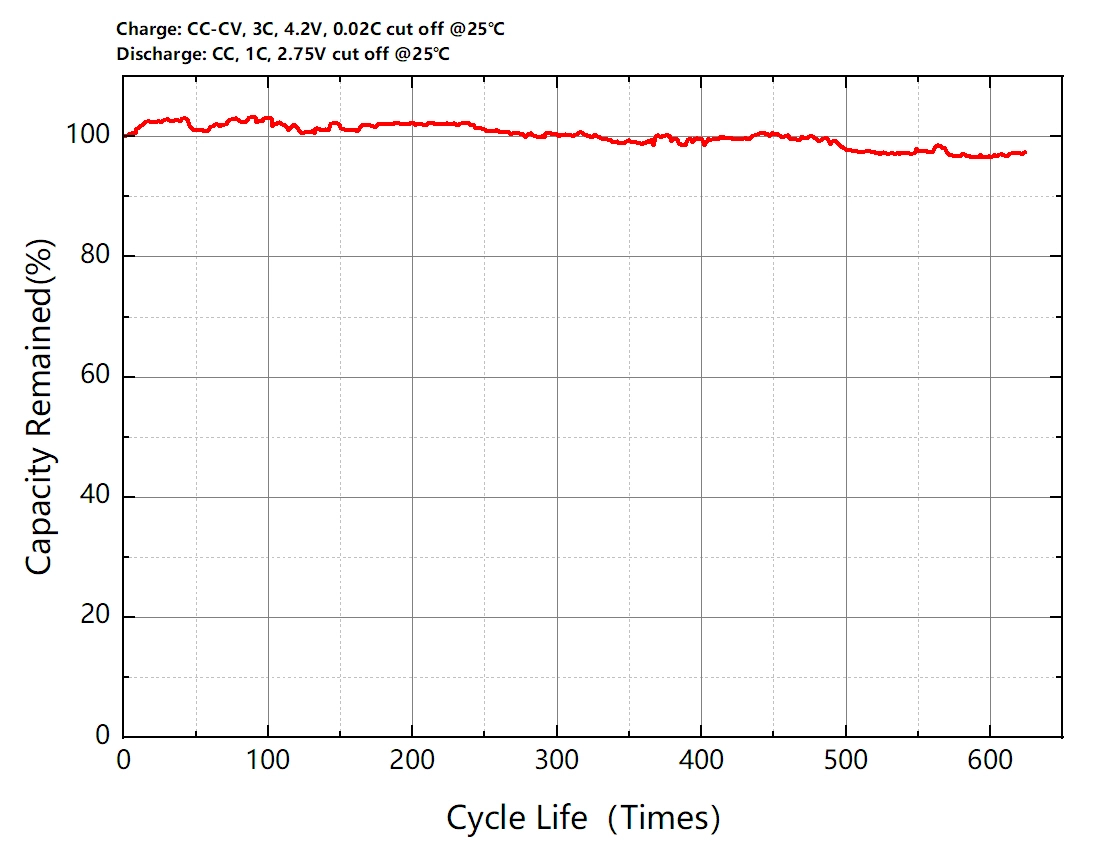
Compare Cycle Results With Their Test Conditions
The detailed specification lists at least 80% capacity after 500 cycles. Review the matching report before using this value as a product-life target.
- Check test current, temperature, and voltage limits.
- Compare results under the same conditions.
- Validate the pack with your device's daily use pattern.
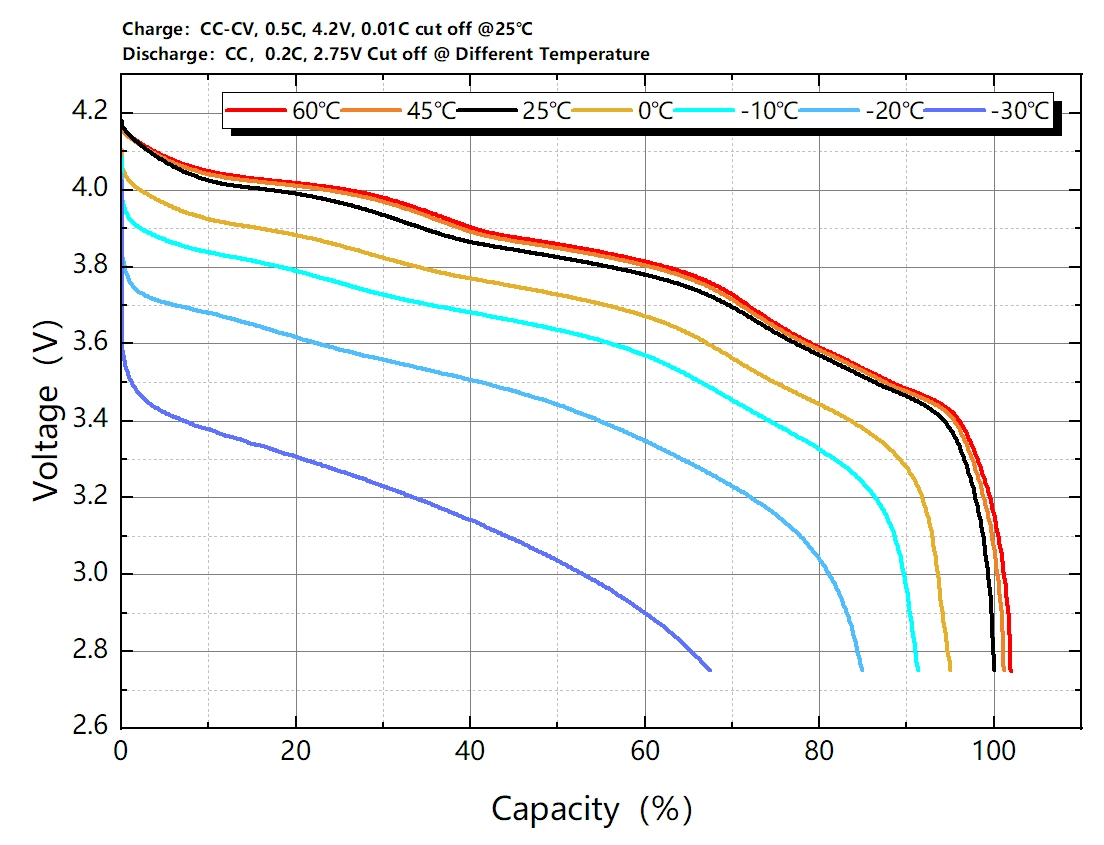
Check Temperature Inside the Housing
The listed charging range is 0°C to 45°C. The discharge range is −20°C to 60°C. Measure pack temperature inside the finished device.
- Use the charging limits when the charger is connected.
- Keep the pack away from heat sources.
- Test available runtime at the expected use temperature.
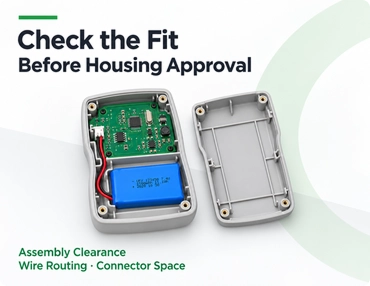
Check the Pack Fit Before Fixing Your Housing
Use the finished pack drawing to plan the battery bay and connection points.
Plan for the Complete 12 × 34 × 52mm Pack
The listed maximum pack size is 12 × 34 × 52mm. Allow extra room for the wire loop, connector, and installation clearance. The enclosure should hold the pack without squeezing it.
- Supply range: Check device operation across the approved pack voltage range.
- Battery bay: Allow for the full 12mm thickness and assembly clearance.
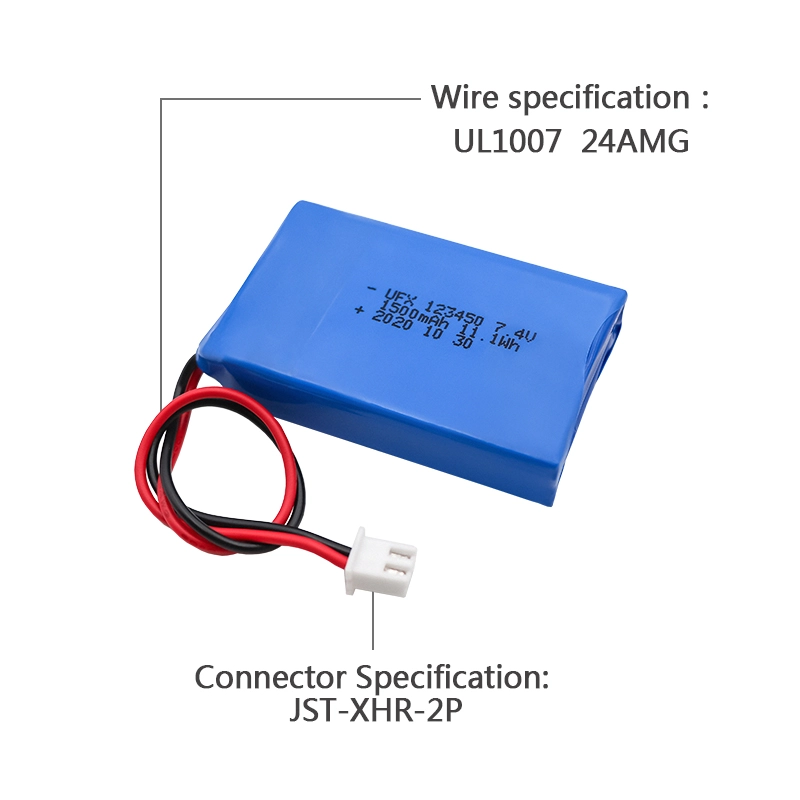
- Connection: Confirm connector type, polarity, and wire length.
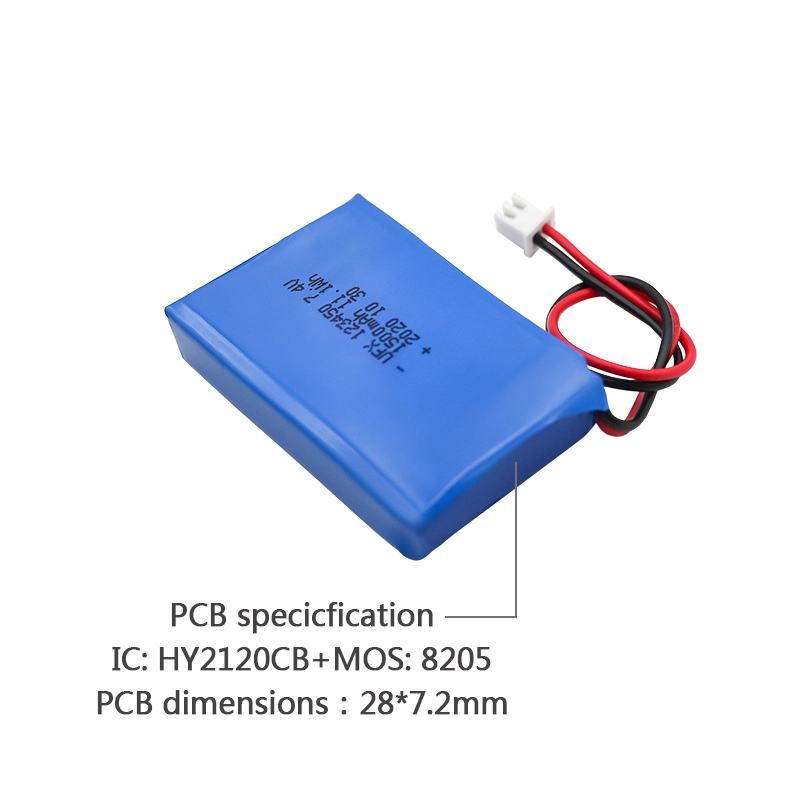
- Protection: The standard pack includes a PCM.
- Temperature sensing: NTC is not included in the standard version.
For Portable Devices Designed Around a 2S Supply
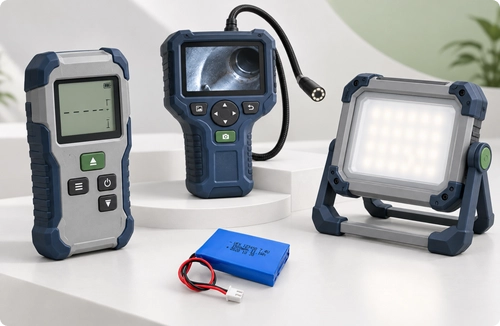
Possible uses include portable instruments, handheld inspection tools, LED lighting, and small motor-driven devices. Each project needs a check of the voltage range, operating current, and available space.
For motors, share startup and stall current. For lighting, measure the load at full brightness. A matching voltage alone does not confirm that the pack can support the device.
Four Reasons to Work With Ufine on Your 2S Pack
Move from an initial battery choice to a clear sample specification with factory support.
Discuss Your Pack Requirements 


Available Variants: Compare Other 7.4V Pack Formats
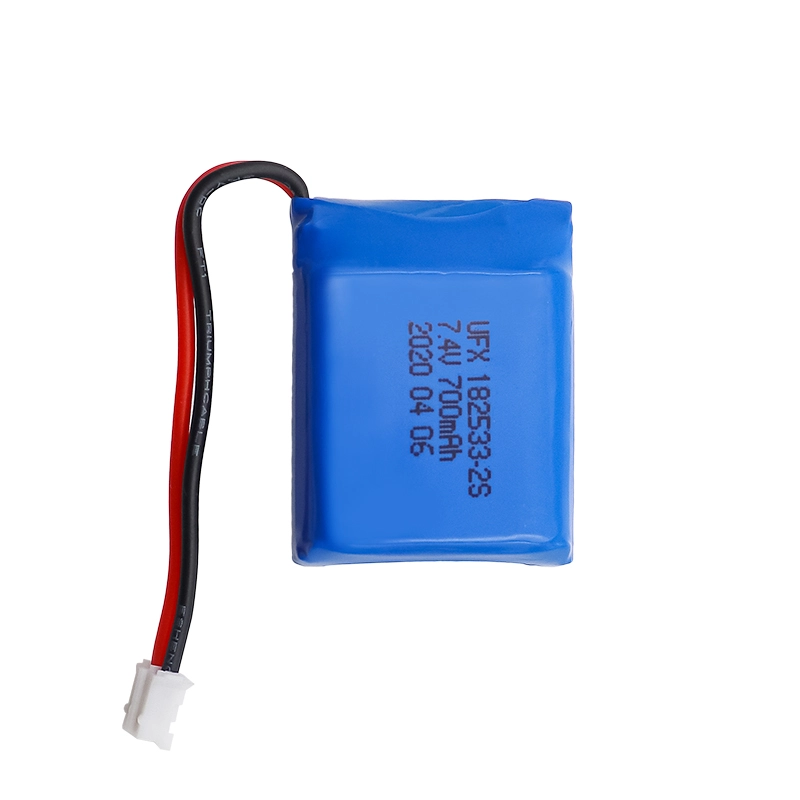
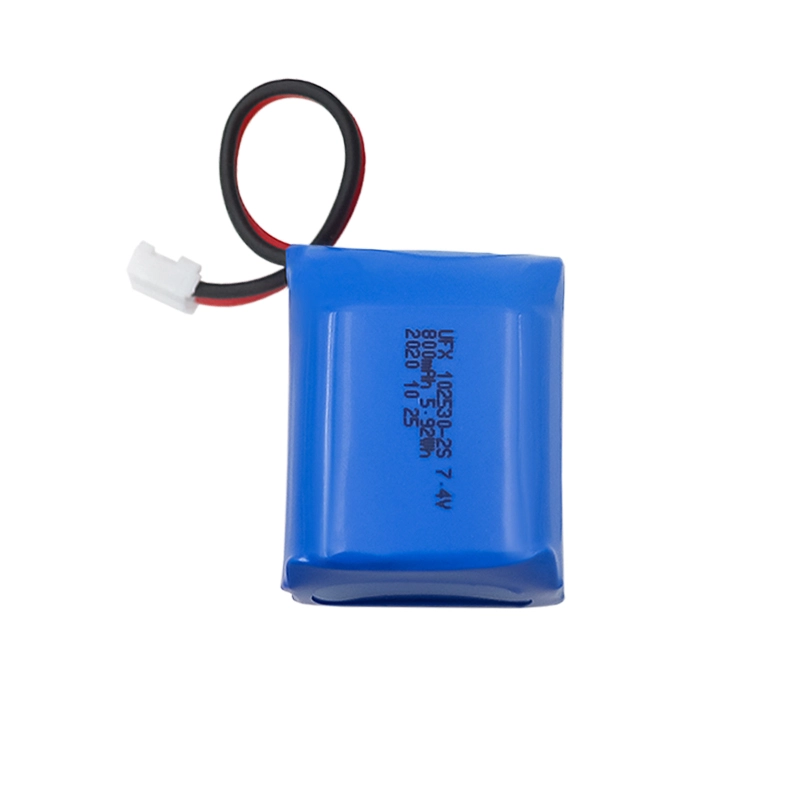
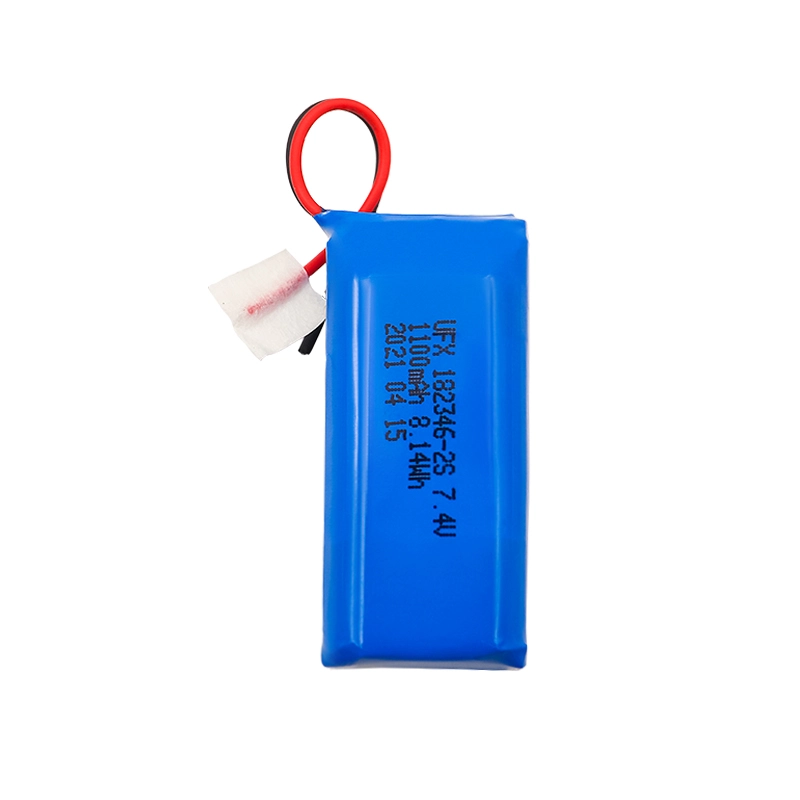
Need a shorter or narrower pack? Compare these lower-capacity 7.4V options. They are thicker than the 123450-2S and use different body shapes. All sizes are maximum dimensions. Confirm current limits, wiring, and protection before choosing an alternative.
Get the Right 2S Pack Into Your Prototype
Send your battery space, device current, and charger details. We can review the configuration and prepare a sample quotation.
- Available battery space or enclosure drawing
- Normal current, peak current, and peak duration
- Charger voltage and charge current
- Connector, wire length, and sample quantity
- Approved pack configuration or sample test results
- Order quantity and expected annual demand
- Required project documents and target market
- Delivery destination and required schedule
Battery Specification
-
1. Mechanical Characteristics
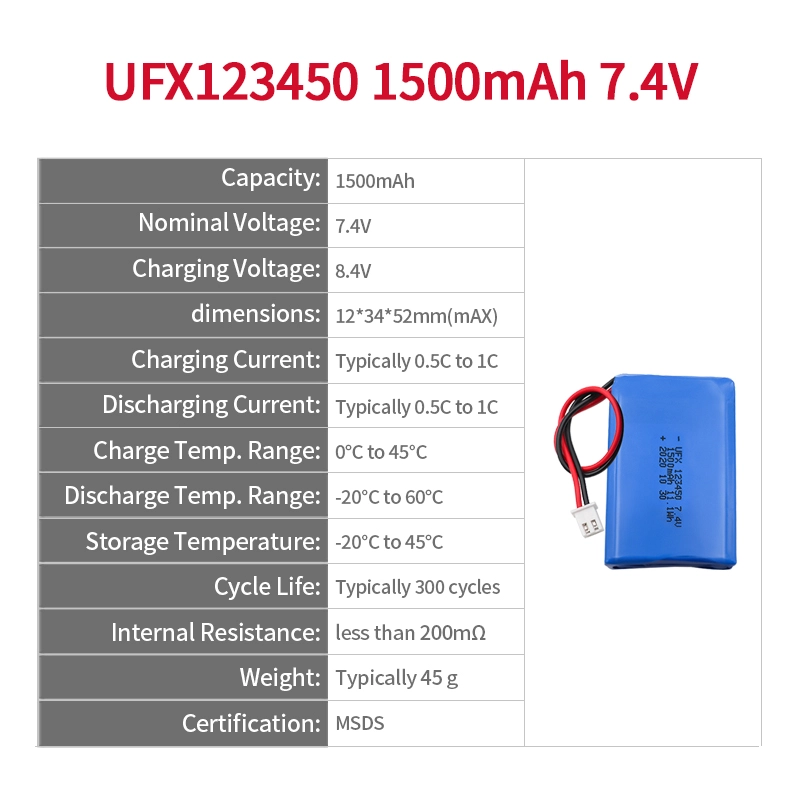
Cell 603450-2S PCM Yes NTC No Weight appr. 45g Configuration 2S1P -
2. Electrical Specification
Capacity 1500mAh Nominal Voltage 7.4V Energy 11.1Wh Internal Resistance less than 200mΩ Max. Charge Voltage 8.4V Discharge Cut Off 5.5V Max. Charge Current 1500mA Max. Discharge Current 1500mA Standard Charge Current 300mA Standard Discharge Current 300mA Charging Temperature 0℃ to 45℃ Discharging Temperature -20℃ to 60℃ Storage Temp.Range 1 year at -20℃ to +30℃ 3 mos. at -20℃ to +45℃ 1 mo. at -20℃ to +60℃ Cycle life 100 cycles ≥92% 300 cycles ≥88% 500 cycles ≥80% -
3. Cell protection
Overcharge Detection 4.28V ±25mV (700 to 1300msec delay, release 4.2V ±50mV) Overdischarge Detection 2.4V ±80mV (70to 150msec. delay, release 3.0V ±100mV) Overcurrent Detection 3A to 6A (5to 15msec. delay) Short protection Yes
The Ufine 123450-2S is a 7.4V 1500mAh rechargeable LiPo battery pack with 11.1Wh of nominal energy. Its two cells are connected in series.
A successful 2S design needs more than a matching voltage label. Review how the device behaves from full charge to shutdown, how the pack is charged, and what the sample must pass.
Start with the device input, not the 7.4V label
The pack reaches 8.4V at full charge. Its voltage then falls during use. Check every circuit connected to the battery, including motor drivers, lighting circuits, and voltage converters.
-
Can the device input accept 8.4V at full charge?
-
At what battery voltage does the device stop working as intended?
-
Does the device shut down cleanly before pack protection is triggered?
The specification lists a 5.5V discharge cut-off. Treat this as a battery specification value, not an automatic device shutdown setting. Confirm the operating limits for the complete system.
Compare the 123450-2S by energy when changing battery voltage
A 7.4V 1500mAh pack and a 3.7V 3000mAh battery both have 11.1Wh of nominal energy. The higher-voltage pack does not automatically provide longer runtime.
For a constant-power load, a first estimate is:
Runtime (hours) ≈ 11.1Wh × conversion efficiency ÷ device power (W)
-
Example device load: 3W.
-
Assumed conversion efficiency: 85%.
-
Estimated runtime: 11.1 × 0.85 ÷ 3 ≈ 3.1 hours.
This estimate assumes the full nominal battery energy is available. Actual runtime depends on usable energy, temperature, battery age, and the device shutdown point.
Make the 2S charging connection clear
Use a compatible 2S Li-ion CC/CV charger with an 8.4V charge limit. The listed standard charge current is 300mA. Confirm the final settings against the approved pack specification.
The external connector alone does not show how the two cells are monitored. It also does not prove that the PCM includes balancing.
-
Confirm which connections are used for charging and discharge.
-
Review cell monitoring and any balancing needs.
-
Confirm whether the charger needs an NTC sensor. The standard pack has none.
-
If the device runs while charging, review how input power is shared.
Share the charger model or circuit details with the pack request. This helps avoid choosing a pack and charger that cannot work together.
Use demanding device tasks to assess the 123450-2S
Choose a few real tasks that place the most demand on the battery. Examples include motor startup, full-brightness lighting, or several functions running at once.
-
Run each task with a fully charged pack.
-
Repeat it at a lower charge level.
-
Record pack current, voltage drop, and any reset or shutdown.
-
Check pack and connector temperature during repeated use.
The listed maximum discharge current is 1500mA. A brief peak above this value needs a separate review. Do not use the PCM trip current as an approved operating limit.
Choose another 7.4V format only after checking the trade-off
The 123450-2S has a listed maximum size of 12 × 34 × 52mm. The alternative packs below use less capacity and different body shapes.
-
182346-2S: 1100mAh, with a maximum size of 18 × 23 × 49mm.
-
182533-2S: 700mAh, with a maximum size of 18 × 25 × 35mm.
Both options are narrower and shorter than the 123450-2S, but they are thicker. Check enclosure depth before switching. Recalculate runtime and confirm each pack's current rating.
Send a sample brief that leads to a useful quotation
Tell us what the pack must achieve in your device. A short, clear brief helps us review the assembly and identify missing details before samples are prepared.
-
Device input range, power use, and target runtime.
-
Startup or peak current, including its duration.
-
Battery bay drawing and connector requirements.
-
Charger details and temperature sensing needs.
-
Sample quantity, expected order volume, and required project documents.
If you already have a prototype, include the measured load and any issues found. We can use these details to review the 123450-2S configuration and prepare a sample quotation.
FAQs
-
Why is the 123450-2S rated at 1500mAh rather than 3000mAh?
Its two cells are connected in series. This raises the nominal voltage to 7.4V while capacity remains 1500mAh. The complete pack stores 11.1Wh of nominal energy. -
Can a device rated for 7.4V accept this pack at full charge?
Check the device's full input range. The 123450-2S reaches 8.4V at full charge. A 7.4V label alone does not confirm that the device can accept this voltage. -
Can I use a 4.2V single-cell charger for the 123450-2S?
No. Use a compatible 2S Li-ion CC/CV charger with an 8.4V charge limit. The listed standard charge current is 300mA. The pack protection board does not replace the charger. -
Does the 123450-2S protection board include cell balancing?
The supplied specification confirms PCM protection but does not state a balancing function. Share your charging design so the cell monitoring and balancing requirements can be reviewed. -
Can the 123450-2S handle motor startup?
This depends on startup current and its duration. The listed maximum discharge current is 1500mA. Send the startup and stall current for review before choosing this pack for a motor-driven device. -
Will the 123450-2S last longer than a 3.7V 3000mAh battery?
Not necessarily. Both have 11.1Wh of nominal energy. Runtime depends on the device power, conversion losses, usable battery energy, and shutdown voltage. Compare both options under the same device conditions. -
Does the 12 × 34 × 52mm size include installation clearance?
No installation clearance is specified in that size. Treat it as the listed maximum pack body size. Allow room for the wires, connector, and assembly, and confirm the finished drawing. -
Can I request a different connector or temperature sensor?
Connector, wire, and optional NTC requirements can be reviewed for your project. Send the connector part number, polarity, wire length, and sensor details. The standard pack has no NTC. -
What should I send to get a 123450-2S sample quote?
Send your battery space, device input range, normal and peak current, charger details, and sample quantity. Include any connector changes and required project documents.
Ready to Power Your Project?
We’ll help you design the perfect power source — tailored to your voltage, capacity, size, C-rate, and performance needs.
Contact Us NowWhat Our Customers Are Saying
We love hearing from you! Your experiences help us improve and inspire others. Check out what our happy customers have to say about our lithium batteries—share your thoughts with us too!









Latest Articles
About Lithium Battery Industry News
How to Size an AMR Battery for Short Charging Stops
Size an AMR battery using route energy, actual charging time, and return-to-dock reserve. See how one missed charge changes the required capacity.
2026-11-19 Ufine
Why Does My Robot Reset When the Motors Start? Battery Voltage Sag Explained
Find out why your robot resets at motor startup. Compare battery voltage, wiring loss, and the logic supply to pinpoint the cause.
2026-11-19 Ufine
3.7V LiPo Battery Pack vs. 3.7V Lithium-Ion Battery Pack: What's the Difference?
Choosing a 3.7V battery pack? Compare LiPo and lithium-ion batteries, and learn how to select the right capacity, charger, protection, and connectors.
2026-11-19 Ufine