
- Part 1. Battery chemistry — LFP vs NMC explained
- Part 2. Energy density — range still matters
- Part 3. Cycle life & longevity — a big win for LFP
- Part 4. Cost — LFP pulls far ahead
- Part 5. Safety & thermal stability — LFP’s big edge
- Part 6. Regional and adoption trends
- Part 7. Geopolitical supply chains — China’s strategic dominance
- Part 8. Raw materials — who controls the inputs?
- Part 9. Use Cases — where each chemistry fits best
- Part 10. Beyond LFP & NMC — emerging technologies
- Part 11. Conclusion — will LFP replace NMC?
- Part 12. FAQs
Electric vehicles (EVs) are rapidly reshaping the global automotive market. At the core of this transformation are lithium‑ion batteries — devices that determine range, cost, charging speed, and even vehicle safety. Two dominant cell chemistries — LFP (Lithium Iron Phosphate) and NMC (Nickel Manganese Cobalt) — are vying for supremacy. This article examines whether LFP batteries will replace NMC, drawing upon the latest 2025–2026 data, market share trends, and geopolitical influences to provide a complete picture.
Part 1. Battery chemistry — LFP vs NMC explained
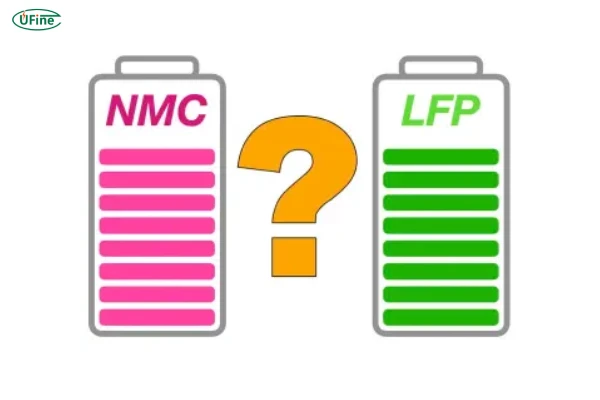
LFP Chemistry Uses iron and phosphate as the cathode — abundant, cheap, and thermally stable. The result is a battery that is safe, long‑lasting, and cost‑effective.
LFP’s Strengths:
-
Unmatched Safety: LFP’s olivine structure acts like a fireproof suit. Even at 500°C, it won’t combust—a lifesaver for EVs and grid storage.
-
Cost Efficiency: No nickel, no cobalt. Just lithium, iron, and phosphate. It’s the “farm-to-table” of batteries, avoiding pricey, conflict-prone metals.
-
Longevity: 3,000+ charge cycles (vs. NMC’s 2,000) make it perfect for taxis, buses, and daily drivers.
NMC Chemistry Combines nickel, manganese, and cobalt — materials that enable higher energy density but come at a higher cost and supply risk.
NMC’s Edge:
-
Energy Density: NMC 811 hits 300 Wh/kg, enabling 400-mile luxury EVs. For comparison, even the best LFP struggles to break 200 Wh/kg.
-
Cold Weather Prowess: Performs better in sub-zero temps—critical for Scandinavian EVs or Chicago winters.
CATL’s new M3P batteries (a hybrid chemistry) promise to bridge the gap. Could this be the “best of both worlds”?
LFP vs. NMC Battery: What is the Difference?
Part 2. Energy density — range still matters
NMC cells typically offer higher voltage and energy per kilogram, while LFP excels in safety and longevity — features that influence OEM battery technology choices.
One of the biggest performance differences is energy density:
- LFP: ~150–190 Wh/kg
- NMC: ~230–260 Wh/kg
This difference means NMC continues to lead on vehicle range and performance, particularly for premium and long‑range EVs.
However, advancements in materials (e.g., manganese‑enhanced LFP) are narrowing the gap, with some LFP packs approaching 200 Wh/kg in real‑world products.
Part 3. Cycle life & longevity — a big win for LFP
Cycle life represents how many times a battery can charge and discharge before losing significant capacity.
LFP batteries tend to:
- Last longer: 6,000–8,000 cycles in energy storage applications.
- Outperform NMC: Typical NMC cycles range 3,000–5,000.
This advantage makes LFP attractive for utility storage systems and high‑utilization EV fleets, where longevity over time equates to lower total cost of ownership.
Part 4. Cost — LFP pulls far ahead
Here’s where LFP delivers a knockout punch. Let’s break down the dollars and cents:
Raw Material Costs:
| Material | LFP Cost Contribution | NMC 811 Cost Contribution |
|---|---|---|
| Lithium | 35% | 25% |
| Nickel | 0% | 40% |
| Cobalt | 0% | 15% |
| (Source: Benchmark Mineral Intelligence, August 2023) |
Nickel’s price volatility alone gives CFOs nightmares. Remember the 67% price swing in 2023? LFP sidesteps this chaos entirely.
Total Battery Pack Costs:
-
LFP: $97/kWh (CATL, Q2 2023)
-
NMC 811: $138/kWh (LG Energy Solution)
For a 75 kWh pack, LFP saves automakers $3,075 per vehicle. At scale, that’s billions in savings.
Cost remains a driving force behind LFP adoption:
- LFP cell pricing ~ $79/kWh (Q1 2026).
- NMC ~ $103/kWh (Q1 2026).
This cost gap stems from raw material choices — iron and phosphate are abundant, stable in price, and easier to procure compared with cobalt and high‑nickel materials required for NMC.
As a result, LFP is often 15–30% cheaper on a pack basis, a huge advantage for cost‑sensitive EV segments and price‑competitive models.
Part 5. Safety & thermal stability — LFP’s big edge
Safety is one of LFP’s biggest strengths. Its chemistry exhibits:
- Higher thermal stability
- Lower risk of thermal runaway
- Greater resistance in high‑temperature environments
NMC cells, while safe under normal conditions, become more volatile at high state of charge or under stress due to the reactive nature of nickel. This safety feature has informed OEM choices for mass‑market consumer EVs.
Part 6. Regional and adoption trends
Global market share is shifting:
2026 EV battery share estimates:
- LFP ~35%
- NMC ~55%
- NCA and others ~10%
In China, LFP is dominant — over 80% of EV battery installations were LFP in 2025, especially in mass‑market vehicle sales.
However, in North America and Europe, NMC still leads due to historical supplier relationships, performance expectations, and slower regulatory adoption of LFP.
Global Market Share (2023):
-
LFP: 43% (up from 32% in 2022)
-
NMC: 38% (down from 45%)
(Source: SNE Research, Q3 2023)
Regional Breakdown:
-
China: LFP dominates 70% of the market. BYD’s Blade Battery powers 80% of their EVs.
-
Europe: Volkswagen, Renault, and Stellantis are pivoting to LFP for budget models.
-
U.S.: Tesla’s Standard Range vehicles all use LFP, and Ford’s $25k EV (2025 launch) is rumored to follow.
When Tesla—the company that made “range anxiety” a household term—backs LFP, you know the tech has leveled up.
Part 7. Geopolitical supply chains — China’s strategic dominance
China dominates the battery value chain:
- Produces ~77% of global EV batteries.
- Controls ~70% of global lithium refining.
- Top supplier CATL holds ~39% market share alone.
China’s export controls on battery cathode technology reinforce its edge and limit foreign access to key manufacturing know‑how.
This poses geopolitical risk for Western industries that still rely on Chinese supply, even as tariffs on Chinese imports rise. US automakers, for example, continue sourcing batteries from China despite tariff barriers.
The battery race isn’t just about chemistry—it’s about control.
Key Battlegrounds:
-
China’s Lithium Monopoly: Controls 60% of global lithium refining (U.S. DoE, 2023). LFP’s supply chain? Almost entirely China-dominated.
-
Nickel Nightmares: Indonesia holds 37% of nickel reserves but faces environmental backlash over mining practices.
-
Western Regulations: The EU’s new battery recycling laws (95% cobalt recovery by 2030) could make NMC unprofitable. Meanwhile, the U.S. Inflation Reduction Act (IRA) favors LFP with $45/kWh tax credits.
Want to avoid geopolitical landmines? Choose LFP. NMC’s reliance on conflict minerals and unstable supply chains is a PR disaster waiting to happen.
Part 8. Raw materials — who controls the inputs?
Geopolitics also extend to raw materials:
- China is projected to become the world’s top lithium miner by 2026, surpassing Australia.
- It also dominates refining infrastructure for battery metals.
This gives China leverage not just in manufacturing but in supply chain control — a strategic advantage with implications for global battery supply stability.
Part 9. Use Cases — where each chemistry fits best
LFP Shines In:
- Budget EVs and city commuters
- Grid energy storage systems (BESS)
- Countries with cost‑sensitive markets
- Fleets requiring long battery life
NMC Excels In:
- Premium and performance EVs
- Long‑range vehicles
- Markets prioritizing cold climate performance
While LFP’s advantages make it appealing for high‑volume segments, NMC retains relevance where higher energy density is essential.
Part 10. Beyond LFP & NMC — emerging technologies
Innovation doesn’t stop at these two chemistries. Research into alternatives like sodium‑ion and next‑gen solid‑state cells continues, and may influence future market compositions in ways not fully predicted today.
Battery Tech’s Next Wave:
-
Sodium-Ion Batteries: CATL’s first-gen tech is 30% cheaper than LFP and ships in 2023. Perfect for low-cost EVs.
-
Solid-State Batteries: Toyota’s 400 Wh/kg promise is exciting, but costs won’t drop until 2030.
-
Lithium-Sulfur: Oxis Energy’s prototypes hit 500 Wh/kg, but cycle life remains a hurdle.
By 2030, the market will split into three tiers:
-
Budget: Sodium-ion and LFP
-
Mainstream: Advanced LFP and hybrid packs
-
Luxury: Solid-state NMC and lithium-sulfur
Besides,
LFP’s Game-Changing Upgrades:
-
Structural Wins: BYD’s Blade Battery uses Cell-to-Pack (CTP) tech to hit 700 km (435 miles) range—enough to silence range critics.
-
Material Science Magic: Adding manganese creates LMFP batteries, boosting energy density by 15% (Guoxuan High-Tech, 2023).
-
Cold Weather Fix: Huawei’s liquid-cooled tech lets LFP batteries operate at 92% efficiency in -20°C (AITO M5 tests).
NMC’s Counterattack:
-
High-Nickel Gambits: CATL’s Qilin Battery (NMC 811) achieves 255 Wh/kg—enough for a 1,032 km (641-mile) road trip in the Zeekr 001.
-
Solid-State Dreams: Toyota claims 400 Wh/kg solid-state batteries by 2027. But let’s be real: these will cost $150/kWh+ until the 2030s.
The future isn’t winner-takes-all—it’s strategic coexistence:
LFP’s Kingdom:
-
Budget EVs: 90% of China’s sub-$20k EVs (Wuling Hongguang Mini, BYD Seagull).
-
Energy Storage: 98% of China’s grid projects use LFP. Tesla’s Megapack? 100% LFP.
-
Commercial Vehicles: Electric buses, delivery vans, and trucks prioritize longevity over luxury.
NMC’s Stronghold:
-
Luxury EVs: Porsche Taycan, Audi e-tron GT, and Lucid Air still need NMC’s high energy density.
-
Performance Cars: Mercedes-AMG’s upcoming EV hypercar won’t settle for LFP’s “good enough” range.
CATL’s new hybrid battery packs (mixing LFP and NMC cells) cut costs by 12% while boosting range. Even rivals are learning to play nice.
Part 11. Conclusion — will LFP replace NMC?
LFP will not completely replace NMC. Instead, the industry is moving toward a dual‑track future:
LFP will dominate mass‑market, cost‑focused EVs and grid storage applications.
NMC will remain the choice for performance, range, and premium vehicles.
This outcome is driven by:
- Cost and safety advantages of LFP
- Regional manufacturing strengths
- Continued demand for energy density in premium segments
- Geopolitical supply chain realities
In short, LFP and NMC will coexist and complement each other across different EV segments, not one completely replacing the other.1
Part 12. FAQs
1. Do LFP batteries degrade faster than NMC batteries?
No. In most real-world applications, LFP batteries actually degrade more slowly and can maintain usable capacity for more charging cycles than typical NMC cells.
2. Why are Chinese EV manufacturers heavily adopting LFP batteries?
Chinese automakers prioritize affordability and large-scale manufacturing. LFP batteries use cheaper materials and align well with China’s strong domestic battery supply chain.
3. Will improvements in LFP technology close the energy density gap?
Research is ongoing. Advances such as manganese-enhanced LFP and improved cell-to-pack designs are gradually increasing energy density, but NMC still maintains an advantage today.
4. Are LFP batteries better for grid energy storage?
Yes. Because of their long cycle life and high safety, LFP batteries are widely used in large-scale energy storage systems and renewable energy applications.
Related Tags:

More Articles
Buck vs. Boost vs. Buck-Boost Converter: Which Is Best for Battery?
Not sure which converter your battery-powered device needs? Compare Buck, Boost, and Buck-Boost designs and discover what affects voltage stability and runtime.
How to Match 18650 Cells for a Reliable Battery Pack?
Building an 18650 battery pack? Learn how to compare cell capacity, voltage, and internal resistance to avoid mismatches and improve reliability.
Why Do 18650 Battery Packs Get Hot During Discharge?
Is your 18650 battery pack overheating under load? Learn what causes excess heat, how to spot dangerous symptoms, and what to do next.
18650 Battery BMS: How to Get the Specs Right
Learn how to choose a BMS for an 18650 battery pack. Compare voltage, current ratings, protection features, and balancing before you buy.
Why Does My Ring Camera Battery Drain So Fast or Stop Charging?
Is your Ring camera battery draining fast or not charging? Discover common causes, practical fixes, and when to replace the battery.


