
- Key Takeaways
- Part 1. What kind of battery does your GoPro use?
- Part 2. Understanding GoPro battery specs
- Part 3. How long can you actually record?
- Part 4. Factors that affect battery life
- Part 5. Charging your GoPro battery
- Part 6. Choosing the right battery for you
- Part 7. Extending your battery life
- Part 8. GoPro vs other action cameras
- Part 9. Troubleshooting common battery issues
- Part 10. Ufine Battery specializes in producing GoPro batteries
- Part 11. FAQs
Whether you’re out on an epic mountain biking adventure, diving into crystal-clear waters, or simply capturing everyday moments, your GoPro battery is your lifeline. If you’ve ever wondered how long your GoPro battery lasts, what type of battery it uses, or how to extend its life, you’re in the right place. Let’s dive in.
Key Takeaways
- GoPro batteries are lithium-ion, providing high energy density in a compact size.
- Typical capacity ranges from 1220–1720mAh, with voltages around 3.85V.
- Battery life varies from 60–120 minutes depending on resolution, frame rate, and features like WiFi or stabilization.
- Enduro batteries are optimized for cold weather and longer durability.
- Proper usage — lowering resolution, turning off WiFi, and avoiding full discharge — can significantly extend runtime and lifespan.
- Always consider your environment and shooting style when selecting a battery.
Part 1. What kind of battery does your GoPro use?
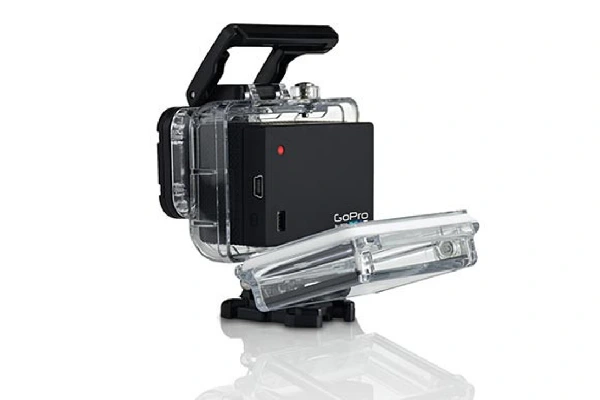
You might be surprised to learn that all modern GoPro cameras rely on lithium-ion batteries. These are small but powerful, which is why they fit snugly inside your GoPro while still delivering enough energy for hours of recording.
Depending on your model, you might see standard batteries or the newer Enduro batteries, which are optimized for cold weather. The chemistry behind them is the same: lithium-ion offers a great balance of energy density, rechargeability, and longevity, making it ideal for action cameras.
Part 2. Understanding GoPro battery specs
Before you rush out to buy a replacement, it’s good to know the key specs:
| Model | Capacity (mAh) | Voltage (V) | Energy (Wh) |
|---|---|---|---|
| HERO 8 | 1220 | 3.85 | 4.7 |
| HERO 9/10/11 | 1720 | 3.85 | 6.6 |
| HERO 12/13 Enduro | 1720 | 3.85 | 6.6 |
Here’s why these numbers matter:
- Capacity tells you how long your battery can last.
- Voltage affects how efficiently the battery powers your camera.
- Energy (Wh) is the total amount of usable power.
You might notice that the Enduro battery has the same capacity as the standard HERO 11 battery. The difference? It’s optimized for low temperatures, which means you won’t see a sudden drop in runtime on a snowy mountain or in chilly waters.
You can learn more about how low temperature affects lithium batteries on our detailed guide.
Part 3. How long can you actually record?
This is the million-dollar question for every GoPro user. Your actual battery life depends heavily on how you use your camera. Here’s a rough guide:
| Recording Mode | Approx. Battery Life |
|---|---|
| 4K @ 60fps | 60–90 min |
| 4K @ 30fps | 80–100 min |
| 1080p | 90–120 min |
Notice how much difference resolution and frame rate make? If you’re recording at the highest settings with stabilization turned on, you’ll use more power. And if you leave WiFi and GPS on, expect your battery to drain even faster.
Part 4. Factors that affect battery life
You might be tempted to blame the battery itself when it dies early, but often it’s how you use it. Here are some factors to keep in mind:
- High-resolution recording and stabilization consume more energy.
- Cold weather reduces battery efficiency because lithium-ion chemistry slows down.
- Background features like WiFi or GPS may seem minor, but they can significantly cut runtime.
The good news is, with a little planning — like lowering resolution for longer trips — you can get the most out of every charge.
Part 5. Charging your GoPro battery
You probably wonder: how long does it take to charge a GoPro battery?
Typically, it takes 1.5–2.5 hours depending on whether you use an external charger or charge inside the camera. Using a quality USB-C fast charger can cut this time down a bit.
For long shoots, consider an external dual-battery charger. This way, you can keep one battery charging while using the other, making sure you’re never left without power when the perfect shot appears.
Part 6. Choosing the right battery for you
Choosing a battery isn’t just about capacity; it’s about matching your lifestyle and environment. Here’s how you can decide:
- Casual users: Standard battery is fine for everyday recording.
- Cold-weather adventurers: Enduro batteries maintain better performance in freezing conditions.
- Heavy users or professionals: Consider having multiple batteries or a custom high-capacity lithium solution to ensure uninterrupted shooting.
Pro tip: Always carry a spare. You’ll thank yourself when your hero moment lasts longer than expected.
Part 7. Extending your battery life
You don’t have to accept short runtime as inevitable. You can extend battery life with a few simple practices:
- Lower your recording resolution when ultra-high definition isn’t necessary.
- Turn off WiFi and GPS when not needed.
- Keep your batteries warm in cold conditions.
- Avoid letting the battery fully drain regularly.
Even small adjustments can extend runtime by 20–30% — crucial when you’re on a long hike or recording an entire day.
Part 8. GoPro vs other action cameras
You may wonder how GoPro batteries stack up against other brands. While the specifics vary, GoPro tends to offer a good balance of runtime and reliability. For example:
| Brand | Capacity (mAh) | Approx. Battery Life |
|---|---|---|
| GoPro | 1720 | 90 min |
| DJI Osmo Action | 1770 | 120 min |
| Insta360 | ~1800 | 100 min |
So while DJI might last slightly longer, GoPro’s ecosystem and battery optimization make it a reliable choice for most users.
Part 9. Troubleshooting common battery issues
Even the best batteries can give trouble. If your GoPro battery isn’t performing as expected:
- Try a different charger.
- Inspect the battery contacts for dust or debris.
- Replace batteries that are old or showing physical signs of wear.
By taking these steps, you can often save a battery that seems “dead” or identify when it’s time for a replacement.
Part 10. Ufine Battery specializes in producing GoPro batteries
1. Dependability
We have built a GoPro battery with the ability to last long even when used in extreme conditions where they can still provide constant power output. Trust Ufine Battery to keep your GoPro running in sub-zero temperatures or scorching heat.
2. Long Life
No need to change batteries all the time, leading to missed shots anymore. Use Ufine Battery, which will enable you to take photos continuously throughout your adventure without being interrupted by low charge levels.
3. Efficiency
These lithium polymer batteries were designed to function at their best, thus giving them more than enough energy to record videos in high definition and take continuous shots. With such a backup from Ufine Battery, there is no way one can fail to capture important moments.
4. Satisfaction Guaranteed
Many happy customers have shared their positive experiences after using our products on various platforms across the internet; therefore, don’t just trust what we say alone. It is evident from all those ratings, together with positive feedback, that photographers everywhere else but hereabouts also rely on Ufine Batteries when it comes to.
Part 11. FAQs
Why does my GoPro battery drain faster in cold weather?
Lithium-ion batteries have reduced efficiency in low temperatures, which slows electrochemical reactions and reduces runtime.
Is it safe to leave a GoPro battery charging overnight?
Modern lithium batteries have protection circuits, but it’s best to avoid overcharging to prolong lifespan.
How many full charges can a GoPro battery handle?
Typically, 300–500 full cycles, depending on use and storage practices. Proper management can extend this number.
Do you need a special charger for GoPro Enduro batteries?
No special charger is needed; standard GoPro chargers work, but fast-charging USB-C adapters can reduce charge time.
How can you tell when a GoPro battery is aging?
Signs include faster drain, shorter runtime, or swelling. Regularly inspect your batteries for safety.
Related Tags:

More Articles

6 Volt Tractor Battery vs 12 Volt: Which One Fits Your Farm Equipment Best?
Compare 6V and 12V tractor batteries. Learn which voltage fits vintage or modern tractors, which specifications matter, and how to convert safely.
The Ultimate Guide to a Molten Salt Battery
Learn how a molten salt battery works, its main types, advantages, disadvantages, operating temperature, safety, and grid energy storage uses.
2000mAh Battery Runtime: How Long Will It Last in Real Devices?
Learn how to calculate 2000mAh battery runtime and backup time. See real device examples, power-loss factors, and battery replacement checks.
White Stuff on Battery Terminals: A Step-by-Step Cleaning and Maintenance Guide
White stuff on a battery may be corrosion or leaked electrolyte. Learn what causes white powder, whether it is dangerous, and how to clean it safely.
Do Lithium Batteries Need to Be Fully Charged Before First Use?
Should you fully charge a lithium battery the first time? Learn what happens if you don't, how long to charge, and the best charging practices.


