- Part 1. What is a battery discharger?
- Part 2. How does a battery discharger work?
- Part 3. Why lithium batteries need controlled discharge
- Part 4. Battery charger vs battery discharger
- Part 5. How battery dischargers test capacity
- Part 6. Why LiPo battery discharge requires extra caution
- Part 7. The hidden danger of over-discharging lithium batteries
- Part 8. AA battery discharger vs lithium battery discharger
- Part 9. How to choose a battery discharger
- Part 10. FAQs
Whether you are testing battery capacity, preparing LiPo packs for storage, checking old AA batteries, or maintaining industrial lithium-ion battery systems, controlled discharge matters far more than most users realize. In fact, improper discharge is one of the fastest ways to shorten battery lifespan, reduce performance, or permanently damage cells.
The good news is that modern battery dischargers make this process much safer and more accurate. And once you understand how they work, you can extend battery life, improve testing accuracy, and avoid many common battery failures.
Key takeaways
- A battery discharger safely removes energy from a battery at a controlled rate.
- Lithium-ion and LiPo batteries should never be deeply discharged below safe voltage limits.
- Battery charger discharger systems can test capacity, monitor voltage, and improve battery maintenance.
- LiPo batteries require special attention because over-discharge can lead to swelling, instability, or permanent damage.
- Controlled discharge is widely used in battery testing, storage preparation, recycling, and performance evaluation.
Part 1. What is a battery discharger?
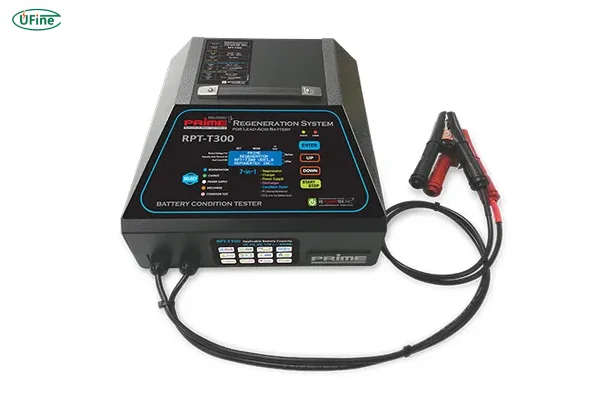
A battery discharger is a device designed to drain energy from a battery in a controlled and measurable way. Unlike simply running a battery until it dies inside a device, a dedicated discharger monitors voltage, current, temperature, and cutoff points to keep the process safe.
At first glance, discharging sounds simple. After all, every battery naturally discharges while powering something. However, uncontrolled discharge creates several problems:
- voltage may drop too low
- cells may become unbalanced
- capacity readings become inaccurate
- battery lifespan decreases faster
- overheating risks increase
A lithium battery discharger solves these problems by applying a stable electrical load while continuously monitoring battery behavior.
For hobby users, this may involve a compact LiPo battery discharger connected to RC packs. In industrial environments, programmable electronic loads are often used for large-scale lithium-ion battery testing.
Benefits of battery dischargers
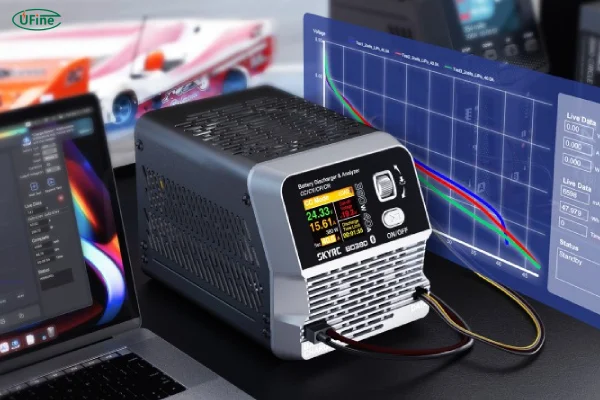
Using a battery discharger offers several significant advantages:
1. Extending Battery Lifespan
By regularly discharging and recharging, you can prevent common issues like capacity loss and voltage drops. This process is especially critical for rechargeable batteries like NiMH and lithium-ion.
2. Testing and Calibration
Battery dischargers allow users to measure the actual capacity of their batteries. This is invaluable for applications where precise performance is essential, such as in drones, medical devices, or industrial tools.
3. Safe Storage
For lithium-ion batteries, storing them at a specific voltage (usually around 3.7–3.9V per cell) is critical. A discharger ensures the battery is at the ideal voltage for long-term storage.
4. Environmental Benefits
Fully discharged batteries are safer to recycle. By discharging them properly, you contribute to safer and more eco-friendly recycling practices.
Part 2. How does a battery discharger work?
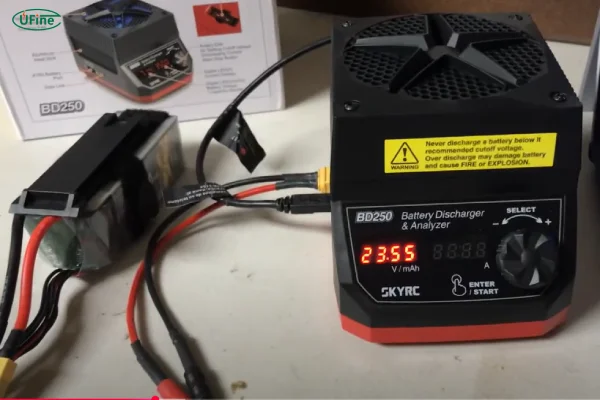
The operation of a battery discharger involves applying an electrical load to the battery, which allows it to release its stored energy in a measured and controlled manner. The process typically includes:
- Voltage Monitoring: The device tracks the battery’s voltage to ensure it remains within safe discharge limits.
- Steady Discharge Rate: It maintains a consistent energy release to avoid sudden drops that could harm the battery.
- Automatic Cut-Off: Most modern dischargers stop the process when the battery reaches its designated cut-off voltage, preventing over-discharge.
This structured approach ensures the battery is discharged without overheating, degrading, or losing efficiency.
Part 3. Why lithium batteries need controlled discharge
Lithium batteries behave very differently from older battery chemistries like NiMH or lead-acid batteries.
For example, older rechargeable batteries often benefited from full discharge cycles. Lithium-ion batteries do not. In fact, deep discharge is one of the worst things you can do to them.
Once a lithium-ion cell drops below its minimum voltage threshold, chemical changes begin occurring inside the battery. Copper dissolution, internal resistance growth, and electrode damage can permanently reduce battery performance.
That is why battery management systems include low-voltage protection. Still, many users accidentally bypass these protections during testing, storage, or DIY projects.
A proper lithium ion battery discharger prevents this by stopping discharge at a safe cutoff voltage.
Here is a general guideline for common lithium battery types:
| Battery Type | Nominal Voltage | Recommended Minimum Voltage | Storage Voltage |
|---|---|---|---|
| Li-ion (18650) | 3.6V–3.7V | 2.5V–3.0V | ~3.7V–3.8V |
| LiPo | 3.7V | 3.0V | ~3.8V |
| LiFePO4 | 3.2V | 2.5V | ~3.2V |
In real-world use, many professionals avoid going anywhere near the absolute minimum voltage because repeated deep discharge accelerates aging.
Why LiPo battery discharge requires extra caution
LiPo batteries are especially sensitive during discharge.
If you have ever used RC cars, FPV drones, or racing quadcopters, you already know how powerful LiPo packs can be. They deliver extremely high current in compact sizes, but that performance comes with higher risk.
A damaged or over-discharged LiPo battery may:
- swell
- overheat
- lose capacity rapidly
- become unstable during future charging
This is why experienced drone pilots rarely drain LiPo batteries completely during flights. Instead, they land early and maintain safer voltage margins.
Modern LiPo battery dischargers often include balance discharge functionality. This helps ensure all cells inside a battery pack remain evenly matched during discharge. Without balancing, one weak cell may become dangerously over-discharged even when the total pack voltage still appears acceptable.
Your Ultimate Guide to Lipo Battery Dischargers
Part 4. Battery charger vs battery discharger
People often confuse chargers and dischargers because many modern devices combine both functions.
A battery charger adds energy into a battery. A battery discharger removes energy safely and predictably. A battery charger discharger system does both.
This combination is extremely useful because charging alone does not tell you whether a battery is healthy. Two batteries may both charge to 100%, yet one could deliver only half its original capacity under load.
That is why technicians rely on charge-discharge cycle testing.
| Feature | Standard Charger | Battery Discharger | Charger Discharger |
|---|---|---|---|
| Charges batteries | Yes | No | Yes |
| Controlled discharge | No | Yes | Yes |
| Capacity testing | Limited | Yes | Yes |
| Voltage monitoring | Basic | Advanced | Advanced |
| Cycle testing | No | Yes | Yes |
| Best use case | Daily charging | Battery testing | Maintenance & diagnostics |
Today, many lithium battery dischargers include programmable discharge current, thermal monitoring, data logging, and USB software integration. This makes them valuable not only for engineers, but also for serious hobby users.
Part 5. How battery dischargers test capacity
One of the most common reasons people buy battery dischargers is capacity testing.
Imagine you have a lithium battery pack that claims 5000mAh capacity. After two years of use, you suspect the runtime feels shorter, but charging still appears normal. Without a discharge test, you cannot accurately confirm the real remaining capacity.
A battery discharger solves this by draining the battery at a fixed current while measuring how much energy the battery delivers before reaching cutoff voltage.
The process usually works like this:
- Fully charge the battery.
- Connect it to the battery discharger.
- Set discharge current and cutoff voltage.
- Begin controlled discharge.
- Record delivered capacity in mAh or Wh.
This testing method is widely used in:
- EV battery diagnostics
- solar energy storage maintenance
- drone battery monitoring
- laptop battery analysis
- quality control for battery manufacturers
Interestingly, discharge testing often reveals problems that charging alone hides. A weak battery may still charge normally but experience severe voltage sag once load is applied.
That is why many engineers consider discharge testing more valuable than charging tests alone.
Part 6. Why LiPo battery discharge requires extra caution
LiPo batteries are especially sensitive during discharge.
If you have ever used RC cars, FPV drones, or racing quadcopters, you already know how powerful LiPo packs can be. They deliver extremely high current in compact sizes, but that performance comes with higher risk.
A damaged or over-discharged LiPo battery may:
- swell
- overheat
- lose capacity rapidly
- become unstable during future charging
This is why experienced drone pilots rarely drain LiPo batteries completely during flights. Instead, they land early and maintain safer voltage margins.
Modern LiPo battery dischargers often include balance discharge functionality. This helps ensure all cells inside a battery pack remain evenly matched during discharge. Without balancing, one weak cell may become dangerously over-discharged even when the total pack voltage still appears acceptable.
Your Ultimate Guide to Lipo Battery Dischargers
Part 7. The hidden danger of over-discharging lithium batteries
Many users assume a fully empty battery is harmless. Unfortunately, lithium batteries do not work that way.
When voltage falls too low, several irreversible reactions may occur inside the cell. In severe cases, the battery may refuse to recharge entirely.
Sometimes the damage is not immediately obvious. The battery may still work, but:
- runtime becomes shorter
- heat generation increases
- charging efficiency drops
- internal resistance rises
This is one reason old drone batteries often feel weak even after full charging.
In industrial environments, over-discharge protection is treated very seriously because large lithium battery systems store enormous amounts of energy.
The emotional side of this issue is easy to overlook. Many people experience frustration after expensive batteries suddenly fail far earlier than expected. In reality, the problem is often not charging itself, but poor discharge habits repeated over time.
Part 8. AA battery discharger vs lithium battery discharger
Although both devices remove energy from batteries, AA battery dischargers and lithium battery dischargers are often designed for different goals.
AA battery dischargers commonly focus on:
- NiMH rechargeables
- alkaline battery testing
- household electronics
- lower discharge currents
Meanwhile, lithium battery dischargers usually support:
- higher current loads
- programmable voltage cutoffs
- balance discharge
- battery analytics
- cycle testing
That distinction matters because lithium batteries require tighter voltage control. A small error that might be harmless for a NiMH AA battery could permanently damage a Li-ion cell.
Still, some advanced battery analyzers support both AA batteries and lithium battery packs in a single device, which is convenient for technicians working across multiple battery chemistries.
Part 9. How to choose a battery discharger
Not every user needs an expensive laboratory-grade electronic load. The best choice depends on your battery type, testing needs, and experience level.
If you mainly handle small consumer batteries, a compact charger discharger may be enough. Drone users often prefer RC chargers with integrated LiPo discharge modes. Meanwhile, battery manufacturers and engineers typically require programmable electronic loads with advanced analytics.
When comparing battery dischargers, pay attention to:
- supported battery chemistries
- discharge current range
- cutoff voltage accuracy
- thermal protection
- balance discharge support
- data logging features
One overlooked feature is cooling performance. High-current discharge generates substantial heat, especially with large lithium battery packs. A poorly cooled discharger may produce inaccurate readings or reduce testing safety.
Part 10. FAQs
Why does my battery voltage drop suddenly under load?
A sudden voltage drop often indicates high internal resistance, cell aging, poor battery quality, or damage caused by repeated over-discharge cycles.
Can a battery discharger detect weak cells in a battery pack?
Yes. Advanced lithium battery dischargers and battery analyzers can identify voltage imbalance, abnormal voltage sag, and weak cells during discharge testing.
Should new lithium batteries be fully discharged before first use?
No. Unlike older battery chemistries, lithium-ion batteries do not require full discharge before first use. Deep discharge may actually reduce long-term battery health.
Why do drone users discharge LiPo batteries before storage?
LiPo batteries stored fully charged for long periods experience higher chemical stress. Storage discharge helps maintain stability, reduce swelling risk, and improve cycle life.
Can temperature affect battery discharge performance?
Yes. Cold temperatures reduce discharge efficiency and usable capacity, while excessive heat accelerates battery aging and may increase safety risks during high-current discharge.
Related Tags:

More Articles

Can Battery Degradation Be Reversed on LFP Batteries?
Can LFP battery degradation be reversed? Learn what causes LFP degradation, how to read its degradation curve, recover apparent capacity, and slow aging.
What’s the Difference Between Volts and Amps? A Beginner’s Guide
Learn the difference between volts and amps, how voltage and amperage work together, and how to calculate watts and current with simple examples.
Double A vs Triple A Battery: Understanding Size, Capacity, and Compatibility
Compare AA vs AAA batteries by size, voltage, capacity, runtime, chemistry, and compatibility. Learn which battery fits your device and lasts longer.
The Ultimate Guide to Battery Terminal Adapters
Compare battery terminal adapters for top post, side post, stud, marine, and U1 batteries. Learn how to choose, install, and maintain them safely.
What Can a 12V 50Ah Lithium Battery Power? Real-World Applications Explained
Learn what a 12V 50Ah lithium battery can power, realistic runtimes, inverter limits, charging methods, and uses for RVs, camping, solar, and backup.