
- Key Takeaways
- Part 1. What is an inverter? (inverter definition)
- Part 2. What is a generator?
- Part 3. Inverter vs generator: key differences
- Part 4. Advantages of inverters
- Part 5. Advantages of generators
- Part 6. Limitations of inverters
- Part 7. Limitations of generators
- Part 8. Application-based selection guide (inverter vs generator)
- Part 9. Inverter or generator: how to decide
- Part 10. FAQs about inverter vs generator
When comparing inverter vs generator, many users ask: what is an inverter, what does an inverter mean on a generator, and what is the real difference between a generator and an inverter? Both provide electricity, but they work in completely different ways. This affects power quality, noise, cost, and real-world usability.
This guide explains the difference between inverter and generator from an engineering and application perspective. It helps you choose the right solution based on your power demand, environment, and budget.
Key Takeaways
- An inverter converts DC to AC, while a generator produces AC power from fuel-driven mechanical energy.
- Inverters provide clean and stable power, ideal for electronics and battery-based systems.
- Generators deliver high power output and long runtime, suitable for heavy loads and outages.
- The difference between inverter generator and generator often lies in noise, fuel efficiency, and waveform quality.
- For solar or battery systems, an inverter is essential. For job sites or emergency backup, generators are more practical.
- Many modern systems combine both (hybrid setups) for optimal performance.
Part 1. What is an inverter? (inverter definition)
An inverter is an electronic device that converts direct current (DC) into alternating current (AC). This is the core inverter meaning in power systems.
It allows energy stored in batteries or generated by solar panels to power standard AC appliances.
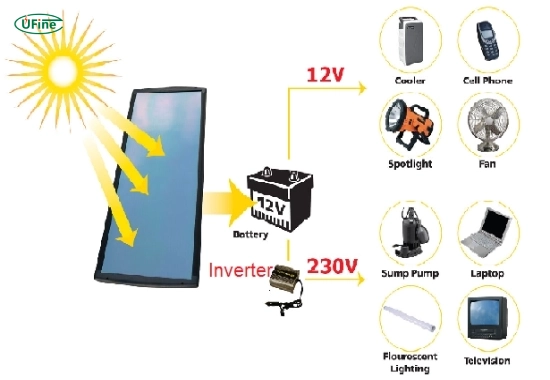
How does an inverter work?
An inverter uses high-frequency switching circuits to reverse current direction rapidly, creating an AC waveform.
Common types:
- Pure sine wave inverter
- Smooth waveform, same as grid power
- Best for sensitive devices (medical, laptops, industrial control systems)
- Modified sine wave inverter
- Simpler waveform
- Lower cost but may reduce efficiency or damage sensitive electronics
👉 Learn more: battery inverter working principles and selection guide
Typical applications
- Solar energy systems
- RV and marine power
- Portable power stations
- Backup systems with lithium batteries (e.g., 18650 lithium-ion batteries)
Part 2. What is a generator?
A generator is a machine that converts mechanical energy into electrical energy, usually powered by fuel such as gasoline, diesel, or propane.
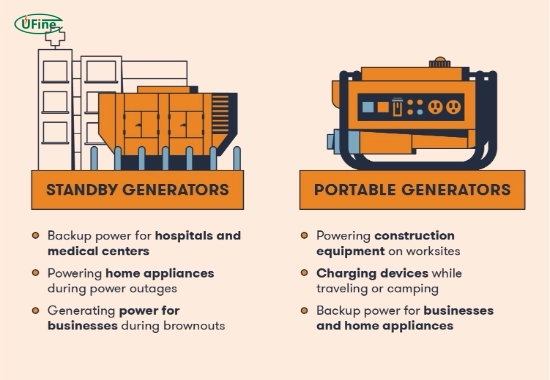
How does a generator work?
Generators operate based on electromagnetic induction. Key components include:
- Engine – provides mechanical power
- Alternator – generates electricity
- Fuel system – supplies energy to the engine
Types of generators
- Portable generators
- Mobile, used for camping or temporary backup
- Standby generators
- Installed systems that automatically power homes during outages
- Inverter generators (hybrid concept)
- Combine generator + inverter electronics
- Produce cleaner and more stable power than traditional generators
👉 This explains a common question: “What does an inverter generator do?” It converts raw generator output into stable AC, improving power quality.
Part 3. Inverter vs generator: key differences
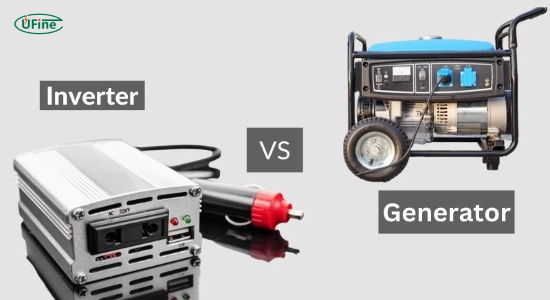
Understanding the difference between generator and inverter is critical for proper system selection.
| Feature | Inverter | Generator |
|---|---|---|
| Energy Source | Battery / solar (DC) | Fuel (gasoline/diesel) |
| Output | AC converted from DC | AC generated directly |
| Power Quality | Clean, stable (pure sine) | May fluctuate |
| Noise | Very quiet | Loud |
| Runtime | Limited by battery | As long as fuel lasts |
| Maintenance | Low | High (engine-based) |
Part 4. Advantages of inverters
- Clean power output – safe for sensitive electronics
- Quiet operation – suitable for indoor or residential use
- High efficiency – no fuel consumption when idle
- Compact design – easy to integrate into systems
- Low maintenance – no moving parts
👉 Especially useful in systems built with custom battery packs: battery production process and pack design
Part 5. Advantages of generators
- High power capacity – supports heavy equipment
- Long runtime – continuous operation with fuel
- Fast deployment – no battery charging required
- Versatility – construction, events, emergency backup
Part 6. Limitations of inverters
- Limited output power for large loads
- Depends on battery capacity and charge
- Higher upfront system cost (battery + inverter)
Part 7. Limitations of generators
- High noise levels
- Fuel cost and dependency
- Emissions and safety risks
⚠️ According to the U.S. Consumer Product Safety Commission, generators must never be used indoors due to carbon monoxide risk.
Part 8. Application-based selection guide (inverter vs generator)
| Application Scenario | Recommended Solution | Reason |
|---|---|---|
| Home backup (short outages) | Inverter + battery | Quiet, safe indoor use |
| Long power outages | Generator | Continuous runtime |
| Solar energy systems | Inverter | Required for DC to AC conversion |
| Construction site | Generator | High power demand |
| RV / camping | Inverter or inverter generator | Low noise, portability |
| Medical devices | Pure sine wave inverter | Stable voltage |
Part 9. Inverter or generator: how to decide
Choose an inverter if you need:
- Clean and stable power
- Silent operation
- Integration with batteries or solar
- Portable and low-maintenance solution
Choose a generator if you need:
- High wattage output
- Long runtime without interruption
- Power for heavy equipment
- Emergency backup for large loads
👉 In many modern systems, the best solution is hybrid: battery + inverter + generator backup.
Part 10. FAQs about inverter vs generator
What is the difference between inverter and generator?
An inverter converts DC power from batteries into AC, while a generator produces electricity from fuel using mechanical energy.
What does inverter mean on a generator?
It means the generator includes an inverter module to stabilize output power, producing cleaner electricity for sensitive devices.
Which is better: inverter or generator?
It depends on your use case. Inverters are better for electronics and quiet environments. Generators are better for high power and long runtime.
Can I use an inverter with a battery system?
Yes. Inverters are designed to work with battery systems and are essential in solar and backup energy setups.
Are inverter generators better than traditional generators?
Inverter generators provide cleaner power and are quieter, but they usually have lower output compared to conventional generators.
Related Tags:

More Articles
Dead Battery or Device Failure? How to Find the Cause
Think your device is broken? Learn how to tell if the problem comes from battery aging or hardware failure before replacing your electronics.
Why iPhone Duo Uses Two Batteries: The Engineering Behind Foldable Phone Power
Why do foldable phones need two batteries? Explore the engineering challenges behind iPhone Duo’s dual-battery architecture and future battery trends.
Solid-State Batteries: 3 Myths You Need to Know
Solid-state batteries promise safer EVs and longer range, but the reality is more complex. Discover the challenges behind this next-gen technology.
Battery Capacity vs Discharge Rate: The Choice Engineers Face
Higher capacity or higher discharge rate? Learn how to choose the right LiPo battery for longer runtime, stable power output, and better device performance.
Battery Cable Size Guide: Choose the Right Wire Fast
Not sure what battery cable size you need? Learn how to select the right wire gauge, terminal size, and cable for safer, more efficient battery systems.


