
- Part 1. What defines battery quality? Key performance indicators
- Part 2. Original vs. refurbished vs. counterfeit 18650 batteries
- Part 3. The hidden costs of inconsistent battery quality
- Part 4. Inside the cell: how key components affect battery safety
- Part 5. How Ufine Battery ensures high battery quality
- Part 6. Recommendations for manufacturers and consumers
- Part 7. Final words
In today’s fast-growing lithium battery market, the demand for high-capacity, high-safety batteries continues to rise. Yet, as demand expands, inconsistency in battery quality and the presence of counterfeit or low-grade products have created major safety and reliability risks.
At Ufine Battery, we believe that understanding what defines a good 18650 battery—and how to ensure consistent quality across every production stage—is the foundation for safer and longer-lasting energy solutions.
Part 1. What defines battery quality? Key performance indicators
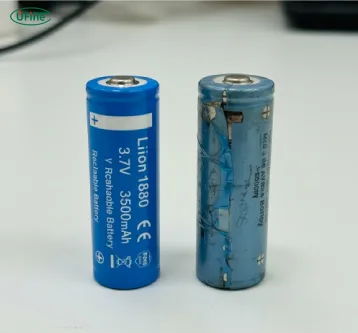
Battery quality is not determined by a single factor, but by a combination of measurable performance indicators that directly affect safety, reliability, and lifespan. When evaluating whether a product is a good 18650 battery, several core metrics must be considered:
- Capacity Retention: A high-quality battery maintains at least 80% of its initial capacity after hundreds of cycles. Poor-quality cells often show significant degradation within the first 100 cycles.
- Internal Resistance: Lower internal resistance ensures high energy efficiency and reduces heat generation. Inconsistent internal resistance among cells leads to unbalanced performance in battery packs.
- Cycle Life: A well-manufactured 18650 battery can last 500–1000 full charge-discharge cycles, while low-cost alternatives may fail after fewer than 200 cycles.
- Voltage Stability: Consistent discharge voltage reflects stable electrochemical reactions, which is critical for devices that rely on precise power output.
- Thermal Stability and Safety: Premium materials and separators reduce the risk of overheating and thermal runaway.
A truly good 18650 battery delivers not just high initial performance, but consistent and predictable behavior throughout its entire lifespan.
Part 2. Original vs. refurbished vs. counterfeit 18650 batteries
Not all batteries labeled “18650” are equal. The global market contains three major categories—original, refurbished, and counterfeit—each with distinct characteristics and risks.
Original 18650 Batteries
Original batteries are manufactured by reputable companies under strict quality control systems.
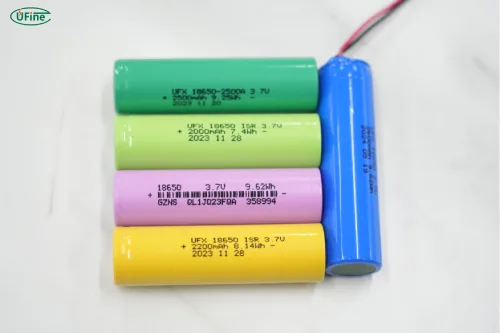
These cells:
- Use certified materials and advanced production lines.
- Have clear batch tracking and performance testing.
- Offer predictable energy output, long cycle life, and reliable safety mechanisms.
Such batteries are commonly used in electric vehicles, energy storage systems, and industrial applications where failure is not an option.
Refurbished 18650 Batteries
Refurbished batteries are cells salvaged from used or discarded packs (e.g., laptop or EV batteries). While they may appear functional, they come with major drawbacks:
- Inconsistent capacity: remaining energy density varies widely.
- High internal resistance: leads to heat buildup and imbalance in packs.
- Unverified safety: structural degradation can cause leakage or short circuits.
- Refurbished batteries might reduce costs initially but often lead to early system failure.
Counterfeit or Low-Cost 18650 Batteries
These are imitation products branded with false specifications, such as inflated capacity (e.g., “9800mAh” labels). Their issues include:
- Use of recycled or substandard materials.
- Lack of protection circuits and poor electrolyte purity.
- High defect rates and extreme safety risks, including fire or explosion.
- According to Ufine’s internal quality sampling, over 30% of low-cost 18650 cells fail to meet basic safety standards—underscoring how crucial it is to verify the source.
Part 3. The hidden costs of inconsistent battery quality
Choosing the cheapest battery option may appear cost-effective at first, but poor battery quality creates far greater hidden costs over time.
- Higher Failure Rate: Inconsistent cells cause frequent replacement, downtime, and maintenance costs.
- Safety Incidents: Faulty batteries can overheat, ignite, or damage connected equipment, resulting in product recalls or liability losses.
- Brand Reputation: A single battery failure can permanently damage consumer trust.
- Operational Inefficiency: Unbalanced packs reduce total usable capacity, wasting up to 15–20% of potential energy output.
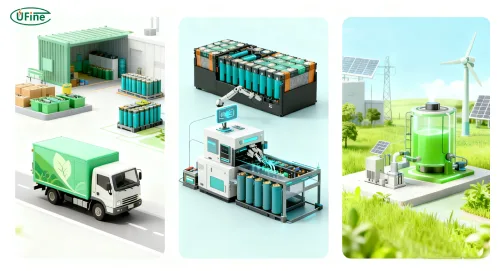
For manufacturers, these hidden losses often exceed the small upfront savings from cheaper batteries. From an engineering and economic standpoint, investing in good 18650 batteries ensures long-term reliability and profitability.
Part 4. Inside the cell: how key components affect battery safety
To understand why battery quality varies so widely, it’s important to look inside the 18650 cell. Each component plays a critical role in overall safety and performance.
- Cathode Material: Determines capacity and stability. Premium materials like NMC or LiFePO₄ provide better thermal resistance and longer lifespan.
- Anode Material: Typically made from graphite; impurities or uneven coating can cause lithium plating, leading to internal short circuits.
- Separator: A thin film that prevents the electrodes from touching. Poor-quality separators are the leading cause of internal shorts and thermal runaway.
- Electrolyte: Transfers ions between electrodes. Impure or unstable electrolyte formulations accelerate gas generation and degradation.
- Protective Circuit and Casing: High-quality batteries include overcharge, over-discharge, and temperature protection systems, preventing catastrophic failures.
Ufine Battery uses high-purity raw materials, tight coating control, and automated testing to ensure every layer—from separator to electrolyte—meets international safety standards. This attention to internal chemistry is what ultimately distinguishes a reliable, good 18650 battery from a dangerous one.
Part 5. How Ufine Battery ensures high battery quality
As a leading custom lithium battery manufacturer in China, Ufine Battery integrates precision engineering with strict quality assurance. Our process includes:
- ISO-Certified Production Lines: Every step, from electrode preparation to final formation, follows international quality standards.
- 100% Cell Testing: Each battery undergoes automatic inspection for capacity, voltage, and internal resistance.
- Traceability: Every cell batch is digitally recorded, ensuring full traceability throughout the supply chain.
- Material Selection: Ufine partners only with reputable suppliers for cathode powders, electrolytes, and separators.
- R&D and Customization: We design lithium polymer, LiFePO₄, and 18650 batteries tailored to specific voltage, capacity, or discharge rate requirements.
- Environmental Responsibility: Ufine uses eco-friendly materials and safe recycling systems to minimize environmental impact.
Through these measures, Ufine ensures customers receive consistently high-performing, durable, and safe lithium batteries—whether for industrial, consumer, or high-rate applications.
Part 6. Recommendations for manufacturers and consumers
Maintaining high battery quality requires joint effort across the supply chain.
For Manufacturers
- Source cells only from certified, traceable suppliers.
- Conduct incoming quality checks, including capacity and internal resistance tests.
- Design protection circuits and thermal management systems for each application.
- Implement strict pack assembly standards and safety audits.
For Consumers
- Choose products using verified, branded 18650 batteries.
- Avoid extremely low-cost batteries with unrealistic specifications.
- Inspect for proper labeling, certification marks (e.g., CE, UL), and packaging integrity.
- Store and charge batteries under proper temperature and voltage limits.
By following these guidelines, both manufacturers and end-users can reduce risks, extend battery life, and ensure safe, sustainable use of lithium energy technologies.
Part 7. Final words
The difference between a good 18650 battery and a poor one is more than just capacity—it’s about chemistry, precision, and responsibility.
Ufine Battery continues to invest in advanced materials, testing, and innovation to provide safe, customizable, and high-quality lithium batteries for global partners.
With Ufine, every battery is built for performance, safety, and trust—because true battery quality begins with commitment.
Related Tags:

More Articles
Buck vs. Boost vs. Buck-Boost Converter: Which Is Best for Battery?
Not sure which converter your battery-powered device needs? Compare Buck, Boost, and Buck-Boost designs and discover what affects voltage stability and runtime.
How to Match 18650 Cells for a Reliable Battery Pack?
Building an 18650 battery pack? Learn how to compare cell capacity, voltage, and internal resistance to avoid mismatches and improve reliability.
Why Do 18650 Battery Packs Get Hot During Discharge?
Is your 18650 battery pack overheating under load? Learn what causes excess heat, how to spot dangerous symptoms, and what to do next.
18650 Battery BMS: How to Get the Specs Right
Learn how to choose a BMS for an 18650 battery pack. Compare voltage, current ratings, protection features, and balancing before you buy.
Why Does My Ring Camera Battery Drain So Fast or Stop Charging?
Is your Ring camera battery draining fast or not charging? Discover common causes, practical fixes, and when to replace the battery.


