
- Part 1. What is a 6v lithium golf cart battery system
- Part 2. How long do lithium golf cart batteries last
- Part 3. What actually determines battery lifespan
- Part 4. Lithium vs lead acid in golf cart applications
- Part 5. How to choose the right 6 volt lithium golf cart battery
- Part 6. Common installation mistakes and risks
- Part 7. Applications beyond golf carts
- Part 8. FAQs
Golf carts, RV systems, and other deep-cycle applications often rely on multiple 6V batteries connected in series. This makes the topic of 6 volt lithium golf cart batteries not just about a single cell, but about the entire system design.
This article explains how 6V lithium batteries work, how long they last, and how they compare with traditional systems in real-world usage.
Key takeaways
- 6V lithium batteries are widely used in golf carts because they replace traditional 6V lead-acid batteries in series-based power systems.
- A properly designed lithium golf cart battery system can last 8–15 years, depending on usage, temperature, and charging behavior.
- The biggest performance advantage over lead-acid batteries is cycle life (2000–5000 cycles vs 300–500 cycles) and reduced maintenance.
- Most golf carts use multiple 6V batteries in series to build 36V or 48V systems, so compatibility is more about system design than a single battery.
- Understanding golf cart battery life requires looking at both cycle life and real-world usage patterns, not just nominal capacity.
- Lithium upgrade is usually a drop-in replacement in system structure, but charger and BMS compatibility must be checked carefully.
Part 1. What is a 6v lithium golf cart battery system
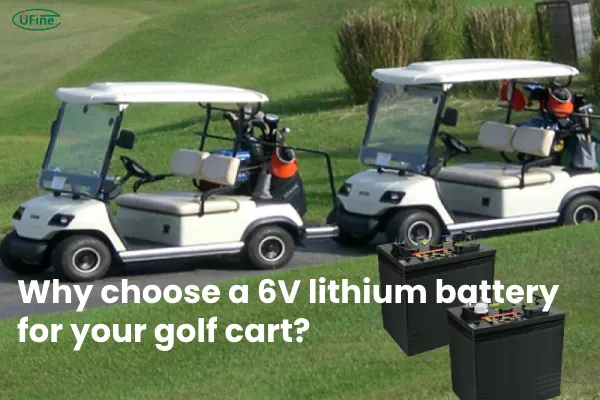
A 6V lithium battery is not usually used alone in a golf cart. Instead, multiple 6V batteries are connected in series to build a full system voltage.
Typical configurations include:
- 6V × 6 = 36V golf cart system
- 6V × 8 = 48V golf cart system
These systems replace traditional lead-acid battery banks, which historically dominated golf cart power systems.
Most modern lithium versions use LiFePO4 chemistry, which is preferred for its thermal stability and long cycle life.
Part 2. How long do lithium golf cart batteries last
The lifespan of a lithium golf cart battery depends on three main factors:
- Depth of discharge (DoD)
- Charging behavior (C-rate and charger quality)
- Temperature and operating conditions
typical lifespan comparison
| Battery type | Cycle life | Real-world lifespan |
|---|---|---|
| Lead-acid (deep cycle) | 300–500 cycles | 2–4 years |
| Lithium (LiFePO4) | 2000–5000 cycles | 8–15 years |
For a typical golf cart used daily on a golf course, lithium batteries can last 10–12 years, while recreational use can extend lifespan even further.
Part 3. What actually determines battery lifespan
Battery lifespan is not a fixed number—it is a function of multiple engineering factors:
1. depth of discharge (DoD)
- 100% DoD = faster degradation
- 80% DoD = significantly longer lifespan
2. charging behavior
- Overcharging damages cells
- Inconsistent charging causes imbalance
3. temperature exposure
- High heat accelerates chemical aging
- Cold reduces performance efficiency
4. discharge rate (C-rate)
- High current draw shortens cycle life
- Smooth discharge improves longevity
5. battery management system (bms)
A high-quality BMS protects against:
- Over-discharge
- Over-current
- Cell imbalance
Battery life can be expressed conceptually as:
Lifespan ≈ cycles × depth of discharge × temperature stability × load stress
Part 4. Lithium vs lead acid in golf cart applications
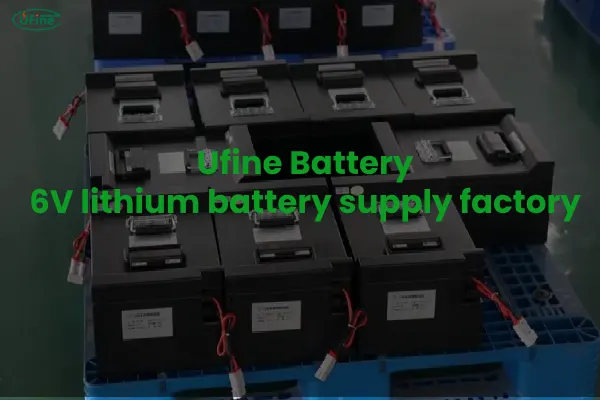
When evaluating 6v lithium golf cart battery options, the comparison with lead-acid batteries is essential for decision-making.
key performance differences
| Feature | 6V lithium battery | 6V lead-acid battery |
|---|---|---|
| Weight | Lightweight | Heavy |
| Maintenance | None | Water refill required |
| Usable capacity | 80–95% | 50–60% |
| Charging speed | Fast (2–4 hours typical) | Slow (6–10 hours) |
| Cycle life | 2000–5000 cycles | 300–500 cycles |
Lithium batteries also maintain more stable voltage output, which improves torque consistency in golf carts, especially on slopes or under load.
Why golf carts are switching to lithium systems
The shift toward lithium-based 6 volt lithium golf cart batteries is not just a trend but a structural upgrade in energy storage systems.
The main reasons include:
- Longer operational lifespan reduces replacement frequency
- Lower total weight improves driving efficiency
- Faster charging enables higher fleet utilization
- Stable voltage improves motor performance
In commercial golf courses, this translates directly into lower downtime and reduced long-term operating costs.
If you want a deeper comparison, see our guide on lead-acid vs lithium batteries for more details.
Part 5. How to choose the right 6 volt lithium golf cart battery
Selecting the correct 6v lithium golf cart battery is not just about capacity. It requires system-level compatibility.
You should evaluate:
- Battery capacity (Ah rating aligned with usage time)
- BMS protection (overcurrent, overvoltage, temperature control)
- Series compatibility (6V configuration consistency)
- Charger compatibility (lithium-specific charging profile)
Most importantly, the battery system must match the existing golf cart architecture, which is typically based on multiple 6V units in series.
Part 6. Common installation mistakes and risks
Even though lithium upgrades are generally straightforward, several mistakes can reduce performance or damage the system.
Typical issues include:
- Mixing old lead-acid and new lithium batteries in the same bank
- Using incompatible lead-acid chargers
- Incorrect series wiring causing imbalance
- Ignoring BMS cutoff behavior during peak load
These mistakes are often responsible for early performance degradation, not the battery technology itself.
Part 7. Applications beyond golf carts
Although golf carts are the primary use case for 6 volt lithium battery rechargeable systems, these batteries are also used in other applications:
- Deer feeder systems requiring long-term low-power discharge
- Camera and surveillance equipment (6V stable output systems)
- RV auxiliary power systems
- Motorcycle and specialty legacy electrical systems
- 2CR5 / CR-P2 replacement applications
Each use case benefits from lithium’s long cycle life and stable discharge curve.
Part 8. FAQs
1. Do 6V lithium batteries need a special charger?
Yes. Lithium batteries require a lithium-compatible charger with proper voltage cutoff. Using a lead-acid charger may reduce performance or damage the BMS.
2. Can I mix 6V lithium batteries with old lead-acid batteries?
No. Mixing lithium and lead-acid batteries in the same series bank can cause severe imbalance and system failure.
3. What happens if one 6V lithium battery fails in a series system?
Most lithium batteries with BMS protection will shut down individually, but the entire golf cart system may stop functioning until replacement or reset.
4. Can I use 6V lithium batteries in cold weather?
Yes, but charging may be restricted below 0°C unless the battery has low-temperature protection or self-heating features.
Related Tags:

More Articles
Dead Battery or Device Failure? How to Find the Cause
Think your device is broken? Learn how to tell if the problem comes from battery aging or hardware failure before replacing your electronics.
Why iPhone Duo Uses Two Batteries: The Engineering Behind Foldable Phone Power
Why do foldable phones need two batteries? Explore the engineering challenges behind iPhone Duo’s dual-battery architecture and future battery trends.
Solid-State Batteries: 3 Myths You Need to Know
Solid-state batteries promise safer EVs and longer range, but the reality is more complex. Discover the challenges behind this next-gen technology.
Battery Capacity vs Discharge Rate: The Choice Engineers Face
Higher capacity or higher discharge rate? Learn how to choose the right LiPo battery for longer runtime, stable power output, and better device performance.
Battery Cable Size Guide: Choose the Right Wire Fast
Not sure what battery cable size you need? Learn how to select the right wire gauge, terminal size, and cable for safer, more efficient battery systems.


