
- Key Takeaways
- Part 1. What is a battery drop test?
- Part 2. Why battery drop testing is important
- Part 3. Battery drop test procedure
- Part 4. Types of battery drop tests
- Part 5. Battery drop test standards and regulations
- Part 6. What happens if a battery failed drop test?
- Part 7. Car battery drop test: Is it the same?
- Part 8. Applications that require battery drop testing
- Part 9. Related battery safety resources
- Part 10. Battery drop test FAQs
Battery drop tests simulate accidental impacts to verify battery safety and structural strength. The test checks whether a battery remains safe after being dropped during shipping, installation, or daily use.
Manufacturers perform battery drop tests to detect design weaknesses, prevent internal short circuits, and meet safety standards such as UN38.3 and IEC 62133. Understanding how the test works—and what happens when a battery fails a drop test—helps engineers and buyers evaluate battery reliability.
Key Takeaways
- A battery drop test evaluates battery safety and durability by dropping the battery from a specified height onto a hard surface.
- The test helps detect risks such as casing damage, electrolyte leakage, internal short circuits, or thermal runaway after impact.
- Common standards that include drop testing are UN38.3, IEC 62133, and ISO 12405 for EV batteries.
- If a battery fails a drop test, manufacturers must analyze failure modes and improve structural design or packaging.
- Drop testing is critical for products that may experience handling impacts during transport, installation, or everyday use.
Part 1. What is a battery drop test?
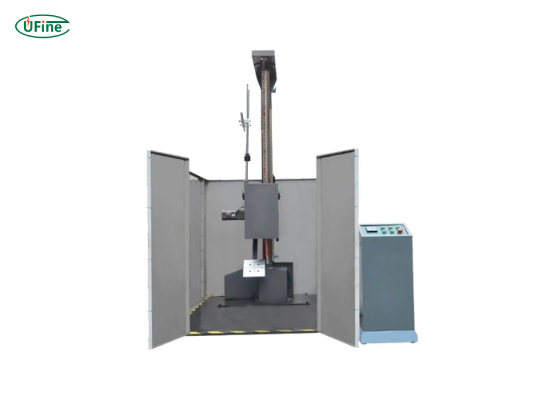
A battery drop test is a mechanical safety test that evaluates how a battery or battery pack behaves after being dropped from a controlled height.
During the test, the battery is released from a defined height onto a rigid surface such as steel or concrete. Engineers then inspect the battery for structural damage, electrical failure, leakage, or safety hazards.
The main objective is to determine whether the battery can withstand accidental impacts without causing dangerous conditions.
Part 2. Why battery drop testing is important
Battery drop tests serve several engineering and safety purposes:
- Detect structural weaknesses
Drops can reveal problems in battery housings, welds, terminals, or internal supports. - Prevent safety hazards
Impacts can cause internal short circuits that may lead to thermal runaway or fire if the battery design is weak. - Ensure transportation safety
Batteries may experience drops during shipping and logistics. Testing verifies they remain safe after impact. - Validate product durability
For consumer devices and vehicles, batteries must survive real-world handling. - Meet regulatory requirements
Many battery safety certifications require drop testing before market approval.
For example, the lithium battery transport standard UN 38.3 includes mechanical safety testing to ensure safe transportation.
Part 3. Battery drop test procedure
Although procedures vary slightly between standards, most drop tests follow a similar process.
1 Pre-test preparation
Before testing begins, technicians prepare and document the battery samples.
Typical preparation steps include:
- Visual inspection for existing damage or defects
- Charging the battery to the specified state of charge
- Recording sample identification numbers
- Installing the battery in its normal enclosure or packaging
These steps ensure the results reflect real product conditions.
2 Test setup
A controlled testing environment is required to maintain consistent results.
Key setup factors include:
- Drop height – often around 1 meter for small batteries
- Impact surface – steel plate, concrete, or rigid platform
- Orientation – flat, edge, or corner drops
- Drop equipment – automated drop testing machines
Testing equipment ensures the battery falls freely without interference.
3 Drop test execution
The drop test is performed according to the chosen standard.
Typical steps include:
- Position the battery in the required orientation.
- Release the battery from the specified height.
- Allow it to impact the surface freely.
- Repeat the test for multiple orientations.
- Record drop height, angle, and impact location.
After each drop, engineers inspect the battery for safety issues.
Common observations include:
- Cracked casing
- Electrolyte leakage
- Smoke or heat generation
- Electrical malfunction
If the battery remains safe and functional, it passes the test.
Part 4. Types of battery drop tests
Different industries use different variations of drop testing depending on battery size and application.
1 Mechanical drop test
The mechanical drop test is the most common method. It evaluates physical durability by dropping batteries from controlled heights.
| Parameter | Typical Range |
|---|---|
| Drop height | 0.5 – 1.5 m |
| Impact surface | Steel or concrete |
| Drop orientations | Flat, edge, corner |
| Test repetitions | 3–6 drops |
This test identifies structural failures that could lead to internal short circuits.
2 Thermal drop test
A thermal drop test evaluates how temperature affects drop resistance.
In this test:
- Batteries are exposed to extreme temperatures.
- They are then subjected to drop impacts.
This method is used in industries such as:
- aerospace
- electric vehicles
- outdoor electronics
Temperature stress can make materials brittle or change internal pressure, increasing failure risk.
3 Environmental drop test
Environmental testing simulates harsh operating environments before the drop occurs.
Conditions may include:
- High humidity
- Low air pressure
- Temperature cycling
These tests ensure batteries remain safe across different climates and altitudes.
Part 5. Battery drop test standards and regulations
Battery drop testing is defined by several international safety standards.
1 Major battery safety standards UN 38.3
UN38.3 is required for lithium battery transportation. It verifies that batteries can withstand mechanical stress during shipping.
2 IEC 62133
IEC 62133 is a key safety standard for portable rechargeable batteries used in consumer electronics. It includes mechanical and electrical safety testing requirements.
3 ISO 12405
ISO 12405 focuses on lithium-ion batteries used in electric vehicles. The standard defines mechanical abuse testing, including drop and vibration tests.
Part 6. What happens if a battery failed drop test?
If a battery failed drop test, engineers must determine the root cause before the product can be released.
Common failure modes include:
| Failure Mode | Possible Cause |
|---|---|
| Cracked battery casing | Weak enclosure design |
| Internal short circuit | Poor cell support or insulation |
| Electrolyte leakage | Seal failure |
| Terminal damage | Weak welds or connectors |
Corrective actions may involve:
- strengthening the battery housing
- improving internal cushioning
- redesigning the battery pack structure
- enhancing protective circuitry
A failed drop test usually triggers design revisions and repeated testing until the battery meets safety requirements.
Part 7. Car battery drop test: Is it the same?
A car battery drop test typically refers to mechanical durability testing of automotive batteries.
However, automotive testing usually includes additional mechanical abuse tests, such as:
- vibration testing
- crash simulation
- thermal shock testing
Automotive battery testing standards often follow ISO or OEM-specific protocols that are stricter than consumer electronics tests.
Part 8. Applications that require battery drop testing
Battery drop testing is widely used across industries where impact risk exists.
Common applications include:
| Industry | Typical Products |
|---|---|
| Consumer electronics | smartphones, laptops, drones |
| Electric vehicles | EV battery modules |
| Industrial equipment | power tools |
| Medical devices | portable monitoring systems |
| Energy storage | battery packs and modules |
Any battery used in portable or mobile equipment may require drop testing.
Part 9. Related battery safety resources
If you are evaluating battery safety or certification requirements, these guides may also help:
These guides explain common battery transport and safety certifications required for lithium batteries.
Part 10. Battery drop test FAQs
What is a battery drop test?
A battery drop test evaluates battery safety by dropping the battery from a specified height onto a hard surface to simulate accidental impacts.
What types of batteries require drop testing?
Drop testing applies to many battery types, including lithium-ion, NiMH, alkaline, EV batteries, and battery packs used in electronics or vehicles.
What happens when a battery fails a drop test?
When a battery fails drop test, engineers analyze the damage and redesign the structure or protection system before retesting.
Can drop testing permanently damage a battery?
Yes. Drop testing can crack the casing, damage internal components, or reduce performance. Therefore, multiple test samples are usually used.
Are automated battery drop testing machines used?
Yes. Modern testing laboratories use automated drop testers that precisely control drop height, angle, and impact surface, ensuring repeatable and accurate results.
Related Tags:

More Articles

JST vs Molex: The Right Battery Connector Choice
JST or Molex for your battery? Learn how connector selection affects current, voltage drop, reliability, and device performance.
Custom Battery Pricing: Costs Manufacturers Don’t Mention
A low battery quote may not be the final cost. Discover common hidden expenses that affect custom lithium battery projects.
Battery Wire Length: Hidden Cause of Power Loss
A longer battery wire can cause voltage drop, power loss, and unstable operation. Learn how wire length affects battery performance.
How Device Sleep Modes Affect Battery Life
Think sleep mode extends battery life? Learn why devices still drain power and how firmware, hardware, and batteries affect runtime.
LiPo Battery and PCB Design: Clearance, Insulation, and Placement
Learn how to optimize LiPo battery PCB clearance, insulation, placement, wiring, and thermal design—and avoid common integration mistakes.


