- Part 1. Quick answer: What are the main LiPo battery connector types?
- Part 2. What a LiPo battery connector actually does
- Part 3. LiPo battery connector types by application
- Part 4. Complete LiPo battery connector comparison table
- Part 5. XT vs EC vs JST: Which family makes sense for you?
- Part 6. Best LiPo battery connector types for RC cars
- Part 7. Connector orientation & anti-Reverse protection
- Part 8. Are LiPo battery connector adapters safe?
- Part 9. Connector size vs wire gauge (AWG)
- Part 10. Connector lifespan: How many plug-unplug cycles?
- Part 11. Charging side vs battery side: Do connectors matter?
- Part 12. Can you change or customize a LiPo battery connector?
- Part 13. How to choose the right LiPo battery connector?
- Part 14. Final thoughts
- Part 15. FAQs
If you’ve ever worked with LiPo batteries, you’ve probably noticed one thing very quickly:
there are many different battery connectors, and they are not interchangeable.
XT60, EC5, JST, Deans… they may look similar at first glance, but choosing the wrong connector can lead to voltage drop, overheating, unreliable performance, or even safety risks.
In this guide, I’ll walk you through all the common LiPo battery connector types, explain where each one is actually used, and help you confidently choose the right connector for your RC car, drone, or electronic project.
Let’s start with the basics.
Part 1. Quick answer: What are the main LiPo battery connector types?
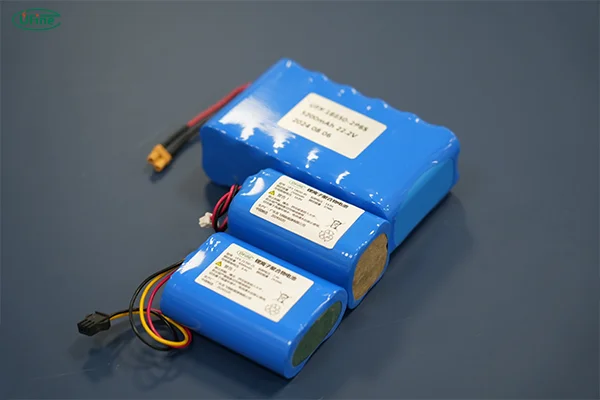
If you just need a fast overview, here it is:
The most common LiPo battery connector types are:
- XT series: XT30, XT60, XT90
- EC series: EC3, EC5, EC8
- JST connectors
- Deans (T-plug)
- JR connectors (mainly RC control systems)
Each type is designed for different current levels, sizes, and applications.
Choosing the wrong one doesn’t just hurt performance — it can shorten battery life or create safety risks.
Part 2. What a LiPo battery connector actually does
At a glance, a connector just links your battery to a device.
In practice, it affects:
- How much current actually reaches your motor or ESC
- How much voltage drops under load
- How much heat builds up at the connection
- How safe the system is during plugging and unplugging
Most LiPo batteries use two connectors:
- Main power connector (high current)
- Balance connector (cell balancing during charging)
Part 3. LiPo battery connector types by application
Instead of memorizing connector names, it’s more useful to think in terms of application.
Typical real-world pairings:
- RC cars & trucks: XT60, XT90, EC5, Deans
- FPV & camera drones: XT30, XT60
- Small electronics & toys: JST
- High-power systems: XT90, EC8
This approach also aligns closely with how people search terms like rc battery connector types or remote control car battery connector.
Part 4. Complete LiPo battery connector comparison table
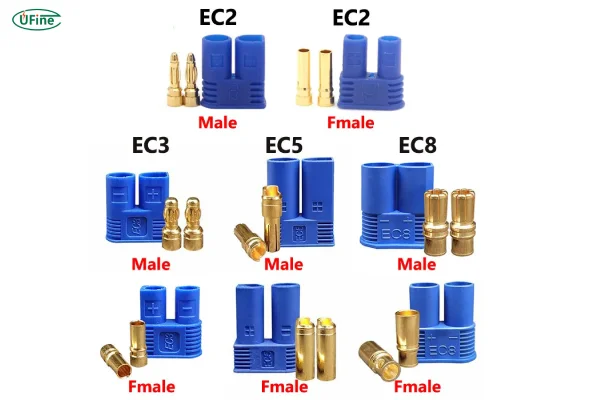
Here’s a practical comparison that puts everything in one place:
| Connector | Typical Max Current | Common Use | Strengths | Limitations |
|---|---|---|---|---|
| XT30 | ~30A | Mini drones | Small, lightweight | Low current margin |
| XT60 | ~60A | RC cars, drones | Reliable, common | Bulkier than XT30 |
| XT90 | ~90A | High-power RC | Anti-spark option | Large size |
| EC3 | ~60A | RC models | Easy to solder | Less compact |
| EC5 | ~120A | RC trucks | High current | Space-hungry |
| EC8 | ~150A | Extreme RC | Very robust | Heavy |
| JST | <10A | Low-power devices | Small & light | Unsafe for high load |
| Deans | ~60A | Hobby RC | Low resistance | Soldering skill needed |
This table alone answers most lipo battery connector types questions clearly.
Part 5. XT vs EC vs JST: Which family makes sense for you?
Let’s simplify this decision.
1 XT Connectors
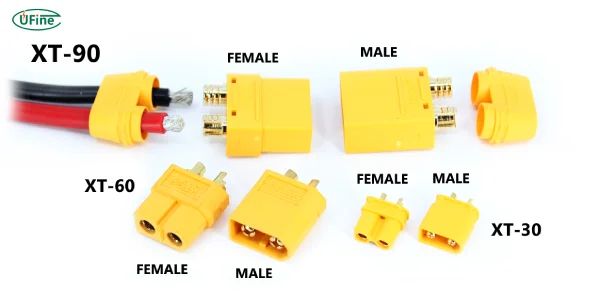
XT connectors are popular because they’re:
- Durable
- Easy to find
- Consistent in quality
XT60 is a safe default for many RC cars and drones. XT90 is preferred when current spikes are high or anti-spark protection is needed.
XT60 vs. XT90 Battery Connector Comparison
2 EC Connectors
EC connectors are common in the RC world, especially for vehicles that draw sustained high current.
They’re mechanically strong and well suited for larger RC platforms.
3 JST Connectors
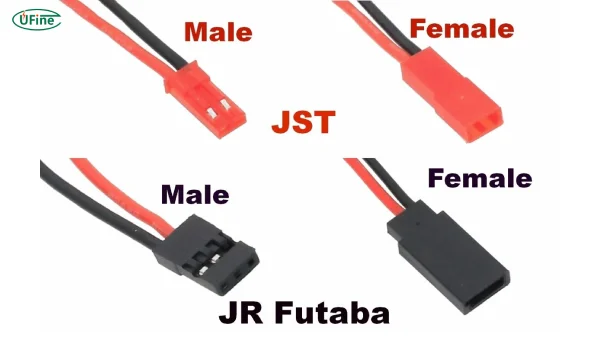
JST connectors are often misunderstood.
They’re not “bad” — they’re just designed for low-power electronics. Using them for main LiPo power is one of the most common beginner mistakes.
Part 6. Best LiPo battery connector types for RC cars
RC cars place unique stress on connectors due to:
- Sudden acceleration
- High peak current
- Frequent battery swaps
Practical recommendations:
- Beginner & mid-level RC cars: XT60 or Deans
- High-power RC trucks: EC5 or XT90
- Never use JST for main RC power
If a connector heats up after a run, that’s already a warning sign.
Part 7. Connector orientation & anti-Reverse protection
Another common concern is reverse polarity.
Most modern connectors like XT and EC are:
- Polarized
- Designed to prevent reverse connection
Older or generic connectors may not offer this protection, increasing the risk of damaging ESCs or chargers.
For high-power systems, anti-spark XT90 connectors are especially useful. They reduce arcing during connection and extend connector lifespan.
Part 8. Are LiPo battery connector adapters safe?
This is a very common question — and the honest answer is: it depends.
Adapters are convenient, but they:
- Add extra resistance
- Introduce another failure point
- Can heat up under high current
Using an adapter temporarily is usually fine.
Using one permanently on a high-power RC car is not ideal.
If possible, it’s always better to match connectors directly.
Part 9. Connector size vs wire gauge (AWG)
A connector is only as good as the wire attached to it.
Common mistakes include:
- XT60 with thin wires
- EC5 with undersized cable
As a rough guideline:
- XT30 → 18–20 AWG
- XT60 → 14–16 AWG
- XT90 / EC5 → 10–12 AWG
Mismatched wire gauge causes heat buildup even if the connector itself is rated correctly.
Part 10. Connector lifespan: How many plug-unplug cycles?
Connectors wear out over time.
High-quality connectors are typically rated for hundreds of insertion cycles, but:
- Cheap copies wear much faster
- Sparking accelerates degradation
If a connector feels loose or discolored, it’s time to replace it.
For a general technical overview of connector durability and electrical contact design, Wikipedia provides a solid reference.
Part 11. Charging side vs battery side: Do connectors matter?
Yes — but differently.
- Battery side: must handle peak current
- Charger side: usually lower current, more flexibility
This is why you’ll often see different connectors on chargers than on batteries, sometimes using adapters safely only during charging.
Part 12. Can you change or customize a LiPo battery connector?
Absolutely — and many users do.
People change connectors to:
- Standardize their setup
- Reduce adapters
- Improve current handling
Solder quality matters more than connector choice.
For professional or industrial projects, manufacturers like Ufine Battery can provide custom LiPo batteries with specific connectors, wire gauges, and layouts to avoid modification altogether.
Part 13. How to choose the right LiPo battery connector?
Before choosing, ask yourself:
- What current does my device draw at peak?
- How much physical space do I have?
- Is this for RC, drones, or low-power electronics?
- Do I need anti-spark protection?
If your connector comfortably exceeds your current needs, you’re making a safe choice.
Part 14. Final thoughts
LiPo battery connectors may seem like a small detail, but they directly affect performance, safety, and reliability.
Once you understand connector types, current ratings, and real-world applications, choosing the right one becomes straightforward.
And if you’re working on a specialized project, customized connectors can save you time, reduce risk, and improve overall system performance.
Choosing the right LiPo battery connector isn’t about following trends — it’s about matching the connector to the job.
Part 15. FAQs
1. Can using the wrong LiPo connector damage my ESC or motor?
Yes, it can — indirectly. An underrated connector increases resistance, which leads to voltage drop and excess heat. Over time, this can stress your ESC and reduce motor efficiency, especially during high current bursts like acceleration or sudden load changes.
2. Why do some LiPo connectors get hot while others stay cool?
Heat usually comes from resistance, not current alone.
Poor contact quality, worn terminals, cheap connector materials, or mismatched wire gauge can all cause localized heating, even if the connector is technically rated for the current.
3. Does connector length or extension cable affect performance?
It does, especially in high-current systems. Longer cables increase resistance and voltage drop. For RC cars and high-power drones, keeping connector leads as short as practical helps maintain efficiency and reduces heat buildup.
4. Can I use different connector types on the same LiPo battery pack?
You can, but it’s usually not recommended. Mixing connector types often leads to adapters, extra solder joints, and inconsistent resistance. For reliability and safety, standardizing one connector type across your setup is the better long-term solution.
5. Do LiPo connectors affect charging speed?
Not directly — but poor connectors can limit effective current. If the connector or wire introduces resistance, your charger may reduce current or take longer to reach full charge, especially at higher charge rates.
6. Is it safe to store LiPo batteries with connectors exposed?
It’s better to protect them. Exposed connectors can short if they contact metal objects. Using protective caps, heat shrink, or proper storage cases helps prevent accidental shorts during transport or storage.
Related Tags:

More Articles

Battery Calibration: Why Is Your Battery % Wrong?
Is your battery percentage inaccurate? Learn how battery calibration works, when you need it, and how to fix unexpected battery drops.
Battery Calibration Guide: Fix SOC Errors in Lithium Systems
SOC accuracy problems can reduce device reliability. Learn how battery calibration, BMS, and fuel gauge optimization improve lithium battery performance.
How Internal Resistance Limits LiPo Battery Performance
Your LiPo Battery may have enough capacity but still fail under load. Discover how Internal Resistance causes voltage sag, heat, and power loss.
What Engineers Can Learn From a Discharge Curve for LithiumBattery?
What can a discharge curve for lithium ion battery tell engineers? Learn how voltage, C-rate, temperature, and capacity affect real-world performance.