- Key Takeaways
- Part 1. What does lithium battery failure actually mean?
- Part 2. Common types of lithium battery issues
- Part 3. How to tell if your lithium battery is bad
- Part 4. How to check battery failure using tools
- Part 5. What causes lithium batteries to fail?
- Part 6. What you should do if your battery fails
- Part 7. Tips to prevent future failures
- Part 8. Conclusion
- Part 9. FAQs
Whether it’s a smartphone, laptop, power tool, or EV — understanding why lithium batteries fail, how to recognize the signs, and what you can do about it can save you headaches and even costly replacements.
Key Takeaways
- Lithium batteries are reliable but not perfect — they degrade over time and can fail due to age, misuse, or damage.
- Common signs include swelling, rapid discharge, overheating, and unexpected shutdowns.
- You can check battery health with simple tests and extend life with good habits.
- Not all failures are dangerous — but some can be, so safety matters.
Part 1. What does lithium battery failure actually mean?

When people talk about lithium ion battery failure, they’re often referring to a decline in performance or a point where the battery no longer works as intended. But failure isn’t just one thing — it’s a spectrum:
- Your phone dies earlier than it used to.
- A battery bulges, making your device feel… weird.
- A tool stops charging at 80% and never goes higher.
- A battery overheats while charging.
Behind all of this are chemical changes inside the battery’s cells. Over time, lithium ions — which move back and forth during charge/discharge — create wear and tear. According to battery scientists, this degradation is unavoidable but predictable as part of how lithium cells age.
Part 2. Common types of lithium battery issues
Here’s the real‑world look at the problems you’re most likely to encounter:
| Symptom | What You Might Notice | What It Usually Means |
|---|---|---|
| Swelling | Device feels oddly bulged | Gas buildup inside battery — potentially dangerous |
| Rapid Discharge | Battery drains fast even after charge | Loss of effective capacity |
| Slow or Incomplete Charging | Stalls at 80–90% | Cell imbalance or charger/circuit issue |
| Overheating | Warms a lot while charging | Can be internal damage or poor thermal management |
| Unexpected Shutdowns | Device dies despite showing % left | Voltage instability in cells |
These aren’t just technical terms — each of them tells a story about what’s happening inside your battery.
Swelling batteries can be alarming — we explain the top reasons in 9 reasons why lithium batteries bulge.
Part 3. How to tell if your lithium battery is bad
You might be wondering “how to tell if lithium battery is bad?” — here’s how you can assess it without needing fancy tools:
Simple Checks You Can Do
1. Visual Inspection
Does your battery or device look swollen? If yes — stop using it. A bulging battery is one of the strongest warnings that something’s gone wrong internally.
2. Charge Behavior
Does it take forever to hit 100%? Or linger strangely at a low percentage? Batteries that fail to charge cleanly often have aging or cell imbalance issues.
3. Rapid Drain
If you fully charge and it’s nearly empty within a couple of hours (much faster than it used to), that’s classic battery capacity loss — a form of lithium battery failure.
4. Overheating
While mild warmth can be normal, excess heat during charging or use suggests internal resistance buildup — a symptom of aging or damage.
Part 4. How to check battery failure using tools
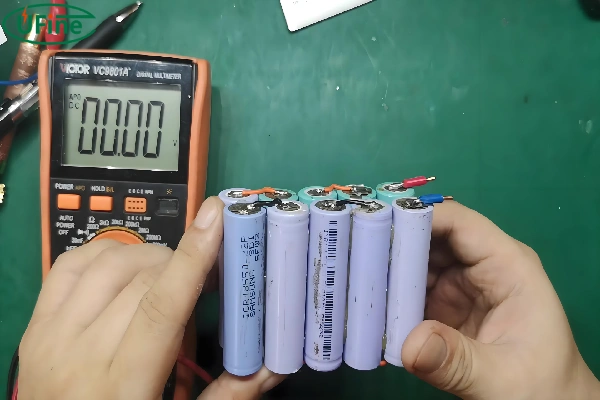
If you have basic tools, you can go deeper:
| Test Type | How to Do It | What It Reveals |
|---|---|---|
| Voltage Test | Use a multimeter | Low voltage suggests cell deterioration |
| Capacity Test | Full charge → full discharge | Compare against original rated capacity |
| Heat Monitoring | Smartphone temp apps or infrared gun | Persistent hot spots indicate internal damage |
Note: If you’re uncomfortable using a multimeter, ask a tech‑savvy friend or a professional.
If you want to measure your battery’s health precisely, check out our guide on simple steps to test a lithium battery with a multimeter.
To prevent shortening your battery’s life, see how overcharging affects it in how does overcharging a battery affect charging cycles and battery lifespan.
Part 5. What causes lithium batteries to fail?

Here’s where most of us misunderstand battery problems. It’s not just “old age.” The real causes often combine use habits with environmental stress:
Top Root Causes
1.Age & Chemicals Wearing Out
With each charge/discharge cycle, tiny chemical changes reduce how much charge the battery can hold. This is completely normal.
2. Overcharging or Extreme States
Keeping a battery at 100% constantly or letting it drop to near zero repeatedly both stress the cells.
3. Heat and Cold Extremes
Temperatures outside ~0–35°C (~32–95°F) accelerate wear. Too hot = fast degradation; too cold = temporary performance loss.
Curious why your battery sometimes gets hot? Learn more in our guide to understand lithium battery overheating.
4. Physical Damage
Dropping a battery or exposing it to impact can damage internal separators, leading to shorts.
5. Manufacturing Imperfections
Even new batteries can fail early if there were defects in the materials or assembly.
Also, the EPA highlights that improper handling and disposal of lithium batteries are huge concerns, especially with larger packs like EV batteries — another reason to treat them carefully. EPA guidance on lithium battery disposal and recycling.
Part 6. What you should do if your battery fails
So you’ve confirmed your battery is misbehaving… now what?
1. Stop Using It
This seems obvious, but many people keep using a failing battery — which can be unsafe.
2. Replace It with the Right One
Don’t just pick any battery — get one that matches your device specs and comes from a reputable brand.
3. Recycle Old Batteries Properly
Don’t throw them in the trash. Find a certified recycling program — especially for larger cells.
4. Consult a Professional
If in doubt, take it to a trained technician — especially for high‑voltage packs like EV or power tool batteries.
Part 7. Tips to prevent future failures
You don’t need to be obsessive — just a bit thoughtful:
✔ Avoid Extreme Temperatures — heat is the enemy of lithium chemistry.
✔ Use Approved Chargers — mismatched chargers can push voltage where it shouldn’t go.
✔ Partial Charging is Okay — you don’t have to hit 100% every time.
✔ Store at ~50% Charge if Long Unused — helps preserve cell health.
These habits extend lifespan and keep lithium battery problems at bay.
Part 8. Conclusion
Lithium batteries are convenient, powerful, and safe—when used properly. By understanding common failures, spotting early warning signs, performing simple tests, and practicing good maintenance, you can get the most out of your batteries.
Remember, a well-maintained battery isn’t just about longer device life—it’s about safety, performance, and peace of mind.
Part 9. FAQs
Can storing lithium batteries in a bag affect their lifespan?
Yes. Batteries stored with other electronics in tight, insulated bags may heat up, accelerating aging.
Does partial charging harm lithium batteries?
No. In fact, charging between 20–80% can extend battery life compared to full cycles to 0–100%.
Why do some lithium batteries fail faster than others of the same model?
Variations in manufacturing quality, storage conditions, and usage patterns can make two identical batteries age differently.
Do lithium batteries lose charge faster in cold weather?
Yes. Low temperatures slow the chemical reactions inside the battery, reducing available power until it warms up.
Can firmware updates improve battery performance?
Sometimes. Updates can optimize charging algorithms and power management, slightly improving longevity and stability.
Related Tags:

More Articles
Dead Battery or Device Failure? How to Find the Cause
Think your device is broken? Learn how to tell if the problem comes from battery aging or hardware failure before replacing your electronics.
Why iPhone Duo Uses Two Batteries: The Engineering Behind Foldable Phone Power
Why do foldable phones need two batteries? Explore the engineering challenges behind iPhone Duo’s dual-battery architecture and future battery trends.
Solid-State Batteries: 3 Myths You Need to Know
Solid-state batteries promise safer EVs and longer range, but the reality is more complex. Discover the challenges behind this next-gen technology.
Battery Capacity vs Discharge Rate: The Choice Engineers Face
Higher capacity or higher discharge rate? Learn how to choose the right LiPo battery for longer runtime, stable power output, and better device performance.
Battery Cable Size Guide: Choose the Right Wire Fast
Not sure what battery cable size you need? Learn how to select the right wire gauge, terminal size, and cable for safer, more efficient battery systems.