
- Part 1. What is a big square battery?
- Part 2. What is a cylindrical battery?
- Part 3. Big square battery vs Cylindrical: Which battery uses space more efficiently?
- Part 4. Big square battery vs Cylindrical: Which battery handles heat better?
- Part 5. Big square battery vs Cylindrical: Which battery is more durable?
- Part 6. Big square battery vs Cylindrical: Which battery is easier to assemble?
- Part 7. Big square battery vs Cylindrical: Which battery lasts longer?
- Part 8. Big square battery vs Cylindrical: Which battery is more cost-effective?
- Part 9. Big square battery vs Cylindrical: Which battery is safer?
- Part 10. Big square battery vs Cylindrical: Which battery is better for EVs?
- Part 11. FAQs about big square battery and cylindrical
Choosing the right battery type is critical for designers, OEMs, and engineers. Big square batteries and cylindrical batteries are the two most popular lithium-ion formats, but they serve different purposes depending on space, thermal needs, durability, and cost. This guide helps you decide which battery best fits your application.
Part 1. What is a big square battery?
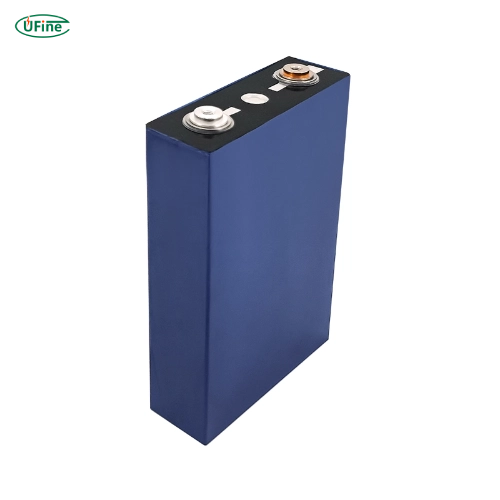
Big square batteries, also called prismatic cells, are rectangular lithium-ion batteries designed to maximize space usage.
Why designers choose them:
- Ideal for compact devices or systems where every inch of space counts.
- Used in EV battery packs, solar energy storage systems (ESS), and drones.
Key advantages:
- Flat, stackable design allows up to 90–95% packing efficiency.
- Easy to integrate into custom battery modules.
Use case example:
- EV engineers looking to fit high-capacity batteries in slim chassis.
- Drone designers needing high energy density in a compact form.
Product recommendation:
- High-Power 3.2V 160Ah LiFePO4 Battery – perfect for EV packs or large ESS projects requiring space optimization.
Part 2. What is a cylindrical battery?
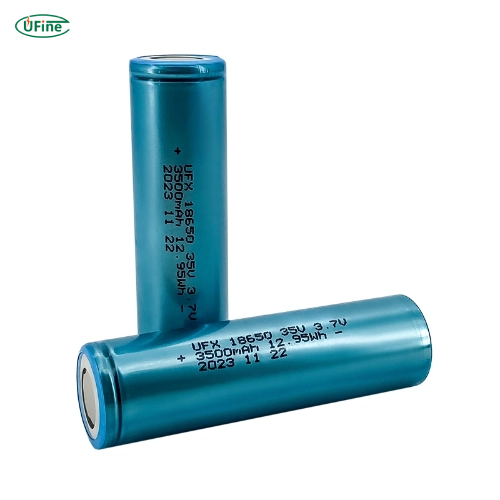
Cylindrical batteries, such as 18650 and 21700 cells, are round lithium-ion cells widely used in consumer electronics and industrial devices.
Why engineers choose them:
- Mechanical stability under vibration and shocks.
- Efficient heat dissipation due to cylindrical geometry.
Common applications:
- Power tools, laptops, e-bikes, and industrial equipment.
Advantages:
- Strong metal casing provides high durability.
- Mature manufacturing allows cost-effective mass production.
Product recommendation:
- 3500mAh 18650-3C Flat Top 3.7 V Battery – ideal for high-drain devices and rugged environments.
Part 3. Big square battery vs Cylindrical: Which battery uses space more efficiently?
Challenge: Maximize energy per volume in compact systems.
Scenario:
- EV packs with tight chassis space.
- Solar storage or UPS systems in constrained enclosures.
Analysis:
- Big square batteries: Flat shape allows tighter stacking, reducing wasted volume.
- Cylindrical batteries: Round shape leaves voids, lowering packing efficiency to 60–70%.
Takeaway:
- For space-critical designs, big square batteries are usually preferred.
Part 4. Big square battery vs Cylindrical: Which battery handles heat better?
Challenge: Prevent overheating in high-current or fast-charging systems.
Scenario:
- Industrial equipment running continuously.
- Fast-charging EVs requiring thermal management.
Analysis:
- Cylindrical cells dissipate heat more effectively due to larger surface area per volume.
- Square cells require careful thermal management to avoid hotspots.
Step for designers:
- Map heat generation across the battery pack.
- Use airflow channels or thermal pads for square cells.
- Cylindrical cells can often operate safely without complex cooling.
Part 5. Big square battery vs Cylindrical: Which battery is more durable?
Problem: Devices operating in harsh environments need robust batteries.
Scenario:
- Outdoor scooters, power tools, and industrial machinery exposed to vibration or shocks.
Comparison:
- Cylindrical batteries: Metal canister resists mechanical stress.
- Square batteries: Can swell or deform under long-term cycling if not managed.
Design tip:
- Choose cylindrical cells for high-vibration or outdoor applications.
- For controlled environments, square cells can still provide reliable service.
Part 6. Big square battery vs Cylindrical: Which battery is easier to assemble?
Challenge: Simplify battery module design and assembly.
Scenario:
- Custom EV packs or energy storage systems requiring tailored layouts.
Analysis:
- Square batteries: Flat design simplifies stacking and module layout.
- Cylindrical batteries: Benefit from automated assembly lines for large-scale production.
Recommendation:
- For custom pack designs, big square cells save space and design complexity.
- For high-volume manufacturing, cylindrical cells reduce cost and streamline assembly.
Part 7. Big square battery vs Cylindrical: Which battery lasts longer?
Problem: Need high cycle life for long-term applications.
Scenario:
- Industrial ESS, EVs with extended warranties.
Analysis:
- Cylindrical batteries: Consistent internal pressure and better heat management → longer cycle life.
- Square batteries: May degrade faster if poorly managed in high-stress environments.
Tip:
- Include a high-quality BMS for square cells to maximize lifespan.
Part 8. Big square battery vs Cylindrical: Which battery is more cost-effective?
Challenge: Optimize cost for large-scale deployment.
Scenario:
- EV startups or solar storage projects with budget constraints.
Analysis:
- Cylindrical batteries: Mature production → lower unit cost.
- Square batteries: More expensive due to custom design and manufacturing complexity.
Step for cost optimization:
- Assess required energy per volume.
- Compare price-performance of square vs cylindrical for your target capacity.
- Factor in assembly and thermal management costs.
Part 9. Big square battery vs Cylindrical: Which battery is safer?
Problem: Minimize risk of thermal runaway or mechanical failure.
Scenario:
- Medical devices, aviation systems, or rugged outdoor equipment.
Comparison:
- Cylindrical batteries: Metal casing provides additional protection; better for vibration.
- Square batteries: Require precise BMS control to prevent swelling and overheating.
Design tip:
- Consider cylindrical cells for systems where safety under stress is critical.
- Square cells are fine if integrated with advanced monitoring and cooling.
Part 10. Big square battery vs Cylindrical: Which battery is better for EVs?
Problem: Selecting the right cell format for vehicle performance and pack design.
Scenario:
- EV OEMs balancing space, thermal management, and scalability.
Comparison:
- Square batteries: Used in Tesla LFP packs, BYD Blade Battery; space-optimized for custom EV packs.
- Cylindrical batteries: Used in Tesla 4680 cells, Lucid Air; easier thermal control and modular design.
Step for EV designers:
- Determine energy density needs.
- Evaluate thermal management strategy.
- Decide on production scale and modularity.
- Select the appropriate Ufine product:
- High-capacity, space-optimized: High-Power 3.2V 160Ah LiFePO4 Battery
- Modular, scalable, high-drain: 3500mAh 18650-3C Flat Top 3.7 V Battery
Part 11. FAQs about big square battery and cylindrical
What is the main difference between big square and cylindrical batteries?
Shape and space usage. Square cells maximize volume usage; cylindrical cells offer better thermal performance and durability.
Which battery type is safer for high-vibration environments?
Cylindrical batteries, due to their strong metal casing.
Are square batteries better for compact designs?
Yes, especially in EV packs or slim ESS modules.
Which battery type is more cost-effective for mass production?
Cylindrical batteries, because of mature, high-volume production lines.
Which battery should I choose for better thermal performance?
Cylindrical batteries perform better under fast charging and high-drain conditions.
Related Tags:

More Articles

고방전 배터리는 높은 전류와 발열로 배터리수명이 줄어듭니다. 구조적 한계, 사용 패턴, 충전 습관 등 실제 수명 단축 요인을 체계적으로 분석했습니다.
Capacitor vs Battery: What is the Difference?
Capacitor vs battery explained in detail. Learn the difference between capacitor and battery in energy storage, charging speed, lifespan, and real applications.
18650 Battery vs AA: Which Is Better for Your Device?
Compare 18650 vs AA batteries in capacity, voltage, rechargeability, and applications. Learn which battery type fits high-drain or everyday devices.
What is the Difference Between Battery Cell, Battery Control Module, and Battery Pack?
Compare battery cells, modules, and packs. Learn functions, design differences, control modules, and selection tips for EV, ESS, and industrial use.
How to Prevent LiPo Battery Explosion?
Can LiPo batteries explode or catch fire? Learn key causes of LiPo battery fires and proven charging, storage, and handling tips to reduce explosion risk.


