- Part 1. What is a battery load test?
- Part 2. Principles of battery load testing
- Part 3. Types of battery load tests
- Part 4. Battery load testing equipment
- Part 5. Battery load testing procedure
- Part 6. Interpreting load test results
- Part 7. 5 Critical Battery Load Test Mistakes
- Part 8. FAQs about Battery Load Testing
- Part 9. Conclusion
A battery load test is a diagnostic method to measure a battery’s ability to deliver power under controlled conditions. It shows real performance under stress, helping identify weak batteries before failure. Applications include car battery load testing, solar energy systems, and industrial equipment.
Modern devices from smartphones and laptops to cars and industrial machinery rely on batteries. Over time, batteries may lose capacity, causing operational issues. Battery load testing provides a reliable method to assess battery health and performance.
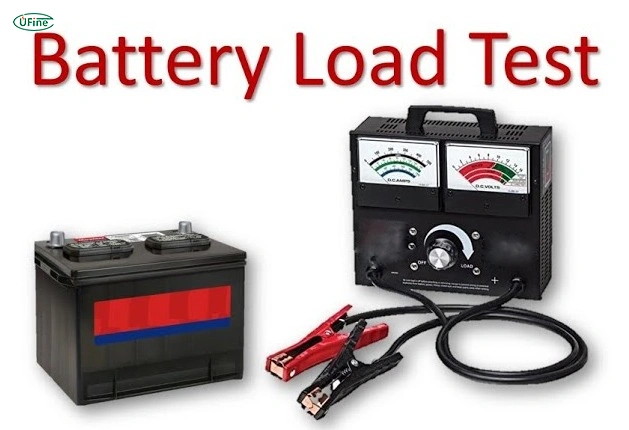
Part 1. What is a battery load test?
Battery load testing is a diagnostic procedure used to measure a battery’s performance and health by applying a controlled load. It determines the battery’s ability to deliver power and maintain voltage levels under real-world conditions, helping prevent unexpected failures.
Importance of Battery Load Testing
- Ensuring Performance: Evaluate battery performance under stress and identify degradation.
- Preventing Failures: Detect weak batteries early to reduce downtime and repair costs.
- Extending Lifespan: Optimize charge/discharge cycles and maintenance for longer battery life.
- Safety: Identify potential risks in automotive, solar, and industrial applications.
Part 2. Principles of battery load testing
Understanding the principles of load testing ensures accurate results and reliable battery assessment.
Load Testing Methodology
- Fully charge the battery and ensure recommended temperature.
- Connect to load testing equipment.
- Apply a controlled load for a specified duration.
- Monitor voltage and performance during the test.
- Analyze results to determine battery condition.
Factors Affecting Load Testing
- Battery Temperature: Conduct tests at recommended temperatures for consistent results.
- Load Applied: Use appropriate load levels reflecting real-world usage.
- Test Duration: Follow battery specifications; too short or long tests can misrepresent health.
- Equipment Calibration: Ensure testers are calibrated for accurate measurements.
Part 3. Types of battery load tests
Common types of load tests:
- Constant Current Load Test: Apply constant current, measure voltage over time, assess sustained performance.
- Pulse Load Test: Apply high-current pulses to simulate sudden demand; evaluates peak load handling.
- Capacity Load Test: Discharge battery at a set rate until predefined voltage; assesses usable capacity.
- Cranking Load Test: Automotive test for high current delivery during engine start.
- Car Battery Load Test: Measure Cold Cranking Amps (CCA) with 15-second cycles.
- Solar Battery Load Test: Use 20-hour capacity rating (C20) for deep-cycle evaluation.
Part 4. Battery load testing equipment
Using the right equipment ensures accurate battery load testing results.
| Equipment Type | Recommended Models | Best For | Price Range |
|---|---|---|---|
| Digital Load Tester | Midtronics MDX-650 | Automotive Batteries | $300-$400 |
| Industrial Analyzer | Fluke 500 Series | Solar/Deep Cycle Batteries | $450-$600 |
| Basic Multimeter | INNOVA 3320 | Quick Voltage Checks | $20-$50 |
Key Equipment and Functions
- Load Tester: Applies controlled load, measures voltage response, current, and internal resistance.
- Multimeter: Measures voltage, current, resistance during load test for additional diagnostics.
- Data Logger: Records voltage/current trends during testing for performance analysis.
- Safety Equipment: Gloves, goggles, and protective clothing to prevent accidents.
Part 5. Battery load testing procedure
How to load test a battery safely?
- Preparation:
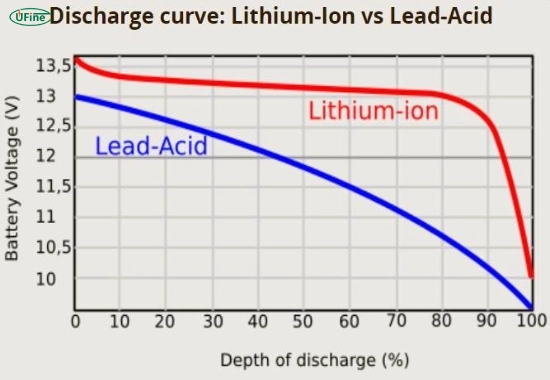
- Charge lead-acid to 12.6V or lithium to 3.65V per cell.
- Wear ANSI-approved gloves & goggles.
- Connection:
- Attach red clamp to (+), black to (-).
- Ensure contacts are clean and corrosion-free for accurate readings.
- Load Application:
- Automotive batteries: Apply 50% CCA for 15 seconds to evaluate starting power.
- Deep-cycle batteries: Apply 3x Ah rating for 3 hours to assess usable capacity.
- Voltage Monitoring:
- Record initial, 5s, and 15s voltage readings.
- Stop the test if voltage drops below 9V for a 12V battery.
This structured approach ensures accurate load test battery results for various applications.
Part 6. Interpreting load test results
Analyzing battery load test chart and voltage response helps determine battery health.
Voltage Response
A healthy battery maintains stable voltage under load. Significant drops indicate capacity loss or high internal resistance.
Capacity Assessment
Compare observed capacity with rated capacity. Low results suggest aging or degradation.
Performance Analysis
Check for inability to sustain load or irregular voltage patterns. These highlight potential operational risks.
Trends and Historical Data
Compare with previous load tests to detect progressive degradation or improvements.
Battery Load Test Voltage Chart
- 12V Automotive: ≥9.6V @ 15s load → Healthy
- 6V Golf Cart: ≥5.5V @ 30min → Replace if below
- Solar Lithium: ≤3% voltage drop @ 1C rate → Acceptable
Use this chart as a quick reference for evaluating test outcomes. Proper interpretation ensures timely maintenance and prevents unexpected battery failures.
Part 7. 5 Critical Battery Load Test Mistakes
❌ Testing a Discharged Battery
Charging to full state-of-charge (SOC) is essential. Testing a discharged battery gives false “bad battery” results.
❌ Ignoring Temperature Compensation
Voltage readings change with temperature. Add 0.01V/°F above 80°F, subtract below (per SAE J537) for accuracy.
❌ Using Wrong Load Settings
Automotive: 50% CCA. Deep-cycle: 3x Ah. Incorrect loads can misrepresent performance.
❌ Testing Immediately After Charging
Wait 2 hours for surface charge to dissipate. Testing too soon gives inflated voltage readings.
❌ Using Damaged Cables
Worn clamps increase resistance >0.2Ω, causing voltage drop errors. Replace cables for reliable results.
Part 8. FAQs about Battery Load Testing
How long does a battery load test take?
Automotive: 15-30 seconds. Deep-cycle/solar: 1-3 hours. Duration depends on battery type and load.
Can you load test a lithium battery?
Yes, use CC/CV mode ≤1C rate. Avoid traditional resistive loads to prevent damage.
Is a load test better than a voltage test?
Yes. Voltage only shows surface charge; load test reveals actual performance under stress.
Can I do a load test without special equipment?
Basic tests can use headlights (auto) or inverters (solar), but professional tools give precise results.
How often should load testing be done?
Critical systems: every 6 months. Automotive batteries: annually.
Part 9. Conclusion
Battery load testing is crucial for evaluating performance, preventing unexpected failures, and extending battery life. By following the principles, choosing the right equipment, and correctly interpreting battery load test chart results, you can maintain reliable power in automotive, solar, and industrial applications.
Regular battery load testing combined with proper maintenance can extend battery life by up to 40%. For deeper optimization, learn more about battery reconditioning to maximize your power solutions.
Related Tags:

More Articles

Comparative Analysis: 14500 Battery Vs. 18650 Battery
Compare 14500 vs 18650 batteries by size, voltage, capacity, runtime, discharge current, charging, safety, and applications to choose the right cell.
12V Lithium-Ion What Voltage at Fully Charged and Why Your Battery Might Not Reach It
Check the 12V lithium battery voltage chart for 3S Li-ion and 4S LiFePO4. Learn full charge, resting voltage, charger limits, and fault checks.
LiFePO4 Voltage Chart Guide: Everything You Need to Know
Check the LiFePO4 voltage chart for 3.2V, 12V, 24V and 51.2V batteries. Compare SOC, charging voltage, cutoff limits and internal resistance.
Lithium Ion Cell Sizes: A Comprehensive Guide
Compare lithium ion cell sizes with a chart of dimensions, capacity ranges, cell types, applications, and key factors for selecting the right battery.
6 Volt Tractor Battery vs 12 Volt: Which One Fits Your Farm Equipment Best?
Compare 6V and 12V tractor batteries. Learn which voltage fits vintage or modern tractors, which specifications matter, and how to convert safely.