- Key Takeaways
- Part 1. What is an 18650 battery?
- Part 2. What is a cr123 battery?
- Part 3. What is a cr123a battery? (cr123 vs cr123a explained)
- Part 4. 18650 vs cr123 battery: technical comparison
- Part 5. Cr123 vs cr123a battery: is there any difference?
- Part 6. 18650 vs CR123 vs CR123A Batteries:Common application scenarios
- Part 7. FAQs about 18650 vs CR123 vs CR123A batteries
Batteries power critical devices ranging from tactical flashlights and cameras to industrial equipment and battery packs. Among the most commonly compared lithium battery types are 18650, CR123, and CR123A. Although these batteries are often mentioned together, they differ significantly in chemistry, voltage, capacity, rechargeability, and application logic.
This guide provides a clear, engineering-oriented comparison of 18650 vs CR123 vs CR123A batteries, helping you determine which battery is appropriate—and which is not—for your specific device or system.
Key Takeaways
- 18650 batteries are rechargeable lithium-ion cells designed for high capacity, long cycle life, and high current output.
- CR123 and CR123A batteries are the same battery type—both are 3V primary lithium cells with long shelf life.
- CR123A is not rechargeable by default; rechargeable versions are labeled RCR123A / 16340 and operate at higher voltage.
- 18650 batteries cannot directly replace CR123 / CR123A due to size and voltage differences.
- Choose CR123/CR123A for compact, low-maintenance devices; choose 18650 for rechargeable, high-energy systems.
Part 1. What is an 18650 battery?
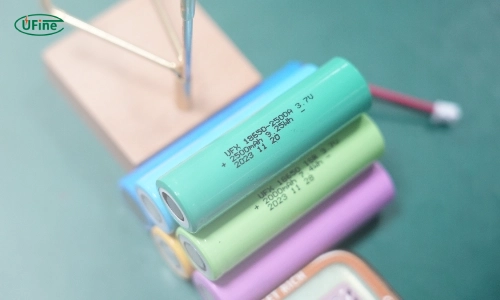
The 18650 battery is a cylindrical rechargeable lithium-ion cell, named after its physical dimensions: 18 mm diameter × 65 mm length. It is one of the most widely used lithium-ion formats in both consumer and industrial applications.
1 Core characteristics of 18650 batteries
- Nominal Voltage: 3.6–3.7V
- Capacity Range: ~1800–3500 mAh
- Rechargeable: Yes (300–1000+ cycles depending on chemistry)
- Discharge Capability: Supports high-drain applications
2 Typical applications
- Laptop battery packs
- Power tools
- E-bikes and EV battery modules
- Energy storage systems
- High-lumen rechargeable flashlights
👉 Related internal reading: Lithium-ion battery pack design and safety considerations
Part 2. What is a cr123 battery?
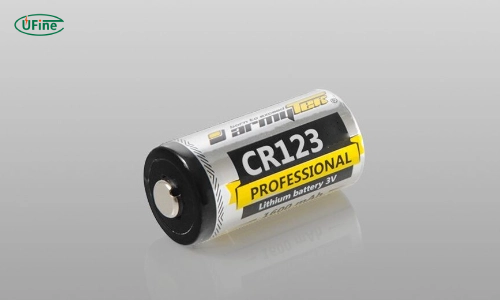
A CR123 battery is a non-rechargeable (primary) lithium battery designed for compact devices requiring stable 3V output and long shelf life.
1 Core characteristics of cr123 batteries
- Nominal Voltage: 3.0V
- Typical Capacity: ~1400–1500 mAh
- Rechargeable: No
- Shelf Life: Up to 10 years
2 Typical applications
- Tactical and emergency flashlights
- Cameras and optical devices
- Medical instruments
- Security and alarm systems
CR123 batteries are valued for reliability, cold-temperature performance, and low self-discharge, making them ideal for mission-critical or standby equipment.
Part 3. What is a cr123a battery? (cr123 vs cr123a explained)
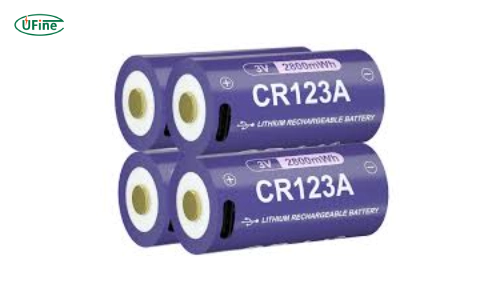
CR123 and CR123A are the same battery. There is no technical or dimensional difference between CR123 and CR123A batteries.
- Same size: 17 × 34.5 mm
- Same chemistry: lithium manganese dioxide (Li-MnO₂)
- Same voltage: 3V
The “A” suffix is simply a manufacturer or branding designation.
Important exception: rechargeable cr123a (rcr123a / 16340)
Rechargeable versions exist and are commonly labeled:
- RCR123A
- 16340 battery
These are lithium-ion rechargeable cells, not primary lithium.
| Parameter | CR123 / CR123A | RCR123A / 16340 |
|---|---|---|
| Rechargeable | No | Yes |
| Nominal Voltage | 3.0V | 3.6–3.7V |
| Chemistry | Li-MnO₂ | Li-ion |
⚠️ Engineering caution: Devices designed for 3V CR123 batteries may be damaged by 3.7V rechargeable cells.
Part 4. 18650 vs cr123 battery: technical comparison
1 Size and form factor
- 18650: Larger, longer, heavier
- CR123: Compact and lightweight
➡ Size alone makes them non-interchangeable.
2 Voltage and electrical compatibility
- 18650: 3.6–3.7V (higher operating voltage)
- CR123: Stable 3.0V output
Voltage mismatch is a primary failure risk when substituting batteries.
3 Capacity and runtime
- 18650: Significantly higher energy capacity
- CR123: Lower capacity but optimized for long shelf life
4 Rechargeability and cost model
- 18650: Higher upfront cost, lower lifetime cost
- CR123: Single-use, higher long-term replacement cost
5 Application fit
| Use Case | Better Choice |
|---|---|
| Rechargeable systems | 18650 |
| Emergency / standby devices | CR123 |
| High current draw | 18650 |
| Ultra-compact design | CR123 |
Part 5. Cr123 vs cr123a battery: is there any difference?
No. CR123 = CR123A.
They are interchangeable in all compliant devices.
The only differentiation users should care about is primary vs rechargeable:
- Use CR123 / CR123A (3V) in devices designed for disposable lithium cells.
- Use RCR123A / 16340 only when the device explicitly supports rechargeable lithium-ion voltage.
Part 6. 18650 vs CR123 vs CR123A Batteries:Common application scenarios
| Application | Recommended Battery |
|---|---|
| Tactical flashlight | CR123 or 18650 (device-dependent) |
| Industrial battery pack | 18650 |
| Security sensors | CR123 |
| Rechargeable consumer electronics | 18650 |
| Cold-environment equipment | CR123 |
Part 7. FAQs about 18650 vs CR123 vs CR123A batteries
Can I replace a CR123 battery with an 18650?
No. The batteries differ in size, voltage, and discharge behavior. Using an 18650 in place of a CR123 can damage the device or create safety risks.
What battery can replace an 18650?
Batteries such as 21700 or 20700 may be alternatives only if the device is designed for them. Physical size and electrical limits must match.
What battery can replace CR123A?
A CR123 or CR123A is the direct replacement. Rechargeable RCR123A / 16340 should only be used if the device supports higher voltage.
Is CR17335 the same as CR123A?
Yes. CR17335 is another designation for CR123A, sharing identical size and electrical specifications.
How long does a CR123A battery last?
Shelf life can reach 10 years. Runtime depends on load—ranging from hours in high-drain devices to years in low-power standby applications.
Related Tags:

More Articles
Dead Battery or Device Failure? How to Find the Cause
Think your device is broken? Learn how to tell if the problem comes from battery aging or hardware failure before replacing your electronics.
Why iPhone Duo Uses Two Batteries: The Engineering Behind Foldable Phone Power
Why do foldable phones need two batteries? Explore the engineering challenges behind iPhone Duo’s dual-battery architecture and future battery trends.
Solid-State Batteries: 3 Myths You Need to Know
Solid-state batteries promise safer EVs and longer range, but the reality is more complex. Discover the challenges behind this next-gen technology.
Battery Capacity vs Discharge Rate: The Choice Engineers Face
Higher capacity or higher discharge rate? Learn how to choose the right LiPo battery for longer runtime, stable power output, and better device performance.
Battery Cable Size Guide: Choose the Right Wire Fast
Not sure what battery cable size you need? Learn how to select the right wire gauge, terminal size, and cable for safer, more efficient battery systems.