
When choosing a battery, size alone is not the deciding factor. The real difference between 18650 batteries and AA batteries lies in energy density, voltage, discharge capability, and intended applications.
This guide provides an engineer- and buyer-focused comparison of 18650 battery vs AA battery, helping you determine which option is technically suitable for your device—whether it’s a high-drain industrial product or a low-power consumer electronic.
Key Takeaways (Quick Summary)
- 18650 batteries deliver far higher energy density and discharge current than AA batteries, making them ideal for high-drain applications.
- AA batteries excel in availability, simplicity, and low-power devices, especially where standardized sizes matter.
- 18650 rechargeable batteries operate at 3.6–3.7V, while AA batteries are typically 1.5V (alkaline) or 1.2V (NiMH).
- AA batteries are not drop-in replacements for 18650 cells due to voltage, size, and safety differences.
- For custom devices, battery chemistry and pack design matter more than form factor alone.
- Long-term cost and sustainability generally favor rechargeable 18650 lithium-ion cells.
Part 1. What is an 18650 battery?
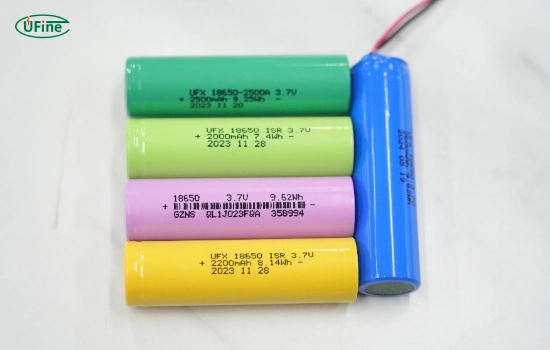
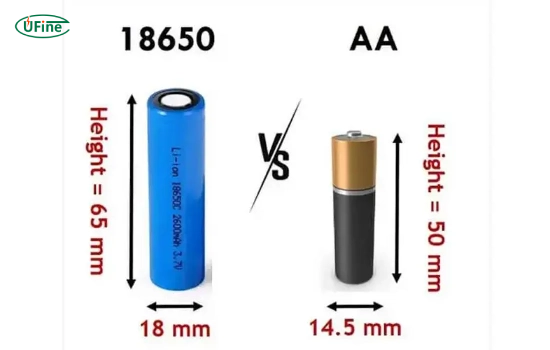
An 18650 battery is a cylindrical lithium-ion rechargeable cell measuring 18 mm in diameter and 65 mm in length. It is widely used in professional and industrial products because of its high energy density, stable discharge curve, and long cycle life.
👉 Learn more: Types of 18650 Battery: Chemistry, Capacity & Selection Tips
1 18650 battery advantages
- High Energy Density: Typical capacities range from 2000–3500 mAh, far exceeding AA cells on a per-cell basis.
- Rechargeable & Long Cycle Life: Quality 18650 cells support 500–1000+ charge cycles, reducing total cost of ownership.
- High Discharge Capability: Designed for medium to high current output, suitable for power tools and energy storage.
- Pack Scalability: Easily configured into series/parallel battery packs for custom voltage and capacity.
2 18650 battery limitations
- Larger physical size limits use in compact consumer devices.
- Requires protection circuits (PCM/BMS) to ensure safety.
- Not standardized for consumer replacement, unlike AA batteries.
3 Common 18650 applications
- Power tools and industrial equipment
- Laptops and portable energy storage
- Electric vehicles and e-mobility
- High-lumen flashlights and outdoor gear
Part 2. What is an aa battery?
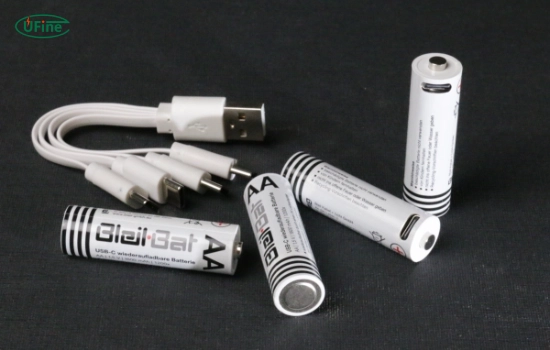
An AA battery is a standardized cylindrical cell measuring approximately 14.5 mm × 50.5 mm. It is one of the most widely used battery formats globally and is available in multiple chemistries.
1 Common AA battery types
- Alkaline AA – 1.5V, disposable
- NiMH Rechargeable AA – 1.2V, reusable
- Lithium Primary AA – 1.5V, long shelf life
2 AA battery advantages
- Universal Compatibility: Designed into countless consumer and medical devices.
- Easy Replacement: Available worldwide with no charging infrastructure needed.
- Low Upfront Cost: Especially suitable for infrequently used electronics.
- Compact & Lightweight: Ideal for small, low-power devices.
3 AA battery limitations
- Low energy density compared to lithium-ion cells
- Poor performance under high current loads
- Disposable versions generate more waste over time
4 Typical AA battery applications
- Remote controls, clocks, keyboards, mice
- Toys and handheld electronics
- Medical and household instruments
Part 3. 18650 vs aa battery: key differences explained
1 Size & form factor
| Battery Type | Diameter | Length |
|---|---|---|
| 18650 Cell | 18 mm | 65 mm |
| AA Battery | ~14.5 mm | ~50.5 mm |
AA batteries are smaller, but size alone does not indicate performance.
2 Capacity & energy density
- 18650 battery: 2000–3500 mAh. High gravimetric and volumetric energy density.
- AA battery: Alkaline: ~2000–3000 mAh (low current only); NiMH: ~1800–2500 mAh.
👉 Under real load, 18650 cells deliver far more usable energy.
3 Voltage & electrical characteristics
| Battery Type | Nominal Voltage |
|---|---|
| 18650 Li-ion | 3.6–3.7V |
| AA Alkaline | 1.5V |
| AA NiMH | 1.2V |
⚠️ Voltage mismatch is the main reason AA batteries cannot replace 18650 cells.
4 Rechargeability & lifespan
- 18650 rechargeable battery: Designed for frequent charging. Long-term industrial use.
- AA batteries: Disposable or rechargeable. Rechargeable AAs have shorter cycle life and lower energy density.
5 Application suitability
Choose 18650 batteries if:
- Device requires high power or long runtime
- Battery pack design is flexible
- Charging infrastructure is acceptable
Choose AA batteries if:
- Device is low-drain
- User-replaceable standard size is required
- Simplicity and availability matter most
Part 4. FAQs about 18650 battery vs AA
Can AA batteries replace an 18650 battery?
No. AA batteries are not direct substitutes due to differences in size, voltage, discharge rate, and safety requirements.
Is an 18650 battery equivalent to multiple AA batteries?
Electrically, one 18650 can replace several AAs in energy, but they are not interchangeable without redesigning the device.
Why are 18650 batteries preferred in high-drain devices?
Because they provide higher continuous current, stable voltage, and better thermal performance than AA cells.
Are rechargeable AA batteries comparable to 18650 cells?
Rechargeable AA (NiMH) batteries are useful for low-power devices, but they cannot match the energy density or discharge capability of 18650 lithium-ion cells.
Which battery is more cost-effective long term?
For frequent use, 18650 rechargeable batteries are typically more cost-effective, despite higher initial cost.
Related Tags:

More Articles

JST vs Molex: The Right Battery Connector Choice
JST or Molex for your battery? Learn how connector selection affects current, voltage drop, reliability, and device performance.
Custom Battery Pricing: Costs Manufacturers Don’t Mention
A low battery quote may not be the final cost. Discover common hidden expenses that affect custom lithium battery projects.
Battery Wire Length: Hidden Cause of Power Loss
A longer battery wire can cause voltage drop, power loss, and unstable operation. Learn how wire length affects battery performance.
How Device Sleep Modes Affect Battery Life
Think sleep mode extends battery life? Learn why devices still drain power and how firmware, hardware, and batteries affect runtime.
LiPo Battery and PCB Design: Clearance, Insulation, and Placement
Learn how to optimize LiPo battery PCB clearance, insulation, placement, wiring, and thermal design—and avoid common integration mistakes.


