
- Part 1. Quick comparison: IMR vs ICR vs INR vs IFR 18650
- Part 2. IMR 18650 battery (lithium manganese oxide)
- Part 3. ICR 18650 battery (lithium cobalt oxide)
- Part 4. INR 18650 battery (nickel manganese cobalt)
- Part 5. IFR 18650 battery (lithium iron phosphate)
- Part 6. Which 18650 battery type should you choose?
- Part 7. Key takeaways
- Part 8. FAQs about 18650 battery chemistry
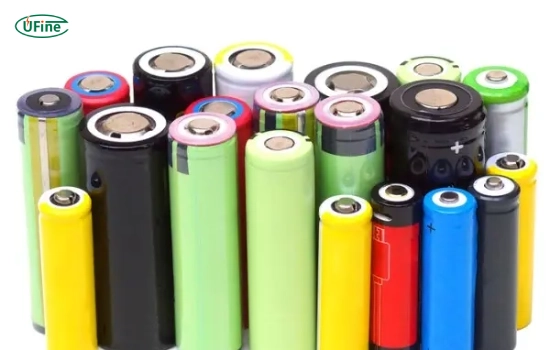
18650 Battery Chemistry Guide: INR, ICR, IMR, and IFR 18650 batteries represent the four most common lithium-ion chemistry families used in cylindrical 18650 cells. While they share the same physical size, their internal chemistry directly determines capacity, discharge capability, safety margin, cycle life, and suitable applications. Understanding these differences is essential for engineers, product designers, and procurement teams selecting the correct battery for performance, reliability, and compliance.
Part 1. Quick comparison: IMR vs ICR vs INR vs IFR 18650
| Type | Chemistry | Typical Strength | Main Limitation | Common Uses |
|---|---|---|---|---|
| IMR | LiMn2O4 | High discharge, safer chemistry | Lower energy density | Power tools, high-drain devices |
| ICR | LiCoO2 | High capacity | Lower safety, low discharge rate | Consumer electronics |
| INR | LiNiMnCoO2 | Balanced capacity & power | No extreme specialization | Power tools, EV packs, industrial devices |
| IFR | LiFePO4 | Excellent safety & cycle life | Lower voltage & capacity | Energy storage, EVs, solar systems |
Short on time? Watch the core differences summarized below.
Part 2. IMR 18650 battery (lithium manganese oxide)
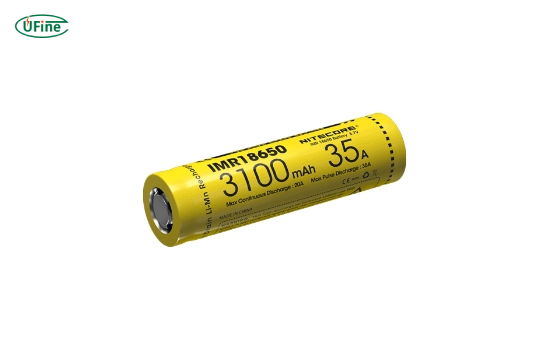
IMR is an industry abbreviation where: I refers to lithium-based chemistry, M indicates a manganese-based cathode (LiMn2O4), and R denotes a cylindrical rechargeable 18650 cell format.
IMR 18650 batteries use lithium manganese oxide cathodes, known for structural stability and low internal resistance.
Key characteristics
- High continuous and peak discharge capability
- Lower risk of thermal runaway compared to cobalt-based cells
- Nominal voltage: ~3.7V
Engineering trade-offs
- Lower gravimetric energy density than ICR or INR
- Shorter runtime per charge in low-drain devices
Typical applications
- High-current power tools
- Vaping devices and e-cigarettes
- High-lumen flashlights
Part 3. ICR 18650 battery (lithium cobalt oxide)
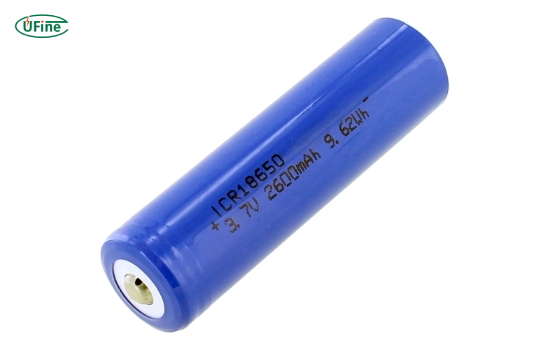
ICR stands for: I – lithium-based chemistry, C – cobalt-based cathode (LiCoO2), and R – cylindrical rechargeable cell (18650 format).
ICR 18650 batteries are high-capacity cells, suitable for low-drain devices but require careful thermal management.
Key characteristics
- High capacity (often used as ICR 18650 battery in consumer electronics)
- Stable voltage for low-current discharge
Limitations
- Poor thermal stability under high load
- Not suitable for high-drain or unprotected use
Typical applications
- Laptops and notebooks
- Cameras and handheld electronics
- Low-drain embedded systems
Part 4. INR 18650 battery (nickel manganese cobalt)
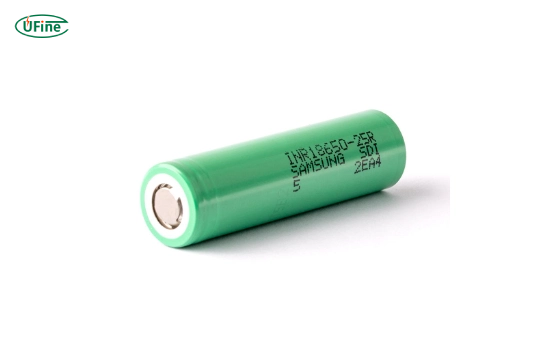
INR represents: I – lithium-based chemistry, N – nickel component, R – round cylindrical cell, with the cathode combining nickel, manganese, and cobalt for balanced performance (LiNiMnCoO2).
INR 18650 batteries offer balanced capacity and discharge rates, widely used in industrial and EV applications.
Key characteristics
- Moderate-to-high discharge capability
- Improved thermal stability vs ICR
- Higher capacity than IMR
Engineering considerations
- Not as safe as LiFePO4 under abuse conditions
- Requires quality BMS in high-current packs
Typical applications
- Power tools and industrial equipment
- Electric vehicle battery packs
- High-performance power banks
For a deeper comparison of cylindrical cell formats, see 26650 vs 18650 battery comparison.
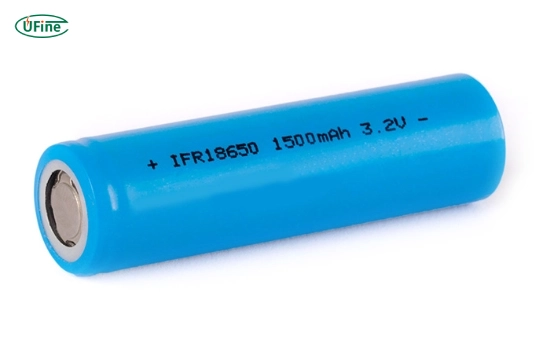
Part 5. IFR 18650 battery (lithium iron phosphate)
IFR is defined as: I – lithium-based chemistry, F – iron phosphate cathode (LiFePO4), and R – round cylindrical rechargeable cell (18650).
IFR 18650 batteries prioritize safety, thermal stability, and long cycle life, making them ideal for energy storage and EV applications.
Key characteristics
- Exceptional thermal and chemical stability
- Very long cycle life (often >2000 cycles)
- Lower nominal voltage (~3.2V)
Limitations
- Lower energy density than INR or ICR
- Larger packs required for equivalent voltage
Typical applications
- Solar and stationary energy storage
- Electric vehicles and e-bikes
- Industrial backup systems
For voltage behavior and standards, refer to Battery University lithium-ion chemistry overview.
Part 6. Which 18650 battery type should you choose?
There is no universally “best” 18650 battery. Selection should be driven by current demand, safety requirements, capacity needs, and system design constraints:
- Choose IMR for maximum discharge and safer high-current operation.
- Choose ICR 18650 batteries when energy density is the priority and discharge current is low.
- Choose INR 18650 batteries for balanced industrial, EV, and power-tool applications.
- Choose IFR (LiFePO4) where safety and lifespan outweigh size and weight concerns.
Part 7. Key takeaways
- INR 18650 batteries offer the best balance of capacity, power, and safety for most modern applications.
- ICR 18650 batteries provide high capacity but require strict current and thermal management.
- IMR cells excel in high-drain scenarios where discharge rate and stability matter more than runtime.
- IFR (LiFePO4) chemistry delivers unmatched safety and cycle life at the cost of lower energy density.
- Battery chemistry selection should align with real-world load profiles, not just nominal capacity ratings.
Part 8. FAQs about 18650 battery chemistry
Which 18650 battery type is best for high-drain devices?
IMR (Lithium Manganese) and high-quality INR (Lithium Nickel Manganese Cobalt Oxide) batteries are generally preferred for high-drain devices due to their ability to discharge high currents without significant voltage drops.
What distinguishes ICR batteries from other types?
ICR (Lithium Cobalt Oxide) batteries typically offer higher energy density. Still, they are less suitable for high-drain applications than IMR or INR batteries. They provide more capacity but have lower current discharge capabilities.
What voltage is IMR 18650?
IMR 18650 batteries usually have a nominal voltage of 3.7 volts and a fully charged voltage of around 4.2 volts.
What size is the ICR 18650 battery?
ICR 18650 batteries typically have a standardized size of 18mm in diameter and 65mm in length, similar to other 18650 batteries.
What applications are suitable for INR batteries?
INR (Lithium Nickel Manganese Cobalt Oxide) batteries are well-suited for various applications such as power tools, vaping devices, high-performance flashlights, and other high-drain devices that require both capacity and continuous high-current discharges.
Ufine Battery provides professional 18650 battery solutions across all chemistry types (IMR, ICR, INR, IFR) with custom capacity, discharge rates, and safety features for your specific application needs — from consumer electronics to industrial power systems.
Find A Solution NowRelated Tags:

More Articles

JST vs Molex: The Right Battery Connector Choice
JST or Molex for your battery? Learn how connector selection affects current, voltage drop, reliability, and device performance.
Custom Battery Pricing: Costs Manufacturers Don’t Mention
A low battery quote may not be the final cost. Discover common hidden expenses that affect custom lithium battery projects.
Battery Wire Length: Hidden Cause of Power Loss
A longer battery wire can cause voltage drop, power loss, and unstable operation. Learn how wire length affects battery performance.
How Device Sleep Modes Affect Battery Life
Think sleep mode extends battery life? Learn why devices still drain power and how firmware, hardware, and batteries affect runtime.
LiPo Battery and PCB Design: Clearance, Insulation, and Placement
Learn how to optimize LiPo battery PCB clearance, insulation, placement, wiring, and thermal design—and avoid common integration mistakes.


